
12-03-2026 19:44
 Enrique Rubio
Hi to everybody.Can you give me any suggestions ab
05-03-2026 10:07
Hulda Caroline HolteHello, I found and collected this species growing
12-03-2026 15:45
Åge OterhalsDear forum,I found this small discomycete on a ver
11-03-2026 17:36
 Michel Hairaud
Bonjour, Je cherche des indices pour cette réc
14-03-2026 13:51
 Thierry Blondelle
Hi everybody Under Quercus ilex, i hesitate to na
08-03-2026 14:05
Thierry Blondelle
Bonjour à tous,Sur 3 récoltes supposées de H. l
11-03-2026 16:48
 Bruno Coué
Bonjour, je serais heureux d'avoir votre avis sur
Byssonectria (?) Pyronemataceae from Eastern US
Ethan Crenson,
23-04-2024 21:49
Hello all,
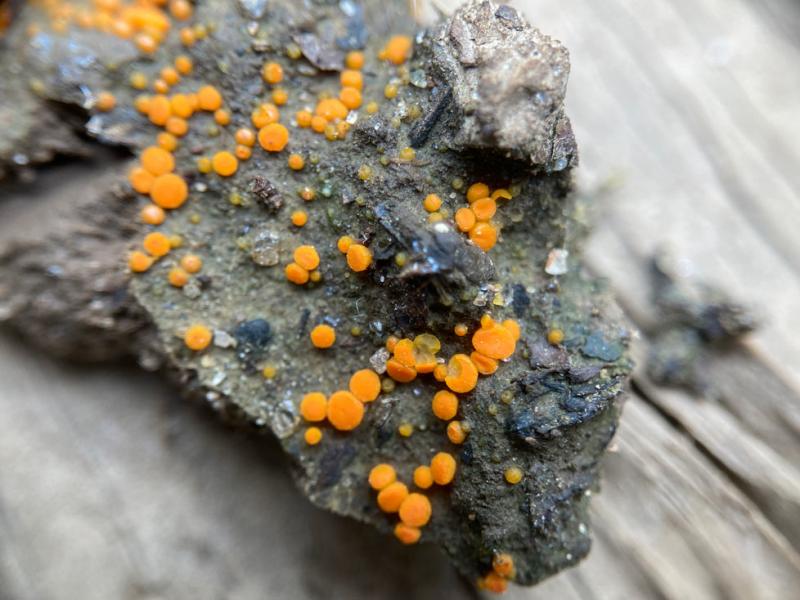
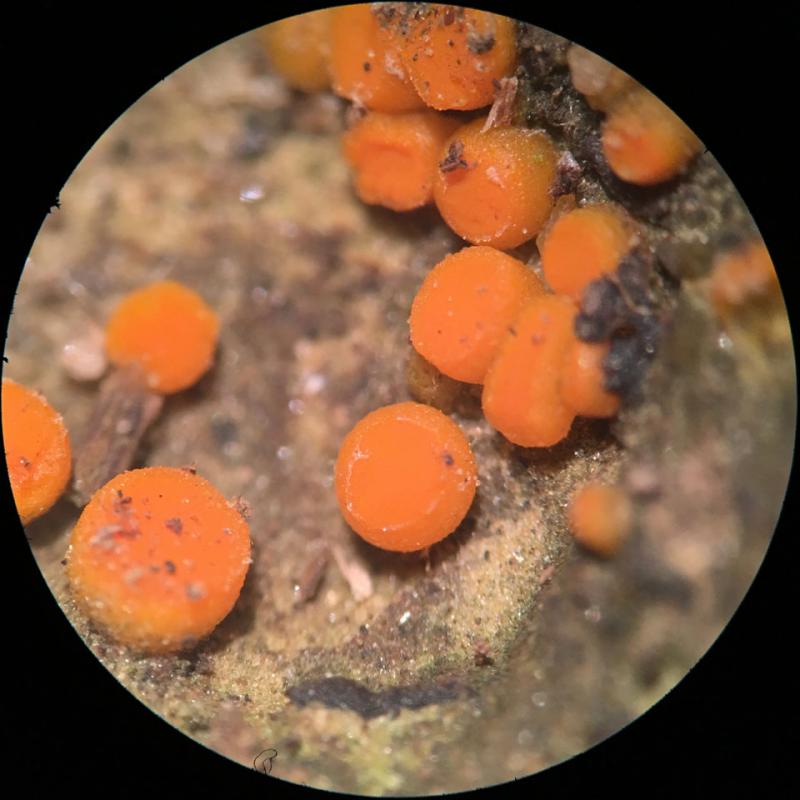
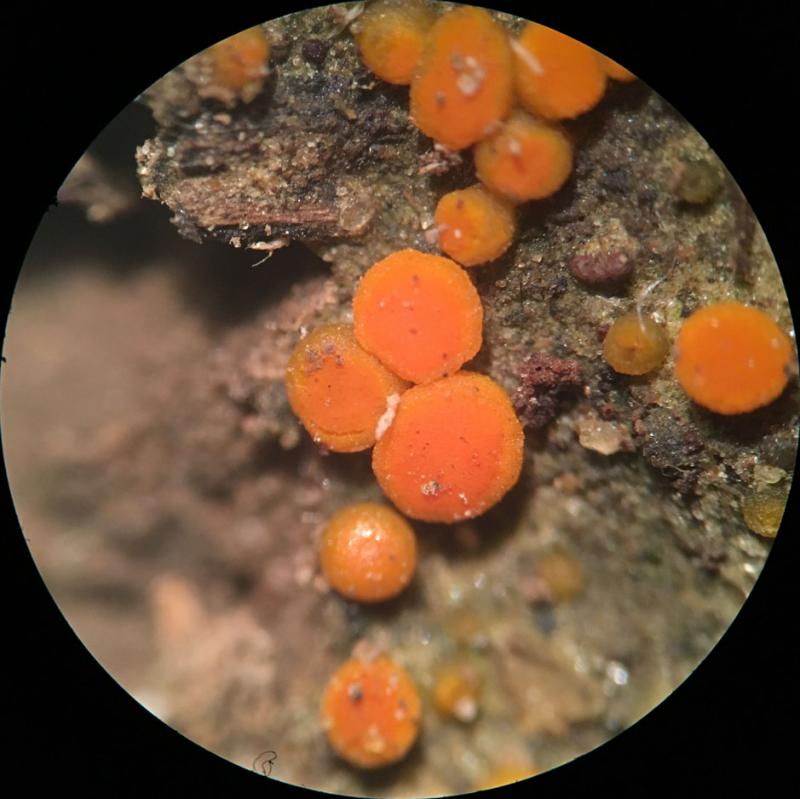
A friend recently found this orange asco on bare earth in a New York City park. The apothecia are orange, turbanate, sessile growing without an apparent mycelial mat on a muddy tire rut. The largest is 1.5 mm in diameter. They sometimes have a faint white marginal zone.
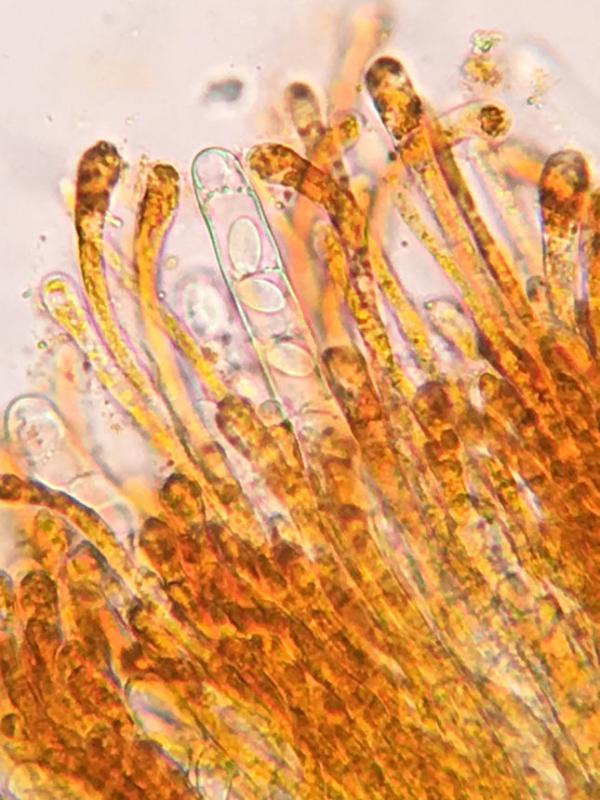
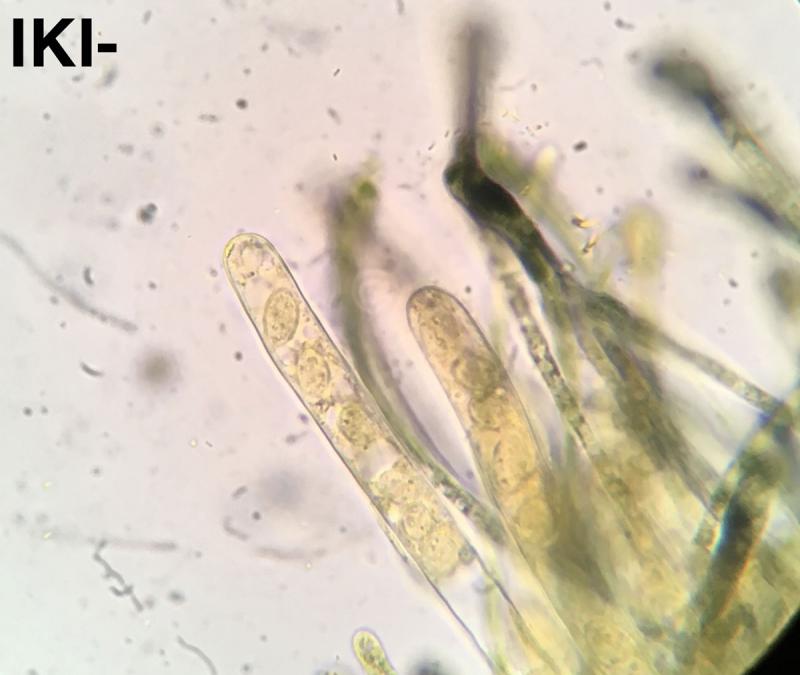
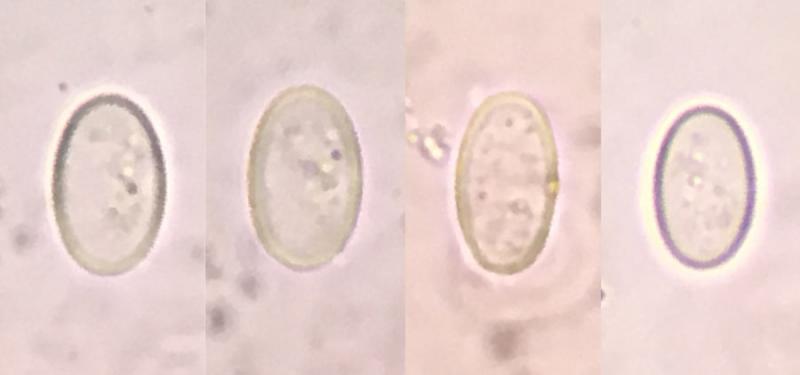
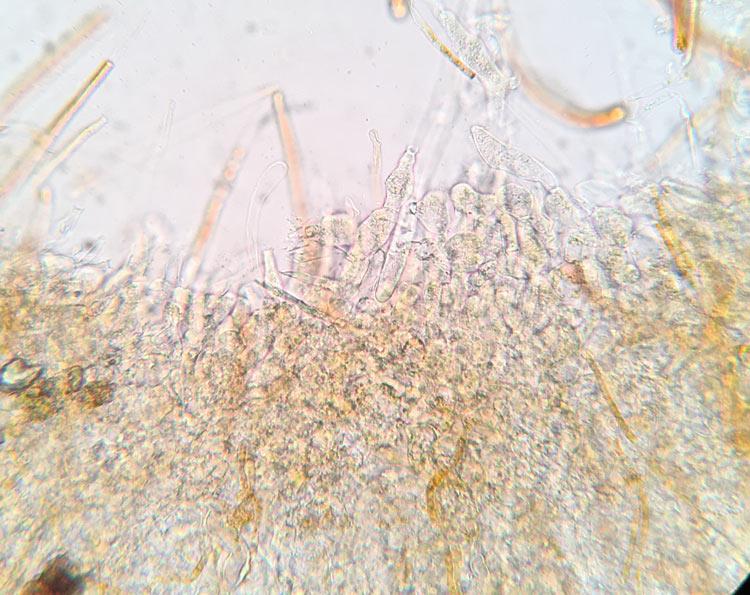
The apothecia are unfortunately immature. I am unable to find many ejected spores. The spores in ascus are broadly ellipsoid, smooth and small. The few I was able to measure out of the asci were approximately 9-10 x 5-6µm.
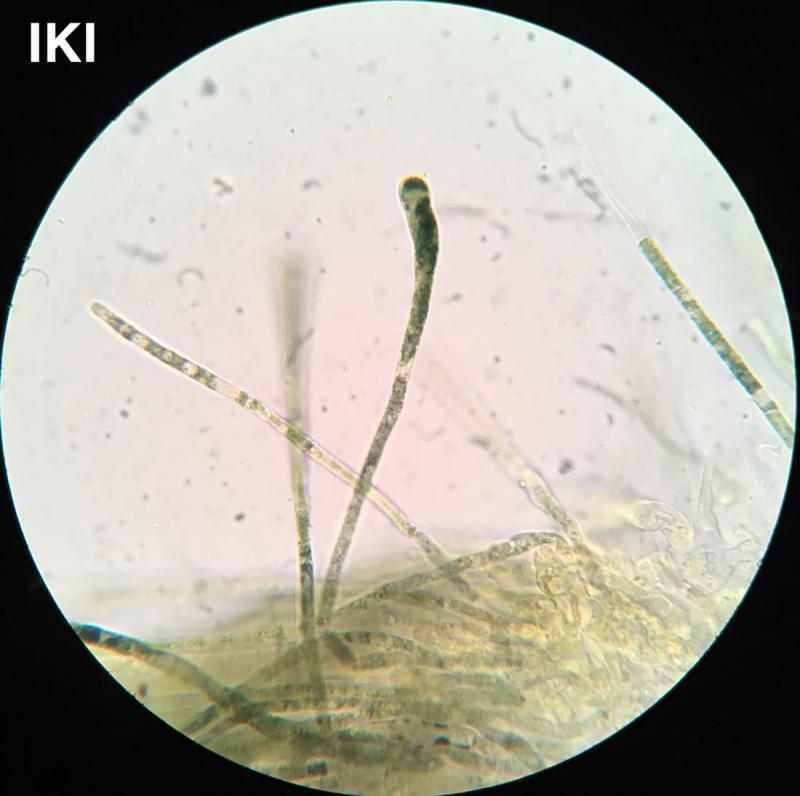
The few asci present are IKI-. Paraphyses are enlarged at the tips and contain orange pigments which stain green in IKI.
In the field I thought this might be Ramsbottomia, but the microscopy shows that it is obviously not. My next thought was Byssonectria, but the Pfister paper Synopsis of the North American Species of Byssonectria contains nothing with spores this shape and size. Byssonectria deformis, in Zotto's folder, has broadly ellipsoid spores, but much larger and it also appears to be restricted to Europe, from what I can tell.
Can anyone help with this asco?
Thank you in advance,
Ethan
Uwe Lindemann,
23-04-2024 22:23

Re : Byssonectria (?) Pyronemataceae from Eastern US
Hello Ethan,
yes, I would agree that it is a species of the genus Byssonectria. The macroscopic appearance is very typical. As for the ascospores, they look immature to me. Perhaps you should wait a few more days and then examine the ascomata again?
Best, Uwe
Ethan Crenson,
23-04-2024 22:26
Re : Byssonectria (?) Pyronemataceae from Eastern US
Thank you for your comments, Uwe. Is it possible that over the course of a few days the spores will become more fusiform in shape and grow to the size of typical North American species? They seem so different.
Uwe Lindemann,
23-04-2024 22:34
Re : Byssonectria (?) Pyronemataceae from Eastern US
No, I don't think they will become fusiform.
Best, Uwe