Accès membres

Mot de passe perdu? S'inscrire

15-01-2026 15:55

Lothar Krieglsteiner Lothar Krieglsteiner

this one is especially interesting for me because

03-01-2026 15:36

éric ROMERO éric ROMERO

Bonjour, Pouvez-vous me dire quel est le nom à p

19-01-2026 12:01

Castillo Joseba Castillo Joseba

Me mandan el material seco de Galicia (España) 

17-01-2026 19:35

Arnold Büschlen

Hallo, ich suche zu Cosmospora aurantiicola Lite

16-01-2026 00:45

Ethan Crenson

Hi all, On decorticated hardwood from a New York

18-01-2026 12:24

Josep Torres Josep Torres

Hello.An anamorph located on the surface of a thin

17-01-2026 10:41

Blasco Rafael Blasco Rafael

Hola, he descubierto que he creado una Pulvinula t

08-12-2025 17:37

Lothar Krieglsteiner Lothar Krieglsteiner

20.6.25, on branch of Abies infected and thickened

16-01-2026 11:20

Castillo Joseba Castillo Joseba

Me mandan el material seco de Galicia (España) 

10-01-2026 20:00

Tom Schrier

Hi all,We found picnidia on Protoparmeliopsis mur

« < 1 2 3 4 5 > »
pyrenomycete on Quercus
Lothar Krieglsteiner, 15-01-2026 15:55
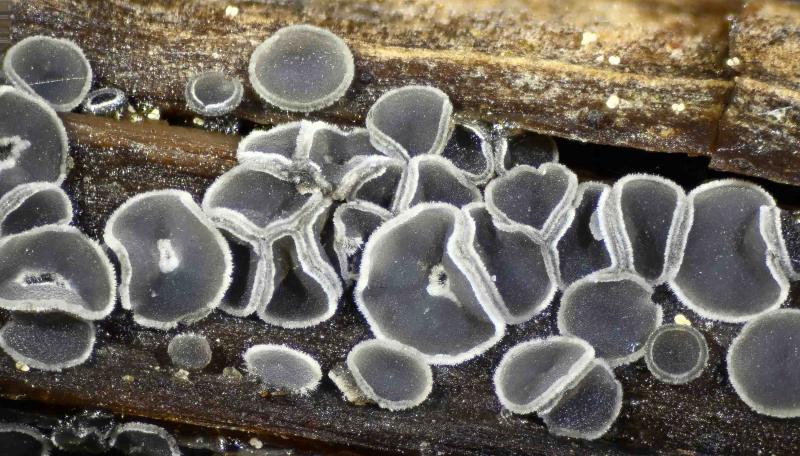
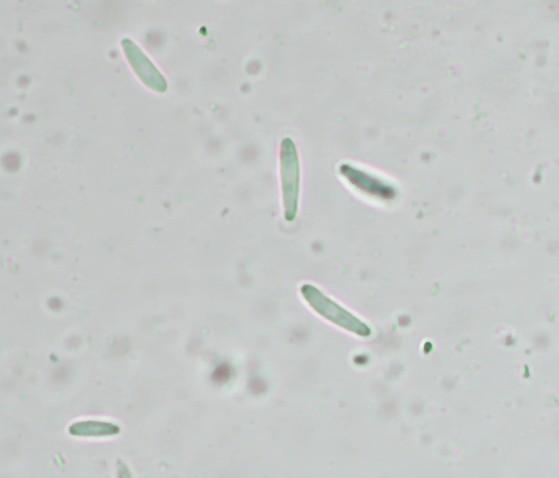
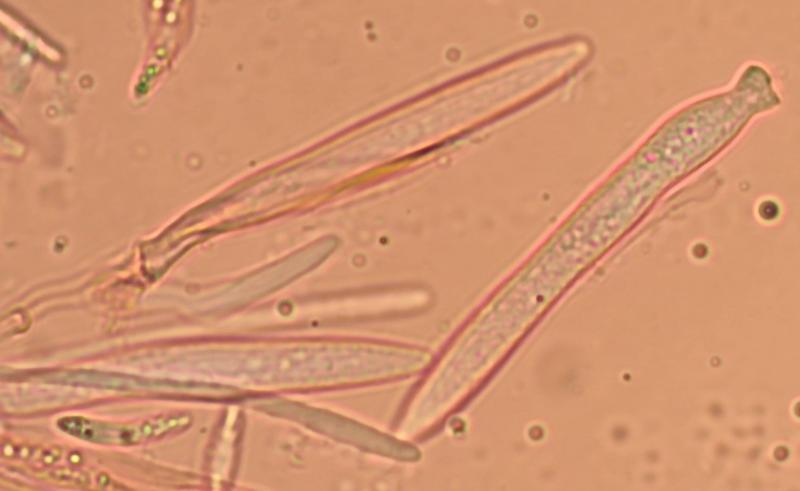
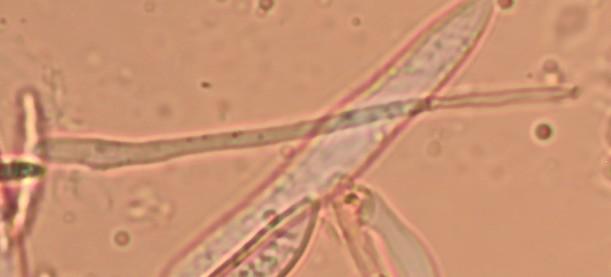
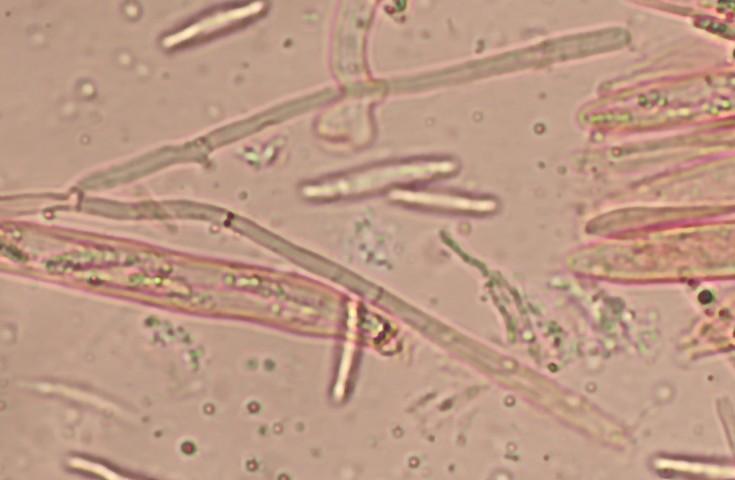
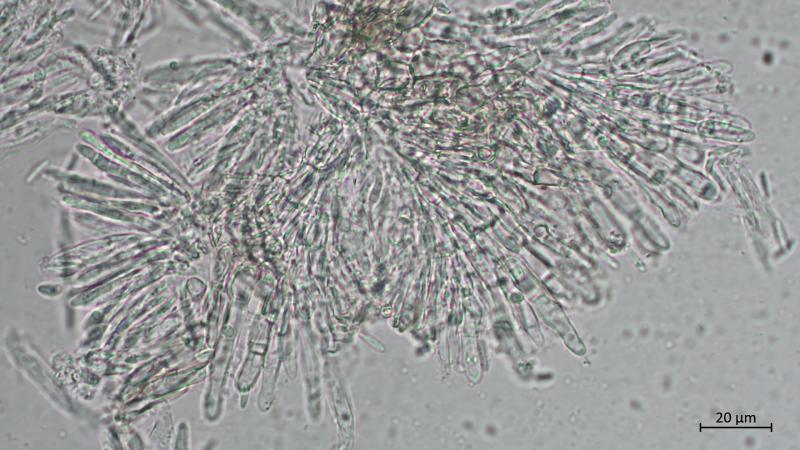
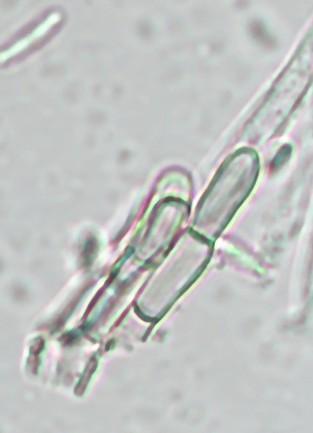
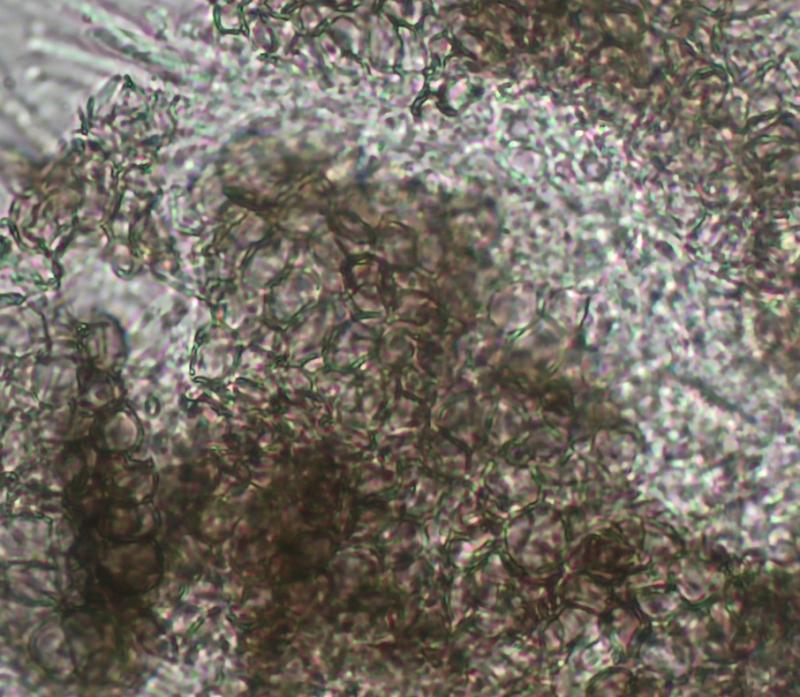
Lothar Krieglsteinerthis one is especially interesting for me because it is the host of an Unguiculariopsis that I plan to show here soon. First, I would like to know more about hte host. Growing on Quercus (Germany, Baaria), attached twigs at lying middle-aged log. The stromata contain some perithecia with white content (hyaline spores at least for long time). The asci are iodine-negative and bear croziers. There are plenty periphyses. The spores are for a long time hyaline, with the second cell distinctly enlarged, and measurea about 19-23/4-5,5 µm. 
The pink color in the fotos is from phloxine (mixed with water). 
Can somebody help me with the identification?
Best regards, Lothar
  • message #84353
  • message #84353
  • message #84353
  • message #84353
  • message #84353
  • message #84353
Lothar Krieglsteiner, 18-01-2026 18:50
Lothar Krieglsteiner
Re : pyrenomycete on Quercus
today I re-examined the Unguiculariopsis. It could well be U. robergei which I had before but know that it surely still is a collectiv species.
I would much be interested what the host is - can somebody take a look and give a hint?
Best regards, Lothar
Björn Wergen, 20-01-2026 00:39
Björn Wergen
Re : pyrenomycete on Quercus
Hi Lothar,
do you have a sample of the Unguiculariopsis? If so, can you send this to me (if so, i will tell you the address via email)?
As your host is not Paraxylaria xylostei, U. robergei is excluded. 

regards
björn

Björn Wergen, 20-01-2026 00:45
Björn Wergen
Re : pyrenomycete on Quercus
The species where the Unguiculariopsis probably grows on, or at least what you have shown above, is Pseudotrichia minor. This is a species which grows on other pyrenomycetes. You can try a longitudinal section to see how it grows on the pyreno debris below.

It is possible that the host of the Unguiculariopsis is not actual Pseudotrichia minor, but the old pyreno (Botryosphaeria?).
  • message #84376
Lothar Krieglsteiner, 20-01-2026 10:44
Lothar Krieglsteiner
Re : pyrenomycete on Quercus
Hello Björn,

first: thank you very much for the determination of Pseudotrichia minor. In fact, I never had this species before although I often read about it. 
Thanks also for the copy of the paper of Hilber (? - or Hilber and Enderle) - I think I have this in the original. Could you give me the data of the whole paper so that I can look up everything in the original?
Interesting that there is a second pyrenomycete below - I did not notice that. 

Second: Surely I can send you a piece of my collection (Werderstr. 17, Hornberg? - or where should the sending go to ?). It is quite abundant - unluckily it contains of many still quite unripe apothecia, but you will finde some that contain ripe asci.

Are you working with Unguiculariopsis now? An interesting genus. You wirte that it cannot be U. robergei because the host is not Paraxylaria xylostei. Well - why do you think it is sure that U. robergei does not grow polyphagous? There are several genera with very specific species and with others less being so.
In Zhuang (1988 - this is the paper I used, because there is no other - or did I overlook something?)  this host is given (as Amphisphaerella) and a variety coelomyceticola (I once determined and published a specimen with this name from Lower Franconia in Krieglsteiner 1999, with a small drawing and some notes). You could say this is an own species (complex) but where is the evidence? In the Algarve I also found only two apothecia of an Unguiculariopsis I determined as U. robergei (s.l.) too, growing on a ?Ulex-twig in a macchia, I did not note a well-developed host there. 
I also wrote that robergei might be a collective species (see above) - and so it is very well possible or even likely that my specimen is something different compared with the original robergei.
As I wrote, we have only Zhuang and this is surely not satisfactory.

Best regards, Lothar

Björn Wergen, 20-01-2026 11:25
Björn Wergen
Re : pyrenomycete on Quercus
Hi Lothar,

in fact, we (that means me and Adam Polhorský) try to do something with Unguiculariopsis and Macroskyttea (and actually also Phaeangella, but this is quite a mess currently). In the past few years, I have tried to collect as many as possible, and had a lot of typical specimen of at least 10 different species fitting quite well to the descriptions (like Zhuang 1988). There are multiple additional collections without a name though, some looking similar or quite equal to the officially described species (like U. rehmii, like U. robergei etc).

Check the real U. robergei subsp. robergei in the attached file. I have found this a few days ago on Lonicera sp. with Paraxylaria xylostei.

After seeing many of the species, I came quite early to the conclusion that they might not be polyphagous. The species growing on lichens (13, see some of the articles from Brackel, Zimmermann, Berger & Cezanne, Etayo & Diederich and others) does not seem to be polyphagous in the cases I have seen, but I cannot tell for all. 

The U. robergei subsp. coelomyceticola might be restricted to Septoriella. I cannot exclude polyphagy here, but I would regard any collection similar to coelomyceticola not growing specifically on Septoriella as an own taxa, until genetical evidence. 

If your collection really grows on the Botryosphaeria, this is something new to us. 

I will send you the address by email. Thanks.

Björn


  • message #84378
Lothar Krieglsteiner, 20-01-2026 11:50
Lothar Krieglsteiner
Re : pyrenomycete on Quercus
Hello Björn,
thank you for your explanations and the beautiful plate of U. robergei s.str.
A specimen that I determined rehmii I found in Italy, on a hanging twig of Juglans at a standing tree. But it is a scanty collection, without a clear host.
You surely saw my contribution here about U. allantospora on Thyronectria coryli?
http://www.ascofrance.fr/search_forum/79983
Best regards, Lothar