
27-04-2026 20:52
 Lothar Krieglsteiner
Found on hanging tiwg of Olea europaea in dried-ou
28-04-2026 22:51
 Bernard CLESSE
Bonsoir à toutes et tous,Pourriez-vous m'aider à
29-04-2026 08:01
Lothar Krieglsteiner
... on twig attached to small tree of Citrus auran
29-04-2026 10:44
Lothar Krieglsteiner
growing at moist, drying-out soil at the side of a
28-04-2026 20:33
Vitus SchäfftleinHello, I found Trochila ilicina on Ilex aquifoliu

28-04-2026 21:50
 Pablo Sandoval
Hola a todos,Espero se encuentren bien. Hace mucho
27-04-2026 18:05
Lothar Krieglsteiner
... still attached at standing tree. The green con
28-04-2026 20:07
Lothar Krieglsteiner
... on twig in the air at standing Ceratonia siliq
27-04-2026 18:48
Tony MoverleyCollected 23rd April 2026, Norfolk, EnglandSwarms
Any ideas.
Josep Torres,
24-02-2025 20:03
 Hi.
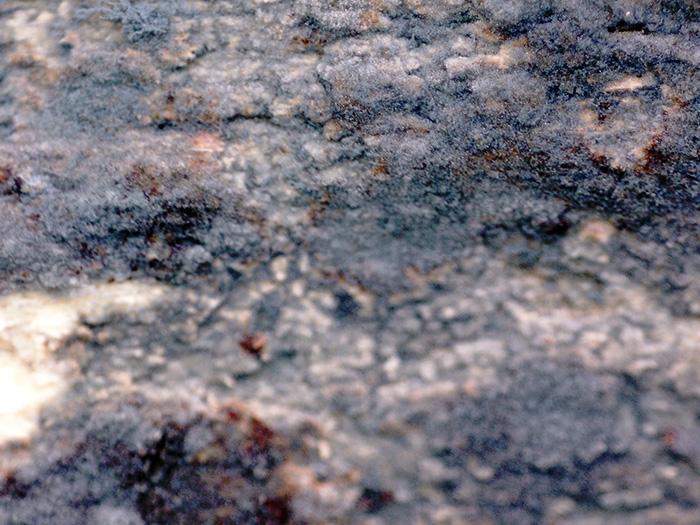
Hi.A unlikely blue-colored fungus sprouting on the surface of a bark-stripped log photographed on February 8th on the small island of Virgin Gorda (Caribbean Sea).
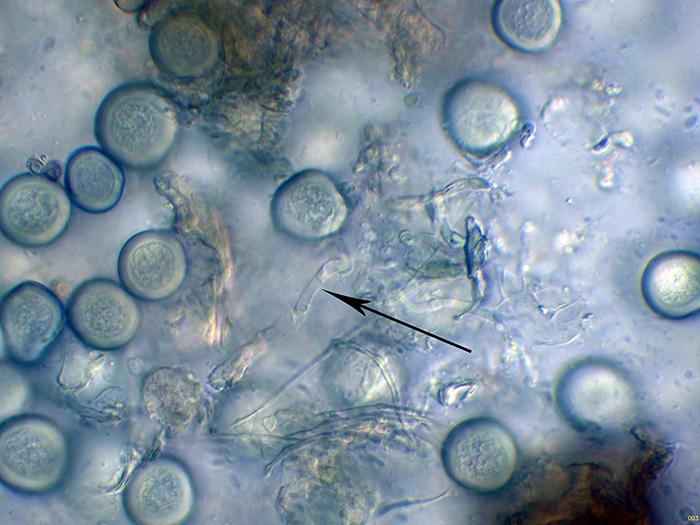
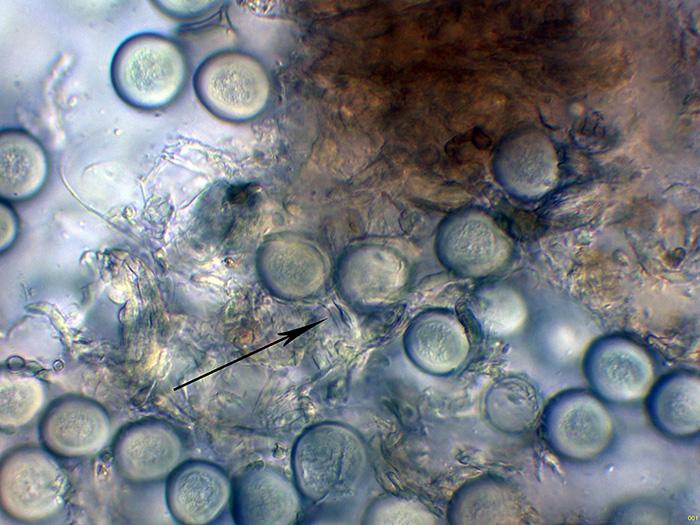
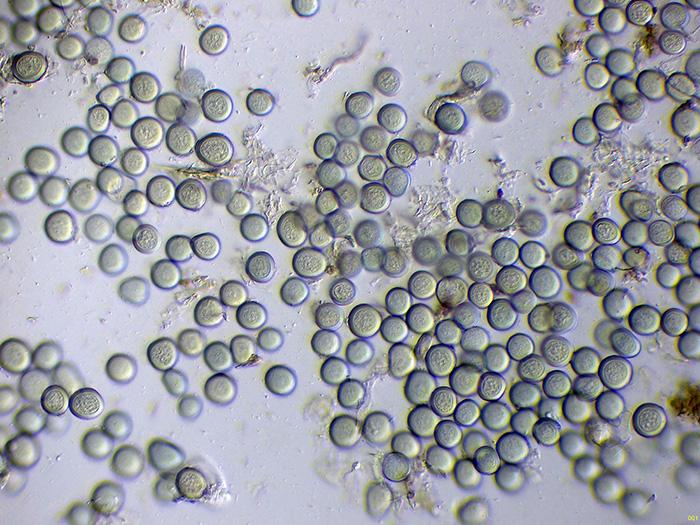
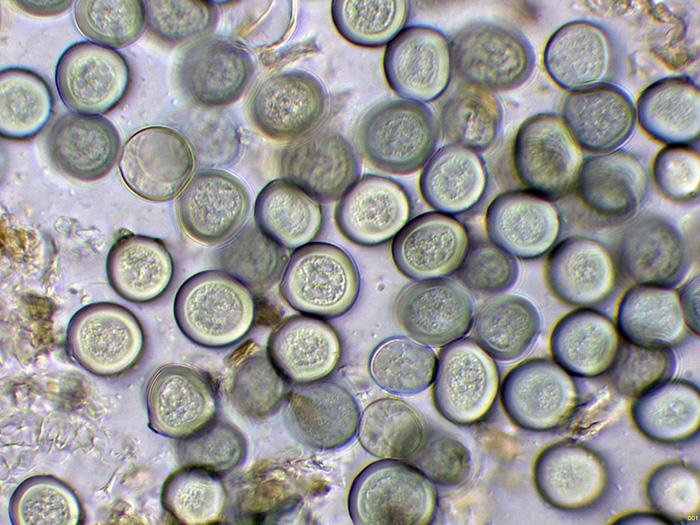
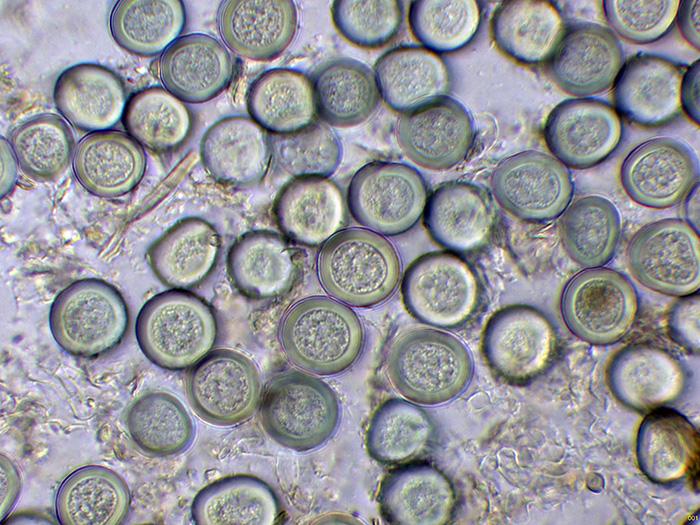
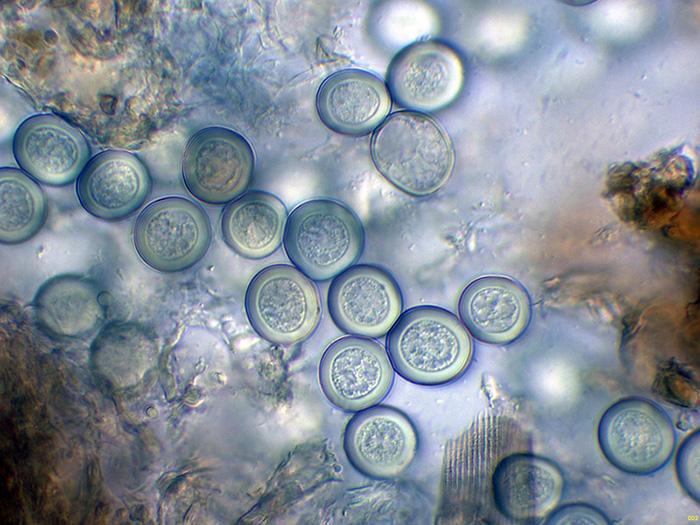
Thick-walled, spherical conidial structures measuring:
(13.4) 14.3 - 16.4 (17.7) × (13) 13.8 - 15.6 (17.1) µm
Q = 1 - 1.09 (1.1) ; N = 30
Me = 15.4 × 14.8 µm ; Qe = 1
Given its appearance, my first impression is that it could be an algae belonging to a genus close to Cyanidium or Galdiera, but it seems that I saw some hyphae in the samples that seemed to produce conidia, hence the doubt that it could perhaps be a fungus.
Any opinion from you will be appreciated.
Thank you very much in advance.
Kind regards.

Hans-Otto Baral,
24-02-2025 20:23

Re : Any ideas.
A member of Glomerales?
Josep Torres,
24-02-2025 21:59
Re : Any ideas.
Thanks Zotto, I'll have to look into that.
I've only come across a couple of Glomus from Glomerales, and in both cases the chlamydospores were much larger, although I admit that I don't understand anything about these genera.
Kind regards.
I've only come across a couple of Glomus from Glomerales, and in both cases the chlamydospores were much larger, although I admit that I don't understand anything about these genera.
Kind regards.
Lothar Krieglsteiner,
25-02-2025 06:35
Re : Any ideas.
I admit that the spores of Glomerales are quite similar - but as far as I know (completely) Glomerales are all arbuscular mycorhiza-symbionts in the earth, only some of them building structures similar to fruiting bodies. Structures growing superficially on wood - I don`t know if it is possible.
Thomas Læssøe,
25-02-2025 08:38
Re : Any ideas.
I have found what appears to the same fungus on a Quercus branch in southern Denmark - it remains unidentified and at present I have no images to show - very extensive greyblue colony and thick-walled, globose "chlamydo-spores"
Josep Torres,
25-02-2025 14:44
Re : Any ideas.
Many thanks to both of you.
For Thomas, it would be interesting to see the images of what you call an extensive bluish-grey colony with thick-walled globose chlamydospores, since the description fits perfectly with my proposal.
It remains to be identified, although I am increasingly convinced that it is indeed a fungus.
Best regards.
For Thomas, it would be interesting to see the images of what you call an extensive bluish-grey colony with thick-walled globose chlamydospores, since the description fits perfectly with my proposal.
It remains to be identified, although I am increasingly convinced that it is indeed a fungus.
Best regards.