
28-04-2026 20:33
Vitus SchäfftleinHello, I found Trochila ilicina on Ilex aquifoliu

30-04-2026 10:28
Rot BojanHello, by appearance I would say that I am dealing
27-04-2026 18:48
Tony MoverleyCollected 23rd April 2026, Norfolk, EnglandSwarms
14-04-2026 05:32
Ethan CrensonHi all, A few weeks back a friend pointed out som
27-04-2026 20:52
 Lothar Krieglsteiner
Found on hanging tiwg of Olea europaea in dried-ou
28-04-2026 22:51
 Bernard CLESSE
Bonsoir à toutes et tous,Pourriez-vous m'aider à
29-04-2026 08:01
Lothar Krieglsteiner
... on twig attached to small tree of Citrus auran
29-04-2026 10:44
Lothar Krieglsteiner
growing at moist, drying-out soil at the side of a

Anamorphe sur Stereum
Thierry Blondelle,
23-03-2025 12:01
 Bonjour à tous,
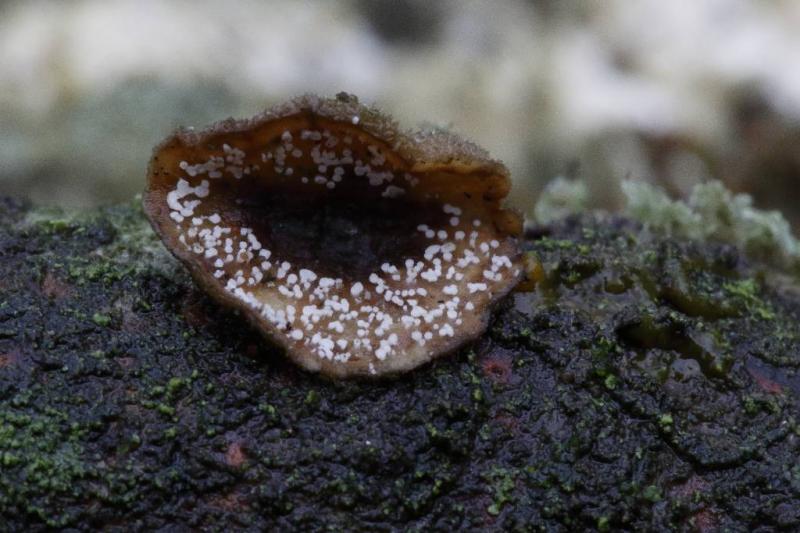
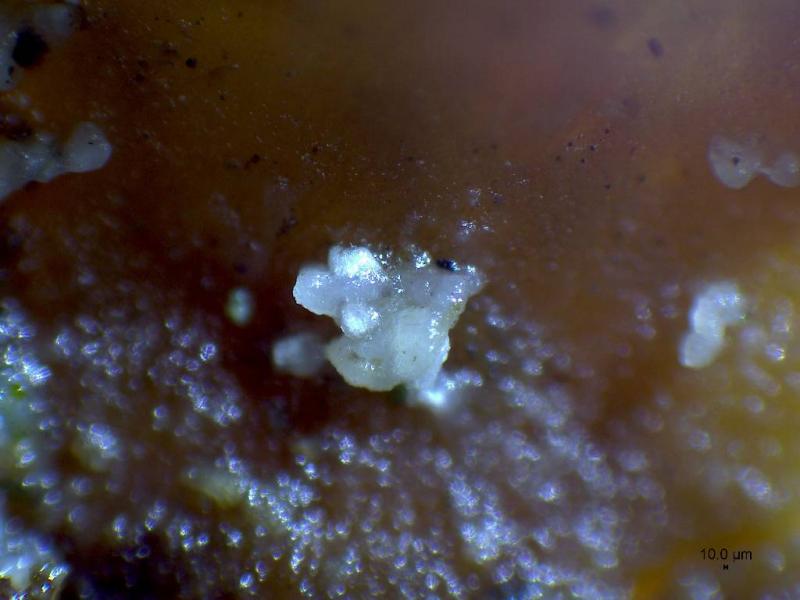
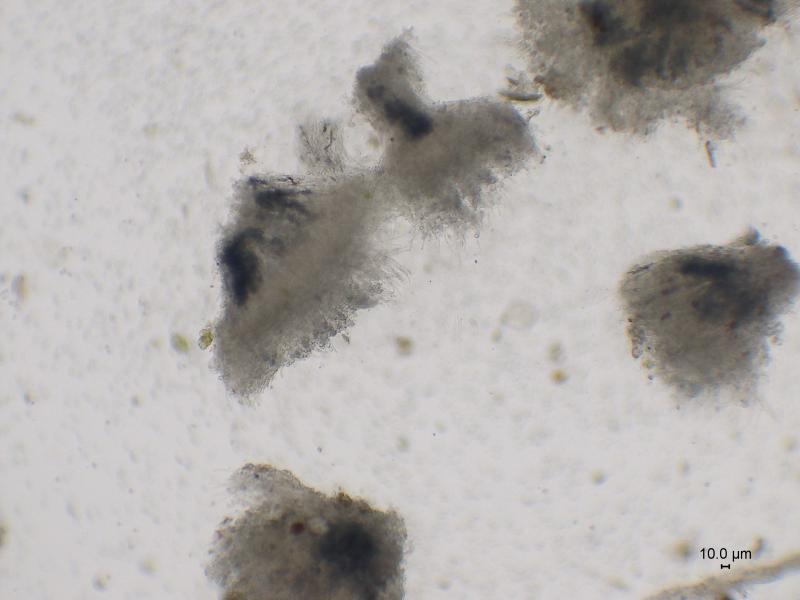
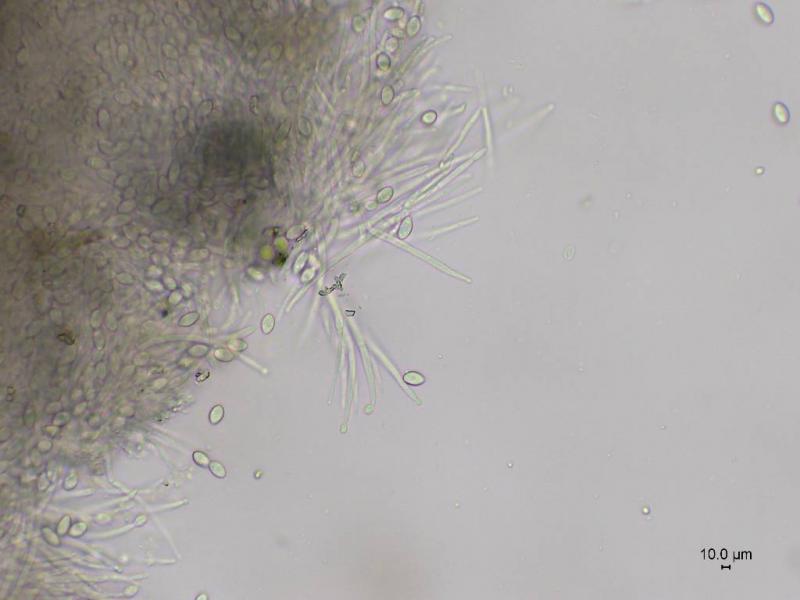
Ce sont de petits coussinets blancs ressemblants à des sporodochies qui colonisent ce basidiome de Stéreum. La sporulation à l'extrémité d'hyphes simples me fait penser à une forme anamorphe du genre Chrysosporium que l'on retrouve sur d'autres champignons.
conidies: 6.2-6.6 x 3.9-4.1 µm
Si l'un d'entre vous a déjà rencontré une forme ressemblante, je suis intéressé par vos observations.
Merci d'avance
Thierry

Josep Torres,
24-03-2025 14:32

Re : Anamorphe sur Stereum
Hi Thierry.
We've seen this around here before.
http://www.ascofrance.com/search_forum/68601
I've seen something very similar as a possible Stilbella sebacea. It all fits, though according to Angel Pintos, it could be Clonostachys.
Best regards.
We've seen this around here before.
http://www.ascofrance.com/search_forum/68601
I've seen something very similar as a possible Stilbella sebacea. It all fits, though according to Angel Pintos, it could be Clonostachys.
Best regards.
Thierry Blondelle,
24-03-2025 19:28
Re : Anamorphe sur Stereum
Hello Josep
Microscopy looks seemly like mine. Just a difference in the fruitbody shape. Rather a sporodochia than a synnemata to my mind. A positive point of Stilbella is its growth on Stereum but few pictures on the web. The only alternative way I found is Helicogloea compressa where hyphae closed in an external gelatinous matrix.
Greetings
Microscopy looks seemly like mine. Just a difference in the fruitbody shape. Rather a sporodochia than a synnemata to my mind. A positive point of Stilbella is its growth on Stereum but few pictures on the web. The only alternative way I found is Helicogloea compressa where hyphae closed in an external gelatinous matrix.
Greetings
Josep Torres,
25-03-2025 08:03
Re : Anamorphe sur Stereum
Hi Thierry.
I'm not saying that your case is Stilbella sebacea, I'm just saying that I have something very similar to what you're presenting as Stilbella sebacea. You're right in appearance, but it may be due to excess moisture. I also don't see in the few conidia you show the thick walls that Stibella sebacea conidia should have, up to 0.5 microns thick. Everything fits in my study: the width of the hyphae, conidiogenesis, the measurements of the phialides, and also, of course, the morphology and measurements of the conidia.
I think you should measure all these parameters carefully before choosing one species or another.
I'm not aware that the Helicogloea compressa you're suggesting can appear on Stereum basidiomata, and it would be more likely a lignicolous species.
Good luck with your fungus.
Best regards.
I'm not saying that your case is Stilbella sebacea, I'm just saying that I have something very similar to what you're presenting as Stilbella sebacea. You're right in appearance, but it may be due to excess moisture. I also don't see in the few conidia you show the thick walls that Stibella sebacea conidia should have, up to 0.5 microns thick. Everything fits in my study: the width of the hyphae, conidiogenesis, the measurements of the phialides, and also, of course, the morphology and measurements of the conidia.
I think you should measure all these parameters carefully before choosing one species or another.
I'm not aware that the Helicogloea compressa you're suggesting can appear on Stereum basidiomata, and it would be more likely a lignicolous species.
Good luck with your fungus.
Best regards.