
28-04-2026 20:07
 Lothar Krieglsteiner
... on twig in the air at standing Ceratonia siliq
11-05-2026 12:32
 Bernard CLESSE
Pourriez-vous m'aider à identifier cette héloti
29-04-2026 10:44
Lothar Krieglsteiner
growing at moist, drying-out soil at the side of a
05-04-2026 22:46
Lothar Krieglsteiner
on wood of Ceratonia, Algarve, 3.4.2026.The color
10-05-2026 16:18
brigitte vignotbonjour trouvée en Ariège sur bois une petite
10-05-2026 23:17
 Andreas Gminder
Hello,today we found in a moist steep decidous for
27-04-2026 17:16
Lothar Krieglsteiner
.. Algarve, moist lying.The conidiomata look like
10-05-2026 09:02
Buckwheat PeteHello everybody, ould this be Lachnum subvirgineu
Small resin asco?
Mirek Gryc,
20-12-2025 10:49
Hi.
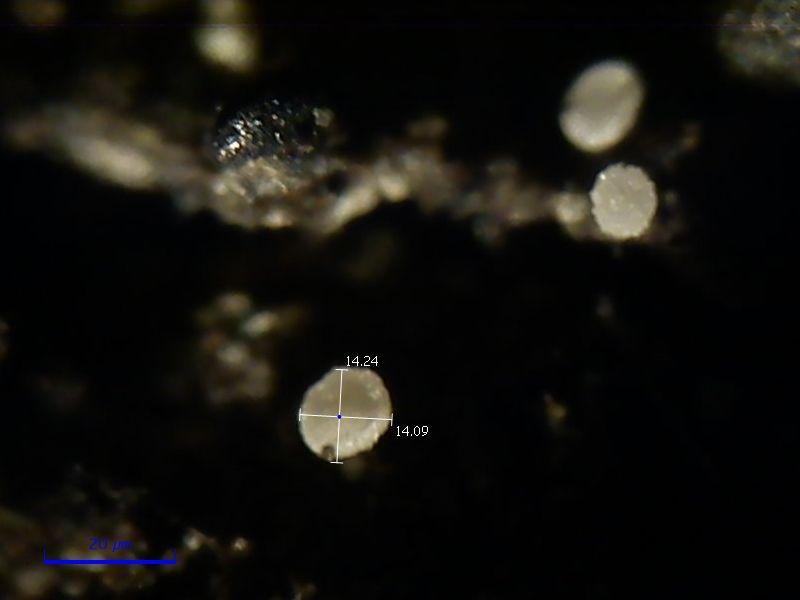
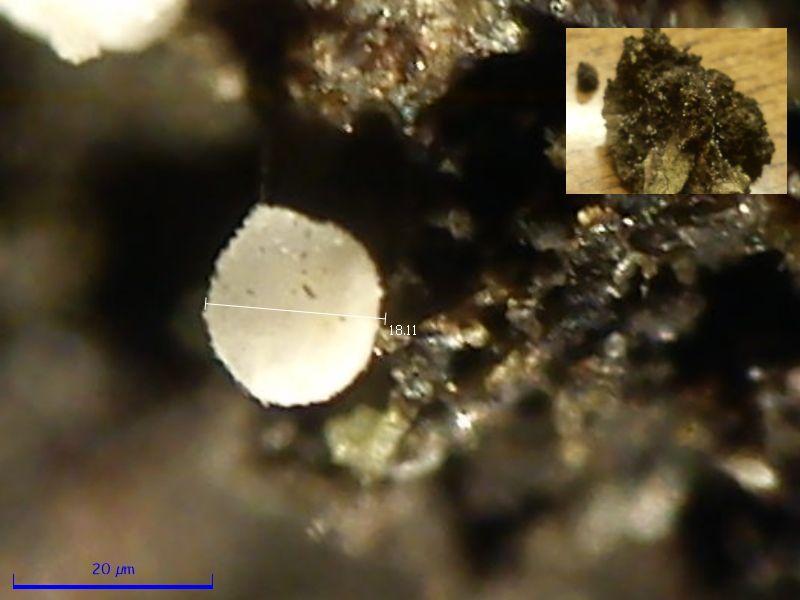
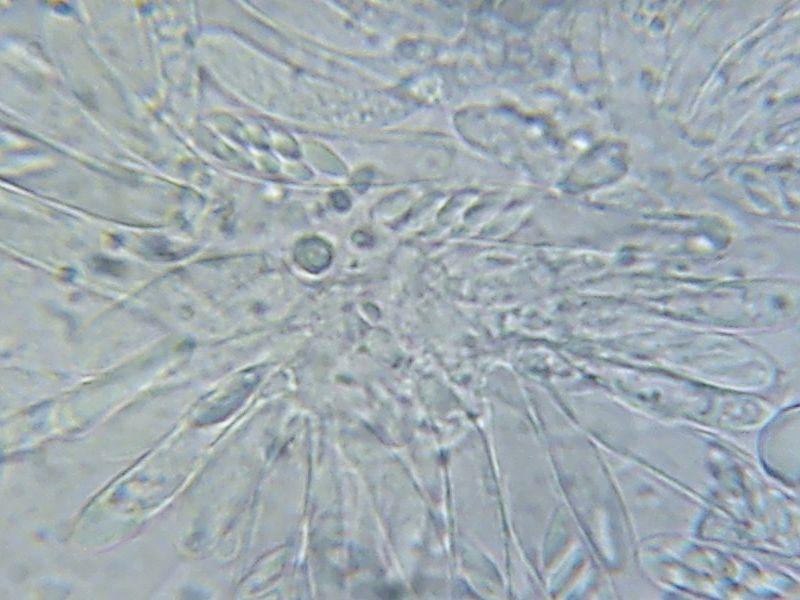
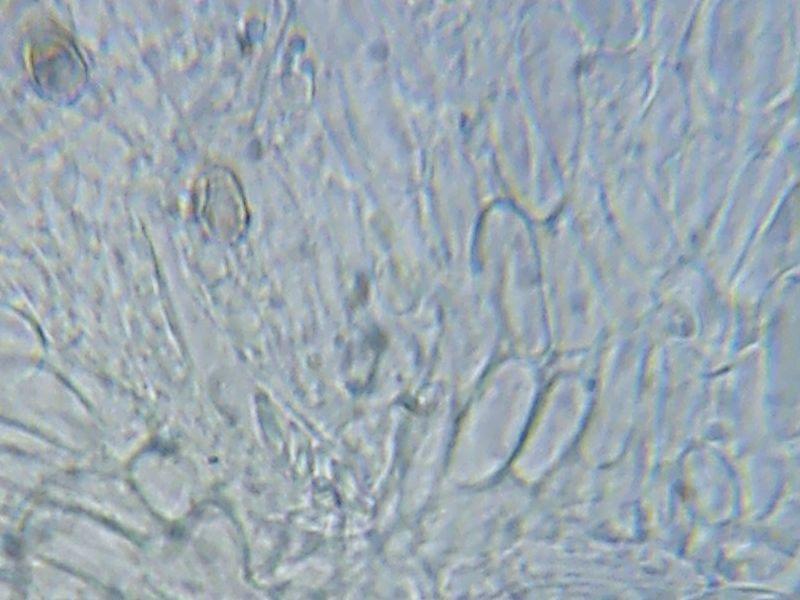
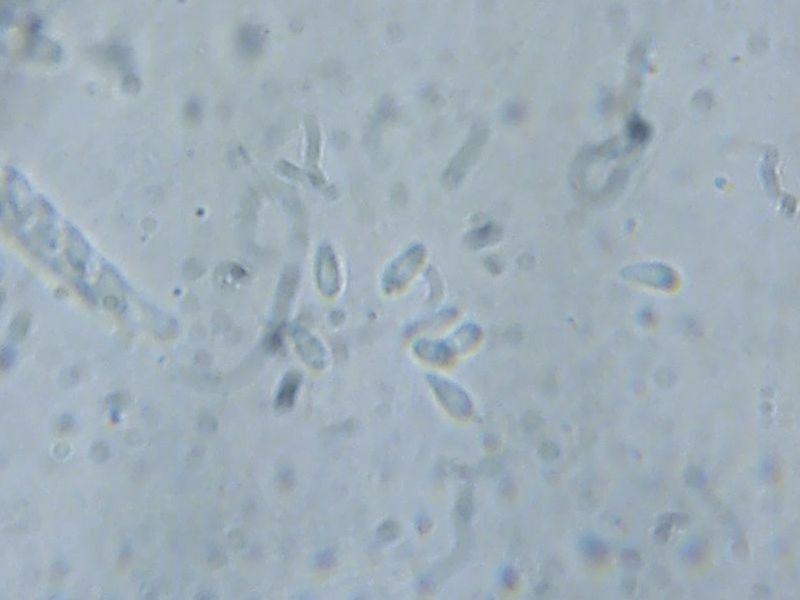
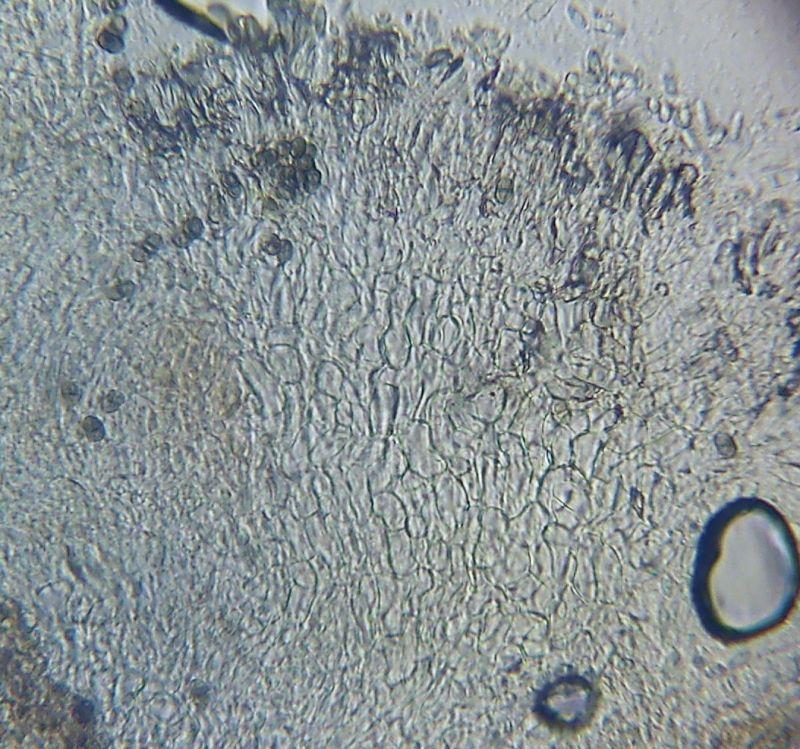
„I doubt it is possible to identify this tiny fungus with such limited data, but I have decided to post a few photos anyway. Unfortunately, I am unable to determine whether croziers are present or not. I observed a very faint apical reaction to iodine. No hairs were found. Marginal cells are essentially absent; if any exist, they are so hyaline that they are impossible to observe with my equipment.
Ascomata diameter: 0.1–0.2 mm. Substrate: old spruce resin.
I hope someone here has encountered something similar before."
Ascomata diameter: 0.1–0.2 mm. Substrate: old spruce resin.
I hope someone here has encountered something similar before."
Spores 3.8 - 4.5 × 1.9 - 2.05 (2.1) µm
Regards
Mirek
Mirek

Mirek Gryc,
20-12-2025 11:02
Re : Small resin asco?
Lugol

Hans-Otto Baral,
20-12-2025 17:53

Re : Small resin asco?
Hard to tell. A Ciliolarina perhaps? Does it have rough small hairs?
Mirek Gryc,
20-12-2025 18:26
Re : Small resin asco?
Dear Zotto,
The elements of this ascoma are so strongly hyaline that observation is extremely difficult. As you can see, the size is also a challenge. I tried staining, but I currently don't have any Congo Red. I couldn't see anything resembling hairs. There are several dozen fruitbodies on this resin; I have preserved them and will try again once I obtain some staining reagent. One thing I am certain of: this species is strictly resinicolous. I haven't seen a single fruitbody outside of the resin.
I have already searched your drive for the genus you suggested, but I couldn't find anything similar. The fruitbodies are mature, so these dimensions are definitely representative of the species. The spores immediately reminded me of Hyphodiscus hymeniophilus, but then again, nothing else fits that species. As soon as I saw them, I knew they would be problematic because I've never seen anything like them before.
Could it be some resinicolous Cistella?
Best regards,
Mirek
The elements of this ascoma are so strongly hyaline that observation is extremely difficult. As you can see, the size is also a challenge. I tried staining, but I currently don't have any Congo Red. I couldn't see anything resembling hairs. There are several dozen fruitbodies on this resin; I have preserved them and will try again once I obtain some staining reagent. One thing I am certain of: this species is strictly resinicolous. I haven't seen a single fruitbody outside of the resin.
I have already searched your drive for the genus you suggested, but I couldn't find anything similar. The fruitbodies are mature, so these dimensions are definitely representative of the species. The spores immediately reminded me of Hyphodiscus hymeniophilus, but then again, nothing else fits that species. As soon as I saw them, I knew they would be problematic because I've never seen anything like them before.
Could it be some resinicolous Cistella?
Best regards,
Mirek
Mirek Gryc,
23-12-2025 12:35
Re : Small resin asco?
„Hi Zotto,
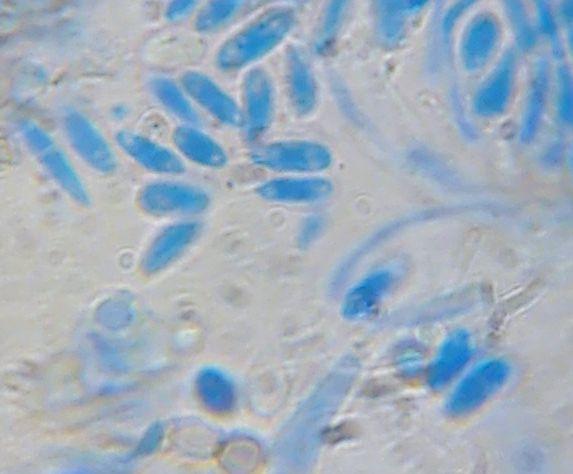
I've looked through your drive again and found a very similar Ciliolarina collection: "Abies resin, synnemata". The morphology is very similar, but the spores appear slightly larger – at least according to my measurements based on the scale bar in the photos.
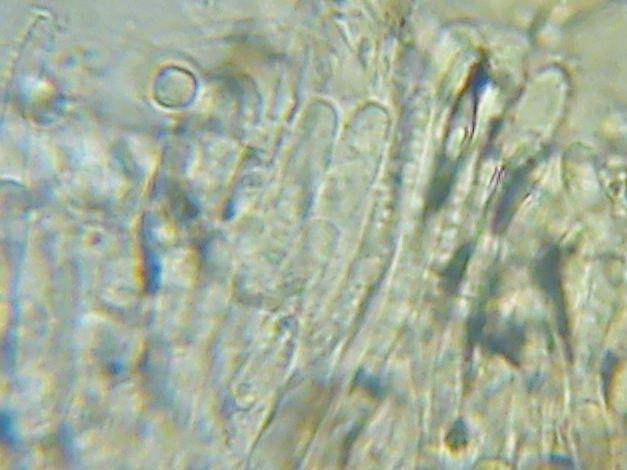
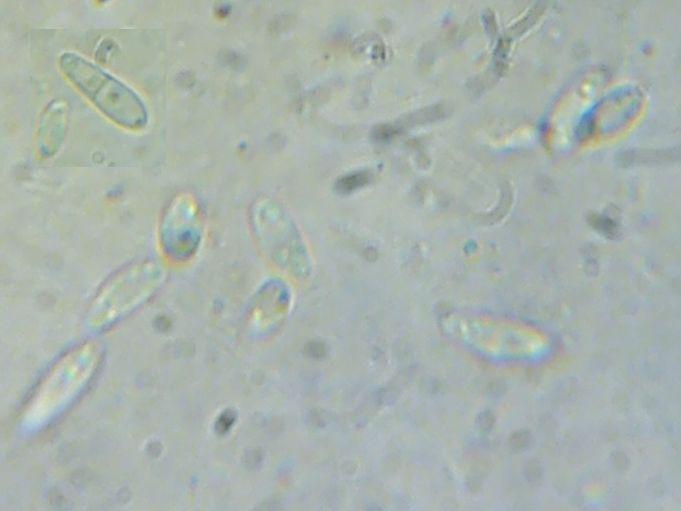
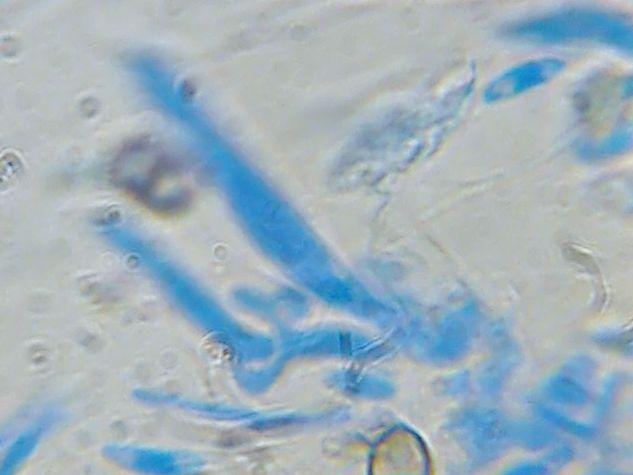
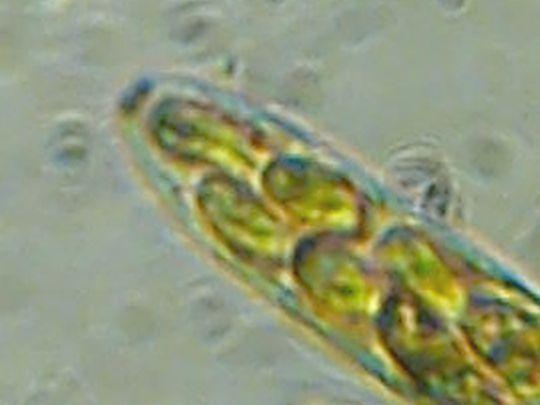
It seems to me that such fungi are not that rare on old resin. I've found similar specimens again, also on spruce resin, but at a site about 20 km away from the previous one. Initially, I thought it was the same species but more mature, however, the spore measurements contradict this. The current dimensions are approximately 8 × 3 µm. I observed a single septum in fully mature spores.
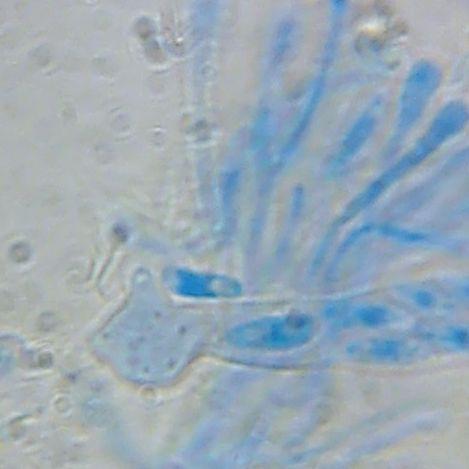
The hairs are slightly roughened, although this isn't clearly visible in the photos. The iodine reaction is positive, but not 'bb' (I didn't test it after KOH pretreatment). I find it difficult to judge whether these are typical croziers.
Best regards,
Mirek"
I've looked through your drive again and found a very similar Ciliolarina collection: "Abies resin, synnemata". The morphology is very similar, but the spores appear slightly larger – at least according to my measurements based on the scale bar in the photos.
It seems to me that such fungi are not that rare on old resin. I've found similar specimens again, also on spruce resin, but at a site about 20 km away from the previous one. Initially, I thought it was the same species but more mature, however, the spore measurements contradict this. The current dimensions are approximately 8 × 3 µm. I observed a single septum in fully mature spores.
The hairs are slightly roughened, although this isn't clearly visible in the photos. The iodine reaction is positive, but not 'bb' (I didn't test it after KOH pretreatment). I find it difficult to judge whether these are typical croziers.
Best regards,
Mirek"
Hans-Otto Baral,
23-12-2025 15:19
Re : Small resin asco?
I am now convinced that it is a Hyphodiscus, a very difficult genus. The warted hairs are clearly visible on your photo, and also the croziers are clear. You saw in my folder that there are several subfolders without an official name.
Mirek Gryc,
23-12-2025 18:02
Re : Small resin asco?
Hi Zotto,
I usually avoid this type of collection, as research in this area rarely ends in success. However, sometimes you have to accept a partial failure and be happy with a "half-success," as is the case here. At least now we know which genus we are dealing with. I am, of course, referring to the second collection; as I mentioned, I couldn't manage the first one at all, even though their structure seems similar.
Best regards, and I wish you a peaceful holiday season and a Happy New Year!
Mirek
I usually avoid this type of collection, as research in this area rarely ends in success. However, sometimes you have to accept a partial failure and be happy with a "half-success," as is the case here. At least now we know which genus we are dealing with. I am, of course, referring to the second collection; as I mentioned, I couldn't manage the first one at all, even though their structure seems similar.
Best regards, and I wish you a peaceful holiday season and a Happy New Year!
Mirek
Hans-Otto Baral,
23-12-2025 18:11
Re : Small resin asco?
Ah. I have overlooked that you posted two collections.