

30-05-2026 21:12
Philippe PELLICIERSur branche de mélèze (Larix) près de la neige,
31-05-2026 10:35
Hulda Caroline HolteHello,I collected this species growing on a rather
25-05-2026 16:35
 Bernard CLESSE
Bonjour à toutes et tous,J'ai trouvé récemment,
29-05-2026 15:35
daniel FERREBonjour à tous,Je voudrais votre aide pour cette
28-05-2026 16:15
James MitchellHello,Does anyone have the original publication of
28-05-2026 11:06
Thomas Læssøehttps://svampe.databasen.org/observations/10596750
23-05-2026 11:44
 Charles Grapinet
Hello, I am having trouble identifying this copro
25-05-2026 16:44
François BartholomeeusenHi forum members,During an excursion organised by
26-05-2026 21:25
Dirk GerstnerHello everyone, I'm completely stumped by this li
These ascomycetes were growing on standing dead wood of Salix caprea, on the edge a forest road. Collected on the 21.12.2025 in Oslo, Norway.
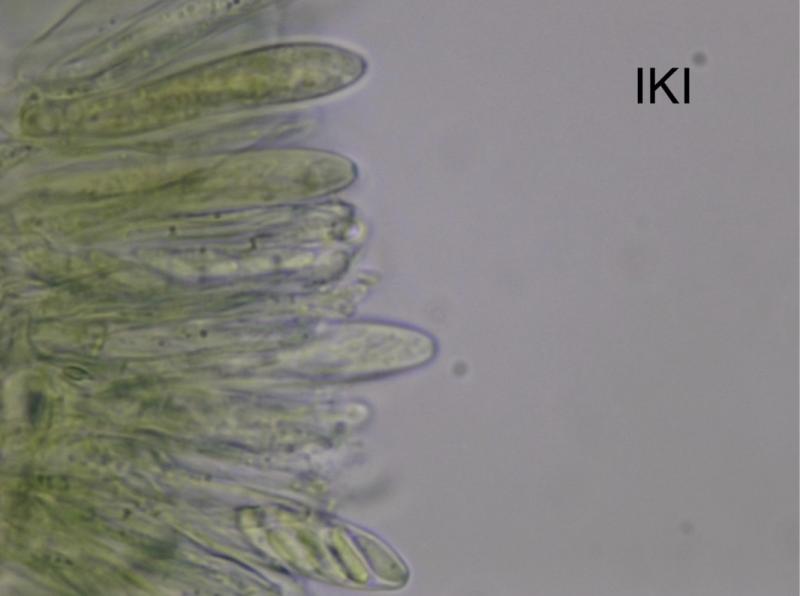
The ascospores are clavate to ellipsoid and have a few lipid drops. OCI 2-3
7,2-10,6 (11,5) x (2,2) 2,4-2,9 µm
Me= 8,8 x 2,8 µm
Asci IKI+ bb. I am a bit uncertain, but I believe that it has croziers (see attached photos).
36,8-49,6 x 7,2-8 µm
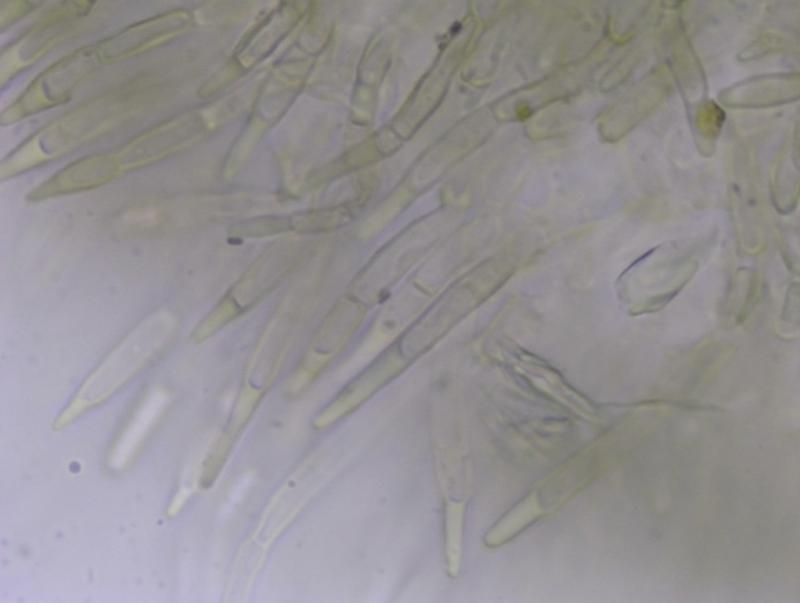
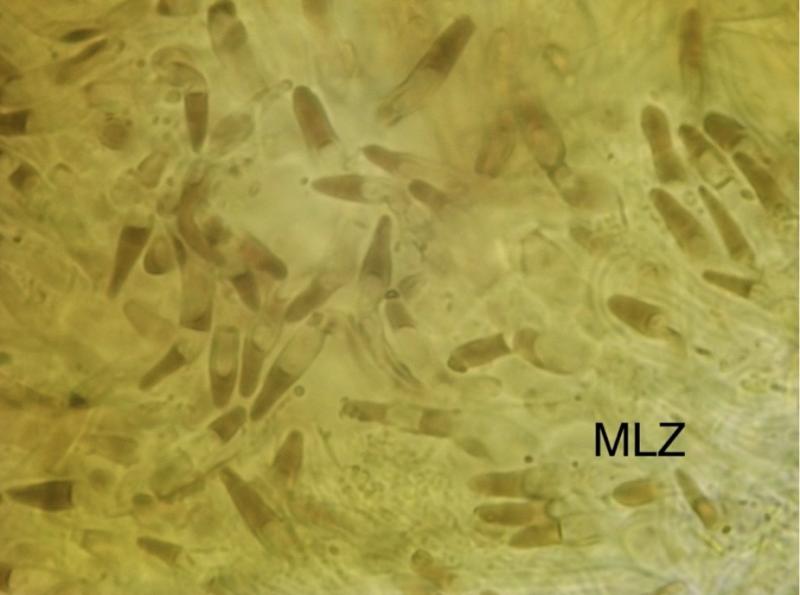
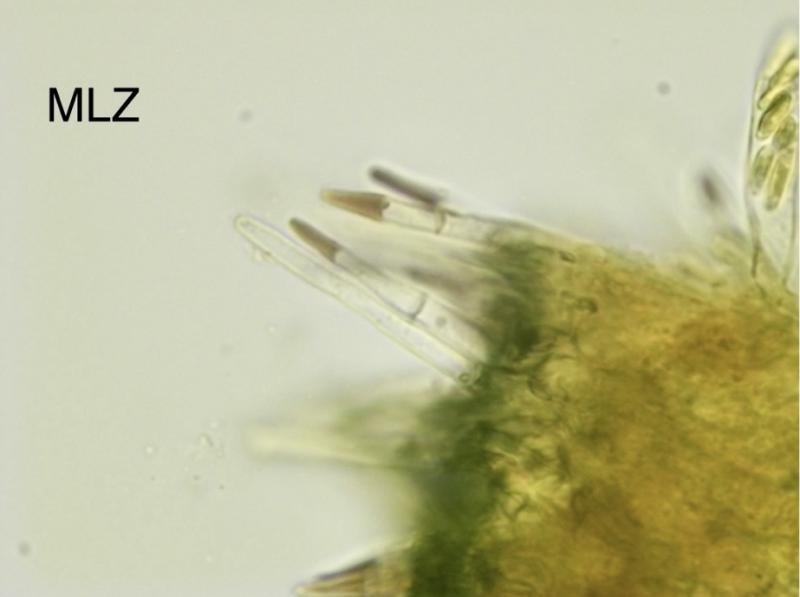
The hairs have highly refractive (glassy) tips, that react dextrinoid in melzer's reagent, thick walls and septa.
28,8-64 x 2,4-3,2 µm
The spore measurements were taken from newly discharged spores in a water mount. All other measurements were taken from living cells.
I have two questions regarding this species:
1. Could this be Olla/Protounguicularia transiens?
2. Is there any other species with glossy, dextrinoid hairs that one should be aware of when determining this species?
Thank you in advance and best regards,
Hulda
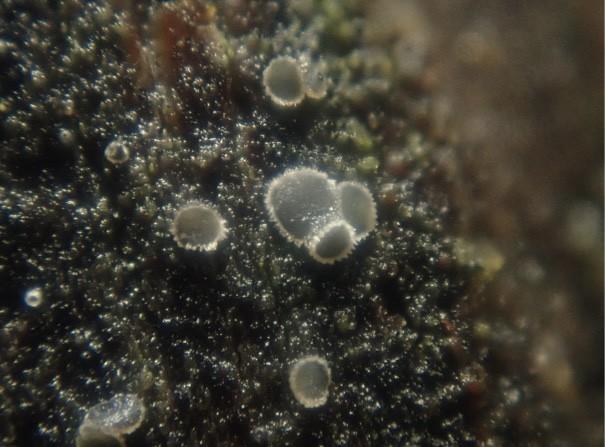
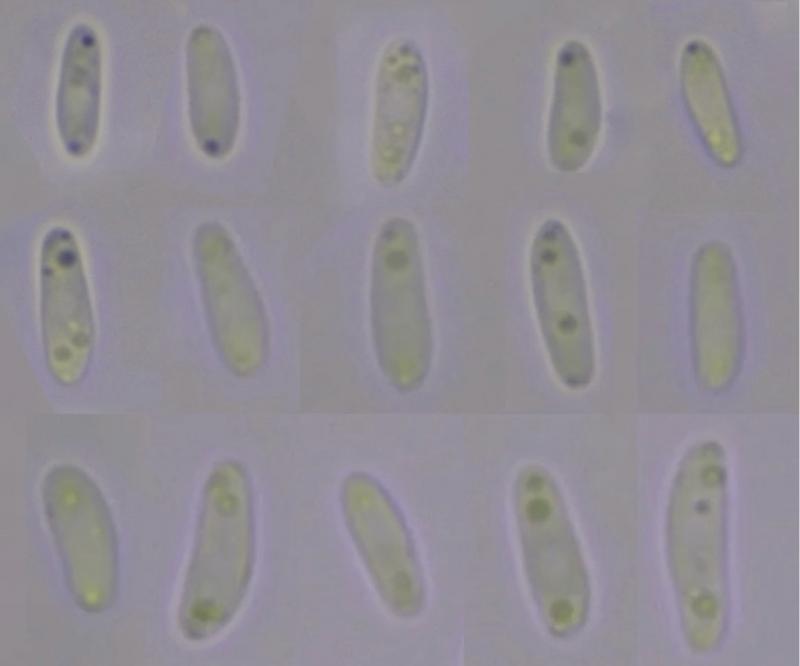
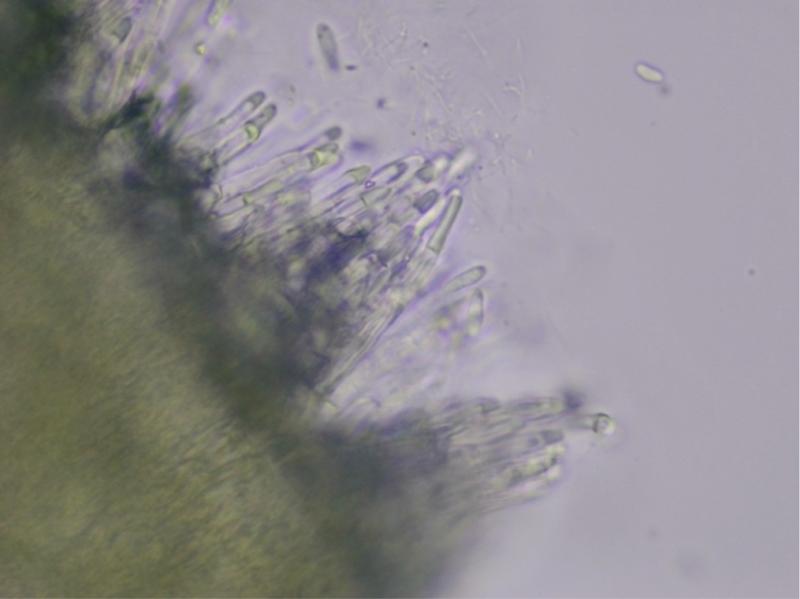
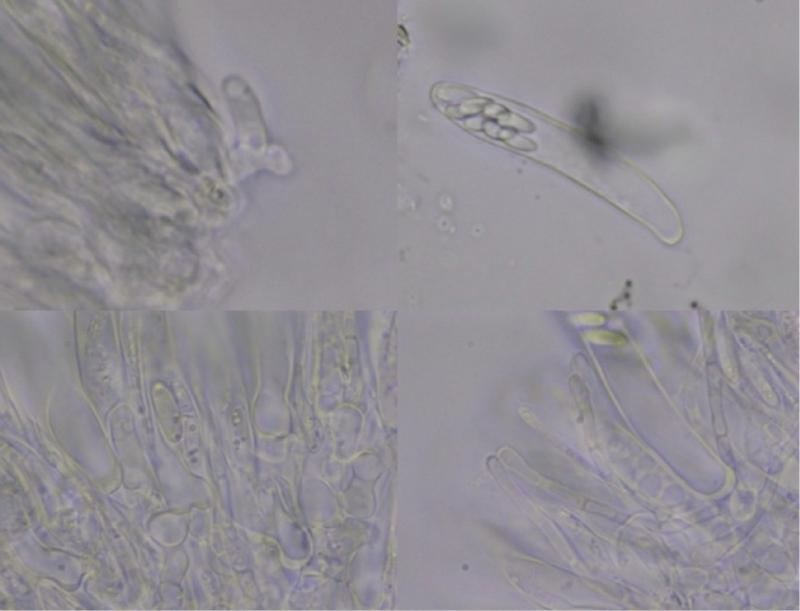

1. O. transiens sure!
2. Good question. Yes and no. O. transiens is somewhat variable (ascus base, the size of the glassy apex) and no thorough study exists including ecology, genetics etc. There's Olla verna, but not sure what that is and how it is distinguished from transiens in the end. Then there is material that has the general appearance of Hyaloscypha/Olla/etc. These have usually multiseptate hairs and sometimes also dextrinoid hairs - but no glassiness. That's usually also material without a (good) species hypothesis. Some Hyalopeziza species have dextrinoid glassiness ( and are most likely +- related to Olla and the genera around), but they are not usually "glossy" in the sense of Olla transiens the way I understood the question.
bw,
Timo
Kind regards,
Hulda