
12-06-2026 14:50
 François Freléchoux
Bonjour, Voici la brève description d'une Mollis
10-06-2026 21:16
François Freléchoux
Bonsoir,Le dernier du jour, en attendant votre avi
11-06-2026 19:01
 William Slosse
Hello all,In an attempt to make a culture of a sus
11-06-2026 19:03
 Nicolas VAN VOOREN
Chers membres d'Ascofrance,Le site sera placé en

09-06-2026 18:32
Camille MertensSur morceau de roseau immergé 0,5 - 0,7 mm de dia
10-06-2026 12:54
Steve ClementsBonjour encore, Pouvez-vous m'aider, s'il vous pl
10-06-2026 21:07
François Freléchoux
Toutes les tiges de gentianes jaunes de l'an passÃ
10-06-2026 13:41
François Freléchoux
Bonjour à nouveau, Voici une trouvaille d'hier.
Anamorph on Tilia
Gernot Friebes,
24-02-2026 11:01
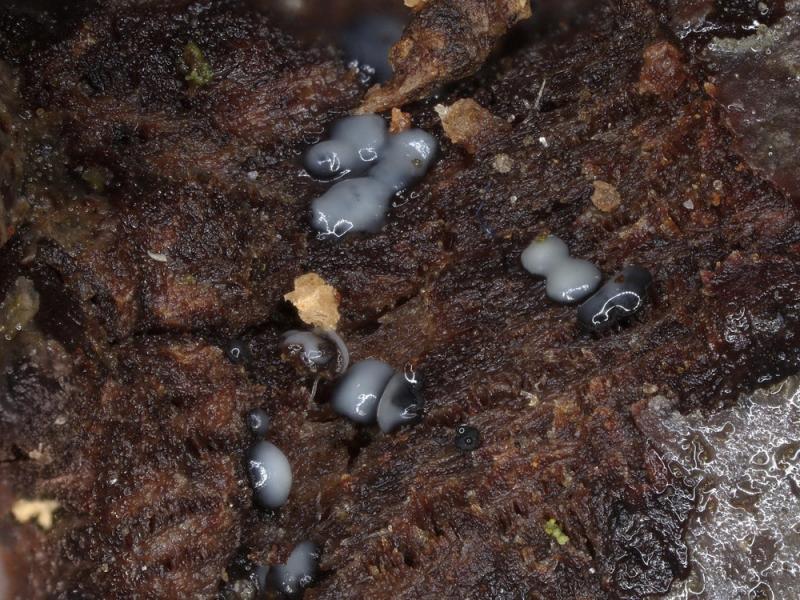
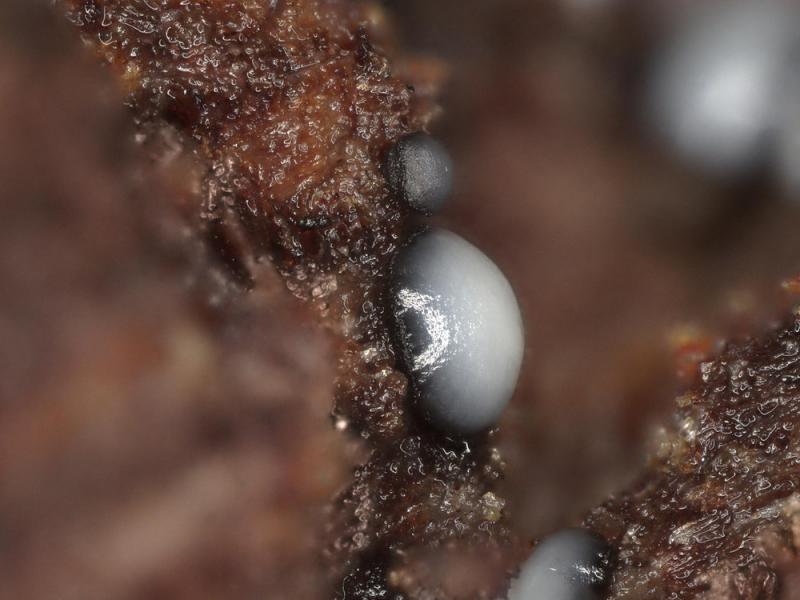
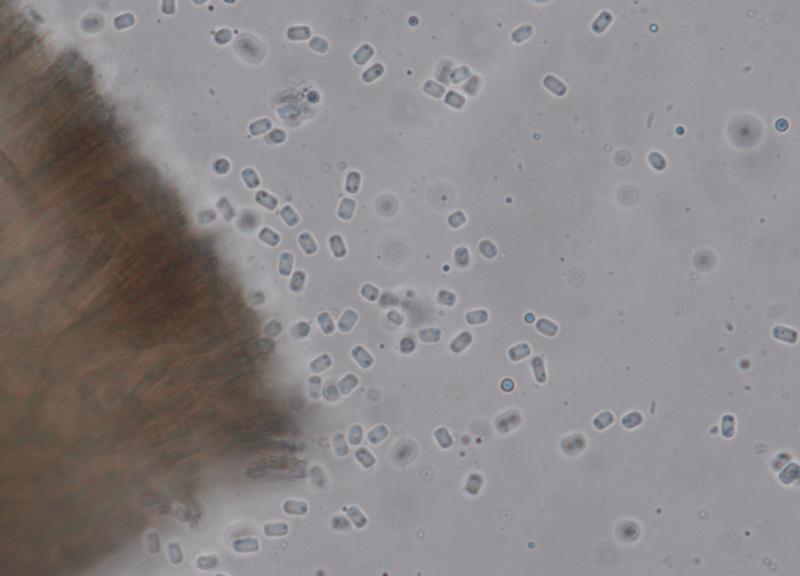
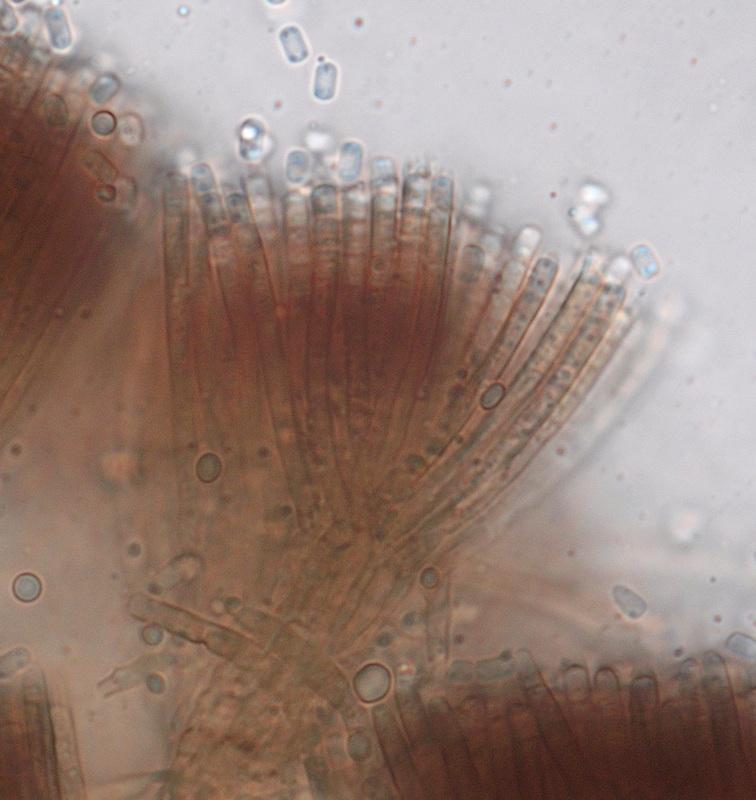
found on a branch of Tilia, with conidia measuring approx. 2.8-3.7 x 1.9-2.0. Thank you for any ideas.
Best wishes,
Gernot
Paul Cannon,
24-02-2026 11:18
Re : Anamorph on Tilia
I think this is Bloxamia truncata (probably not rare but certainly under-recorded). They seem to be anamosphs of Calycina-like fungi.
Best wishes
Paul
Hans-Otto Baral,
24-02-2026 11:18

Re : Anamorph on Tilia
This is a Bloxamia and the anamorph of Calycina discedens / C. claroflava.
Paul Cannon,
24-02-2026 11:25
Re : Anamorph on Tilia
Wu & Diao 2023 combined Calycina discedens into Bloxamia, describing the anamorph with smaller conidia than those of C. truncata, but all of their collections came from China so may not be conspecific with the type.
Gernot Friebes,
24-02-2026 13:18
Re : Anamorph on Tilia
Thank you, Paul and Zotto!
Do you know if C. discedens and C. claroflava are synonyms? Wu & Diao (2023) say that they are not, citing papers by Karunarathna et al. (2021) and Hosoya & Zhao (2016). It would not be surprising if they were different since C. discedens was described from Brazil and C. claroflava from Great Britain. Can we therefore assume that my anamorph is C. claroflava?
Best wishes,
Gernot
Do you know if C. discedens and C. claroflava are synonyms? Wu & Diao (2023) say that they are not, citing papers by Karunarathna et al. (2021) and Hosoya & Zhao (2016). It would not be surprising if they were different since C. discedens was described from Brazil and C. claroflava from Great Britain. Can we therefore assume that my anamorph is C. claroflava?
Best wishes,
Gernot
Hans-Otto Baral,
24-02-2026 15:47
Re : Anamorph on Tilia
Available sequences fall in two groups at least, with about 5% ITS distance, speaking for at least two species.
C. discedens is +/ indistinguishable from claroflava, having inamyloid asci and 1-septate spores. European claroflava (= Helotium citrinicolor Crouan, the type of which I have examined) has asci without croziers, but I have seen that also in the Brazilian type of Ombrophila microsperma Hennings, which Dumont identified as B. discedens. I am not sure if a difference exists in ascus and spore size.
Gernot Friebes,
24-02-2026 15:58
Re : Anamorph on Tilia
Thanks again, Zotto.
Best wishes,
Gernot
Best wishes,
Gernot