
11-06-2026 19:03
 Nicolas VAN VOOREN
Chers membres d'Ascofrance,Le site sera placé en
11-06-2026 19:01
 William Slosse
Hello all,In an attempt to make a culture of a sus

09-06-2026 18:32
Camille MertensSur morceau de roseau immergé 0,5 - 0,7 mm de dia
10-06-2026 12:54
Steve ClementsBonjour encore, Pouvez-vous m'aider, s'il vous pl
10-06-2026 21:16
 François Freléchoux
Bonsoir,Le dernier du jour, en attendant votre avi
10-06-2026 21:07
François Freléchoux
Toutes les tiges de gentianes jaunes de l'an passÃ
10-06-2026 13:41
François Freléchoux
Bonjour à nouveau, Voici une trouvaille d'hier.
10-06-2026 11:53
Steve ClementsBonjour, This disco is abundant on dead stems of
I hope for some hints...
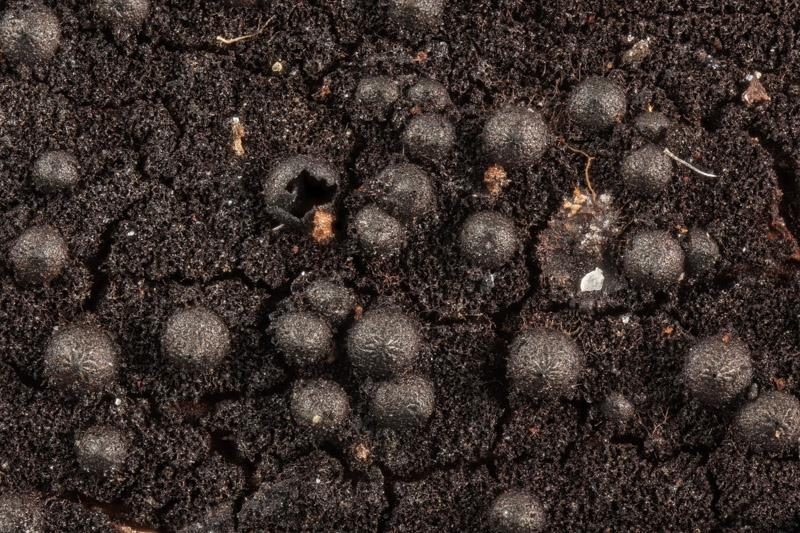
Macro: Perithecia globose, black, glabrous, slightly tapered toward the ostiole, slightly furrowed around the ostiole, 0.4-0.6 mm in diameter. Perithecia always seated in a black mat (see below).
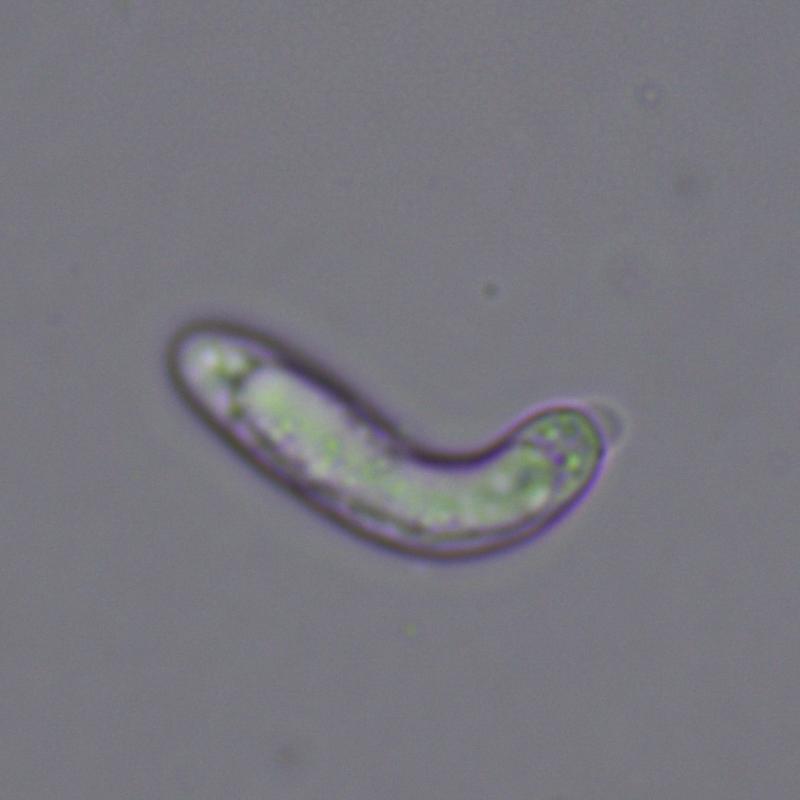
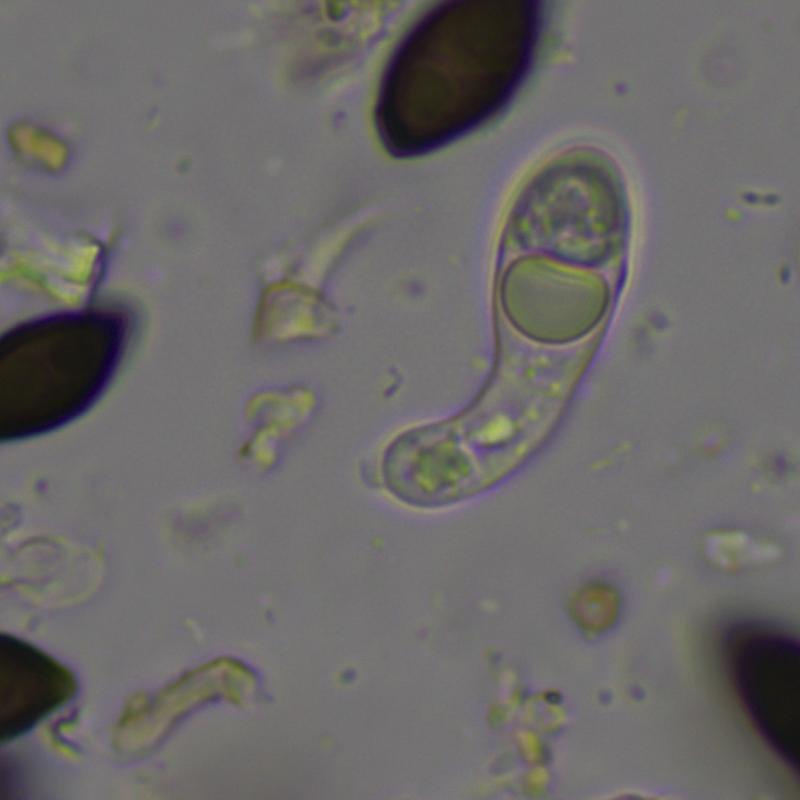
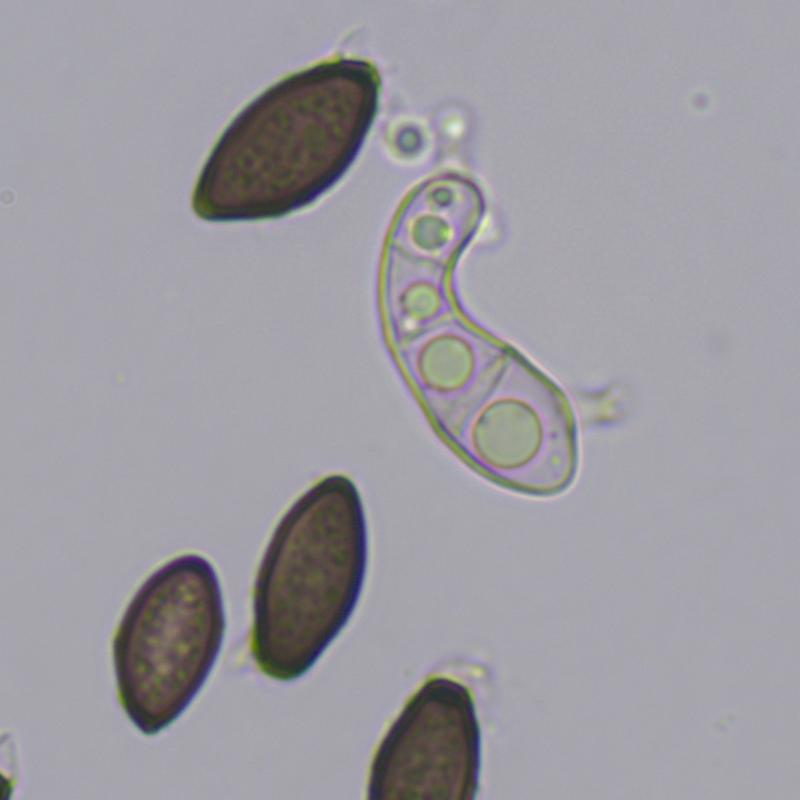
Micro: Spores abruptly and strongly bent in the lower part, with a minute, rounded, hyaline appendage at the lower end, ca 1 µm long. Spores observed in Perithecia were always aseptate and hyaline, but (mostly overmature) Spores from Perithecial surroundings had 3 septa and were very slightly brownish. Spore size mostly 18-22 x (5)-6-8 µm (at the broadest part). Asci have a minute, inamyloid, refractive ring.
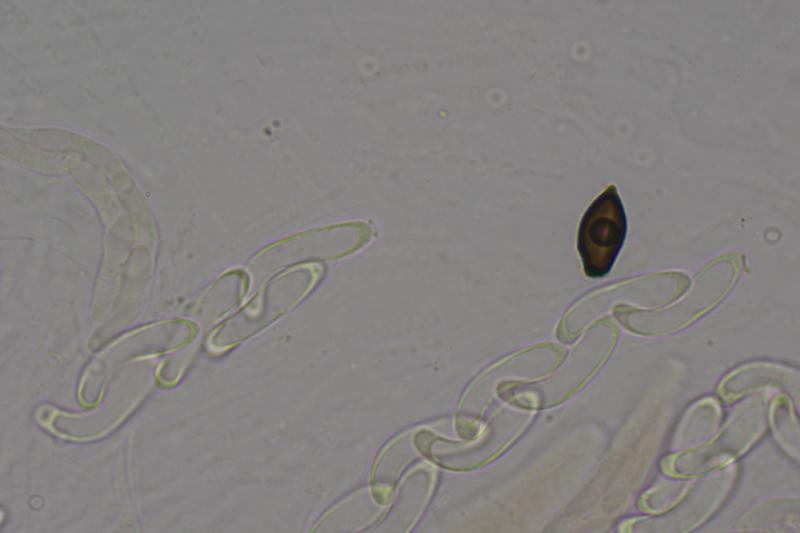
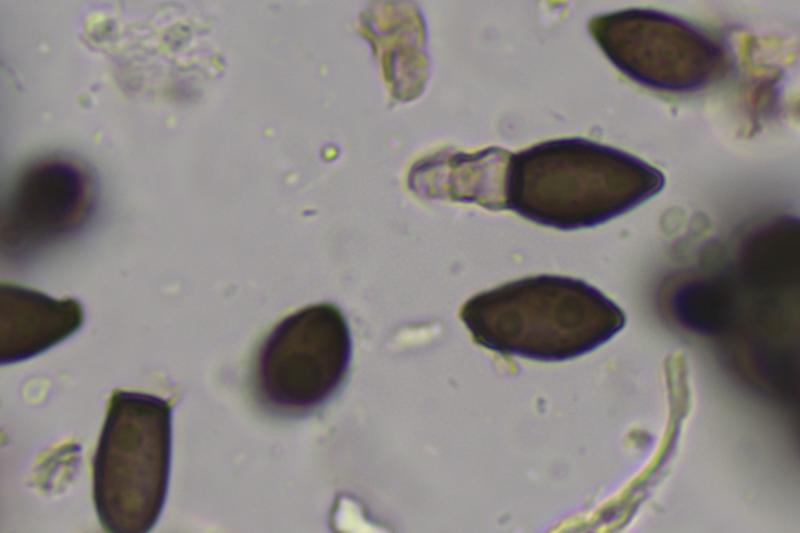
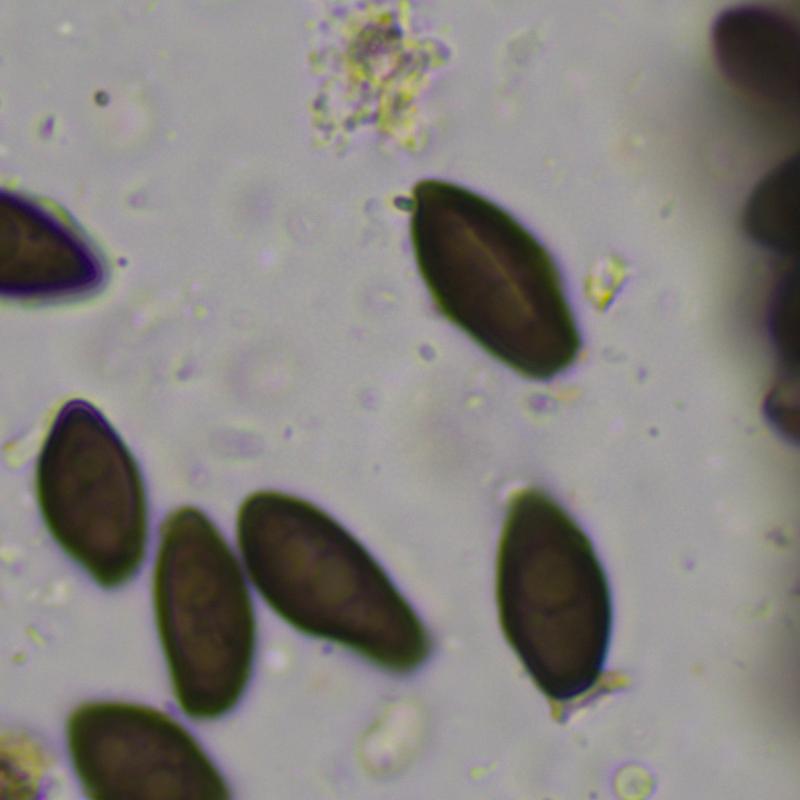
Black mat: This is a conidial stage with dark brown, fusiform conidia with a long, straight germ slight (as in Xylariaceae). I wonder if this actually belongs together with the Perithecial fungus?
Many thanks and best wishes,
Stefan

Andy