03-06-2026 19:45
 Miguel Ángel Ribes
Good afternoonI'm completely baffled by this suppo

03-06-2026 14:39
Thomas FlammerApothecia yellow, glassy-transparent, 80 - 120 ymS
16-03-2014 13:39
 Enrique Rubio
HI to all I'm looking for B. Hein's article on Wi
02-06-2026 14:33
 Nicolas VAN VOOREN
Hello.I'm searching for a PDF copy of the followin
18-10-2022 00:12
Valencia Lopez Francisco JavierHola amigos/asRecientemente encontré esta colecci
02-06-2026 17:58
Louis DENYBonjour forum, Sur feuille de Populus tremula, en
 Good afternoon
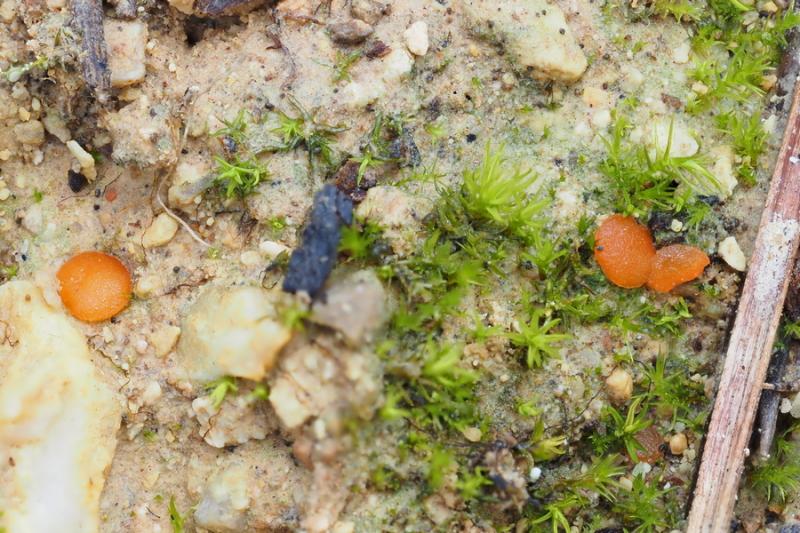
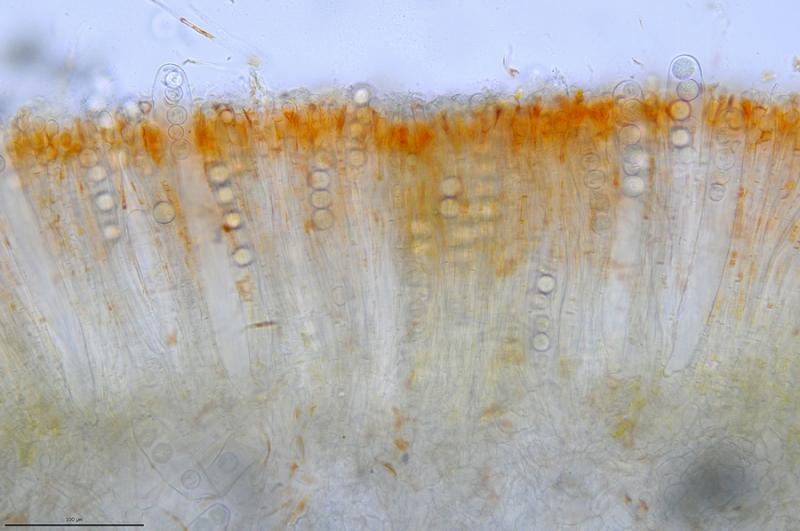
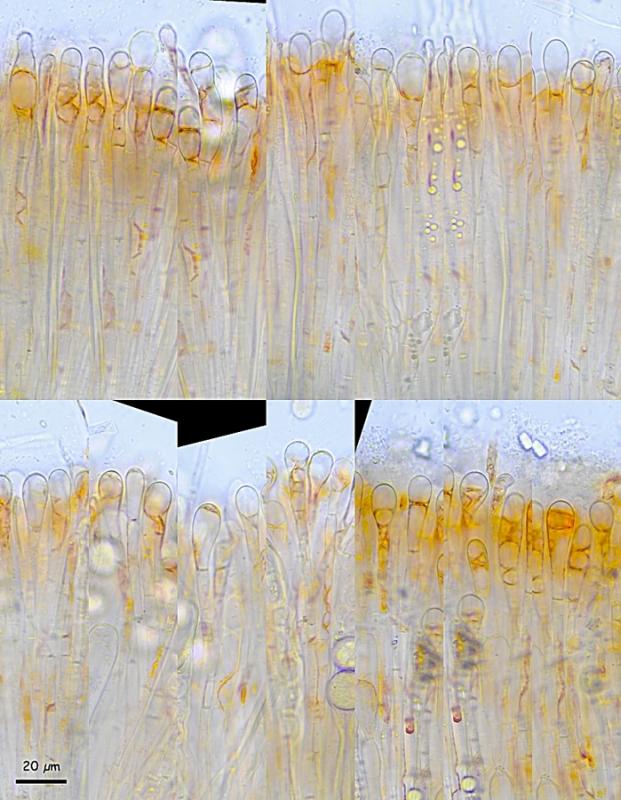
I'm completely baffled by this supposed *Pulvinula* due to its discoid to pulvinate apothecia, the lack of guttulation of the ascospores, and the thickened paraphyses at the apex.
It was growing on soil with some mosses, in calcareous soil that may have been burned some time ago, but I can't confirm the latter.
Apothecia 1-1.5 cm, discoid to pulvinate, not cup-shaped, without a differentiated margin, bright orange in color.
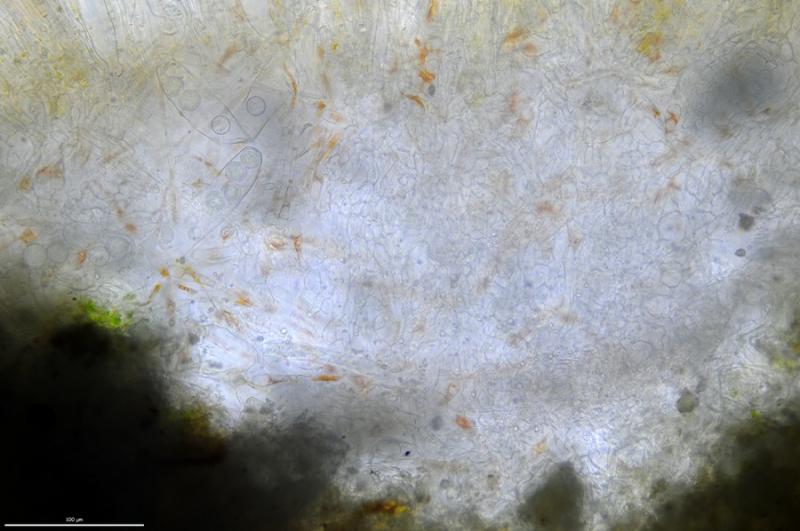
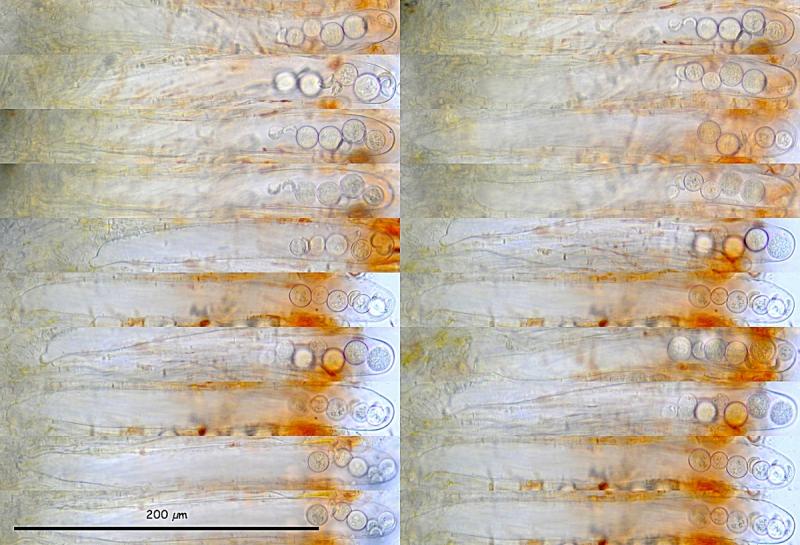
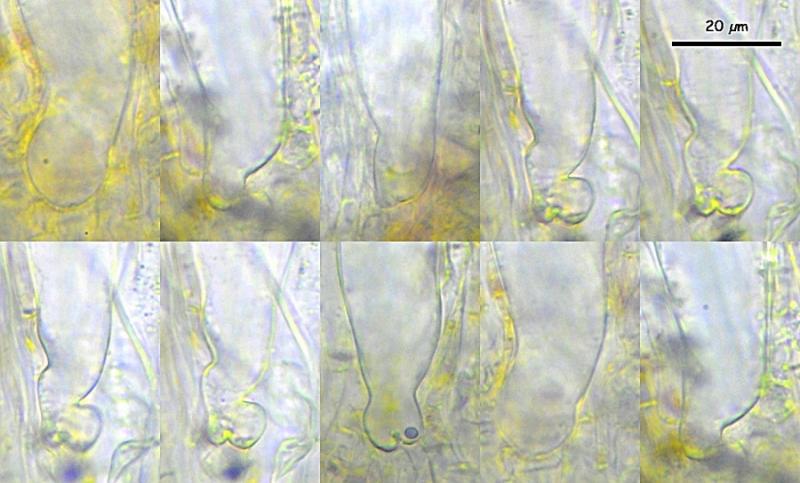
Asci cylindrical almost to the base, with croziers, octosporic (although many of them with 4 aborted spores), inamyloid, (197) 213 - 254 (257) × (21.6) 24.3 - 29.5 (30.5) µm; Q = (7.4) 7.8 - 9.8 (10); Me = 233.1 × 26.7 µm; Qe = 8.8.
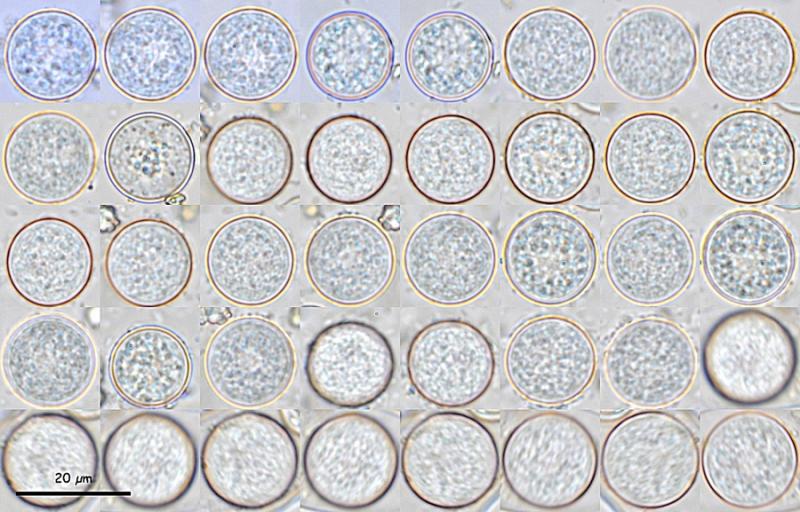
Ascospores spherical, hyaline, without ornamentation nor apparent guttules, (14.1) 15–17.1 (17.4) × (13.5) 14.2–16.4 (16.9) µm; Q = 1–1.05 (1.1); N = 51; Me = 15.9 × 15.5 µm; Qe = 1.
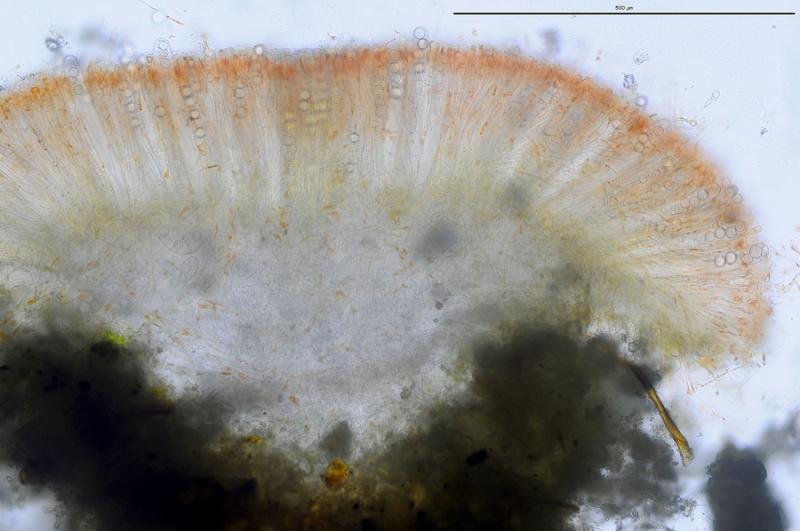
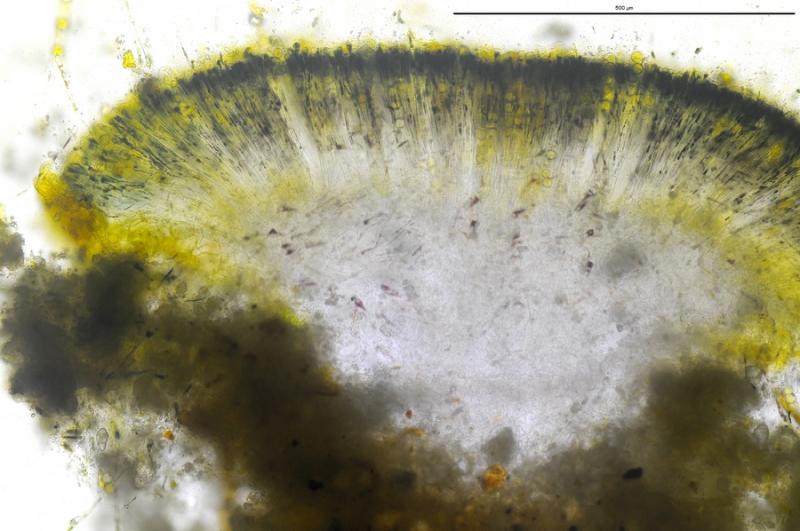
Paraphyses cylindrical, multiseptate, straight, apparently not bifurcated, with the apex thickened to (7.4) 8.8–11.3 (11.8) µm; Me = 10 µm.
Ectal excipulum with textura angularis, medullary excipulum with textura intricata.
Using these characteristics and Moyne's keys, I arrive at P. cinnabarina (but this one would have longer and narrower asci), P. convexella (also with narrower asci), P. miltina (perhaps the best fit), P. carbonaria (also a good fit), and P. globifera (with smaller spores).
Thank you for your help.