23-05-2026 11:44
 Charles Grapinet
Hello, I am having trouble identifying this copro
25-05-2026 16:44
François BartholomeeusenHi forum members,During an excursion organised by
25-05-2026 16:35
 Bernard CLESSE
Bonjour à toutes et tous,J'ai trouvé récemment,
22-05-2026 13:29
Gernot FriebesHi,I am curious to hear your opinion on this mater
23-05-2026 18:57
Sylvie Le GoffBonjour à tousRécolté sur une branchette de Sal
22-05-2026 14:44
 Lothar Krieglsteiner
in unripe condition citrine yellow, then soon fadi
22-05-2026 21:35
Steve ClementsBonjour, I expected this find on old wood on our
22-05-2026 18:12
Lothar Krieglsteiner
... in moist chamber from Portugal.As the fungus s
22-05-2026 20:08
Ethan CrensonHello all, Yesterday in NYC I was visiting an e
Hymenoscyphus aff. fulvidulus
Nicolas VAN VOOREN,
18-10-2009 20:49
 Bonjour.
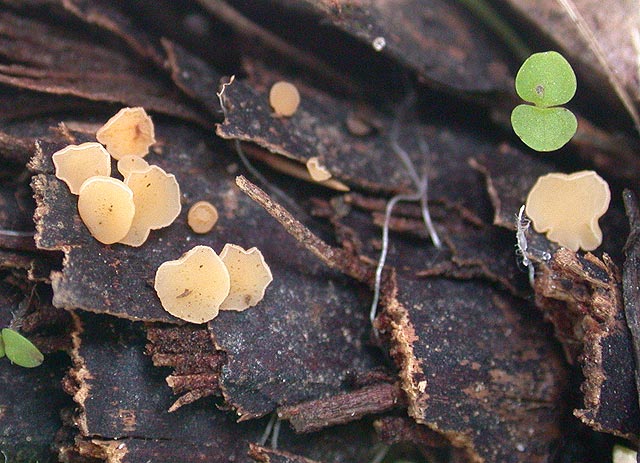
Je vous soumets cette récolte effectuée en Corse, sur cône mort de Pinus nigra ssp. laricio.
Apothécies courtement stipitées, Ø 1-3 mm, à hyménium jaune-beige, rougissant dans les blessures ; surface externe concolore, glabre.
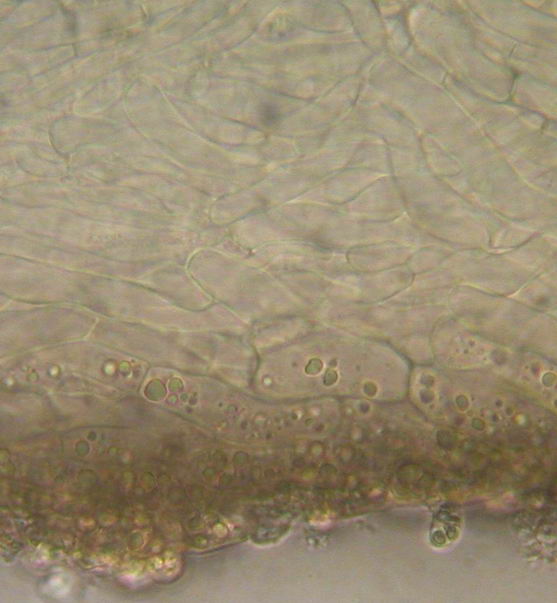
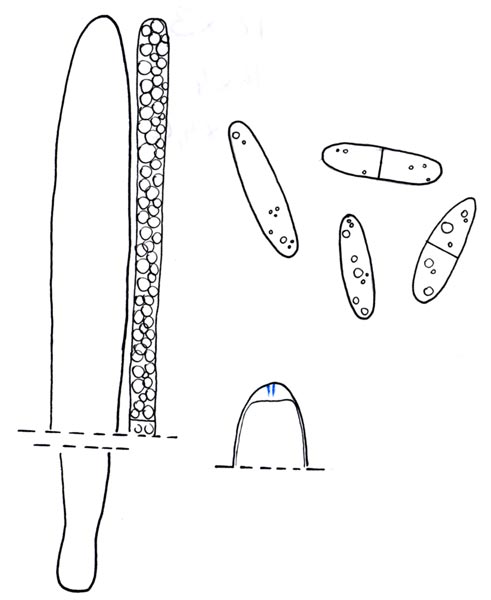
Asques sans crochet, 75-92 x 7-8 µm, anneau apical IKI+ (bb). Paraphyses emplies de VBs. Spores elliptiques allongées ou ± ciboroïdes, 12-18 x 3,8-4,2 (4,5) µm, guttulées, avec une cloison sur les spores les plus mûres (hors asque). Excipulum médullaire de textura intricata ; excipulum ectal de textura angularis, mêlé de cellules plus allongées, dont certaines contiennent des VBs.
Il me semble que l'espèce la plus proche serait H. fulvidulus (= Pachydisca fulvidula) mais la teinte semble plus pâle, les spores plus petites, avec une guttulation moins importante.
Qu'en pensez-vous ?
Nicolas VAN VOOREN,
18-10-2009 20:50
Re:Hymenoscyphus aff. fulvidulus
Dessin micro
Hans-Otto Baral,
18-10-2009 23:26

Re:Hymenoscyphus aff. fulvidulus
Hi Nicolas
H. fulvidulus has much larger oil drops in the spores. The only idea I have is H. lutescens, but that species I saw only with croziers. Difficult to say. The ectal excipulum would perhaps help, is it angularis almost until margin? Oh I see that lutescens is also excluded because of a t. prismatica on lower flanks:
H. fulvidulus has much larger oil drops in the spores. The only idea I have is H. lutescens, but that species I saw only with croziers. Difficult to say. The ectal excipulum would perhaps help, is it angularis almost until margin? Oh I see that lutescens is also excluded because of a t. prismatica on lower flanks: