
12-06-2026 14:50
 François Freléchoux
Bonjour, Voici la brève description d'une Mollis
10-06-2026 21:16
François Freléchoux
Bonsoir,Le dernier du jour, en attendant votre avi
11-06-2026 19:01
 William Slosse
Hello all,In an attempt to make a culture of a sus
11-06-2026 19:03
 Nicolas VAN VOOREN
Chers membres d'Ascofrance,Le site sera placé en

09-06-2026 18:32
Camille MertensSur morceau de roseau immergé 0,5 - 0,7 mm de dia
10-06-2026 12:54
Steve ClementsBonjour encore, Pouvez-vous m'aider, s'il vous pl
10-06-2026 21:07
François Freléchoux
Toutes les tiges de gentianes jaunes de l'an passÃ
10-06-2026 13:41
François Freléchoux
Bonjour à nouveau, Voici une trouvaille d'hier.
Helotiales on Rhododendron
Hans-Otto Baral,
25-08-2014 16:14
 Hi
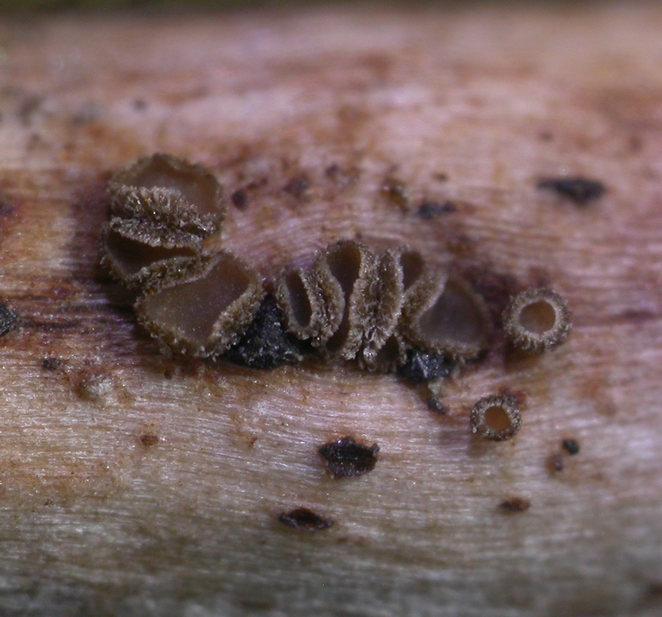
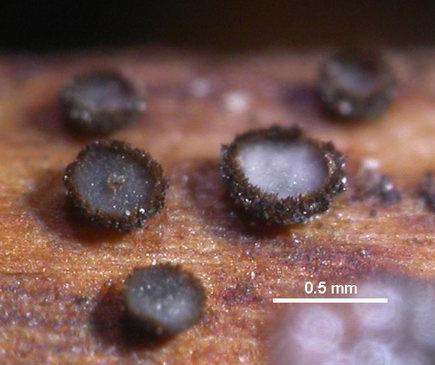
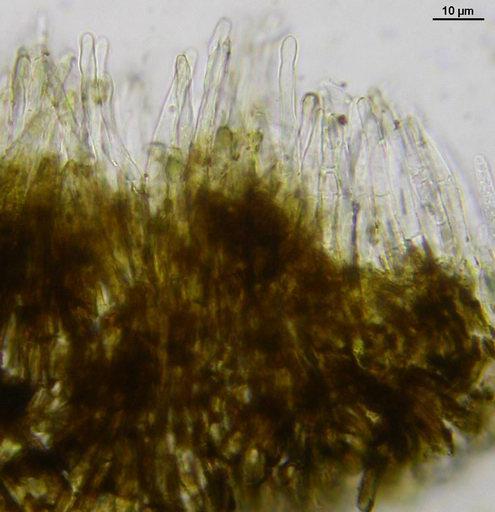
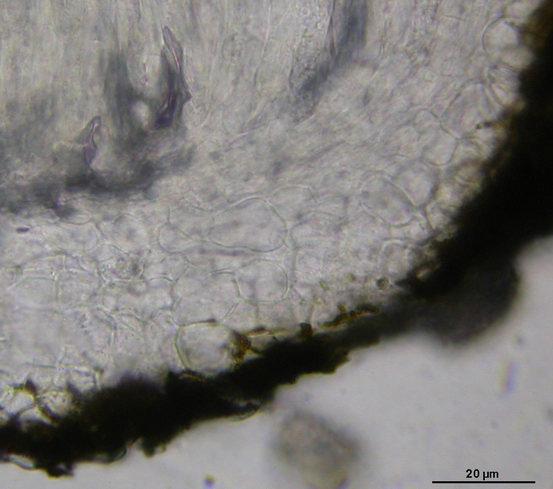
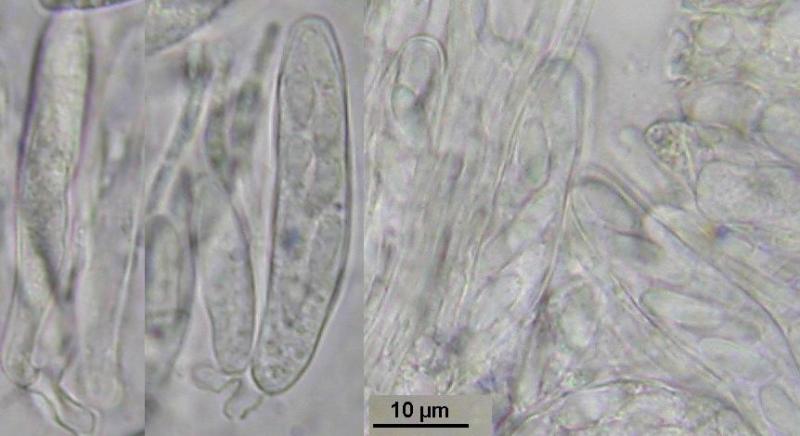
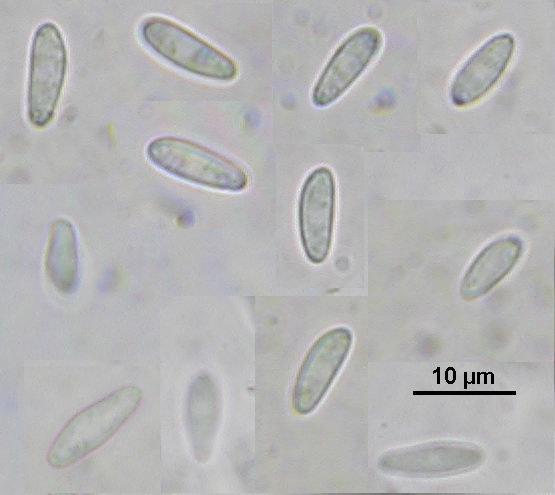
Hino idea of the genus or species of this fungus which I found at 2000 m in the calcarean Alps (18.8.2014, Graubünden, S of Scesaplana), on Rhododendron ferrugineum attached decorticated twigs (exposed, completely dry when collected, therefore drought-tolerant).
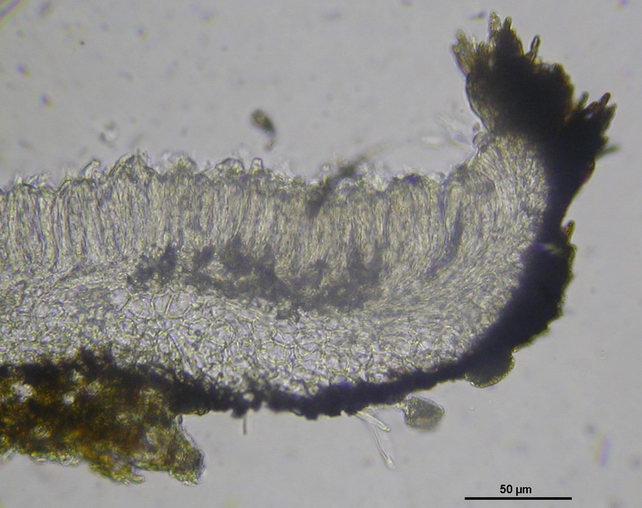
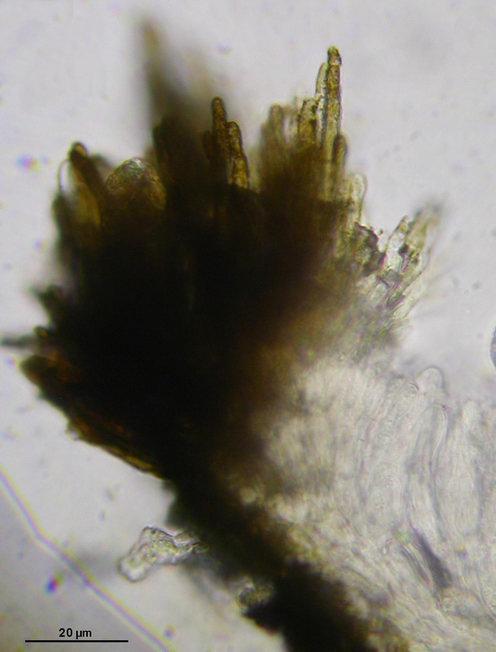
Ap. rehydr. 350-550 µm diam. Asci *40-50(-65) x 8-9(-10) µm, +33-40(-53) x 7-8 µm, broadly sessile or somewhat narrowed in a longer stalk, without croziers, IKI-. Sp. *8-9.8 x 3-3.3 µm. Paraph. cylindrical, +/- flexuous, *1.8-2 µm wide, apically sometimes forked, without VB-contents. Excipulum of hyaline short-prismatic to anguar cells running under a c. 20-40° angle at flanks, thin-walled, at base slightly gelatinized, at margin a t. porrecta protruding 20 µm beyond hymenium, running out in smooth, hyaline, short, pauciseptate, thin-walled hairs that are often covered by dark yellowish-brown rough exudate.
I do not think that the fungus is mollisioid (Pyrenopeziza), perhaps rather encoelioid or hyaloscyphaceous. My database helps nothing, and also with Remler and B. Eriksson I did not succeed.
Zotto
Martin Bemmann,
25-08-2014 16:35

Re : Helotiales on Rhododendron
Hi Zotto
How about Encoeliopsis rhododendri?
Regards
Martin
How about Encoeliopsis rhododendri?
Regards
Martin
Hans-Otto Baral,
25-08-2014 16:42
Re : Helotiales on Rhododendron
That was among my hopes, but that species has much larger spores (12-20 x 3.5-4.5 in Groves 1969) and no hairs, and grows on capsules and leaves.
Zotto
Zotto