
31-03-2026 21:18
 Miguel Ángel Ribes
Good evening. oes anyone have the original descrip
31-03-2026 20:57
Stefan BlaserHello everybody, I hope somebody can help me with
26-03-2026 15:31
 Åke Widgren
Hello,I found this one in October last year, on r
31-03-2026 16:20
 Mlcoch Patrik
Hello, Please about help with determination. On
31-03-2026 08:19
 Bernard CLESSE
Bonjour à toutes et tous,Pourriez-vous m'aider à
30-03-2026 12:03
 William Slosse
Hello all,On 27/03/26, in Kraaiveld in Wingene (Be
25-03-2026 10:35
Hulda Caroline HolteHello,I collected this species growing on a dead b
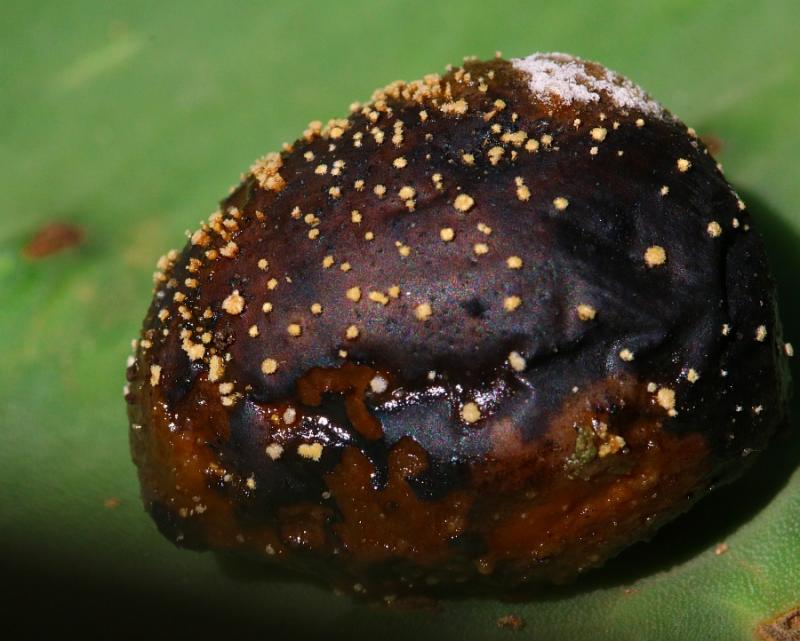
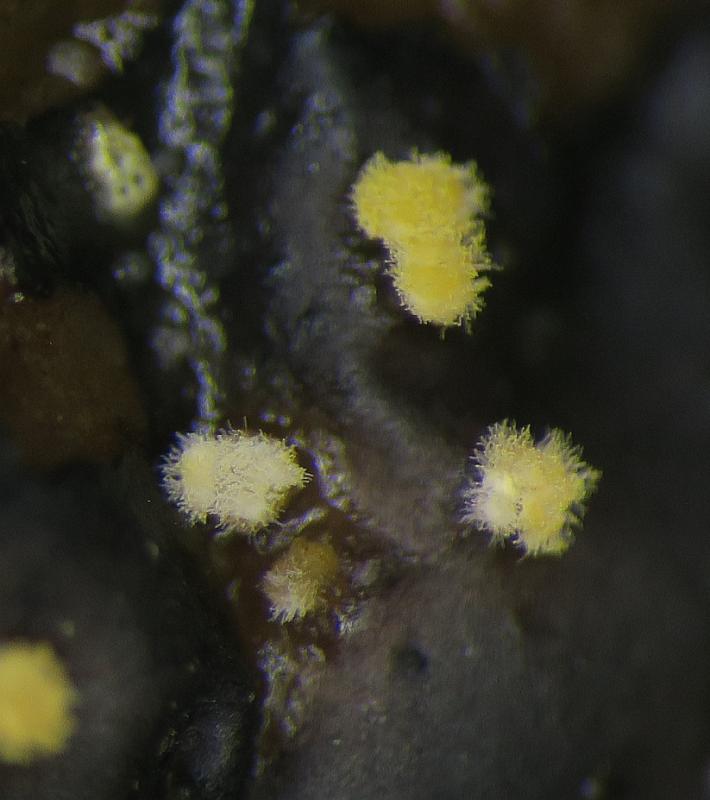
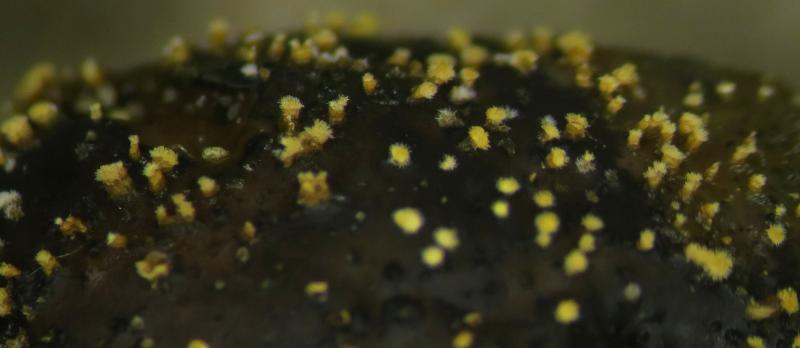
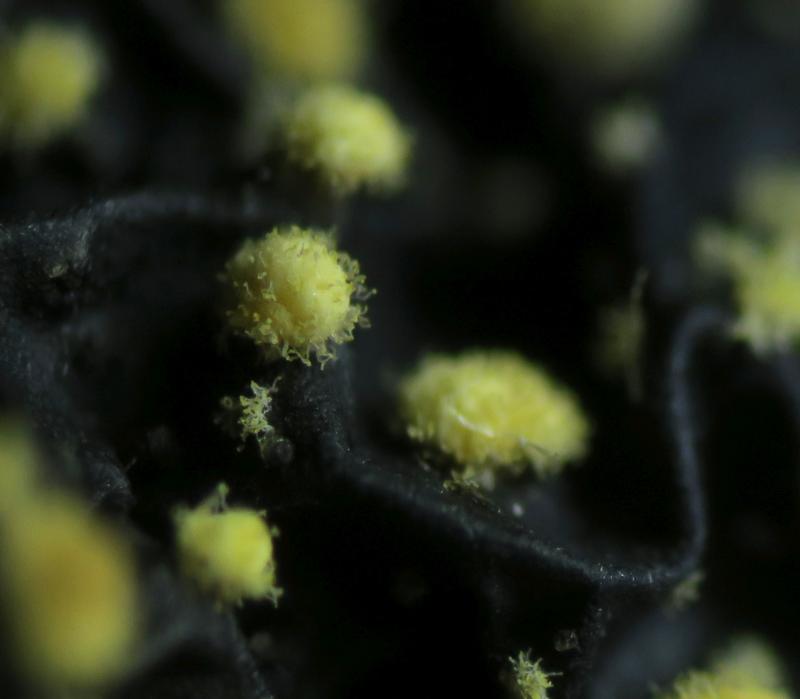
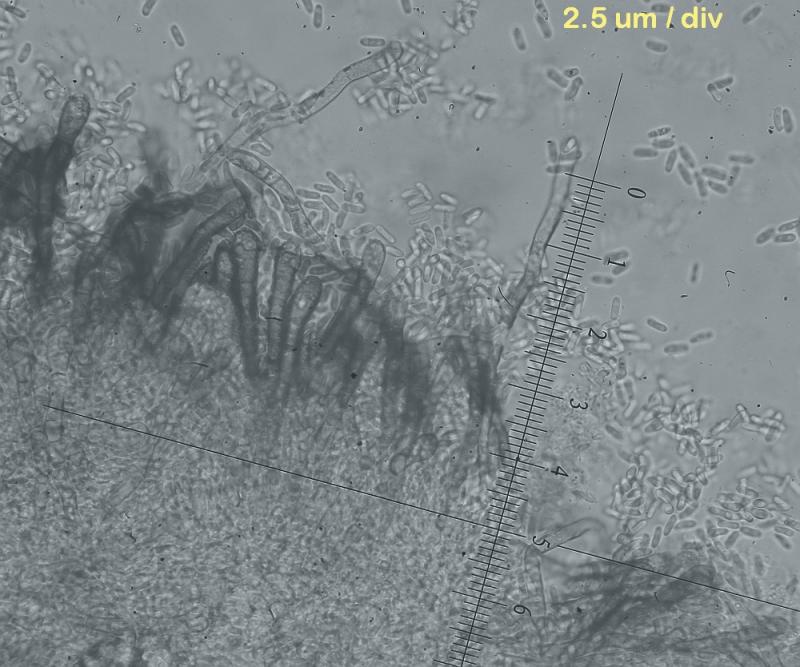
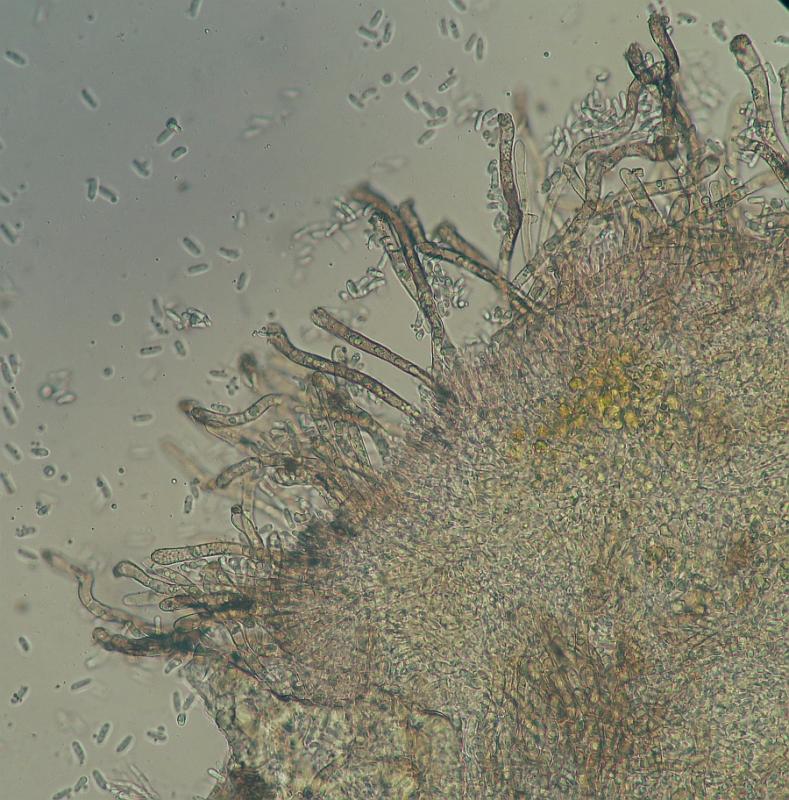
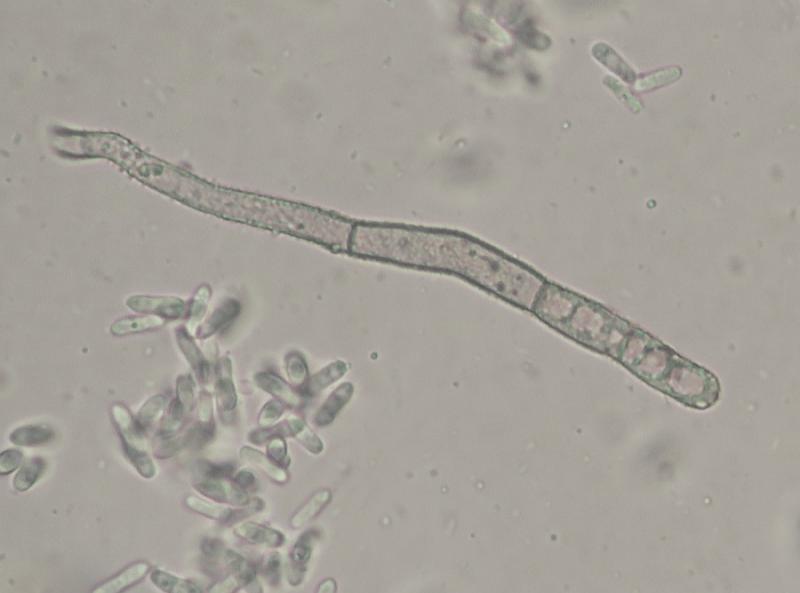
 Hi, I found an interesting ascomycete on the skin of an olive fruit lying on humid ground. According to my interpretation there is a core of profusely branched, yellow, pennillate conidiophores (phialides, etc) overtoped by distinct, broad, cylindrical, septate, very curved paraphysis with the last elemnt slightly swollen. Conidia cylindrical with rounded heads . Some interesting features:
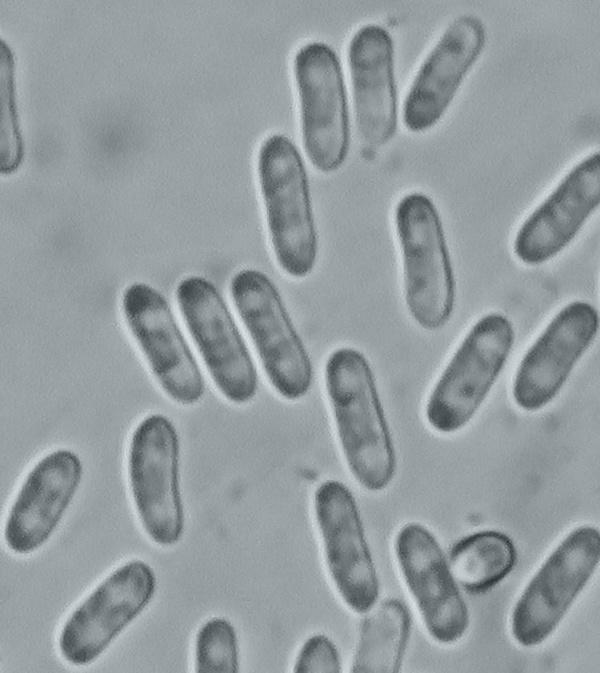
 1. Large amounts of conidiospores measuring (6)7-8(9) x 2-3 um, cylindrical and slightly curved with rounded ends
2. Numerous snake-like (curved) paraphyses, 2-3 septate, clavate with very rough (densely verrucose) walls
3. Dense and x2 (or more) branched penicillate conidiophores that are much shorter from the paraphyses
4. Structural cells with deep yellow pigment, more or less subsphericall
These fruiting bodies are erupting from the fruit's pulp (not superficial)
Spores' size:
(6.1) 6.8 - 8.5 (9.1) × (2.2) 2.3 - 2.8 (2.9) µm
Q = (2.2) 2.5 - 3.5 (3.9) ; N=27
V = (18) 21 - 33 (38) µm3
Me = 7.7 × 2.5 µm ; Qe = 3 ; Ve = 26 µm3


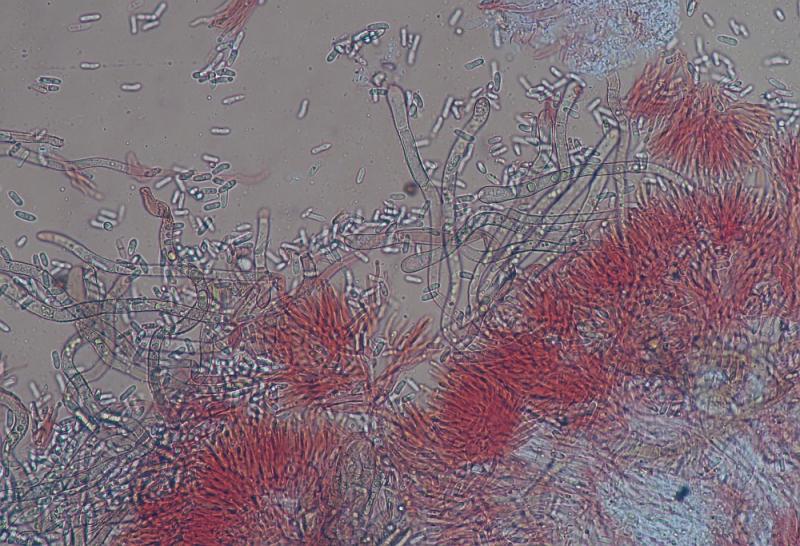
My first thought is Actinostilbe sp.
Mirek
https://grzyby-pk.pl/gat_a/gat_actinostilbe_20200830.php
it is the same one , cant find anything different between the two!!!
But why just Actinostilbe sp. ? There are a lot of spp. ? Anyway you gave me the right track - I take over to do some research on the genus
THANK YOU
Stephen.
"SP" because it is an indescribable species and unfortunately it will probably remain nameless for a long time. Christian examined him and was going to publish, but fate did not allow him :(
Regards
Mirek
We keep in touch Mirek !
I managed to get a pure colony and sequence this fungus and the results where Sarcopodium vanillae - 99.39% Sarcopodium vanillae MK685870
Should I assign this finding to this species or maybe it is not convincing (morphology matches ?)
Paper mentioning this collection with details on the anamorph and sexual state
https://www.researchgate.net/publication/338936119_First_sexual_morph_record_of_Sarcopodium_vanillae#fullTextFileContent
I wonder what are your thoughts (overall it matches)