
31-03-2026 21:18
 Miguel Ángel Ribes
Good evening. oes anyone have the original descrip
31-03-2026 20:57
Stefan BlaserHello everybody, I hope somebody can help me with
26-03-2026 15:31
 Åke Widgren
Hello,I found this one in October last year, on r
31-03-2026 16:20
 Mlcoch Patrik
Hello, Please about help with determination. On
31-03-2026 08:19
 Bernard CLESSE
Bonjour à toutes et tous,Pourriez-vous m'aider à
30-03-2026 12:03
 William Slosse
Hello all,On 27/03/26, in Kraaiveld in Wingene (Be
25-03-2026 10:35
Hulda Caroline HolteHello,I collected this species growing on a dead b
 Hi All,
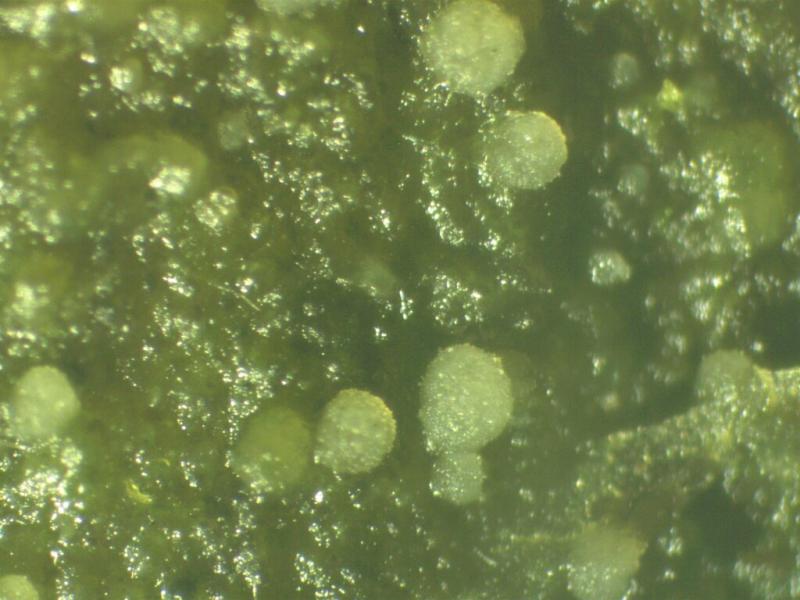
In April I found what I believe to be Trizodia acrobia in carr woodland in North Wales. This poorly known species would be a new genus to Britain. The only thing is that the ascomata were growing on a waterlogged stick rather than on Sphagnum as in Fungi of Temperate Europe so I was wondering if this is important or if there are other Trizodias out there. Also, I've been told that some lichenologists regard it as a lichen owing to its association with cyanobacteria. I was wondering what the latest state of play is on this.
Here is a description of the North Wales material:
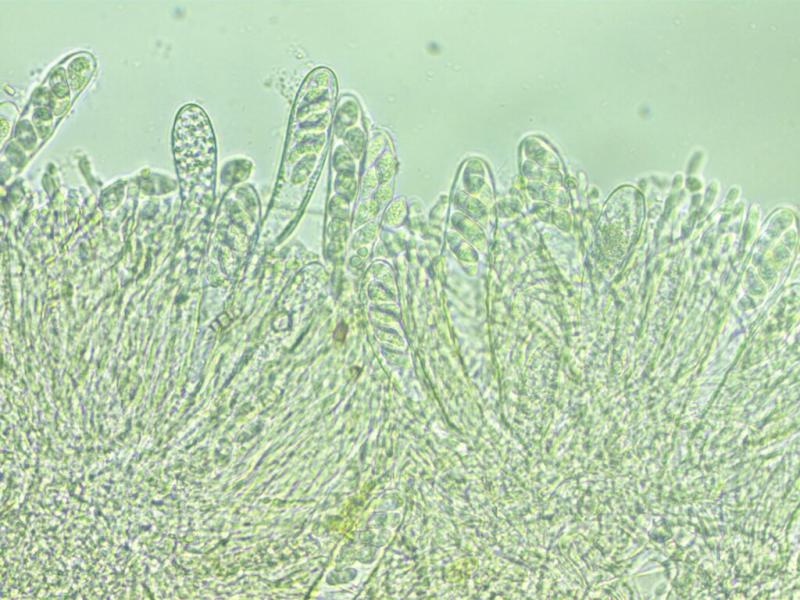
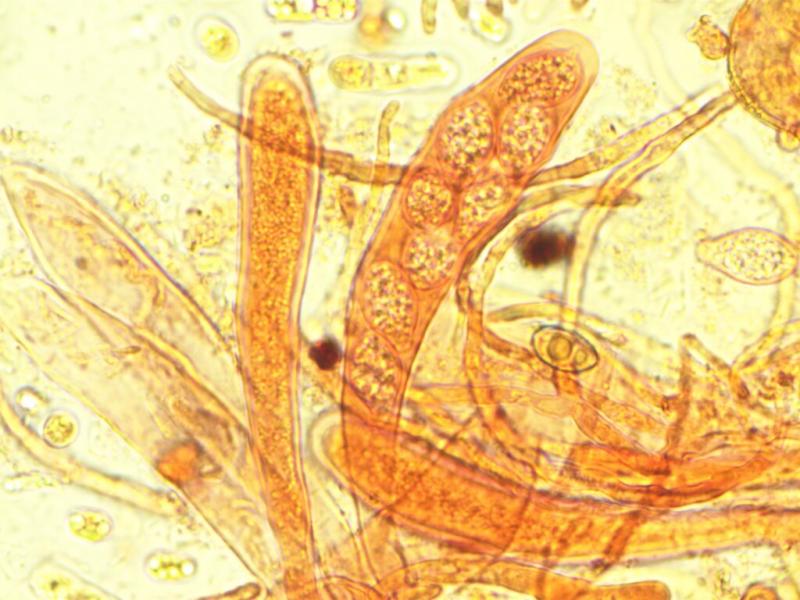
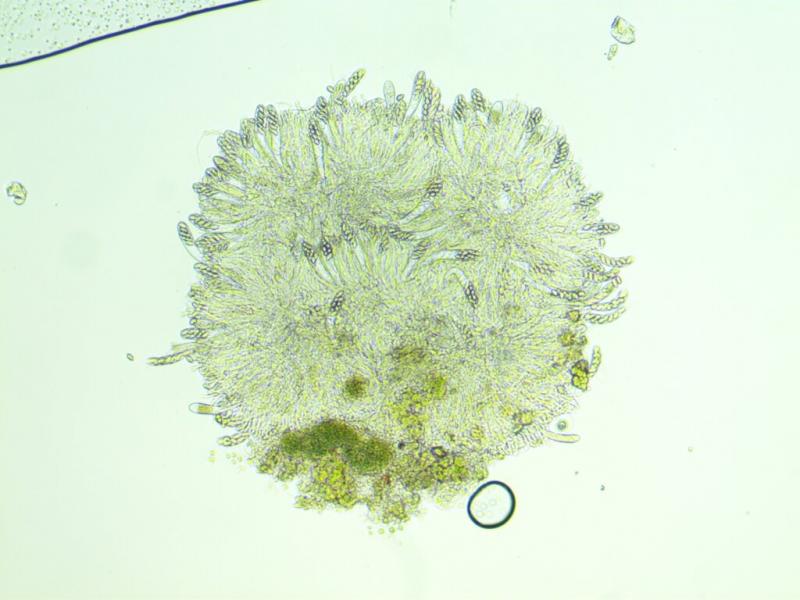
Trizodia acrobia, Morfa Bychan, North Wales, (VC48, SH547369), 13/4/23.
Ascomata consisting of more or less globose, whitish, gelatinous pustules up to c.0.5mm, seated or even immersed in algal scum.
Asci: clavate, rather thick walled, 80-98x14-16µm.
Ascospores: 14-15x7.5-9 µm, pyriform.
Hyphae hyaline, thin to slightly thick-walled, 2-3 wide.
Paraphyses somewhat flexuose, slightly swollen to 3-4.5 at apex, sometimes branching, septate.
Best wishes,
Charles.
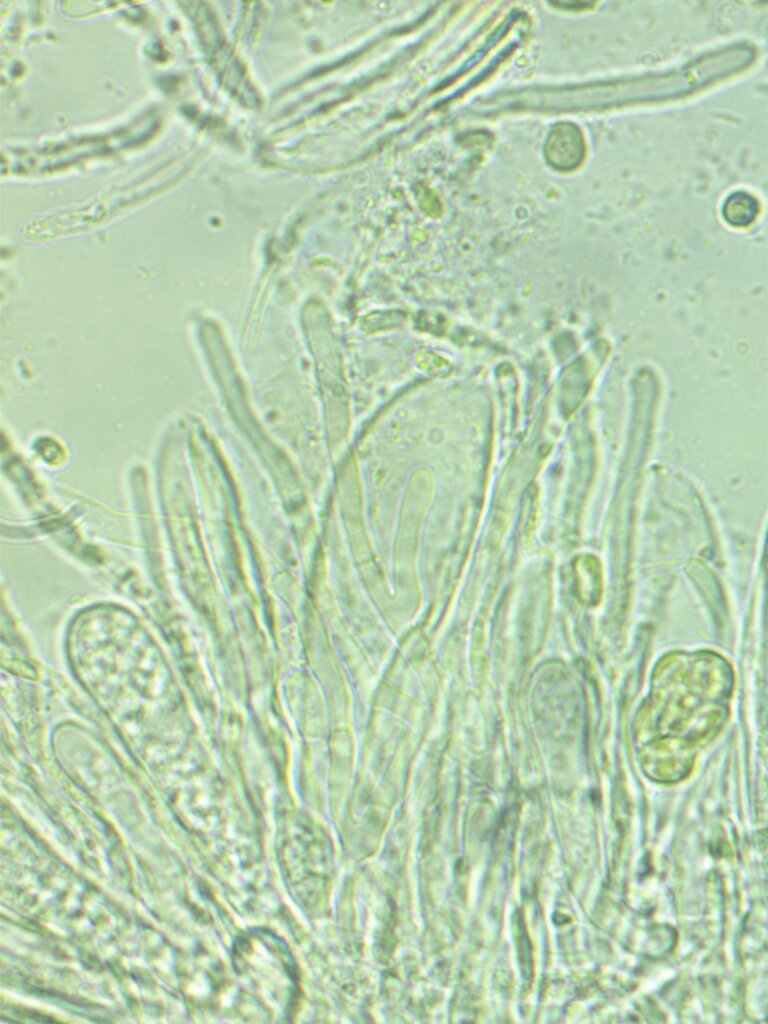 rsz-trizodia-acrobia-paraphyses-morfa-bychan-13423-0001.jpg
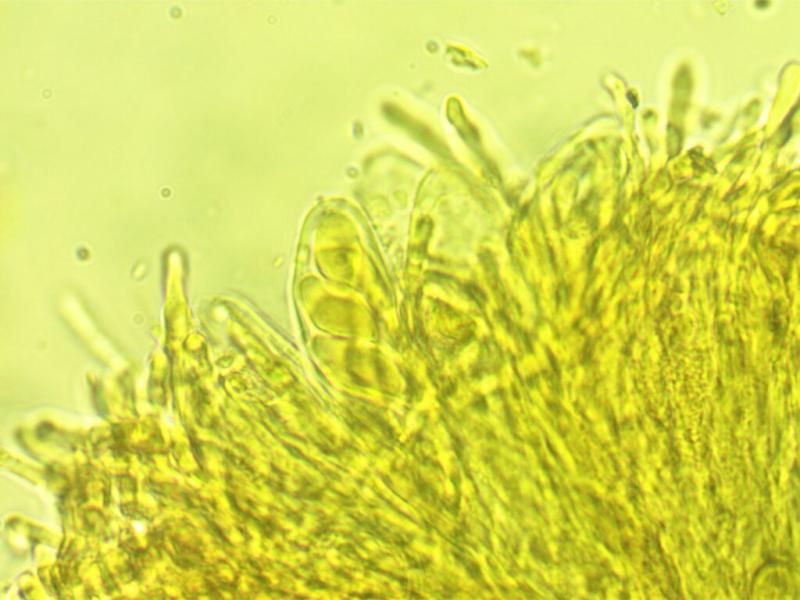
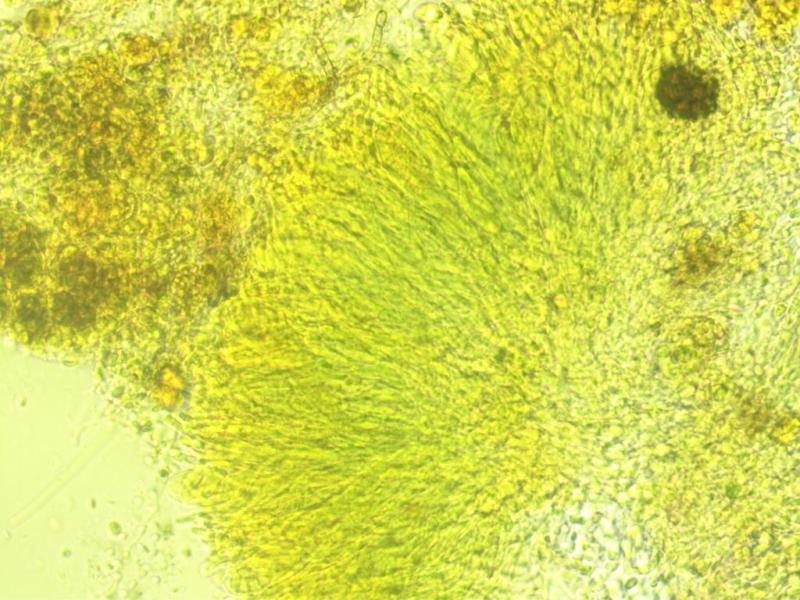
Many thanks for your response. Here are a couple of photos showing a very slight blueing of the asci en masse-perhaps my Melzer's needs replacing! Individual asci don't seem to show much reaction. Didn't realise that Mniaecia could be gelatinous like this.
Best wishes,
Charles.
Thanks for this. I don't think I pretreated the material with KOH. Could have a go with the dried material if I can find where the apos were!
Charles.
Yes, I did! I can see now, got the date wrong.
Charles.