
23-05-2026 18:57
Sylvie Le GoffBonjour à tousRécolté sur une branchette de Sal
23-05-2026 11:44
 Charles Grapinet
Hello, I am having trouble identifying this copro
22-05-2026 14:44
 Lothar Krieglsteiner
in unripe condition citrine yellow, then soon fadi
22-05-2026 21:35
Steve ClementsBonjour, I expected this find on old wood on our
22-05-2026 18:12
Lothar Krieglsteiner
... in moist chamber from Portugal.As the fungus s
22-05-2026 20:08
Ethan CrensonHello all, Yesterday in NYC I was visiting an e
11-01-2022 16:36
 Jason Karakehian
Hi does anyone have a digital copy of Raitviir A (
20-05-2026 17:47
Margot en Geert VullingsWe found this Mollisia on dead Juncus stems mown l
22-05-2026 14:47
Gernot FriebesHi,superficial ascomata collected on bark of a liv

Hello, Forum!
I have 2 findings of Gyromitra, collected on 2 May, 2011. As I'm a beginner in operculate discomycetes, I ask for your verification and guidance.
The first sample is probably G. esculenta. It was collected in a mixed oak-pine forest on the sand soil. It has spores with 2 oil drops, 18-25*10-11 um. The first and the second photos correspond to this species.
Irina
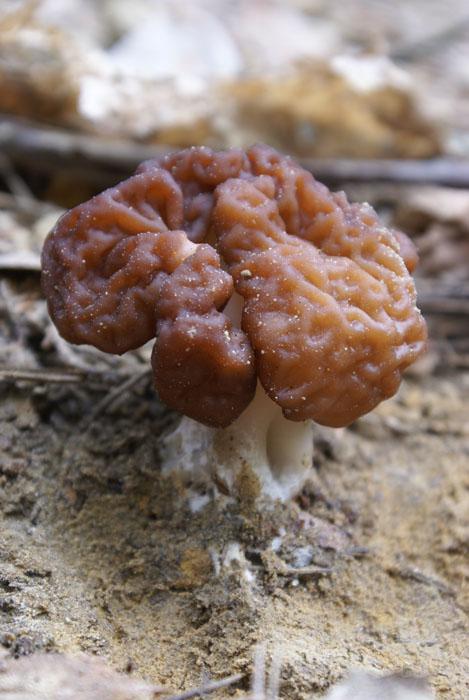
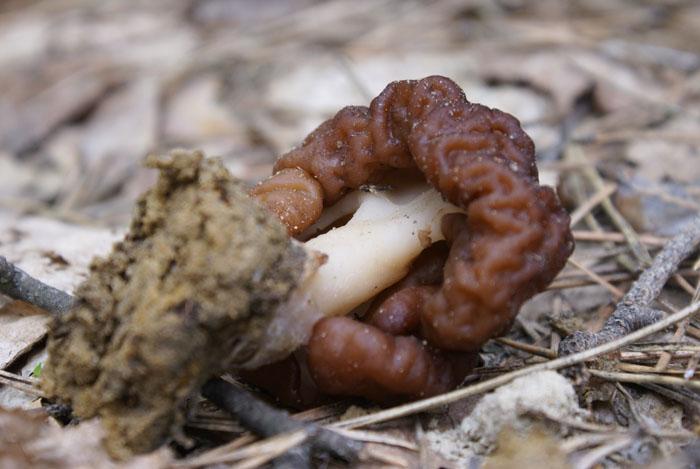
The other species was collected in young oak forest. To my mind it is close to Gyromitra fastigiata, but it has relatively smaller size of spores (18,5*25-9*11,5um). Spores contain several oil drops (many small drops and/or 2-3 large drops).
The next photo corresponds to this species.
Irina
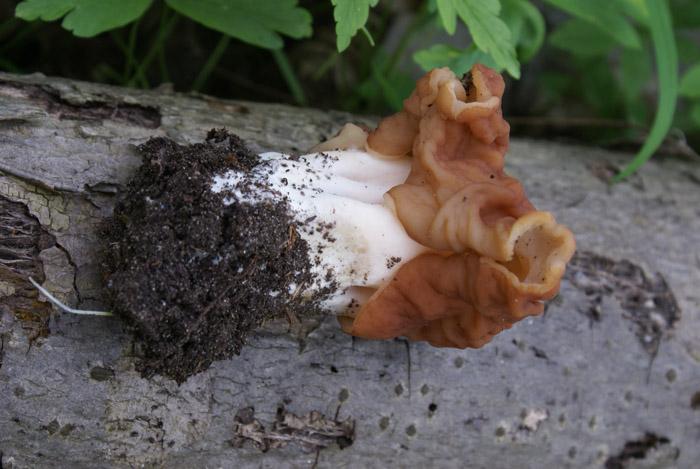
macroscopically, they indeed look like G. esculenta and G. fastigiata. I think the fruit body of the latter species is not fully mature and therefore the spores are too small. Fully mature ascospores of G. fastigiata also posses small finger-like apiculi and a reticulate ornamentation.
Best wishes,
Gernot
Thank you for the confirmation, Gernot!
Sincerely,
Irina