12-06-2026 14:50
 François Freléchoux
Bonjour, Voici la brève description d'une Mollis
10-06-2026 21:16
François Freléchoux
Bonsoir,Le dernier du jour, en attendant votre avi
11-06-2026 19:01
 William Slosse
Hello all,In an attempt to make a culture of a sus
11-06-2026 19:03
 Nicolas VAN VOOREN
Chers membres d'Ascofrance,Le site sera placé en

09-06-2026 18:32
Camille MertensSur morceau de roseau immergé 0,5 - 0,7 mm de dia
10-06-2026 12:54
Steve ClementsBonjour encore, Pouvez-vous m'aider, s'il vous pl
10-06-2026 21:07
François Freléchoux
Toutes les tiges de gentianes jaunes de l'an passÃ
10-06-2026 13:41
François Freléchoux
Bonjour à nouveau, Voici une trouvaille d'hier.
"Rhytisma urticae"
Alex Akulov,
12-07-2011 21:02
 Dear Friends
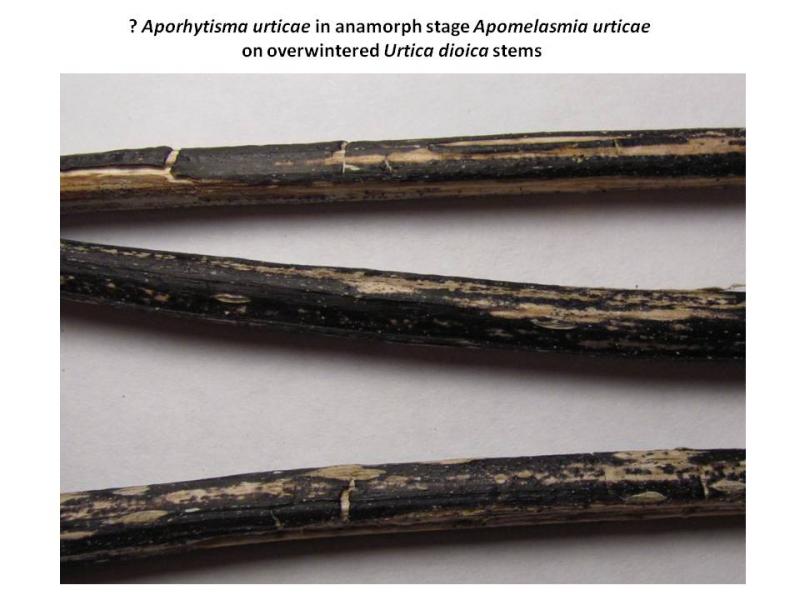
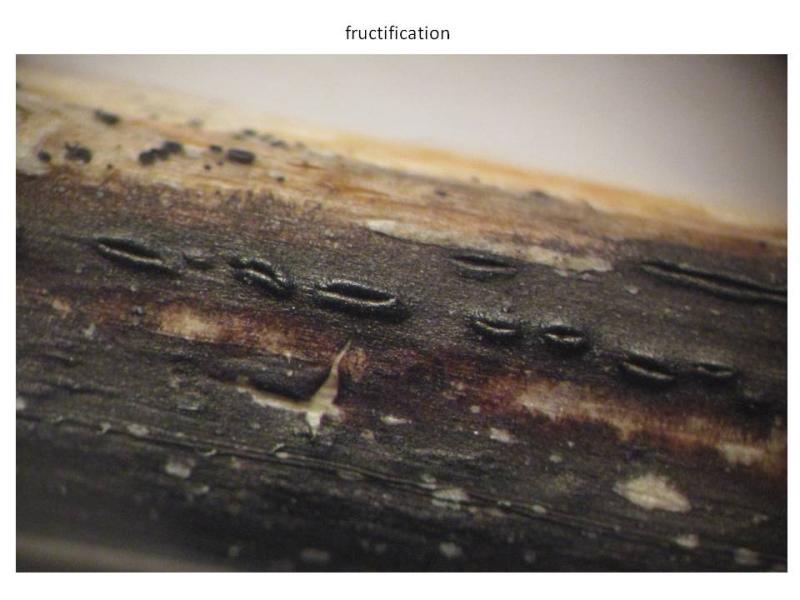
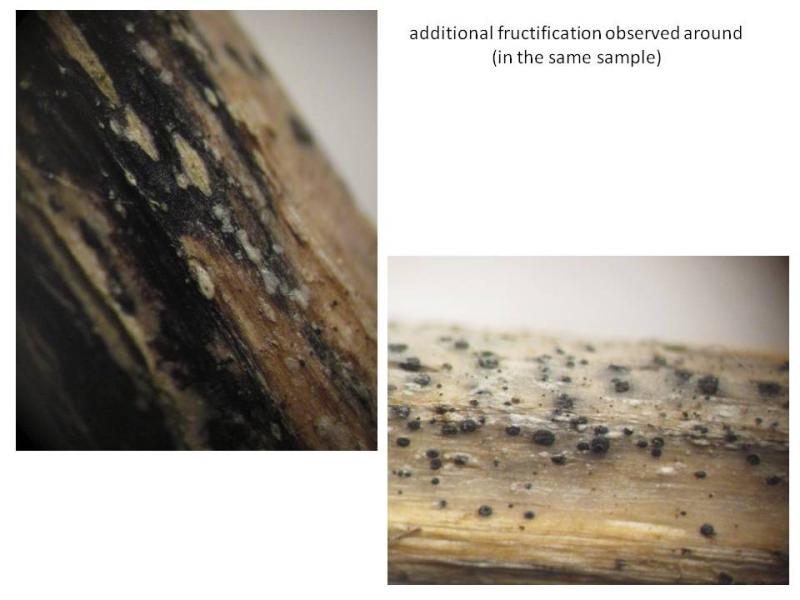
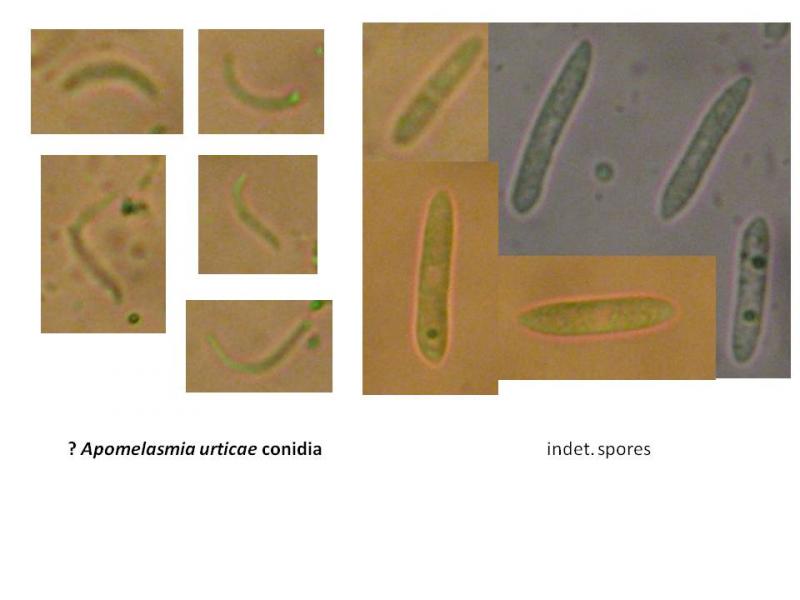
 Sufficiently long time ago in L. Fuckel exiccati I watched the sample of Rhytisma urticae on overwintered Urtica dioica stems. Recently, I've collected in the Carpathians very similar sample. Using the Internet, I found that the modern name of this species - Aporhytisma urticae with anamorph Apomelasmia urticae. Unfortunately, the available information about this species is too poor.
In my sample I found conidia, which are similar to Melasmia representative and other type of spores also.
I have no literature to solve problems with the collected sample. If someone could send me a description of Aporhytisma urticae, as well as express your opinion about this sample, I would be very grateful!
Alex
Alex Akulov,
25-08-2011 00:01
Re : "Rhytisma urticae"
Dear Friends
Today I received a response from Dave Minter with more in detailed datas about this species. He wrote:
Aporhytisma urticae is not so easy. It's not in Dennis (British Ascomycetes) and it's not in the Ascomycetes volume of Champignons de Suisse. Petrak wrote about it in Sydowia 24: 252 (available from Cyberliber). Arx & Muller in Beitrage zur Kryptfl. Schweiz 11: 373 (available from Cyberliber) redisposed it as Diaporthopsis = Diaporthe. There's a photograph of A. urticae on the Internet [http://www.fundkorb.de/?Fundkorb:Acrospermum_compressum%26nbsp%3B_Tode%3AFr.] which looks rather like your fungus.
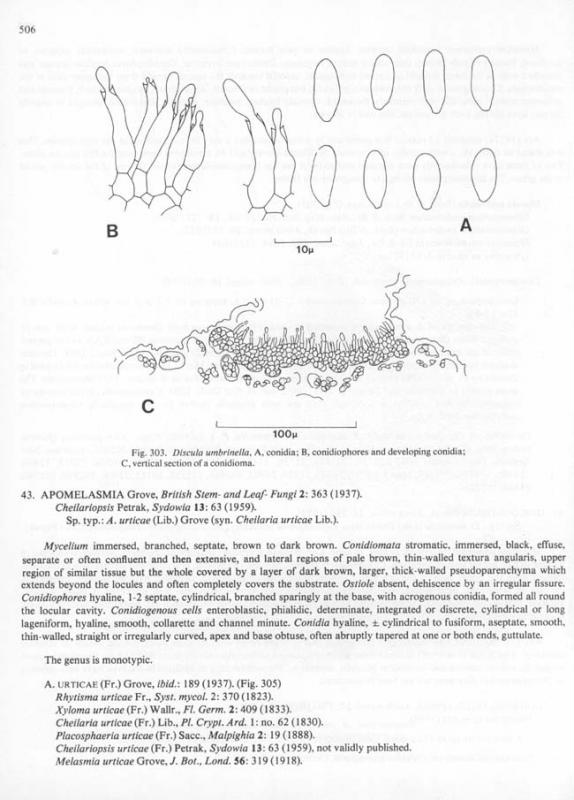
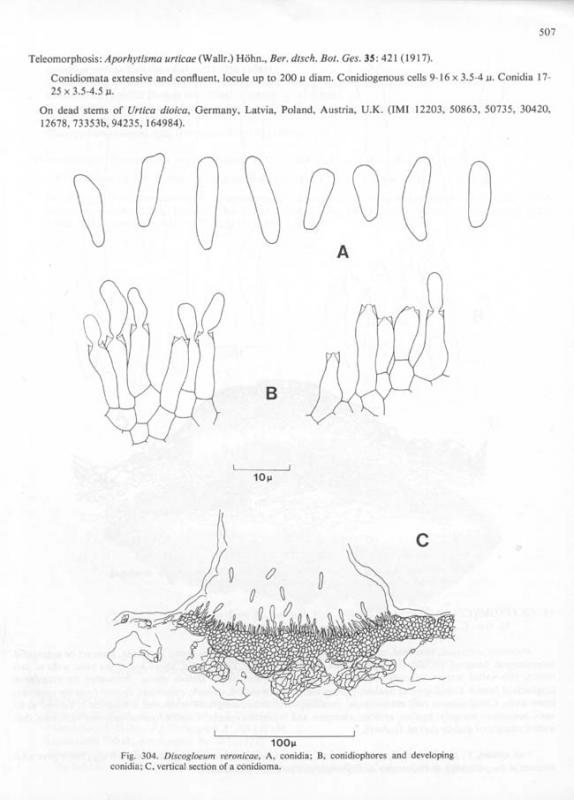
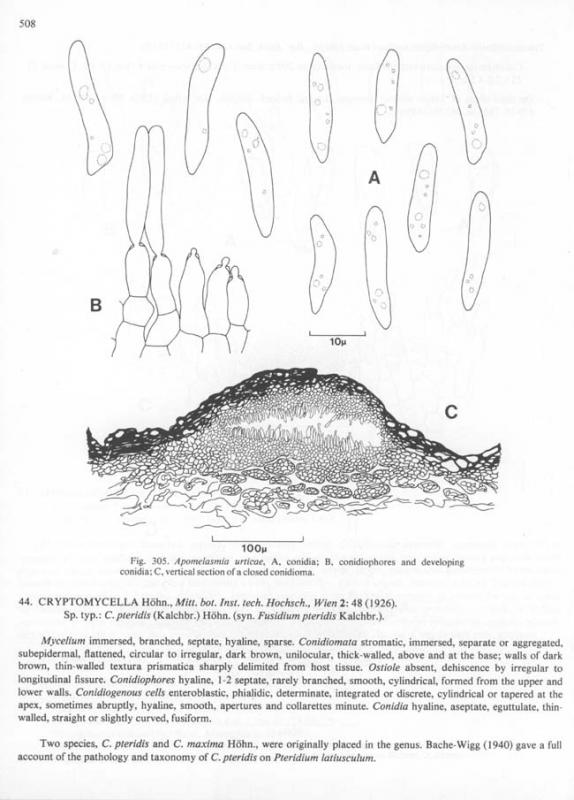
Please, see also attached files - pages from Sutton's Coelomycetes (1980), with description and illustration of anamorph.
Alex
Today I received a response from Dave Minter with more in detailed datas about this species. He wrote:
Aporhytisma urticae is not so easy. It's not in Dennis (British Ascomycetes) and it's not in the Ascomycetes volume of Champignons de Suisse. Petrak wrote about it in Sydowia 24: 252 (available from Cyberliber). Arx & Muller in Beitrage zur Kryptfl. Schweiz 11: 373 (available from Cyberliber) redisposed it as Diaporthopsis = Diaporthe. There's a photograph of A. urticae on the Internet [http://www.fundkorb.de/?Fundkorb:Acrospermum_compressum%26nbsp%3B_Tode%3AFr.] which looks rather like your fungus.
Please, see also attached files - pages from Sutton's Coelomycetes (1980), with description and illustration of anamorph.
Alex