
10-06-2026 09:24
 François Freléchoux
Bonjour, J'imagine que cette détermination ne do
09-06-2026 18:32
Camille MertensSur morceau de roseau immergé 0,5 - 0,7 mm de dia
08-06-2026 10:16
 Spooren Marco
I don`t have a clou about this fungus,it is not in
08-06-2026 17:00
François BartholomeeusenGood day everyone, On June 5 2026, I collected de
07-06-2026 15:10
 William Slosse
Hello everyone,On 05-06-26, I found following asco
05-06-2026 11:02
Thomas Læssøehttps://svampe.databasen.org/observations/10596691
07-06-2026 12:09
François Freléchoux
Bonjour, Voici une brève description de ce qui m
07-06-2026 12:43
Steve ClementsBojour. This was a strange find on a stick on my
12-07-2015 00:05
 Nedim Jukic
This one from the same locality as the previous on
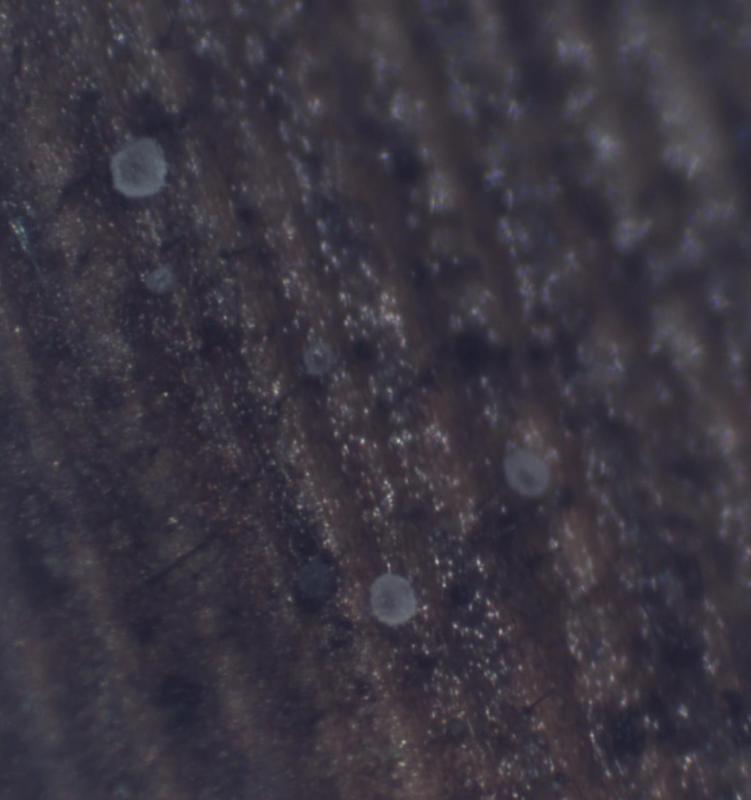
I recently found this Cistella growing on dead leaves of Cladium mariscus.
Apothecia are creamy-white, sessile, < ca 150 µm diam.
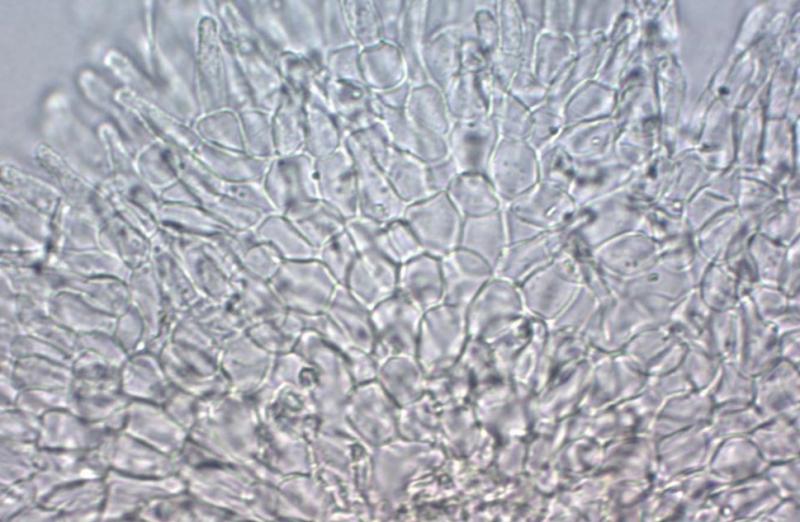
Excipulum is a textura angularis.
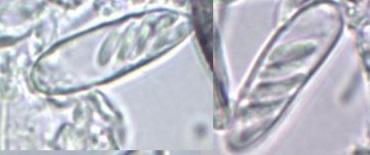
Asci are 19-25 x 5-6 µm; 8-spored; IKI+ blue; apparently arising from simple septa.
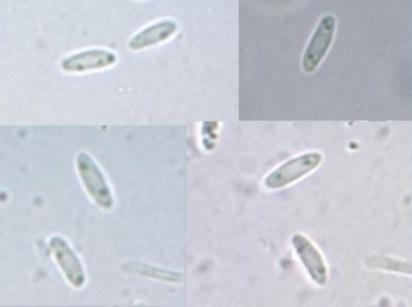
Spores are 6-7 x 1.5 µm; with small oil bodies ca 5% of cell volume (occasionally up to 10%).
Paraphyses are filiform, sometimes branched; 1 µm wide.
Hairs are hyaline, granular above; not septate; lageniform; 12-19 µm long; 3-4 µm wide at base, and 2 µm wide above.
I initially suspected it would be Cistella fugiens, but the hairs are mostly lageniform rather than clavate or cylindrical, so I wonder whether it could be C. lagenipilus.
I'd be grateful for any help.
Marcus




Zotto