
18-05-2026 12:43
Sylvie Le GoffBonjour à tousPuis je avoir votre aide sur ce que
19-05-2026 12:55
 Hardware Tony
After checking Gminder and Otto's library I cannot
19-05-2026 10:27
Patrice TANCHAUDBonjour, récolte récente sur terre retournée i

18-05-2026 10:13
 Lieve Deceuninck
Dear forum members,I identified this as the teleom

17-05-2026 19:05
Thomas FlammerI have found this tiny 200 ym cup shaped apothecia
17-05-2026 16:41
Margot en Geert VullingsWe found this Lachnum on an old Rubus stem.Fruitbo
05-04-2026 22:46
 Lothar Krieglsteiner
on wood of Ceratonia, Algarve, 3.4.2026.The color
15-05-2026 13:33
Sylvie Le GoffBonjour à tousJe serais très reconnaissante enve

Hello,
I found these violet frb on deer dung. Size up to 0,4mm. I see dark coloured tips of asci protruding above frb. Problem is that I see clustered brown (max 10%) spores and loose hyaline ones (90%). Which species could this be and which spores belong to the violet frb?
Loose spore in 8-spored J+asci, size 15/17x7/7,5µm, spores are smooth, without striae and thick walled (1µm), asci up to 21x130µm, paraphyses not swollen
Clustered spores: brown, 40/45x15/17
regards,
Ralph
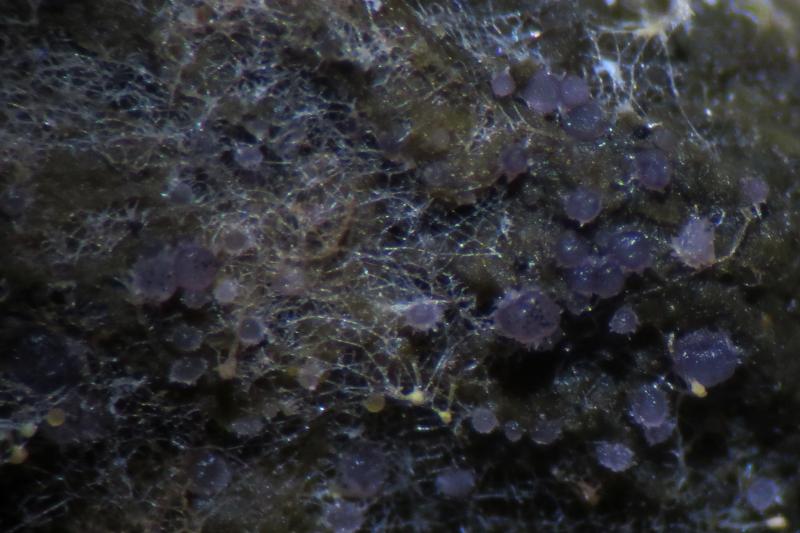
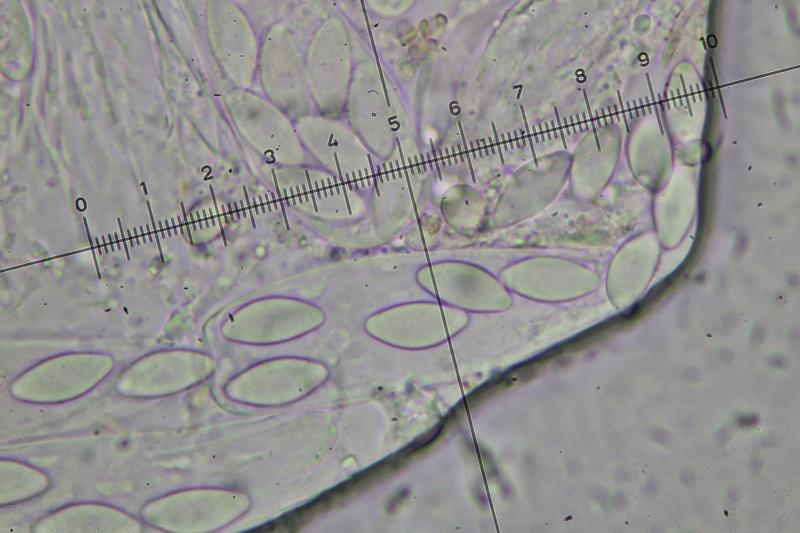
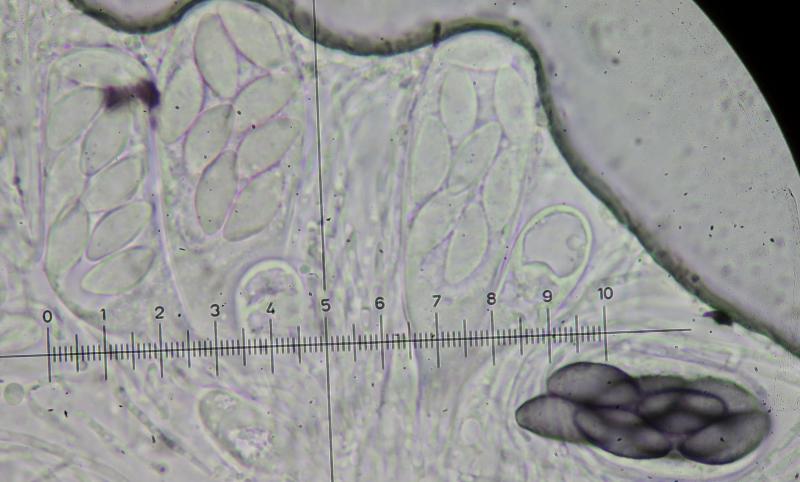
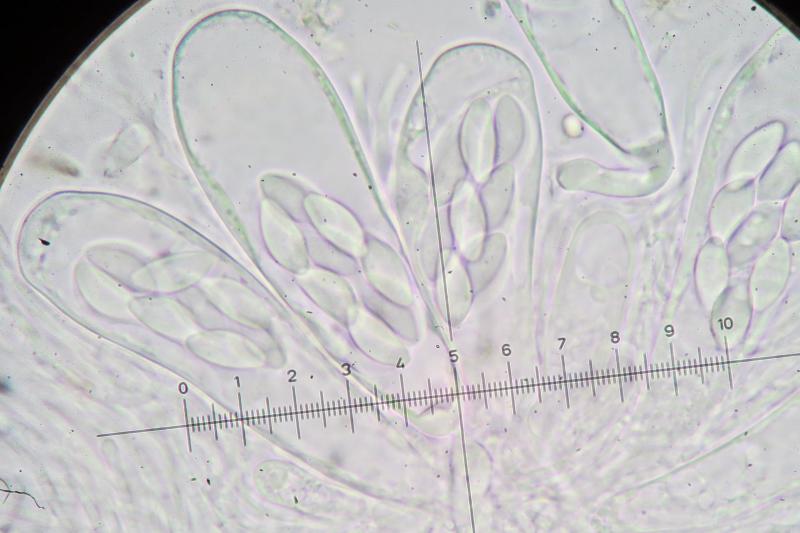
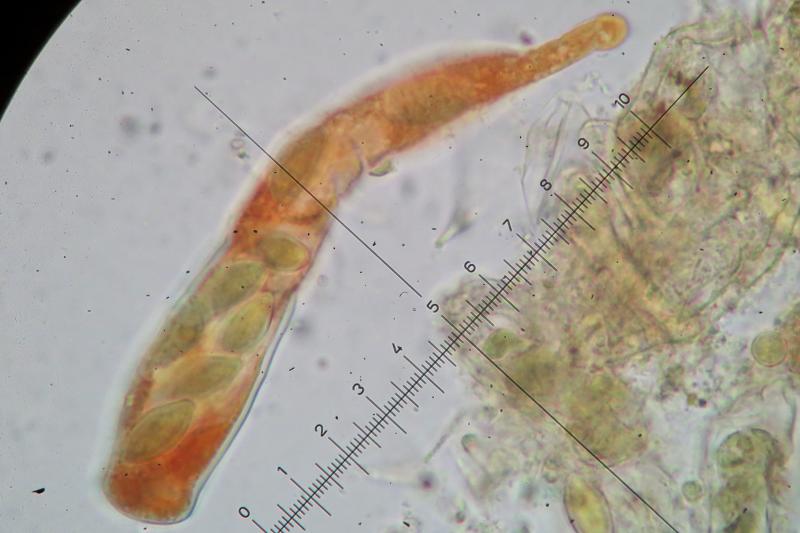
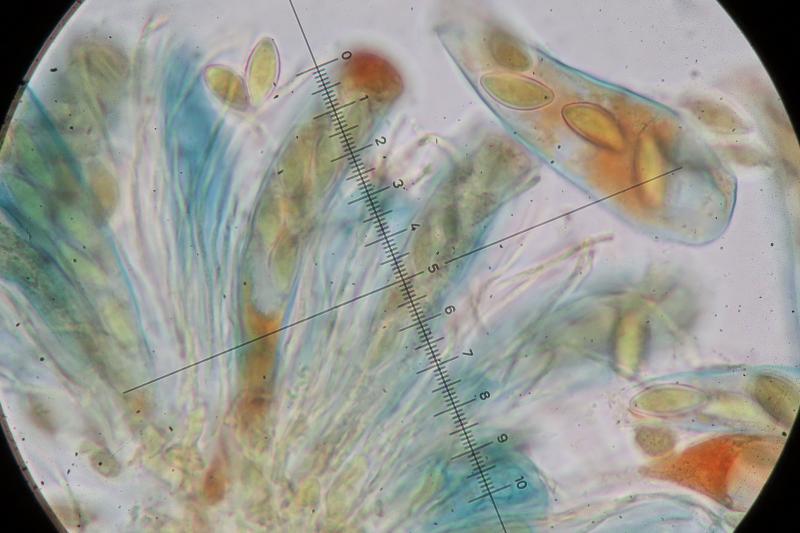
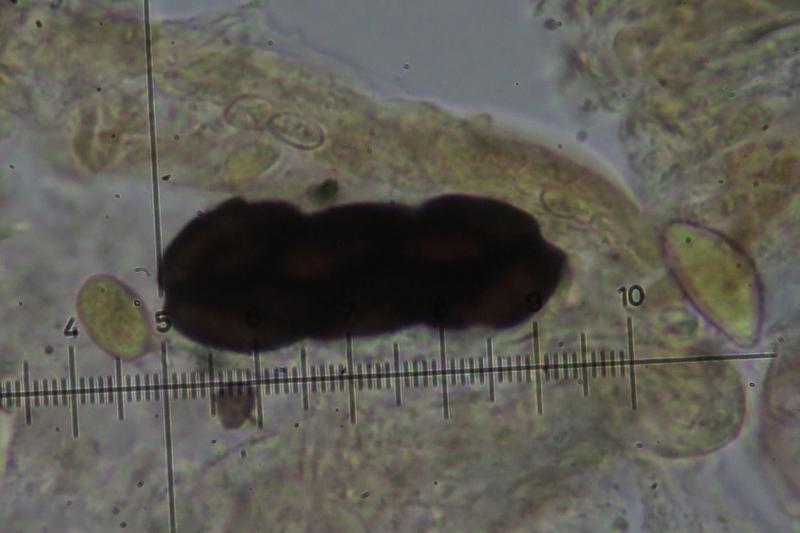

you have a Saccobolus species there. The spores start off as free in the ascus and then by a wonderful phenomenon become united in a single 'spore-ball' the spores becoming pigmented as they mature. The pattern formed by the spores in the spore-ball is constant within a species.
Most of the spores in your images are immature. Do you have van Brummelen's 1967 monograph?
Cordialement
Chris

This is probably Saccobolus depauperatus; to comfirmed by other observations.
Michel.
Hello,
Thanks for the info. I don't think however it's depauperatus as average spore clusters are over 40µm long. Could it be versicolor?
PS I will check again because all terms of the key I use aren't clear to me.
regards,
Ralph

Hello Ralph,
It can be A. depauperatus but also A. versicolor it depends on the size of the spore cluster (your photo shows pattern III) and the single spores.
For A. depauperatus cluster is 28-37x10-13 um; single spores 10-14.5x5-7.5 um.
For A. versicolor cluster is 40-62x14-19 um; single spores 13-21.5x6.5-9.5 um.
Spores seem to be immature but when your measurement is correct I would go for A. versicolor. Also the size of the ascus does compare with A. versicolor in my opinion
Measuring cluster and spore sizes have been made easier with the software program that goes with the microscope camera, works for me.
Joop