22-05-2026 21:35
Steve ClementsBonjour, I expected this find on old wood on our
22-05-2026 18:12
 Lothar Krieglsteiner
... in moist chamber from Portugal.As the fungus s
22-05-2026 20:08
Ethan CrensonHello all, Yesterday in NYC I was visiting an e
11-01-2022 16:36
 Jason Karakehian
Hi does anyone have a digital copy of Raitviir A (
20-05-2026 17:47
Margot en Geert VullingsWe found this Mollisia on dead Juncus stems mown l
22-05-2026 14:47
Gernot FriebesHi,superficial ascomata collected on bark of a liv
22-05-2026 14:44
Lothar Krieglsteiner
in unripe condition citrine yellow, then soon fadi
22-05-2026 13:29
Gernot FriebesHi,I am curious to hear your opinion on this mater
22-05-2026 10:59
 Nicolas VAN VOOREN
Trouvé sur Phragmites, ce que je pense être un L
20-05-2026 21:49
Margot en Geert VullingsWe found this Lachnum on Juncus stems mown last ye
Chaetosphaeria hebetiseta
Björn Wergen,
11-12-2014 23:10
 Hi there,
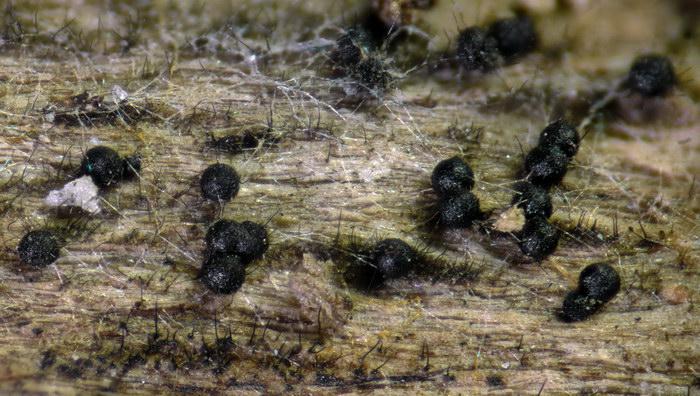
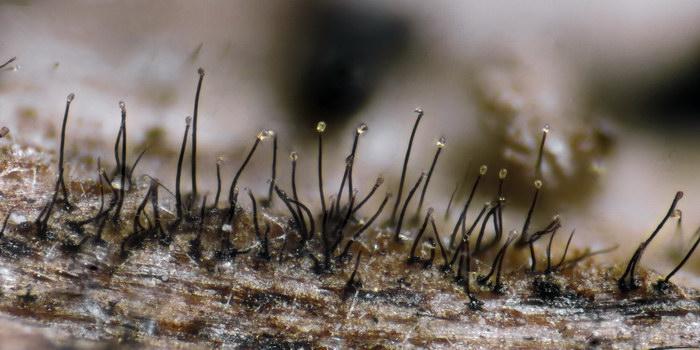
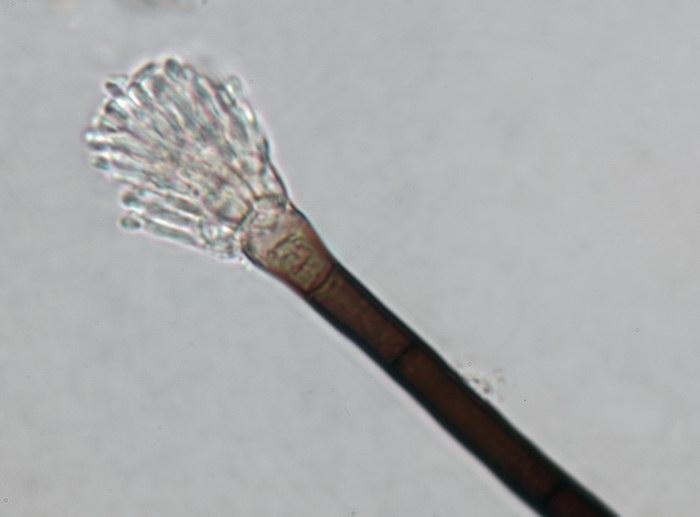
I have an austrian collection of a Chaetosphaeria with a conidial state nearby identified as "Chaetosphaeria hebetiseta" (Réblová 2000). I am a bit unsure because I am not familiar with all the terms (locus, collarette, "proliferating sympodially") used to describe the conidiomata.
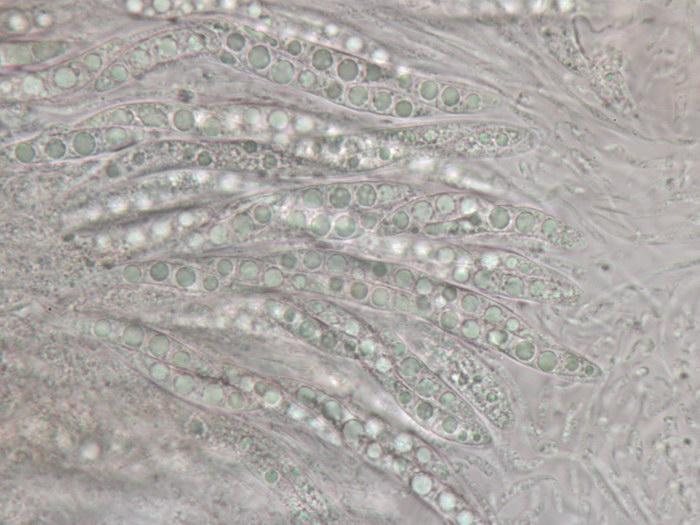
Spores 19-24 (28,5) x 4,4-6,5µm, 3septated. Asci 95-120x8-10µm. Conidia 2-3x1,5µm. On dead Fagus wood.
With the key I clearly come to the branch C. innumera - C. hebetiseta. The first one is described as having distinctly smaller spores and asci, and C. hebetiseta fits well with nearly all characteristics (the conidia are given as 1-1,5µm longer).
Perhaps someone can confirm the determination.
Thanks in advance,
björn