
19-05-2026 12:55
 Hardware Tony
After checking Gminder and Otto's library I cannot
19-05-2026 10:27
Patrice TANCHAUDBonjour, récolte récente sur terre retournée i
18-05-2026 12:43
Sylvie Le GoffBonjour à tousPuis je avoir votre aide sur ce que
19-05-2026 14:56
Åge OterhalsI found this white cushion-formed ascomycete on ro

18-05-2026 10:13
 Lieve Deceuninck
Dear forum members,I identified this as the teleom

17-05-2026 19:05
Thomas FlammerI have found this tiny 200 ym cup shaped apothecia
17-05-2026 16:41
Margot en Geert VullingsWe found this Lachnum on an old Rubus stem.Fruitbo
05-04-2026 22:46
 Lothar Krieglsteiner
on wood of Ceratonia, Algarve, 3.4.2026.The color
bitunicate on twigs on Olea europea var. sylvestris
Angel Pintos,
09-05-2016 16:58
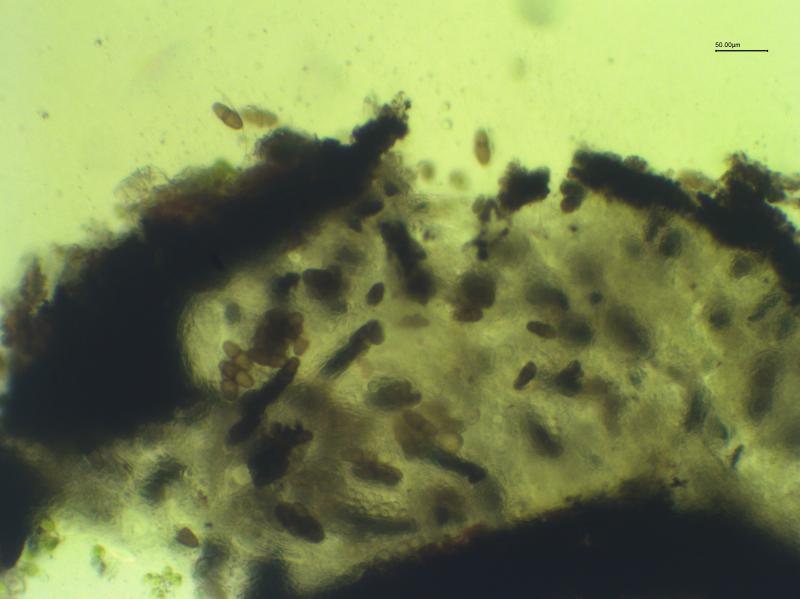
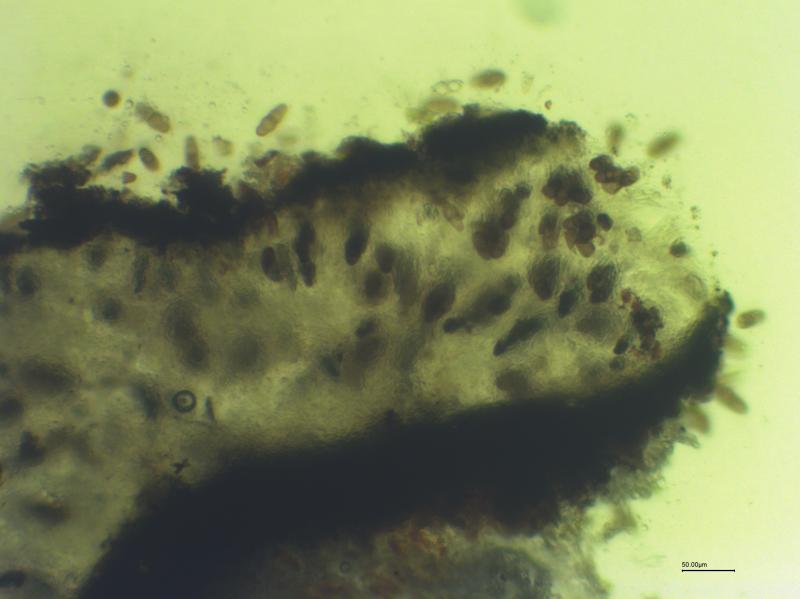
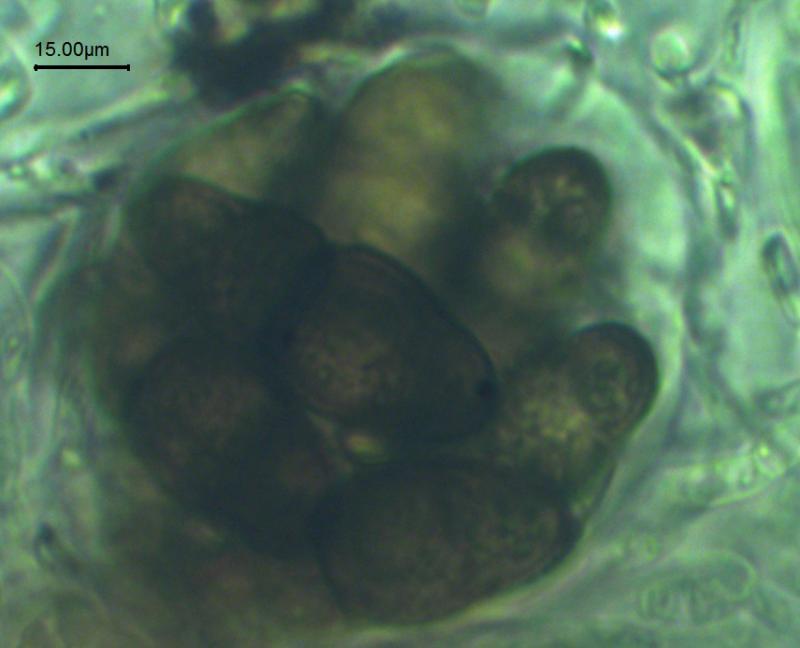
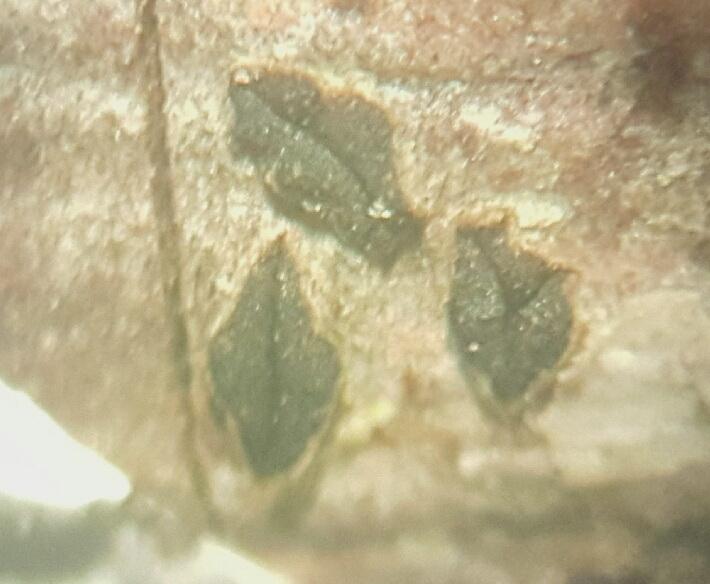
 Ascomata erumpent solitary or in small aggregated groups, disc flattened or deeply cup-shaped, or convex, somewhat ellipsoid tapering at the ends, with longitudinal and transversal opening, some rounded.
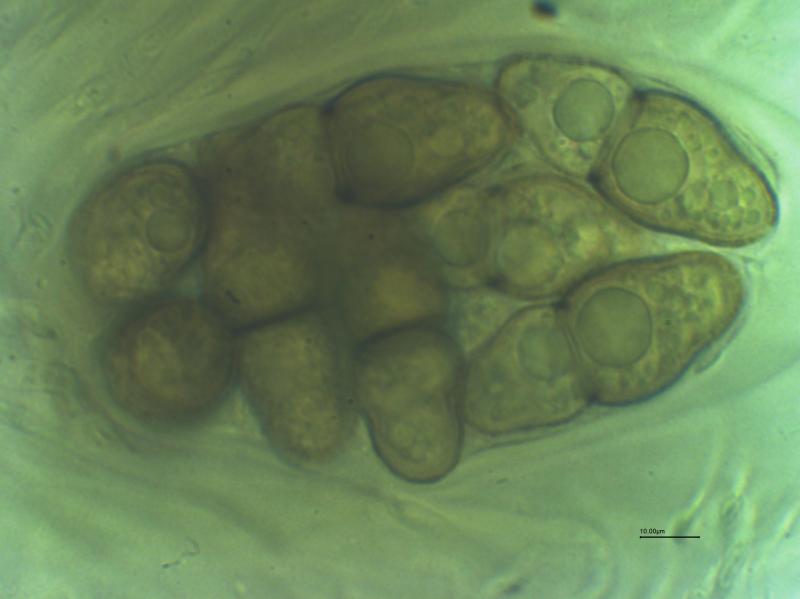
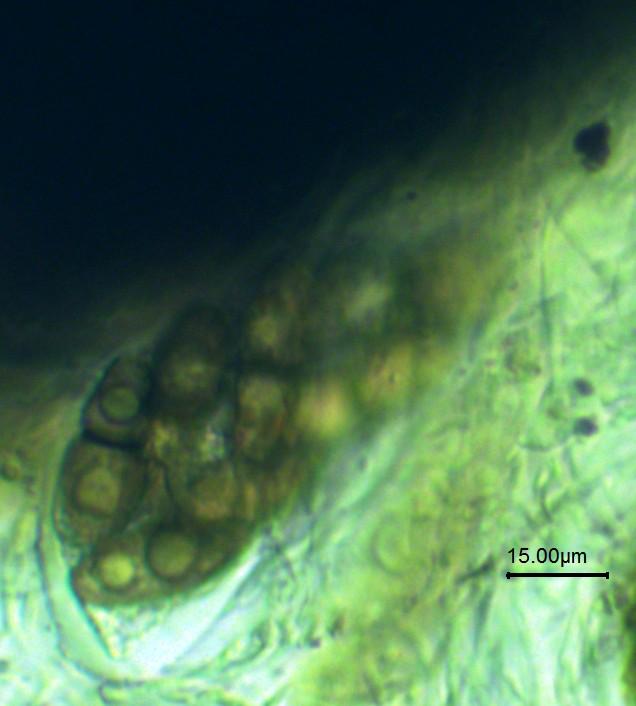
Asci clavate to spherical when mature, bitunicate.
Paraphysis hyaline elongated with septa.
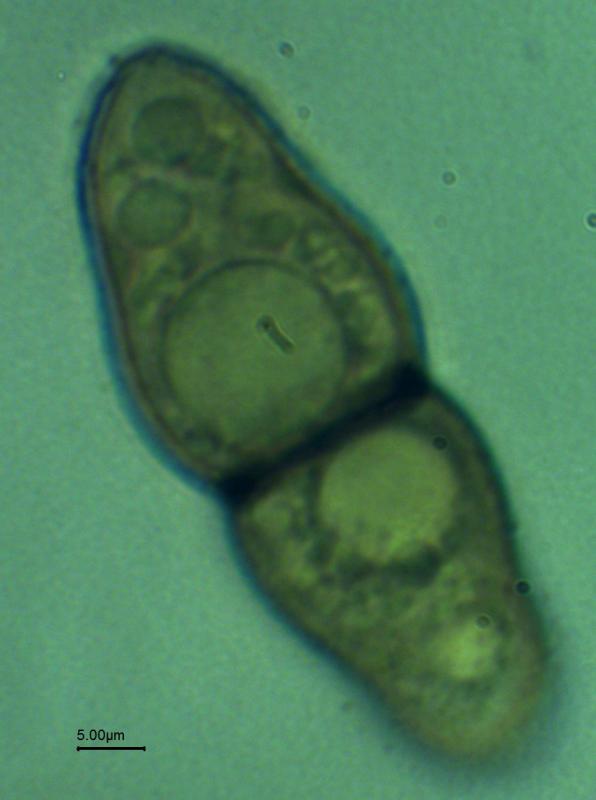
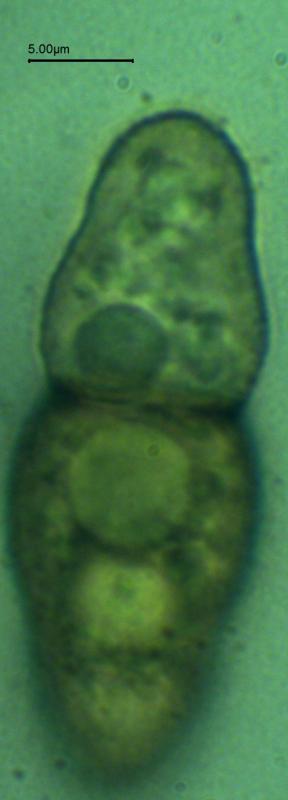
Ascospores one septa , brownis when mature
I have no idea, appreciate help
thanks
Angel
Dartanha Soares,
10-05-2016 14:56

Re : bitunicate on twigs on Olea europea var. sylvestris
Hi Angel,
The overall morphology looks like a member of Asterinaceae (e.g. Echidnodes, Lembosia), but the fact it is erumpent doesn't fit. Sorry can't help you further.
PS.: on photo 3, it seems that there is a 3-septate spore (in the center of the image, just above the ascoma), did you notice this, or it was just a false impression?
The overall morphology looks like a member of Asterinaceae (e.g. Echidnodes, Lembosia), but the fact it is erumpent doesn't fit. Sorry can't help you further.
PS.: on photo 3, it seems that there is a 3-septate spore (in the center of the image, just above the ascoma), did you notice this, or it was just a false impression?