
25-03-2026 10:35
Hulda Caroline HolteHello,I collected this species growing on a dead b
30-03-2026 12:03
 William Slosse
Hello all,On 27/03/26, in Kraaiveld in Wingene (Be
30-03-2026 09:53
Yanick BOULANGERBonjourVoici des petites fructifications poilues s
27-03-2026 10:47
Åge OterhalsI have tentatively identified this Stictis to S. f
28-03-2026 07:55
 Marc Detollenaere
Hello everybody,Yesterday I found a number of whit
26-03-2026 15:31
 Åke Widgren
Hello,I found this one in October last year, on r
27-03-2026 15:23
Gernot FriebesHi,this Trichopezizella deviates from typical T. b
27-03-2026 15:08
Gernot FriebesHi,I'm looking for help with this coelomycete on C
(16.2) 17.3 - 21.9 (22.4) × (7.3) 7.32 - 8.6 (9.1) µm
Q = (2.1) 2.2 - 2.8 (3.1) ; N = 32
Me = 19.2 × 7.9 µm ; Qe = 2.4
Any hint about it will be appreciated.
Thanks in advance,
zaca
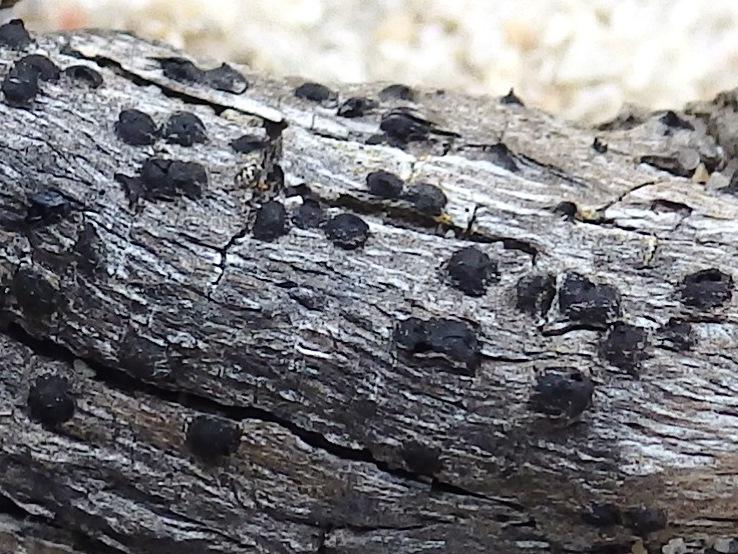
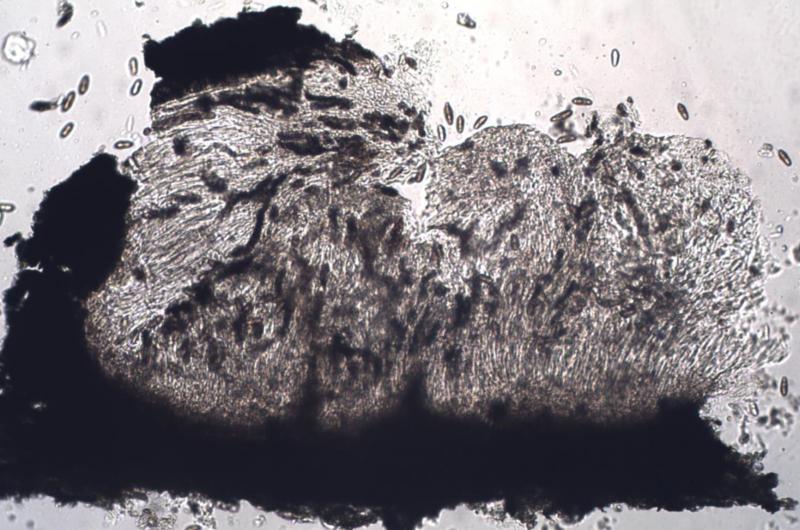
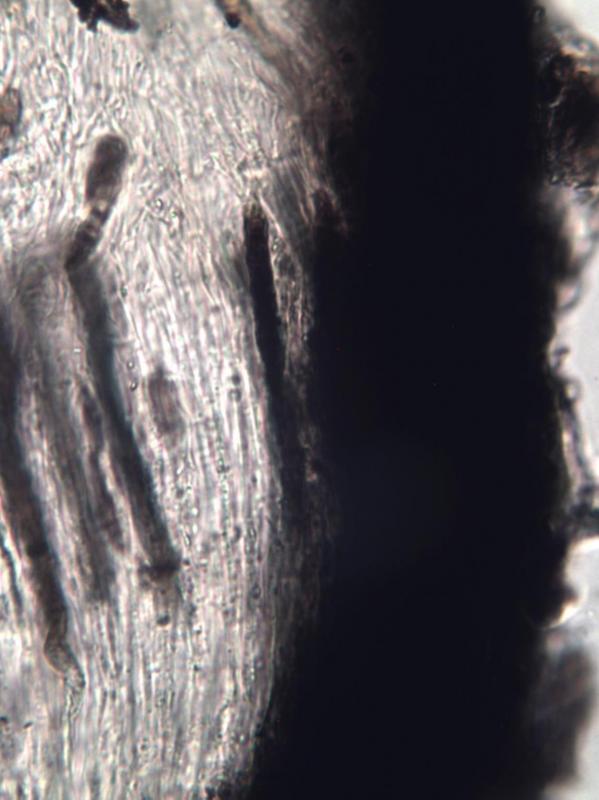
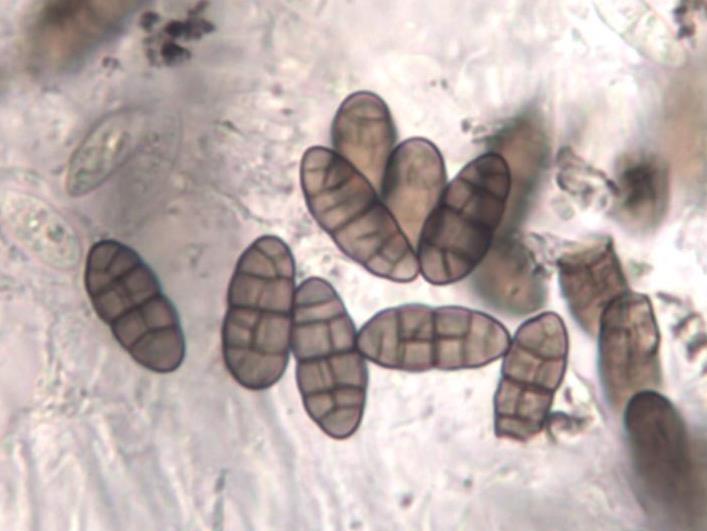
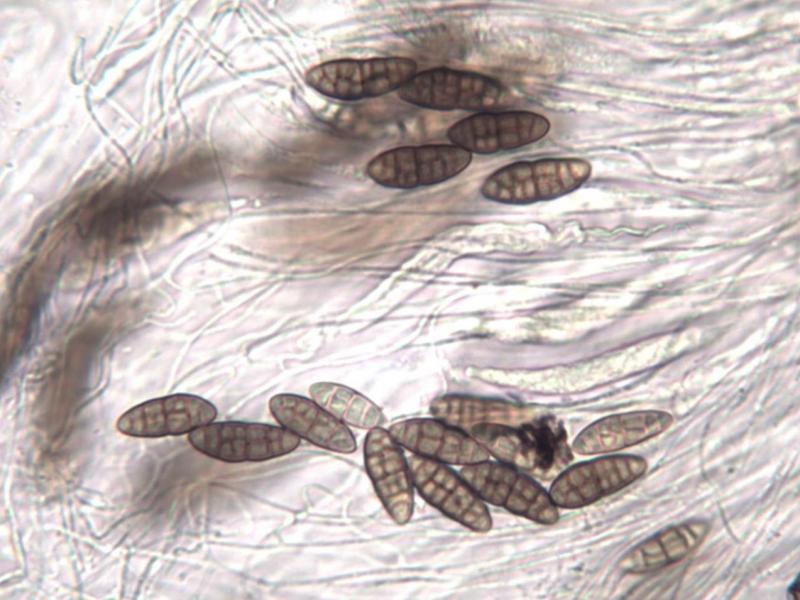
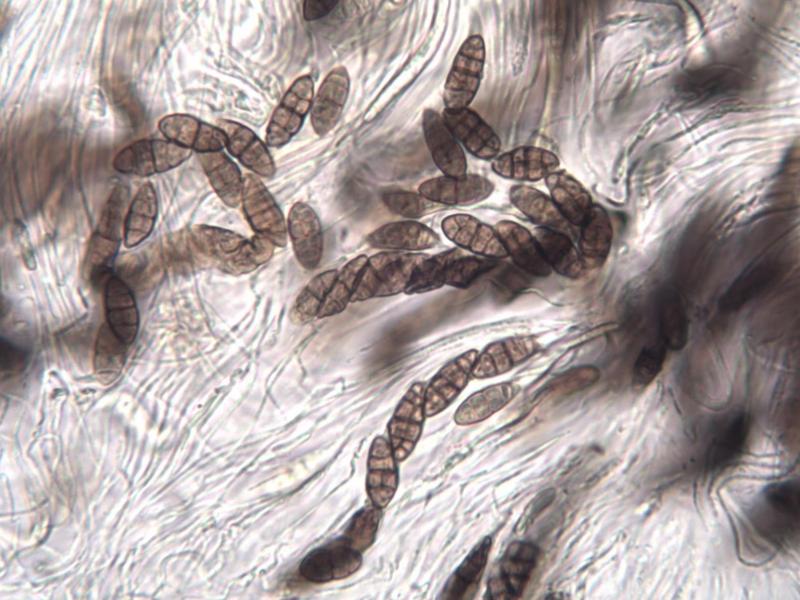
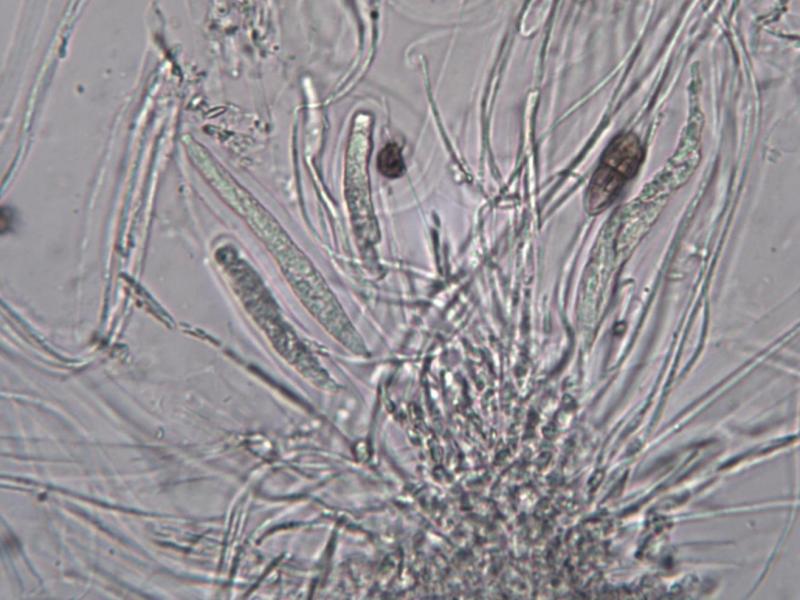
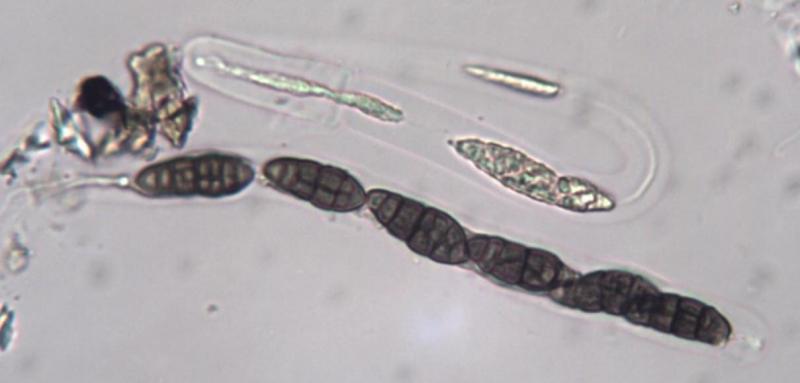
It took me all this time to understand that the name - Hysterobrevium mori - that I gave to a specimen collected on the same day, though at a different place, and considered at the topic
http://www.ascofrance.fr/search_forum/42906
belongs to this fungus, while the other is Oedohysterum cf. pulchrum as I concluded recently at
http://www.ascofrance.fr/search_forum/47602.
At the time any of the genera in consideration was new to me and I was far to imagine that they are so closely related, since the macro appearance seemed diverse.
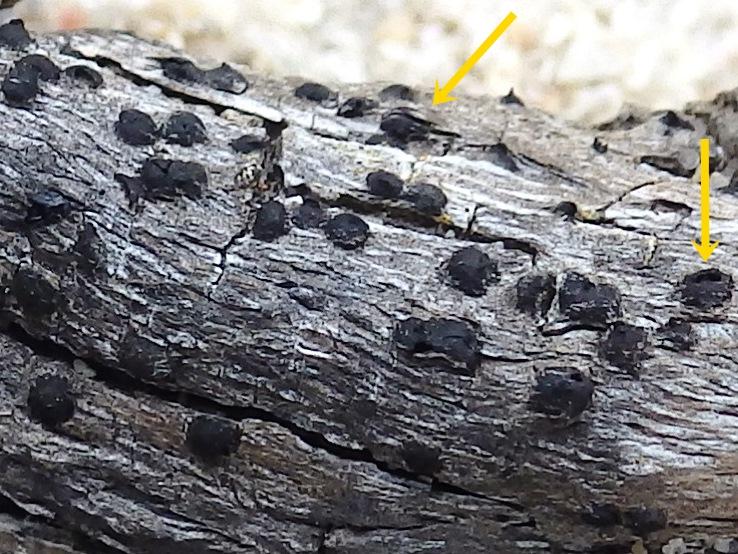
I arrive to this conclusion mainly based on the form of the spores and only after I looked again to the photo of the specimens; I took sometime to realise that at two places lirellae with a slit are visible, whereas the rest of them are deformed due to the degradation of the substrate and to the exposition to the natural elements. I upload again the photo with marks pointing to the "key places".
Summarizing, in spite of the strange looking of most of the fruit bodies of this fungus, I believe that it is Hysterobrevium mori.
Of course, I will appreciate your comments on the subject.
Regards,
zaca

Hi Zaca,
For this one, I don't know, if you don't observe the true shape of hysteriaceous ascomata it's difficult to say it belongs to Hysteriaceae but for the one collected in 2016, I agree, it's closed to your other Oedohysterium cf pulchrum.
Alain
Thanks for your comment.
At the end, looking for the (3) collections I have of H. mori, all with similar size and septation of the spores, in this collection the spores have ends more obtuse, so more according to the description of the species.
The collections I named O. pulchrum were collected at he same place, in two consecutive years.
Best regards,
zaca