
05-04-2026 22:46
 Lothar Krieglsteiner
on wood of Ceratonia, Algarve, 3.4.2026.The color
05-04-2026 20:40
 Robin Isaksson
Hi!Found i Japan on bark of Abies sp. Spores 35-4
31-03-2026 21:18
 Miguel Ángel Ribes
Good evening. oes anyone have the original descrip
31-03-2026 20:57
Stefan BlaserHello everybody, I hope somebody can help me with
26-03-2026 15:31
 Åke Widgren
Hello,I found this one in October last year, on r
31-03-2026 16:20
 Mlcoch Patrik
Hello, Please about help with determination. On
31-03-2026 08:19
 Bernard CLESSE
Bonjour à toutes et tous,Pourriez-vous m'aider à
Hairy black asco
Malcolm Greaves,
05-02-2017 16:11
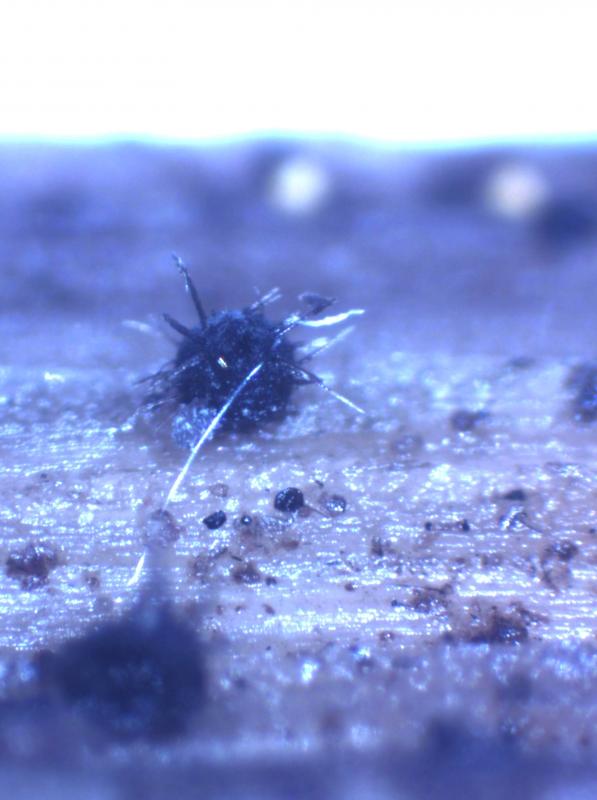
 This specimen was found on the dead stems of grass and rush cleared from a ditch in a local bog.
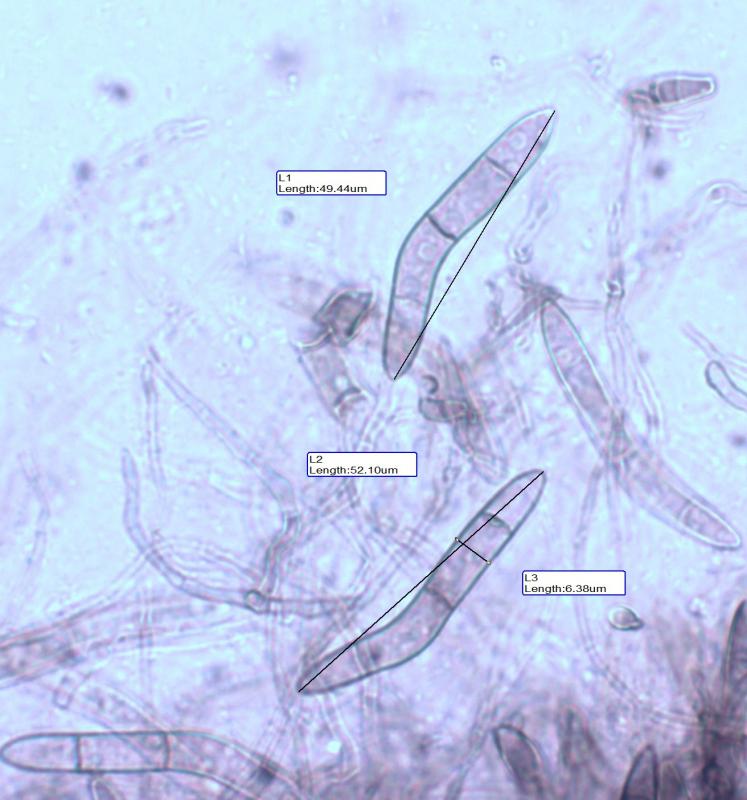
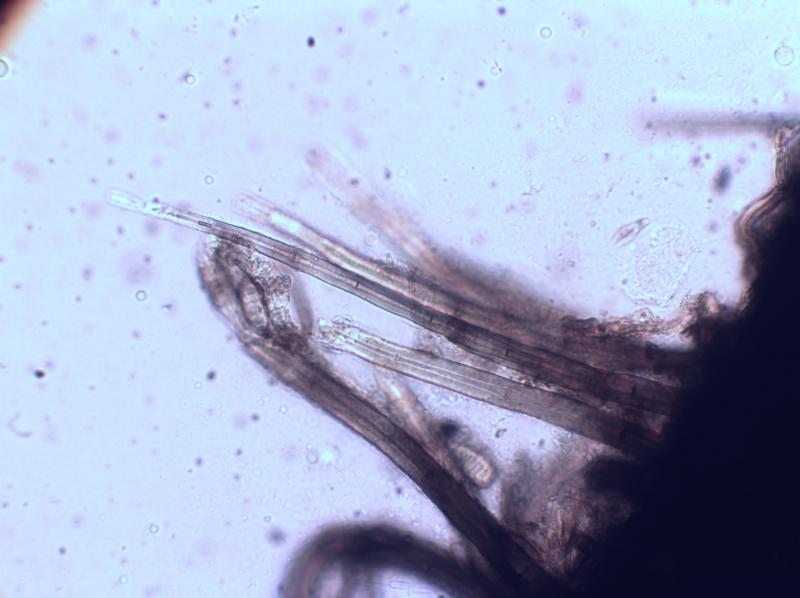
It had a black globose perithicum with a few very dark and very thick walled hairs. The spores were pale mostly 3 septate and bent. There were one or two othere types of spore found in the squash. The first skittle shaped and the second with 8 septa but I think both could have been introduced.
Can someone at least tell me the family
Thanks.
Mal

Bernard Declercq,
05-02-2017 17:42

Re : Hairy black asco
Dear Malcolm,
You collected most probably a Hilberina. Spore dimensions are close to those of H. dactylina (graminicolous) and H. spaghni (bryophilous) but the spores of these species are geniculate in the lower quarter.
Maybe Andy has a better idea?
Cheers,
Bernard
You collected most probably a Hilberina. Spore dimensions are close to those of H. dactylina (graminicolous) and H. spaghni (bryophilous) but the spores of these species are geniculate in the lower quarter.
Maybe Andy has a better idea?
Cheers,
Bernard
Malcolm Greaves,
05-02-2017 20:24
Re : Hairy black asco
Thanks Bernard
Hilberina certainly looks to be a good bet. The Key in the article in Mycologia 106(3) 2014) by Miller et al keys out quickly to H punctata with the note " H punctata differs from other Hilberina species by its roughened ascospores that are rounded at both ends and curved or bent in the middle. The ascospores lack the pointed attenuate basal tip common in other species." I am struggling to make out the roughened ascospores and the spore size given is 28-40 x 4-4.5. I have many that fit that size but many that are much longer and most are wider.
Mal
Hilberina certainly looks to be a good bet. The Key in the article in Mycologia 106(3) 2014) by Miller et al keys out quickly to H punctata with the note " H punctata differs from other Hilberina species by its roughened ascospores that are rounded at both ends and curved or bent in the middle. The ascospores lack the pointed attenuate basal tip common in other species." I am struggling to make out the roughened ascospores and the spore size given is 28-40 x 4-4.5. I have many that fit that size but many that are much longer and most are wider.
Mal
Chris Yeates,
05-02-2017 23:31

Re : Hairy black asco
Hi Mal
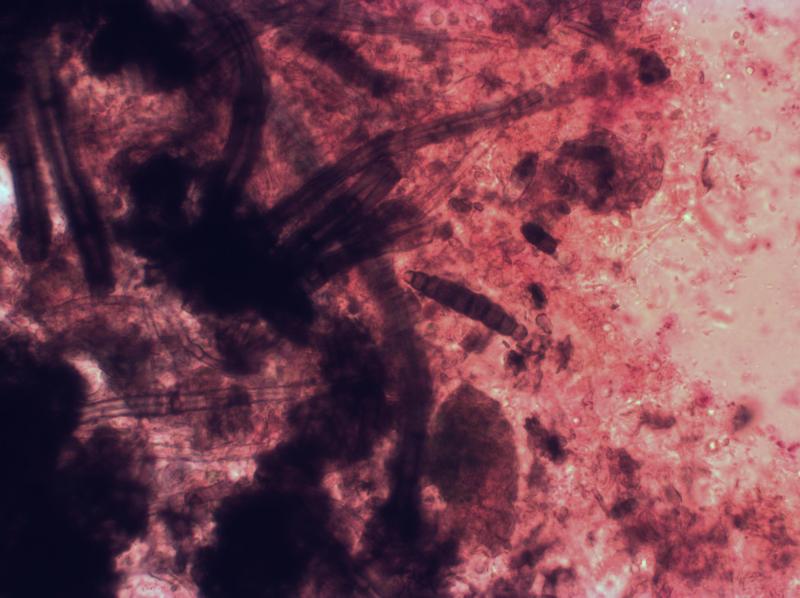
that branched conidium in image #4 rings (distant) bells. It's similar to http://www.ascofrance.com/search_recolte/3992 though I don't think it is that.
regards
Chris
PS the specimens arrived OK and I hope to process them in the next few days
that branched conidium in image #4 rings (distant) bells. It's similar to http://www.ascofrance.com/search_recolte/3992 though I don't think it is that.
regards
Chris
PS the specimens arrived OK and I hope to process them in the next few days
Malcolm Greaves,
07-02-2017 00:34
Re : Hairy black asco
I have heard from Andrew and he said "I believe what you have here is Hilberina punctata. The spore size variation does not bother me too much"
Mal
Mal
Chris Yeates,
15-04-2019 13:30
Re : Hairy black asco
Hi Mal
returning to that stray conidium in #4 I think I've realised what it is and I wasn't a million miles away with my suggestion above. I think it's the Prosthemium anamorph of Pleomassaria holoschista (albeit lacking a few of its arms). Compare with the lowest two images in Enrique's excellent plate at http://www.centrodeestudiosmicologicosasturianos.org/?p=331 An Alnus specialist at that site would be quite appropriate.
Best wishes
Chris