
28-03-2026 07:55
 Marc Detollenaere
Hello everybody,Yesterday I found a number of whit
27-03-2026 10:47
Åge OterhalsI have tentatively identified this Stictis to S. f
26-03-2026 15:31
 Åke Widgren
Hello,I found this one in October last year, on r
27-03-2026 15:23
Gernot FriebesHi,this Trichopezizella deviates from typical T. b
25-03-2026 10:35
Hulda Caroline HolteHello,I collected this species growing on a dead b
27-03-2026 15:08
Gernot FriebesHi,I'm looking for help with this coelomycete on C
24-03-2026 21:37
Elisabeth StöckliBonsoir,Sur bois (tronc) très pourri de conifère


25-03-2026 22:23
Marc Detollenaere
Dear Forum,On a debarked stem of Tilia, we found s
The dung is from an area of unimproved chalk grassland being grazed by cattle.
Location was on the South Downs, near Steyning, West Sussex, England.
Lat, long: 50.886673, -0.347259.
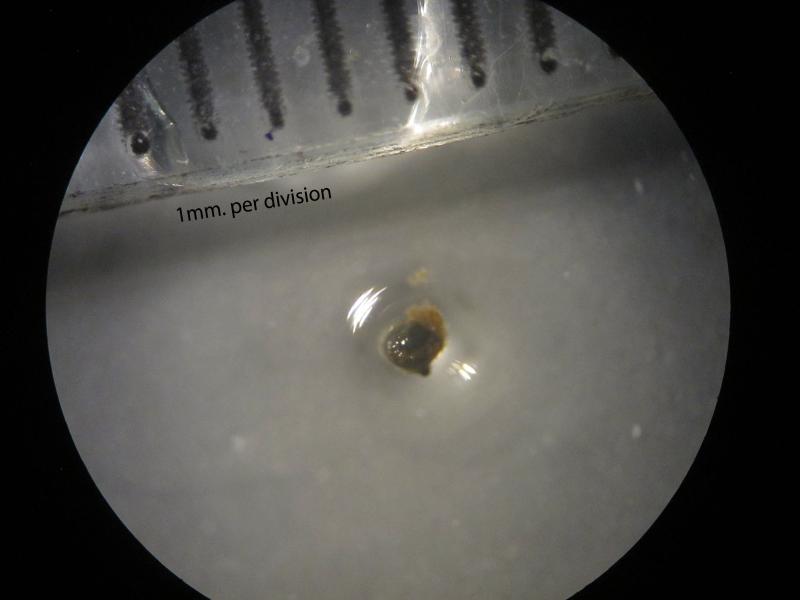
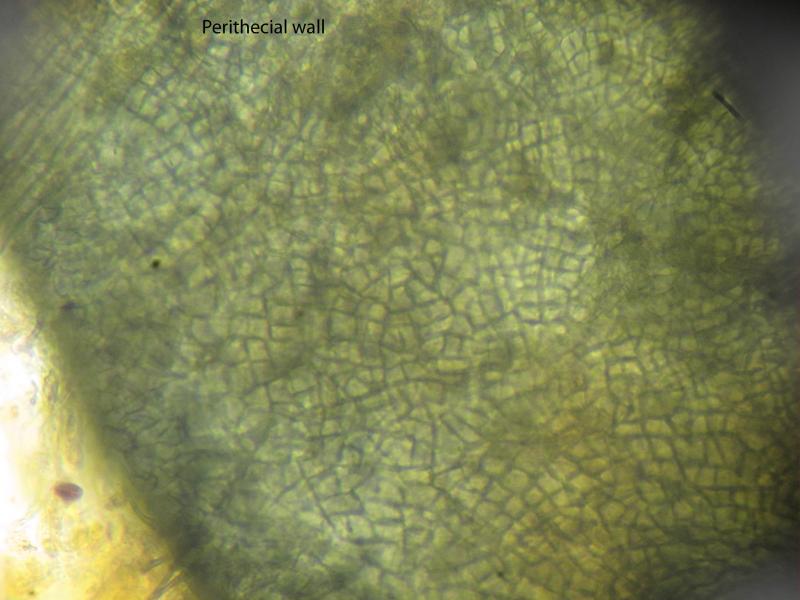
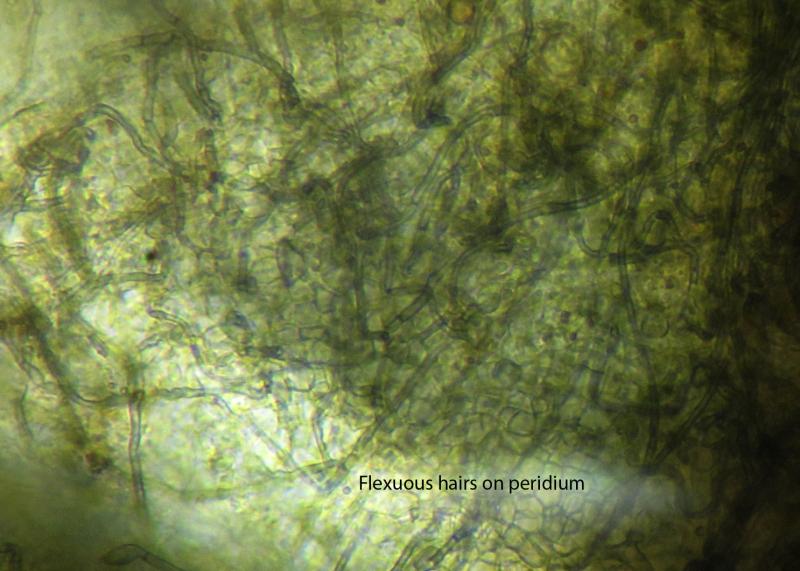
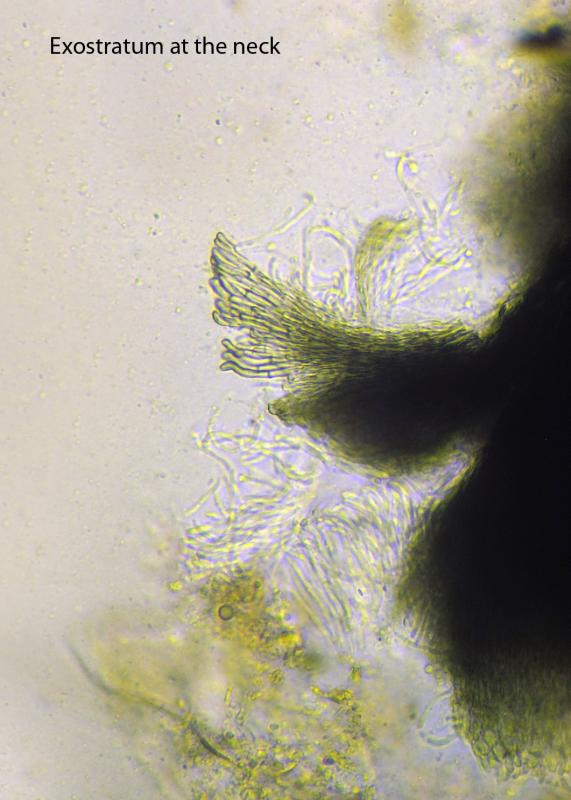
Perithecia immersed with necks protruding above dung surface. Perithecia 0.5mm. to 1mm. in diameter. Necks black and glabrous, perithecia semi-translucent. Hyphoid hairs growing from peridium, brown, septate and flexuous.
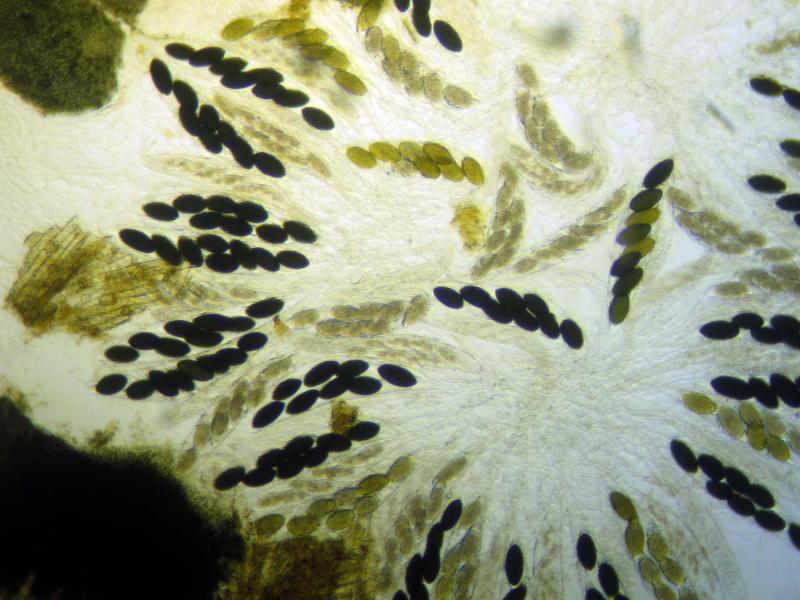
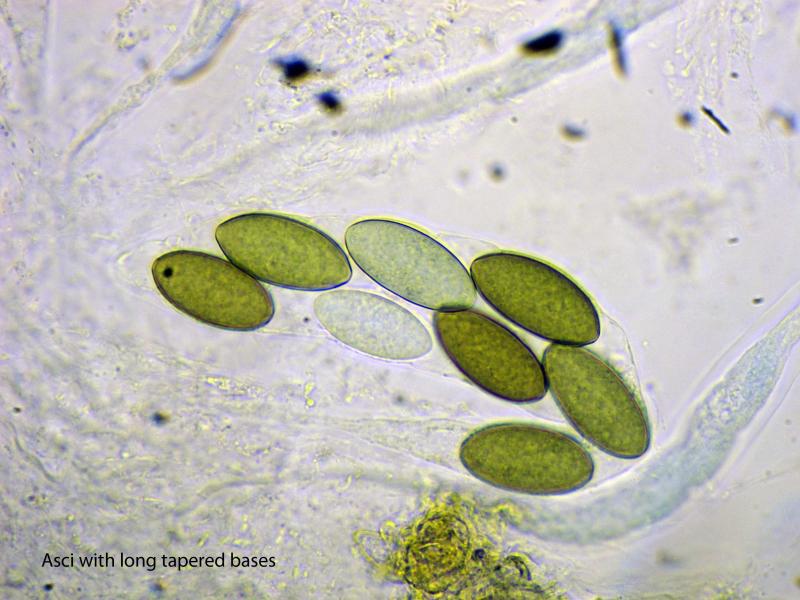
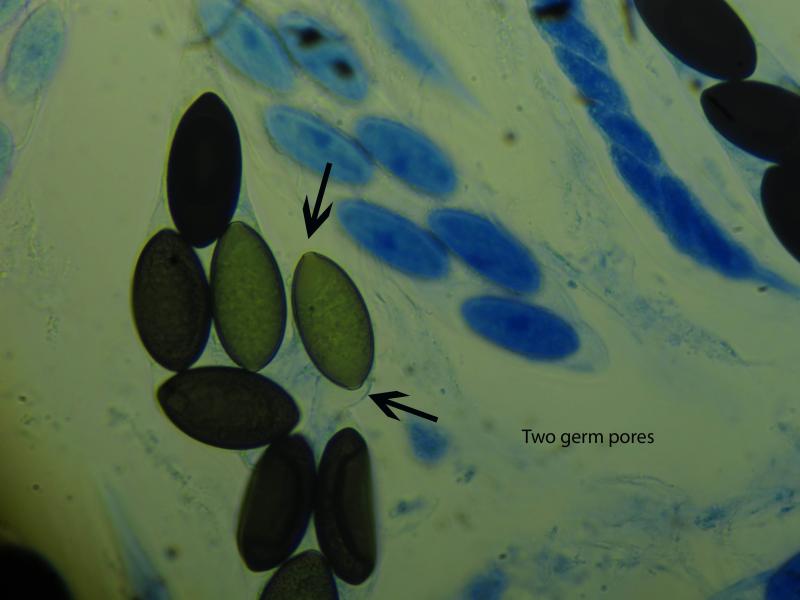
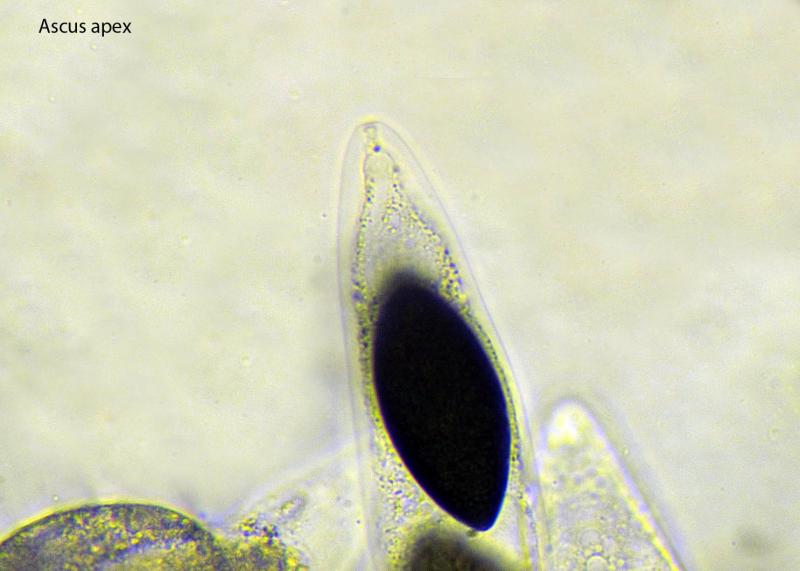
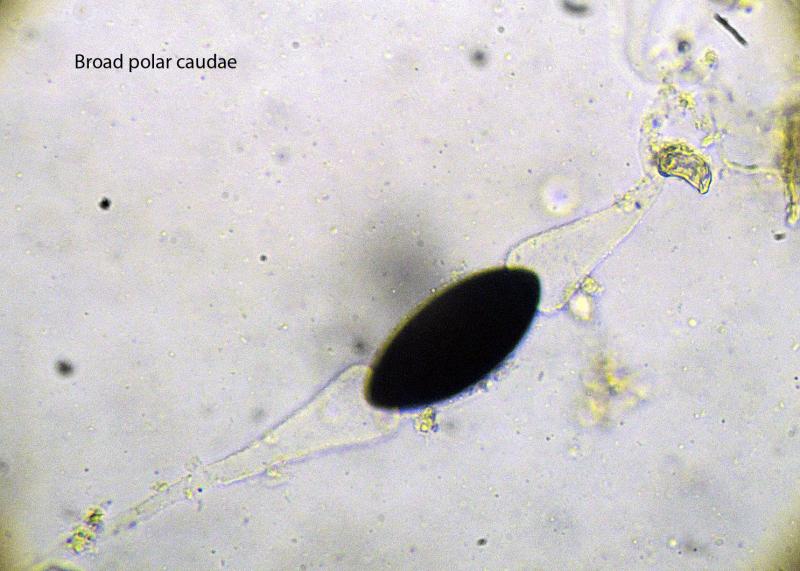
Asci average 300 x 50 tapering at base, spores irregularly arranged. Spores black, 43.75 to 52.5 (57) x 20-24. Central germ pore at each end of spore.
One gelatinous cauda attached centrally at each end. Caudae noticeably broad at base, similar in width or slightly wider than spores, faint striae visible at base of some.
It seems to be a good fit for Arnium cirriferum, as per the record on Ascofrance database and ref. Doveri, Fungi Fimicoli Italici and Anne Bell Coprophilous Ascomycetes of Australia.
As far as I am aware this species has not been found in the UK before so it would be great if someone could confirm the determination or suggest what else it might be.
Thanks
Vivien

Your determination is correct; It is a very beautiful species that is not very often found.
Michel.
Yes, I think the caudae in particular are most elegant and attractive.
All the best
Vivien