
27-03-2026 10:47
Åge OterhalsI have tentatively identified this Stictis to S. f
28-03-2026 07:55
 Marc Detollenaere
Hello everybody,Yesterday I found a number of whit
26-03-2026 15:31
 Åke Widgren
Hello,I found this one in October last year, on r
27-03-2026 15:23
Gernot FriebesHi,this Trichopezizella deviates from typical T. b
25-03-2026 10:35
Hulda Caroline HolteHello,I collected this species growing on a dead b
27-03-2026 15:08
Gernot FriebesHi,I'm looking for help with this coelomycete on C
24-03-2026 21:37
Elisabeth StöckliBonsoir,Sur bois (tronc) très pourri de conifère


25-03-2026 22:23
Marc Detollenaere
Dear Forum,On a debarked stem of Tilia, we found s
Dermea padi or prunastri ?
Peter Püwert,
14-02-2017 02:46
 Hi all,
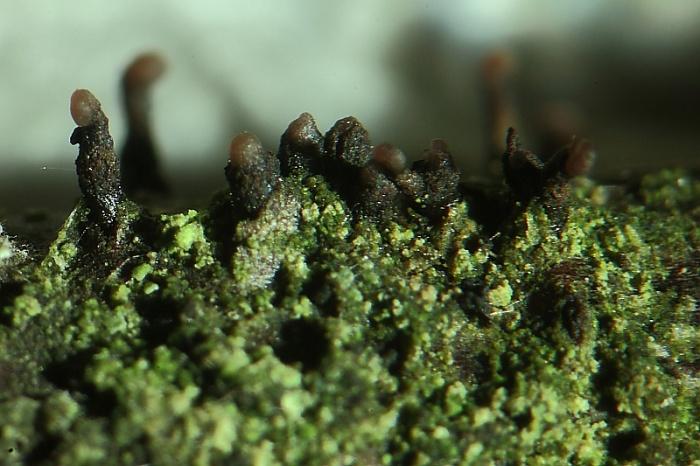
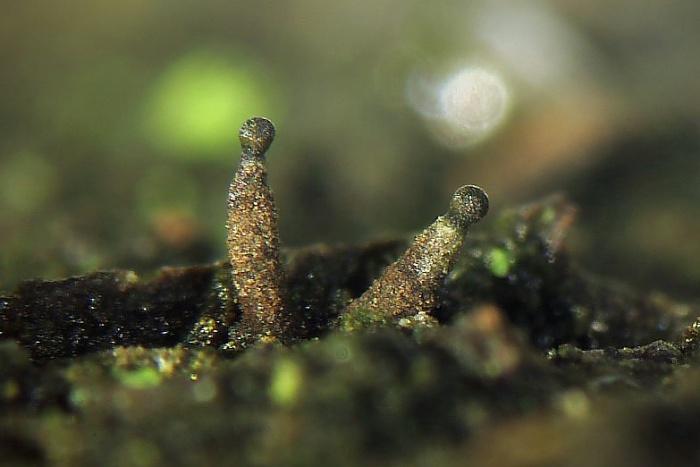
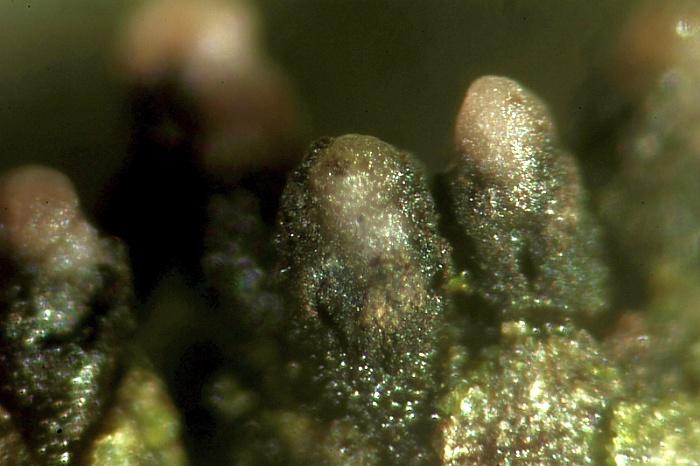
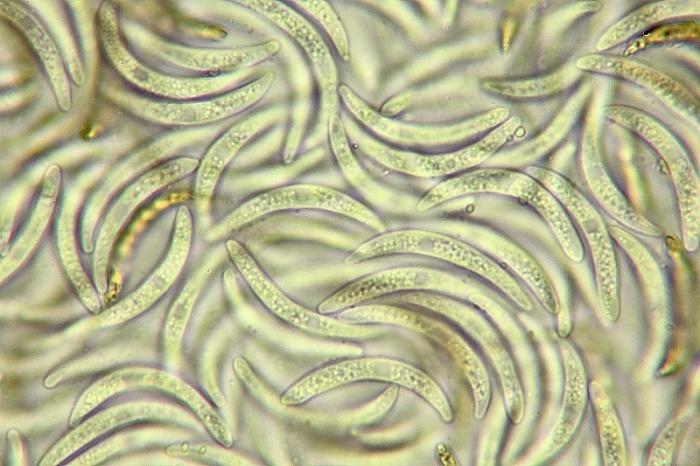
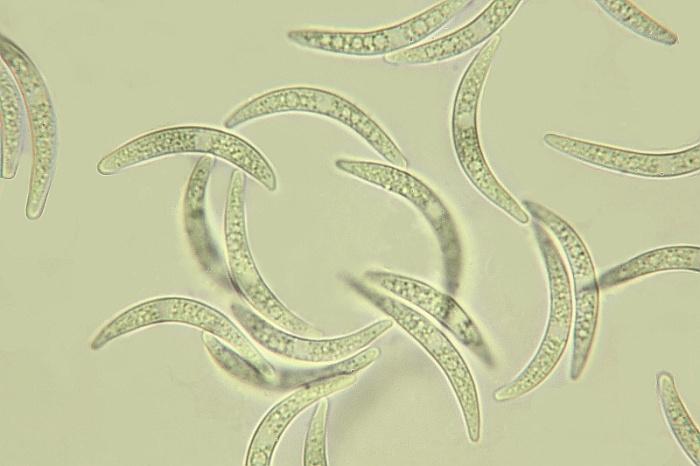
this Dermea if I have in accordance with GROVES (1946), DENNIS (1981), ELLIS (1985) ... as Dermea padi definitely. Conidiospores 19,2 - 22,1 x 2,4 - 2,7 µm.
Now here I find these statements:
http://www.ascofrance.fr/recolte/3558/leotiomycetes-helotiales-dermateaceae-dermea-padi
http://www.ascofrance.fr/recolte/2880/leotiomycetes-helotiales-dermateaceae-dermea-prunastri
https://www.cubbyusercontent.com/pl/CC%2bAscomycota/_1354d48ffaad4b59bd3ffdbb35915d1f#CC
Where does the error lie here?
Greetings Peter.
Hans-Otto Baral,
14-02-2017 08:27

Re : Dermea padi or prunastri ?
I fear this cannot be answered easily. Groves did not study a type of D. prunastri when he reported such wide conidia for that species. His description recalls for me D. padi, whereas his description of D. padi recalls D. prunastri as I interpret these species. I observed a high host specificity and suspect that your collection was on Prunus spinosa, right?
Groves gives several Prunus species for D. padi and merely "Prunus spp." for prunastri. For D. padi he says that the spores are sickle-shaped to almost straight, 2.5-4 µm wide, and for prunastri +/- straight, mainly 5-7 µm wide.
One of the species studied by Groves (Roumeguere) was named Cenangium prunastri but Groves identified it as D. padi.
These old taxa described by Albertini & Schweinitz and Persoon and Fries are probably not documented by exsiccata and surely lack microscopic data in their description. So I think a revision is needed which defines neotypes. These should be collected in Europe, maybe in America different species exist.
The choice of the names prunastri and padi by us might have followed simply the host specificity which leads to padi for the species on Prunus padus.
I see that besides P. spinosa I have seen also a sample on Prunus domestica with narrow falcate conidia.
Zotto
Groves gives several Prunus species for D. padi and merely "Prunus spp." for prunastri. For D. padi he says that the spores are sickle-shaped to almost straight, 2.5-4 µm wide, and for prunastri +/- straight, mainly 5-7 µm wide.
One of the species studied by Groves (Roumeguere) was named Cenangium prunastri but Groves identified it as D. padi.
These old taxa described by Albertini & Schweinitz and Persoon and Fries are probably not documented by exsiccata and surely lack microscopic data in their description. So I think a revision is needed which defines neotypes. These should be collected in Europe, maybe in America different species exist.
The choice of the names prunastri and padi by us might have followed simply the host specificity which leads to padi for the species on Prunus padus.
I see that besides P. spinosa I have seen also a sample on Prunus domestica with narrow falcate conidia.
Zotto
Peter Püwert,
14-02-2017 20:33
Re : Dermea padi or prunastri ?
Hi,
yes, the illustrated finding was on overgrown/ wild Pr. domesticum.
I already understand the connections, but actually I should have formulated my question in a different way: Are with GROVES, DENNIS ....... to certain finding now wrongly ?
Greetings Peter.
yes, the illustrated finding was on overgrown/ wild Pr. domesticum.
I already understand the connections, but actually I should have formulated my question in a different way: Are with GROVES, DENNIS ....... to certain finding now wrongly ?
Greetings Peter.
Hans-Otto Baral,
14-02-2017 20:46
Re : Dermea padi or prunastri ?
What is right and what is wrong needs to be brought out by a detailed study. First we must look whether a host species is indicated in the protologue, I did not look up so far, and I just se it is difficult.
Sometimes the identity of a name depends on the epitype that is proposed.
Sometimes the identity of a name depends on the epitype that is proposed.