
25-03-2026 10:35
Hulda Caroline HolteHello,I collected this species growing on a dead b
30-03-2026 12:03
 William Slosse
Hello all,On 27/03/26, in Kraaiveld in Wingene (Be
30-03-2026 09:53
Yanick BOULANGERBonjourVoici des petites fructifications poilues s
27-03-2026 10:47
Åge OterhalsI have tentatively identified this Stictis to S. f
28-03-2026 07:55
 Marc Detollenaere
Hello everybody,Yesterday I found a number of whit
26-03-2026 15:31
 Åke Widgren
Hello,I found this one in October last year, on r
27-03-2026 15:23
Gernot FriebesHi,this Trichopezizella deviates from typical T. b
27-03-2026 15:08
Gernot FriebesHi,I'm looking for help with this coelomycete on C
I'm again in trouble to classify specimens in Hysteriaceae. In May last year at the topic
"Hysterobrevium mori (?) on Juniperus" - http://www.ascofrance.fr/search_forum/42906
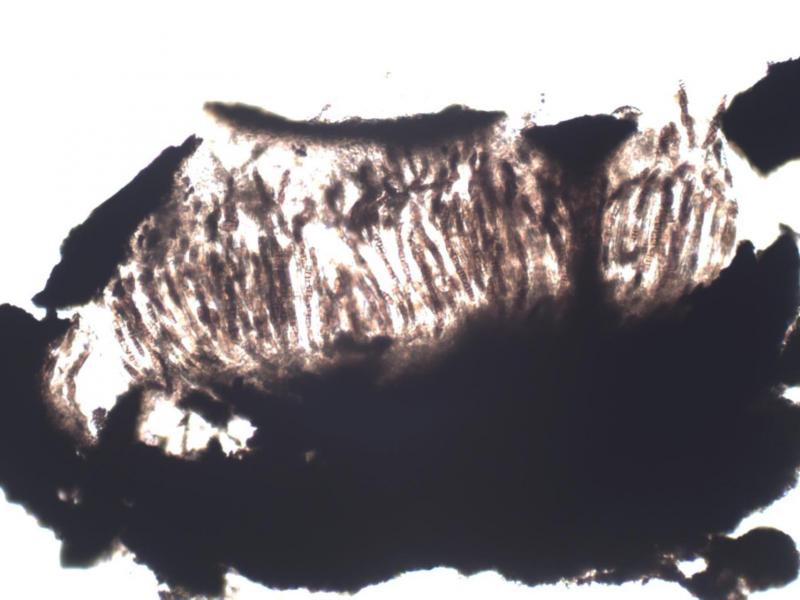
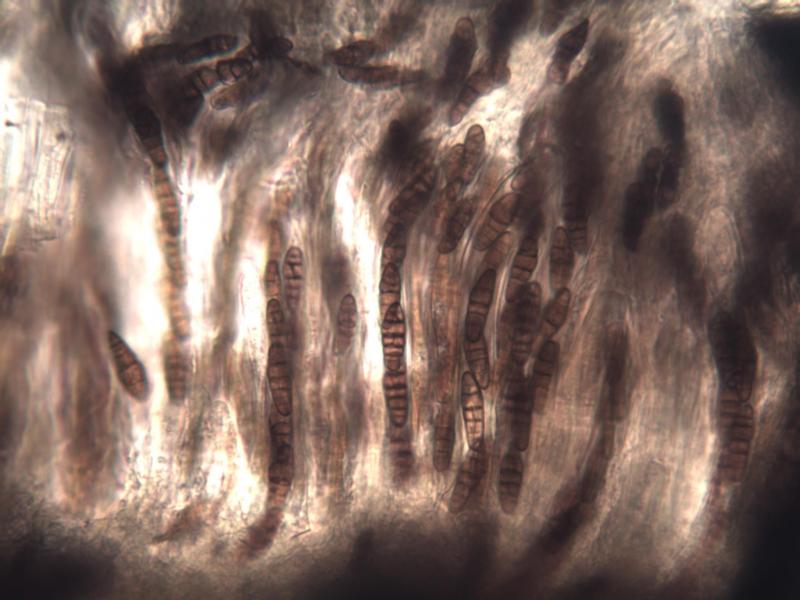
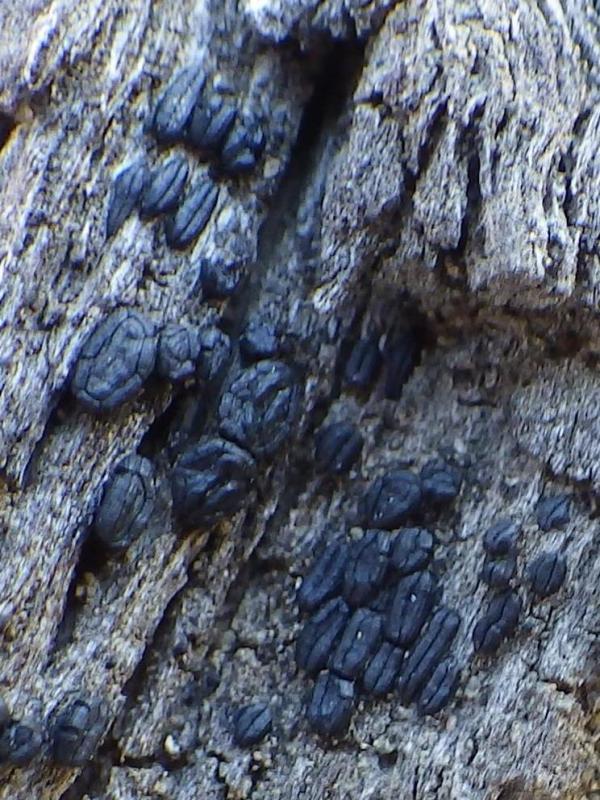
I thought to have found Hysterobrevium mori. More recently, I found other specimens, which seem to be indeed of that species, by the spores configuration and dimensons. I returned to the place the first observation mentioned above and found new specimens. Now, I have no longer doubts that they must be something other than H. mori. I looked again to the E. Boehm´s webpage:
http://www.eboehm.com/hysteriaceae.html
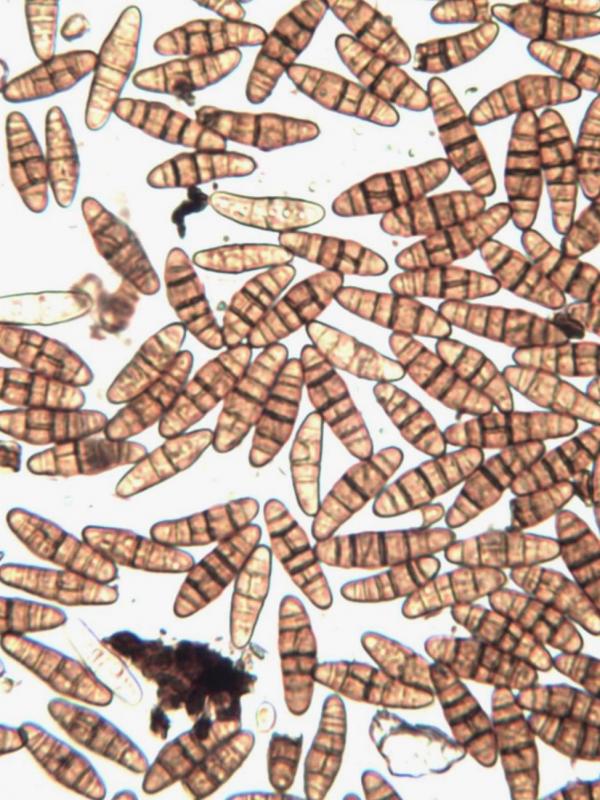
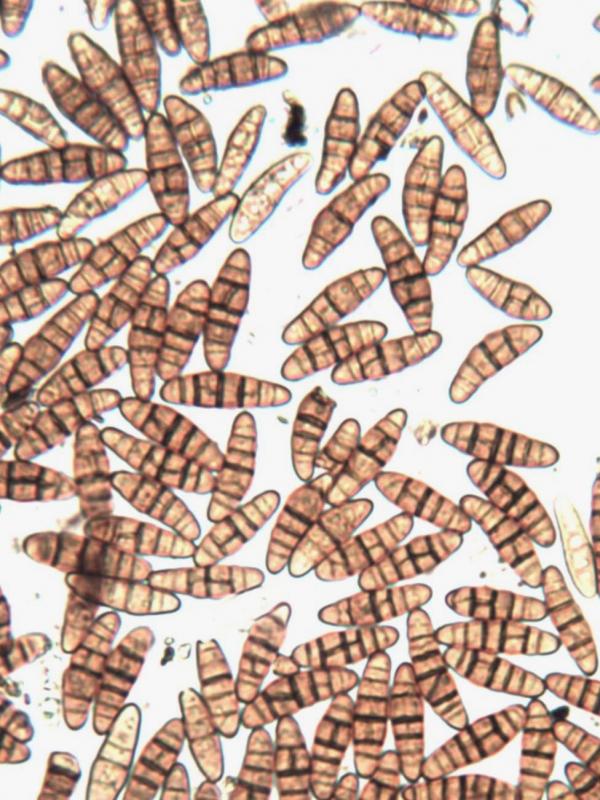
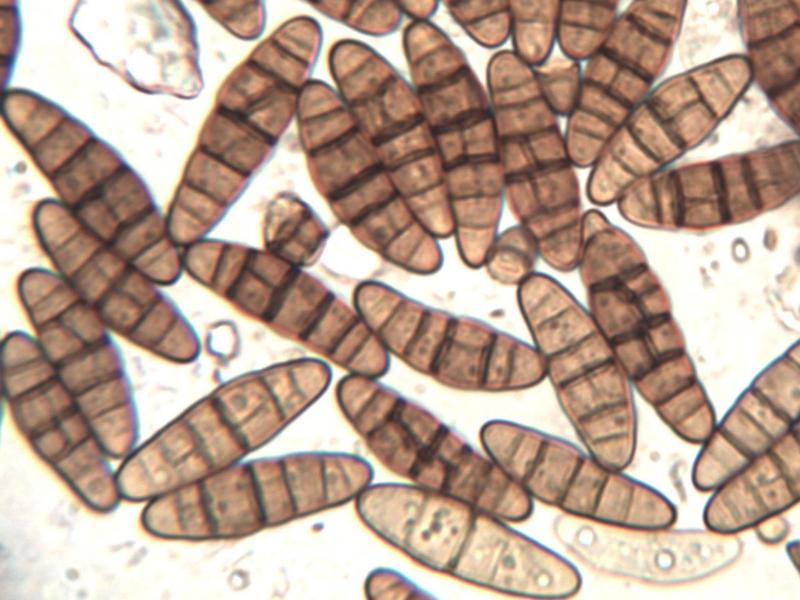
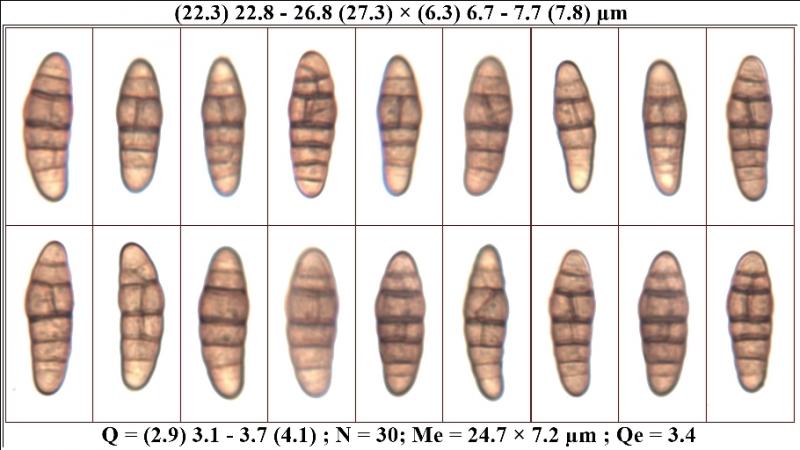
and conclude that my specimens must belong to the genus Oedohysterium, must probably to a species close to O. pulchrum or even itself. The fact is that, the hymenium shows what can be describe as a red pigmentation as well as the spores, which have (5-) 6 transversal septa and most of them have a longitudinal septum at the 3rd cell from the apex, some of are also longitudinally septated at adjacent cells, and some have no longitudinal septa at all. All these feature fit quite well in the above mentioned species, but the spores dimensions, more precisely their widht does not fit. I got the following values:
(22.3) 22.8 - 26.8 (27.3) × (6.3) 6.7 - 7.7 (7.8) µm
Q = (2.9) 3.1 - 3.7 (4.1) ; N = 30
Me = 24.7 × 7.2 µm ; Qe = 3.4
whereas the values given at eboehm.com are:
22 - 25 (-27) x 5-6 µm.
Can anyone give an help?
Thanks in advance,
zaca
P.S.: I saw that Alain Gardiennet recently posted on the Database another species of Oedohysterium, O. insidens, whose spores are only tranversely septated and bigger (I presume).
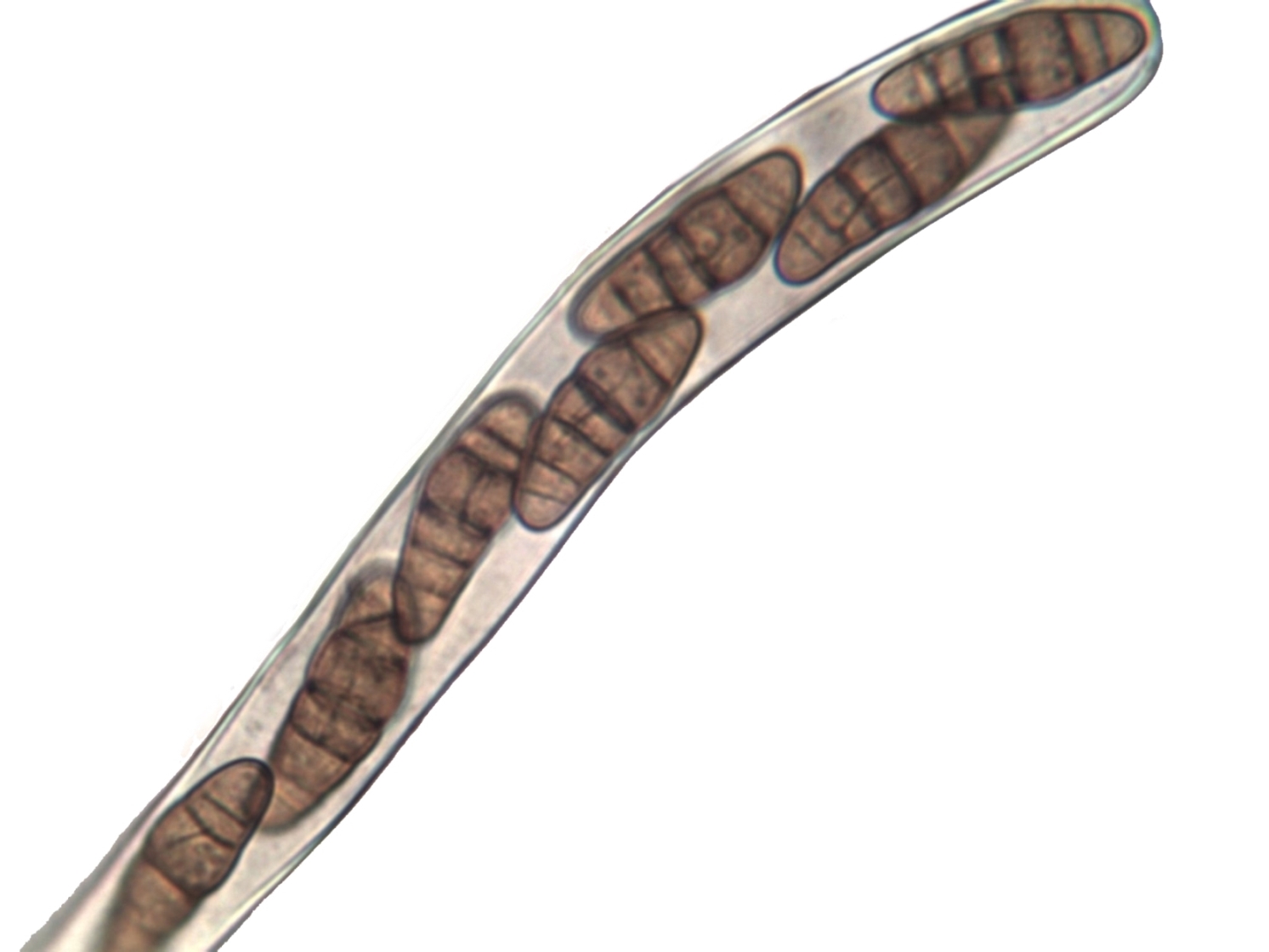 Ascus
Ascus
Hi Zaca,
Your analysis is exact : it's an Oedohysterium very very closed to O. pulchrum.
Did you colpare with the the paper Checa et al. 2007 ?
Alain
I add scale on one photo of O. insidens
Thanks for the confirmation of my analysis. I could not access the paper of Checa et al. (2007).
Best regards,
zaca

Checa & al. 2007- I do not have it either :-)
Regads, Lothar

Checa et al. Some new hysteriaceous Fungi from Costa Rica, Mycologia, 99(2), 2007, pp. 285–290.
Ami Alain, il faut citer tes références pour les copains.
but paid. Since this research is not financed I will not pay for it.
 Checa et al (2007)
Regards,
zaca
Thanks a lot, Francois!
Best regards, Lothar