
25-03-2026 10:35
Hulda Caroline HolteHello,I collected this species growing on a dead b
30-03-2026 12:03
 William Slosse
Hello all,On 27/03/26, in Kraaiveld in Wingene (Be
30-03-2026 09:53
Yanick BOULANGERBonjourVoici des petites fructifications poilues s
27-03-2026 10:47
Åge OterhalsI have tentatively identified this Stictis to S. f
28-03-2026 07:55
 Marc Detollenaere
Hello everybody,Yesterday I found a number of whit
26-03-2026 15:31
 Åke Widgren
Hello,I found this one in October last year, on r
27-03-2026 15:23
Gernot FriebesHi,this Trichopezizella deviates from typical T. b
27-03-2026 15:08
Gernot FriebesHi,I'm looking for help with this coelomycete on C
 Hi,
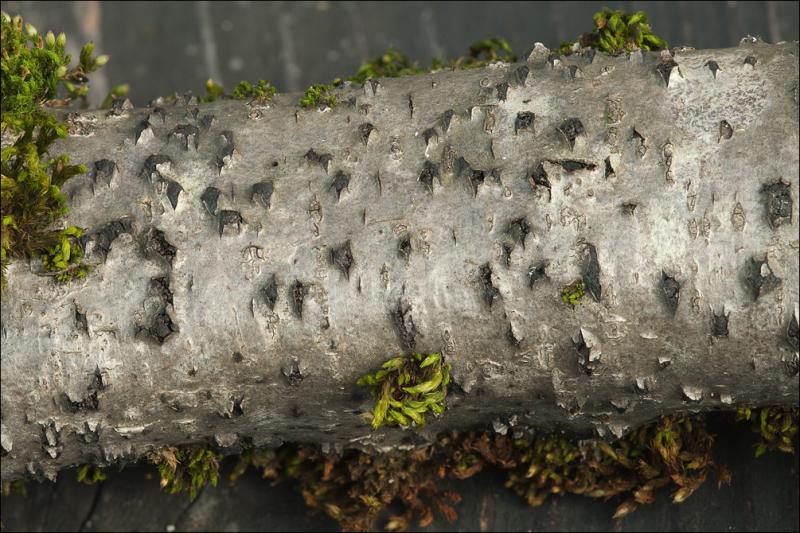
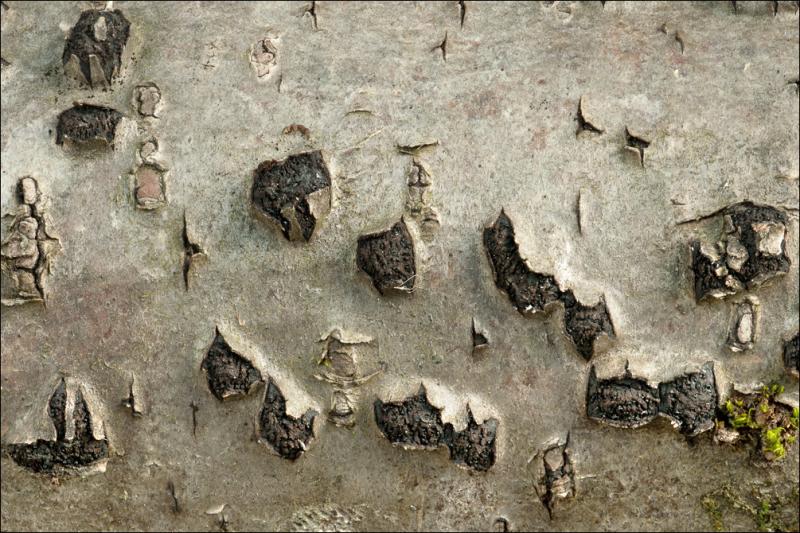
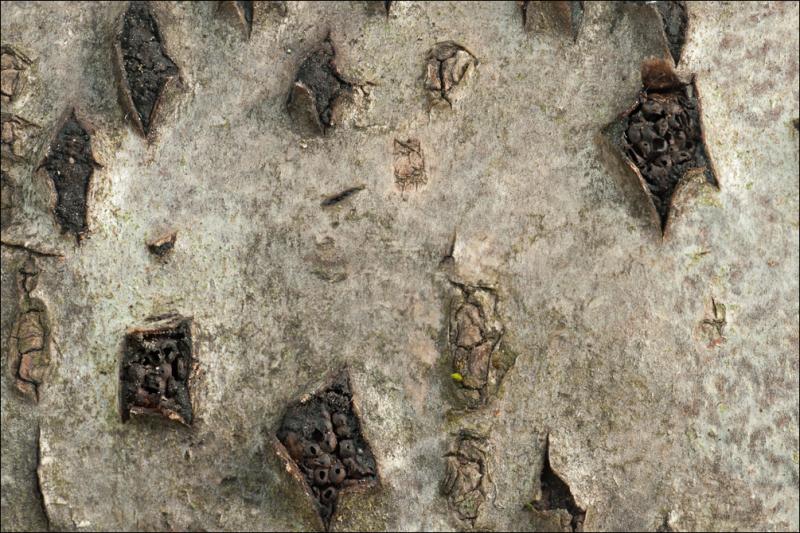
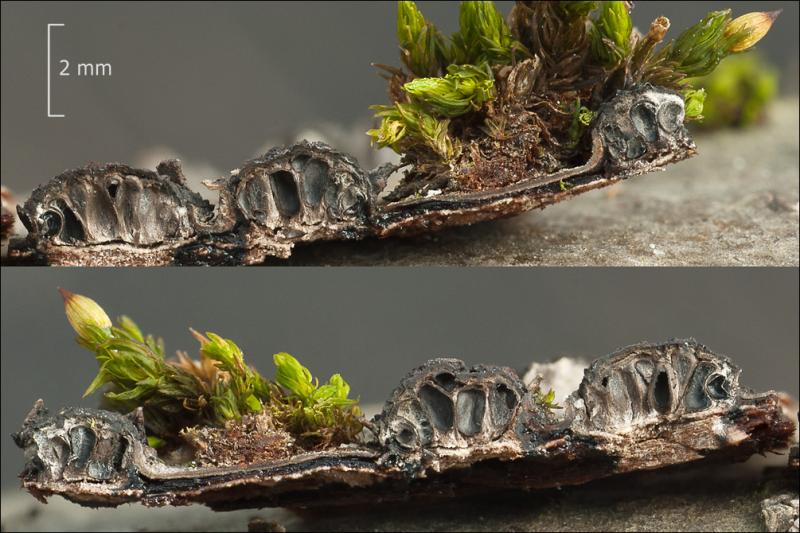
Hi,I would appreciate very much confirmation or correction of this determination. I am confused with quite inconsistent information found in literature; for example regarding substratum (Betula only?), size of ostioles (from 'very small, barely visible' to '6-sulcate, large, conspicuous'). So, I am not sure in it.
Thanks for your time for responding.
Amadej
Spores: Me = 7.4 x 1.8 microns; Qe = 4,2
Asci: many-spored
Stromata: 2-5.5 mm in 'diameter', ostioles of mature stromata small, barely visible
Substratum: Corylus avellana, dead, rotten, still standing, still in bark branch
Place: Trenta valley, Julian Alps, elev. 615 m
Habitat: light mixed wood, bushes, at the edge of a pasture; average precipitations ~ 3.000 mm/year, average temperature 7-9 deg C
No pigments visible in 5% KOH dissolute.
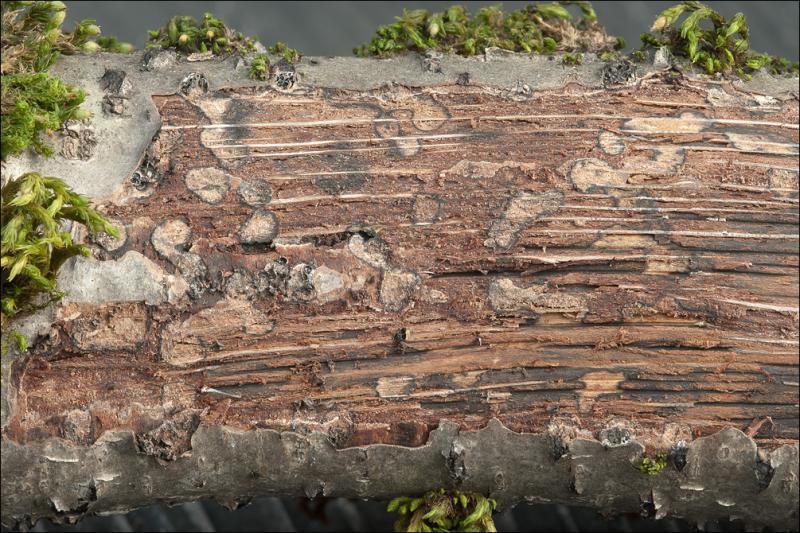
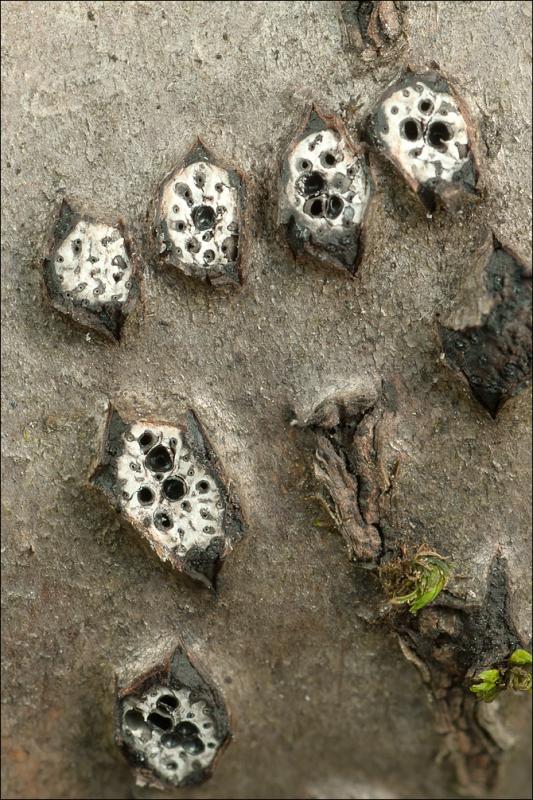
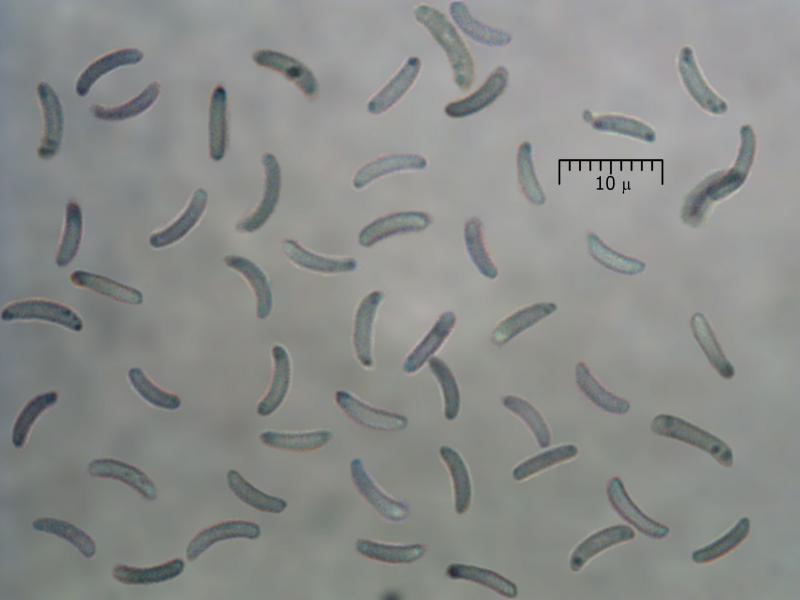
Difficult genus because a modern taxonomic study is lacking. The only key to the European Diatrypella species I am aware of, is included in the following paper:
Vasilyeva, L. & C. Scheuer (1996) Neuere Aufsammlungen stromatischer Pyrenomyceten aus Österreich, insbesondere der Steiermark. Mitt. Naturwiss. Ver. Steiermark 126: 61-82.
(download: http://www.zobodat.at/pdf/MittNatVerSt_126_0061-0082.pdf).
These authors follow a narrow species concept in which D. favacea occurs on Betula. On the contrary, Croxall 1950 (Studies on British Pyrenomycetes. III. The British species of the genus Diatrypella CESATI & DE NOTARIS. - Trans. Brit. Mycol. Soc. 33(1/2): 45-72) considers D. favacea, D. angulata and D. verruciformis as one species (D. favacea). More papers see https://www.verspreidingsatlas.nl/0593010 (under the tab "artikelen').
Eduard
Many thanks for your comment and the interesting links. They helped me a lot to get a better understanding of the situation in present taxonomy of this genus. So, I believe this find corresponds best (based on telemorph traits only) to either (old stile) Diatrypella favacea or Diatrypella verruciformis (according to sources, which tie D. favacea exclusively to Betula). However, this name is (still?) not recognized by IF.
Thanks a lot again.
Amadej