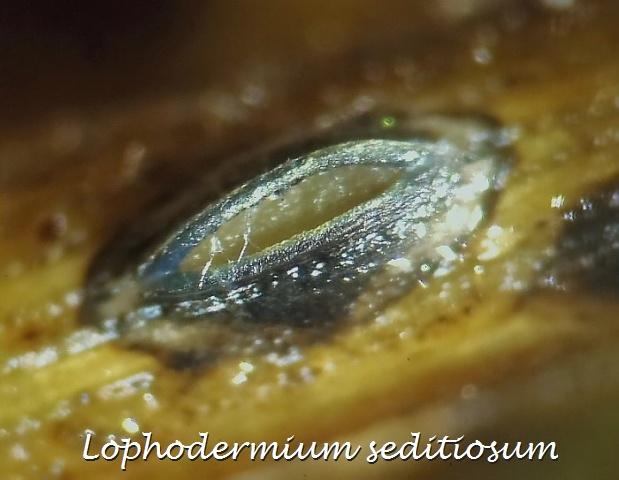
25-03-2026 10:35
Hulda Caroline HolteHello,I collected this species growing on a dead b
30-03-2026 12:03
 William Slosse
Hello all,On 27/03/26, in Kraaiveld in Wingene (Be
30-03-2026 09:53
Yanick BOULANGERBonjourVoici des petites fructifications poilues s
27-03-2026 10:47
Åge OterhalsI have tentatively identified this Stictis to S. f
28-03-2026 07:55
 Marc Detollenaere
Hello everybody,Yesterday I found a number of whit
26-03-2026 15:31
 Åke Widgren
Hello,I found this one in October last year, on r
27-03-2026 15:23
Gernot FriebesHi,this Trichopezizella deviates from typical T. b
27-03-2026 15:08
Gernot FriebesHi,I'm looking for help with this coelomycete on C
Lophodermium on pine needles
Lepista Zacarias,
21-03-2017 18:46
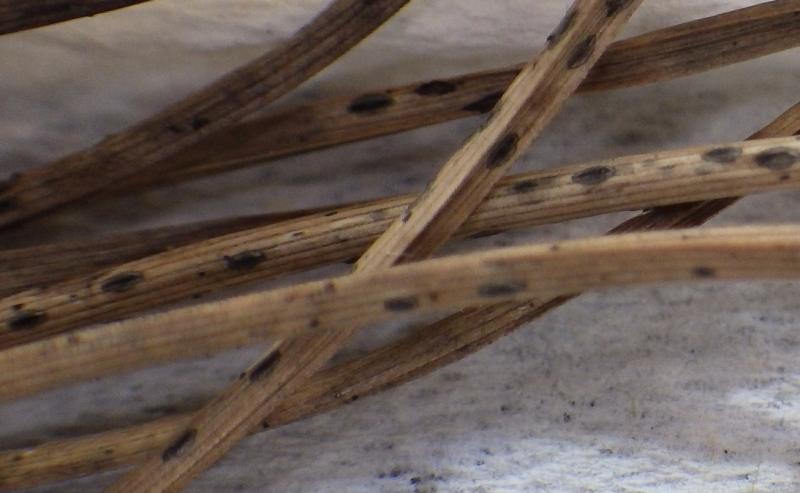
This fungus was found on pine needles about two weeks ago. I don't know the exact species of pine, but the needles are double and do not excceed 10 cm, some with half of that size.
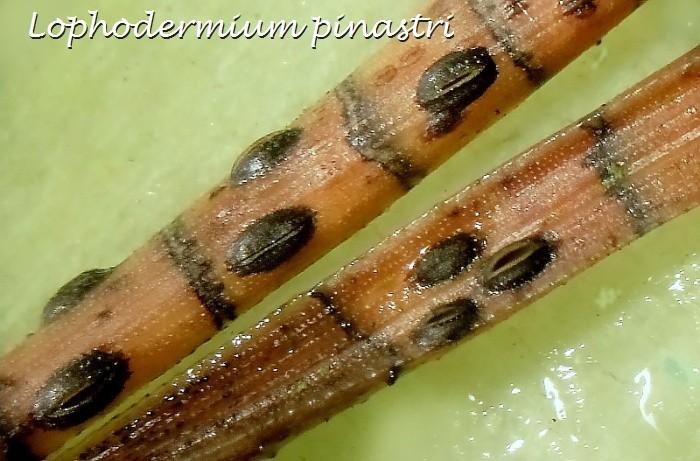
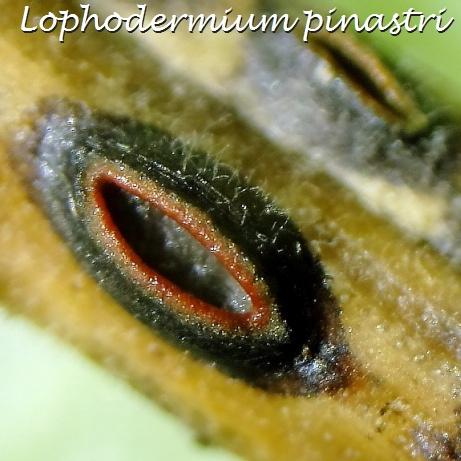
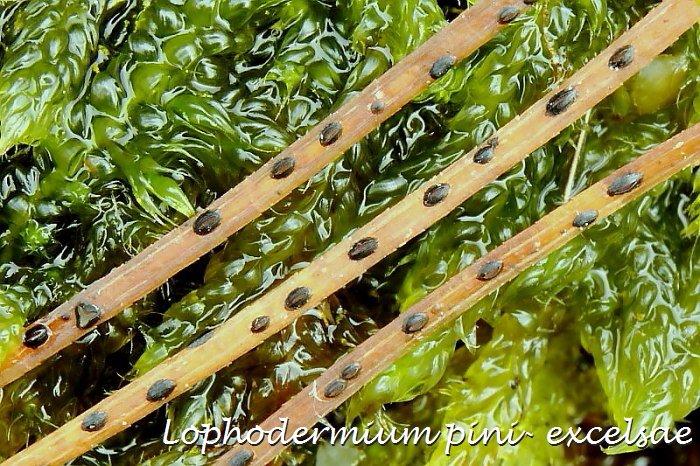
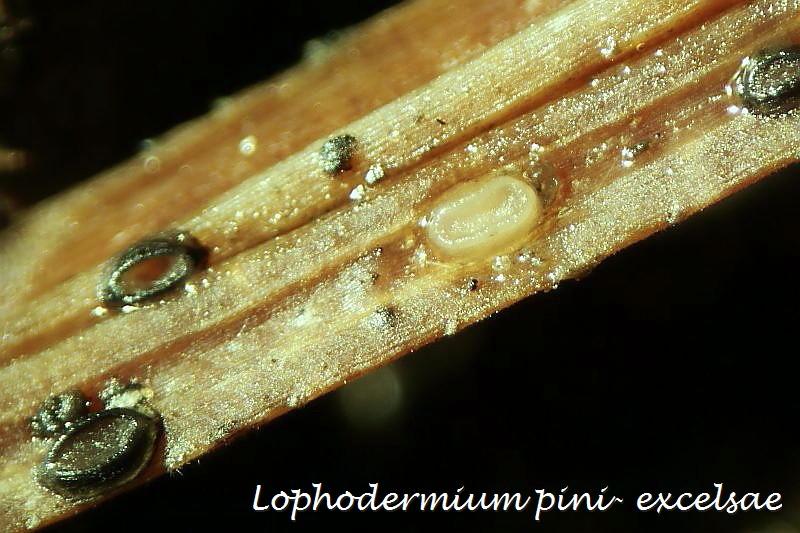
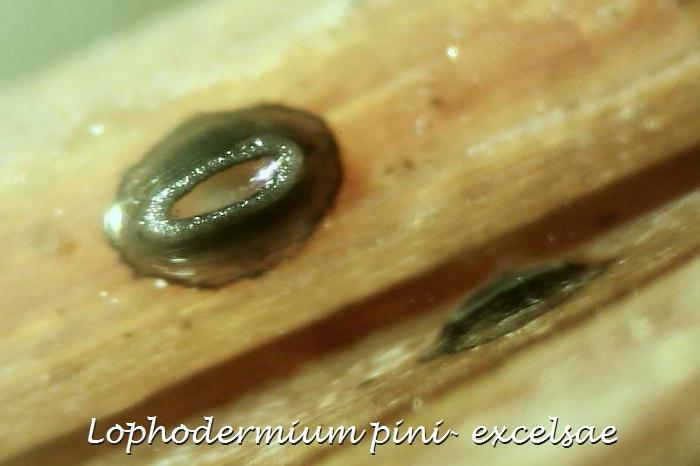
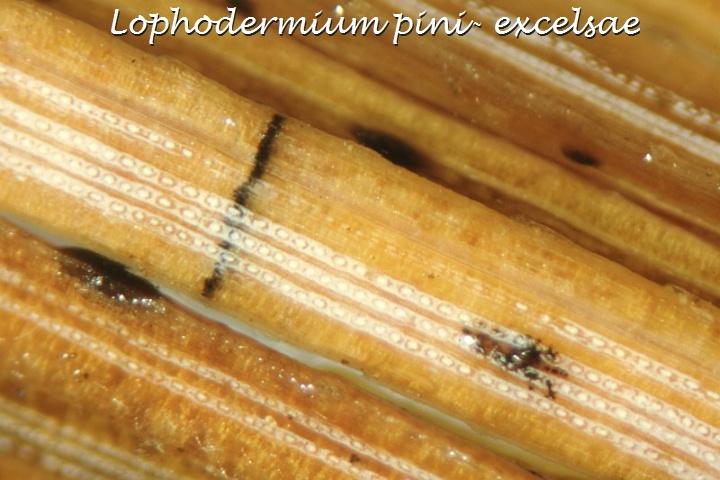
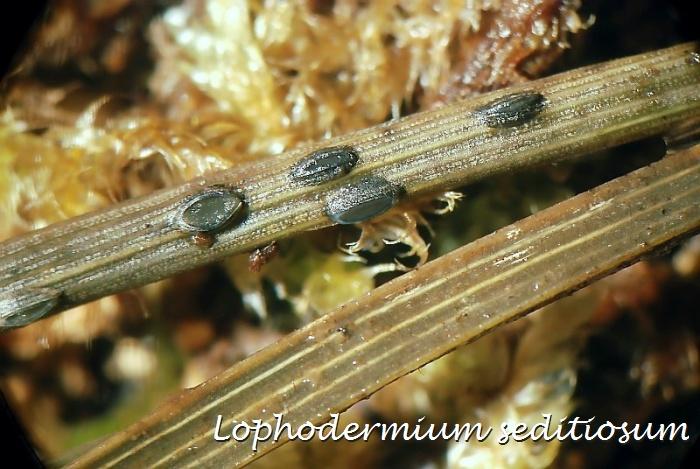
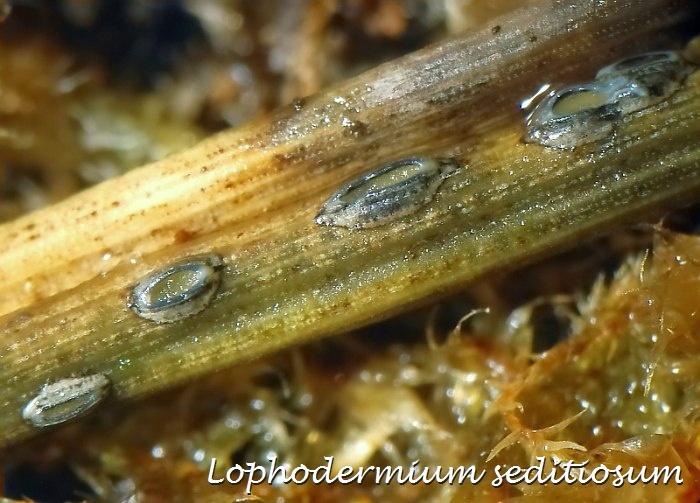
Ascomata black with less than 1mm long, slightly raised and aligned lengthwise on the needle having a slit with greyish labia;
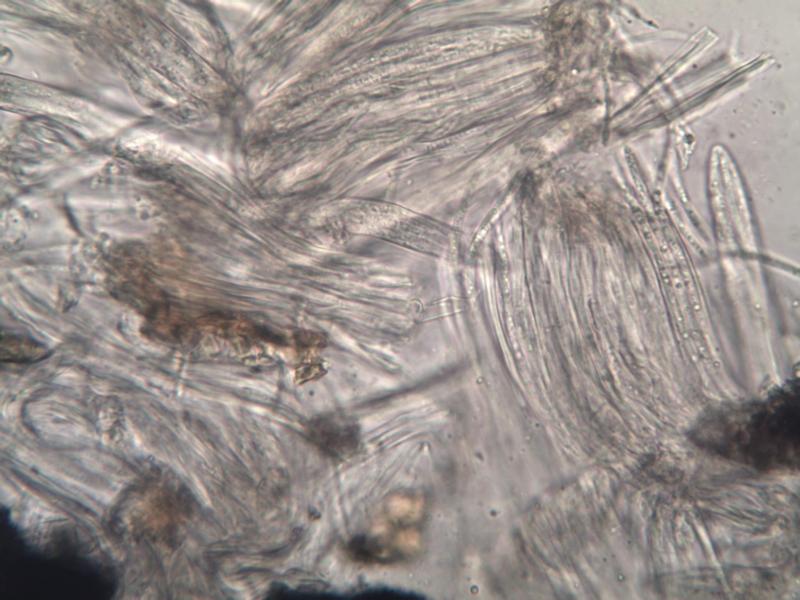
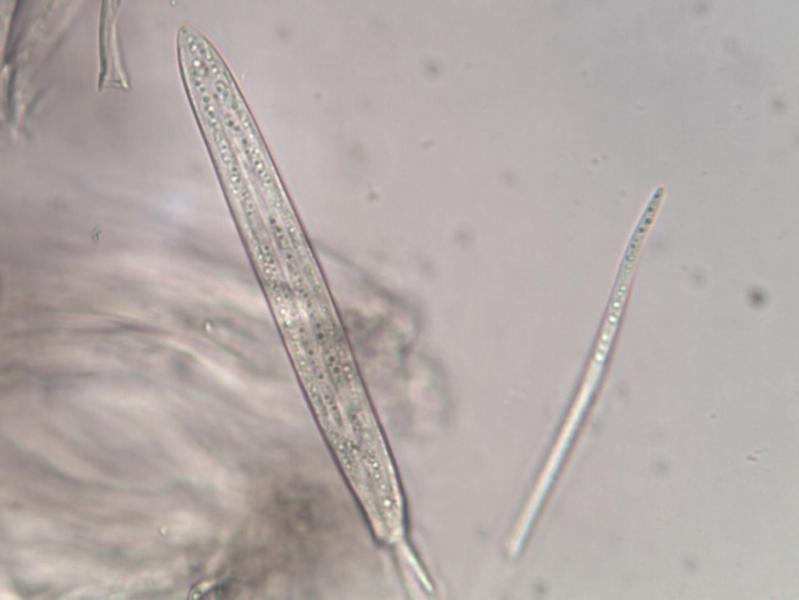
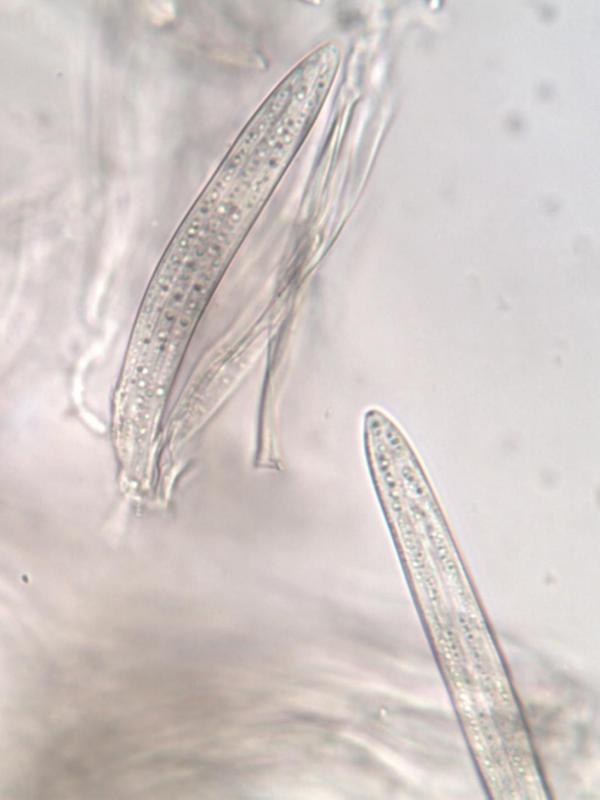
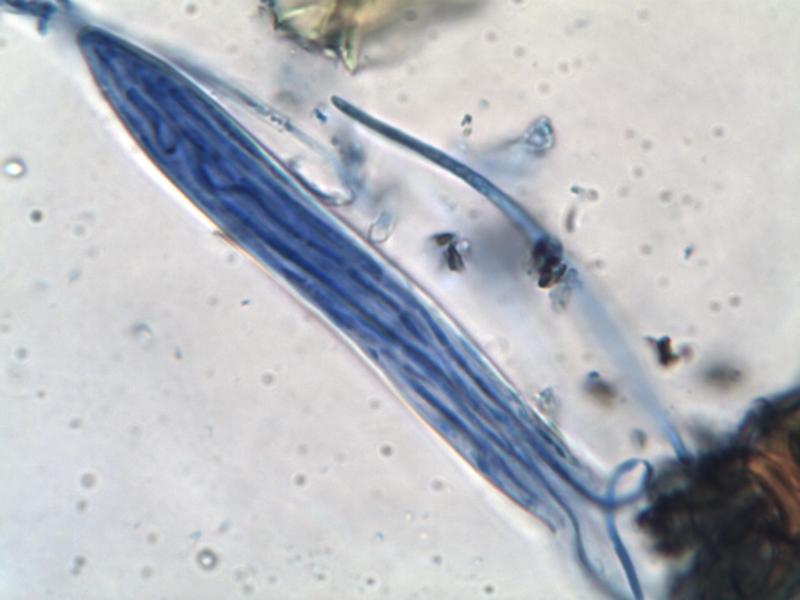
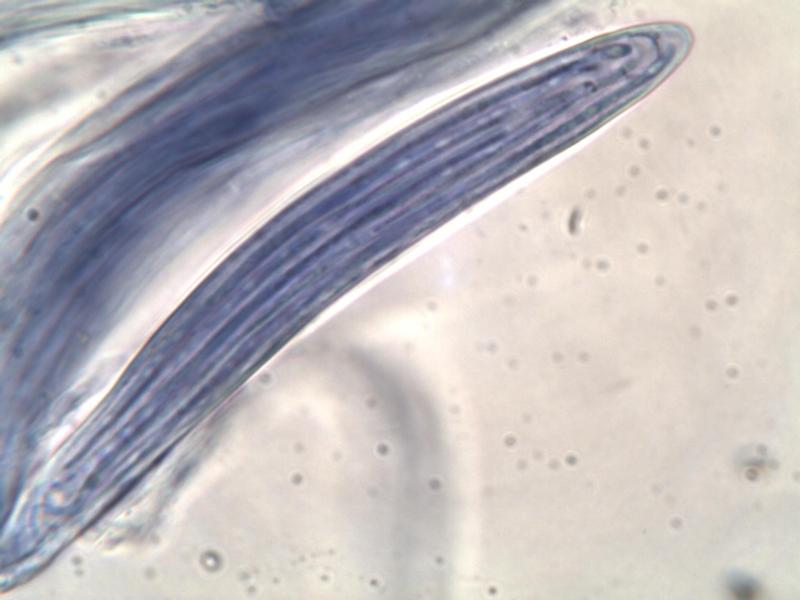
Asci 100-115 x 11-13 µm;
Ascospores hyaline, acicular almost as long as the asci.
Is it possible to identify the species?
Thanks in advance for you help,
zaca
Joanne Taylor,
21-03-2017 19:21
Re : Lophodermium on pine needles
Hi there,
it looks like your needles are trash needles (those which have died prematurely as the branch has been broken) and not senesced litter needles (died of old age). If they are the former and if your host is Scots Pine, then it might either be L. conigenum or L. seditiosum. You then need to look at your sections and look for displaced epidermal cells (the ascomata are more or less sub epidermal but a few cells get left at the base of the ascomata depending on the species). If thereare none then it is L.seditiosum and if there are a few (less than 7)scattered about then it will be L. conigenum. This information is from David Minter's amazing studies on Lophodermium!
Cheers,
Jo
it looks like your needles are trash needles (those which have died prematurely as the branch has been broken) and not senesced litter needles (died of old age). If they are the former and if your host is Scots Pine, then it might either be L. conigenum or L. seditiosum. You then need to look at your sections and look for displaced epidermal cells (the ascomata are more or less sub epidermal but a few cells get left at the base of the ascomata depending on the species). If thereare none then it is L.seditiosum and if there are a few (less than 7)scattered about then it will be L. conigenum. This information is from David Minter's amazing studies on Lophodermium!
Cheers,
Jo
Lepista Zacarias,
21-03-2017 20:07
Re : Lophodermium on pine needles
Hi Joanne,
Thanks for your message.
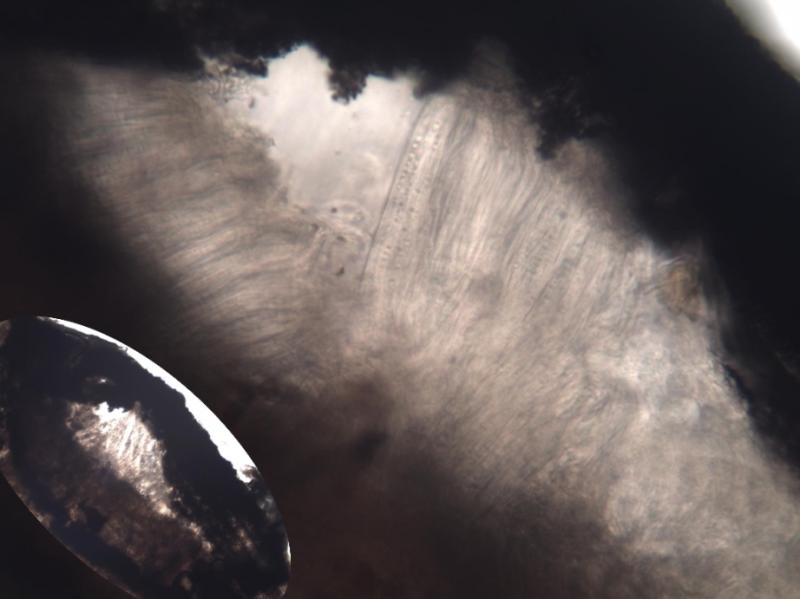
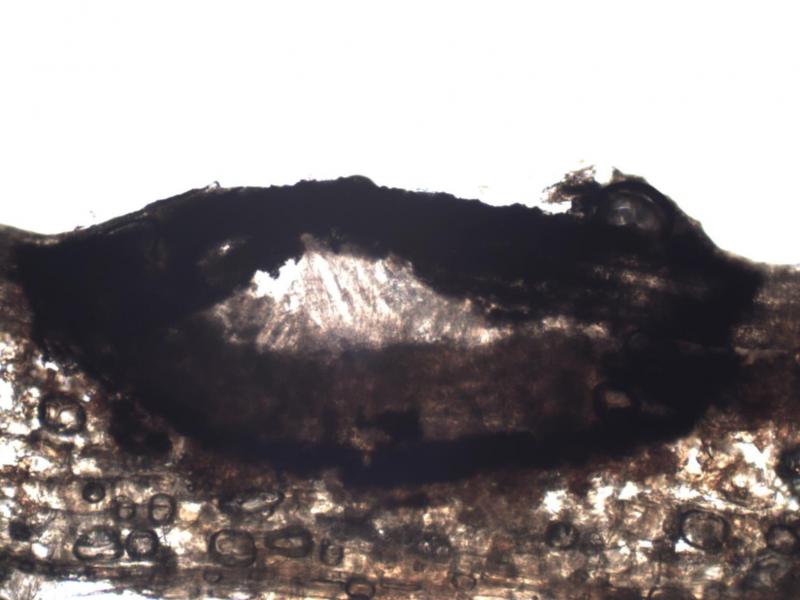
I'm afraid to not understood completely the meaning of the displaced cells as you call them. Thus, I upload the (bad) section I took from microscopy. Where in the photo I should look for those cells?
Best Regards,
zaca
Thanks for your message.
I'm afraid to not understood completely the meaning of the displaced cells as you call them. Thus, I upload the (bad) section I took from microscopy. Where in the photo I should look for those cells?
Best Regards,
zaca
Joey JTan,
21-03-2017 20:48
Re : Lophodermium on pine needles
I can't make them out in your picture, it usually requires a pretty thin vertical section. Sectioning air-dried specimens with a safety razor blade is often easier than sectioning fresh specimens.
Minter describes and illustrates the concept of displaced epidermal cells in:
Minter, D. W., Staley, J. M., & Millar, C. S. (1978). Four species of Lophodermium on Pinus sylvestris. Transactions of the British Mycological Society, 71(2), 295-301.
Minter, D.W., 1981. Lophodermium on pines. Commonwealth Mycological Institute.
It relates to how the ascoma is embedded in the host tissue. It took me a bit of time to learn how to readily identify this character; collecting and comparing different subcuticular and subepidermal Lophodermium species helped.
Of course there are cryptic species complexes in Lophodermium, which makes identification somewhat tenuous for some species...
Minter describes and illustrates the concept of displaced epidermal cells in:
Minter, D. W., Staley, J. M., & Millar, C. S. (1978). Four species of Lophodermium on Pinus sylvestris. Transactions of the British Mycological Society, 71(2), 295-301.
Minter, D.W., 1981. Lophodermium on pines. Commonwealth Mycological Institute.
It relates to how the ascoma is embedded in the host tissue. It took me a bit of time to learn how to readily identify this character; collecting and comparing different subcuticular and subepidermal Lophodermium species helped.
Of course there are cryptic species complexes in Lophodermium, which makes identification somewhat tenuous for some species...
Lepista Zacarias,
21-03-2017 21:31
Re : Lophodermium on pine needles
Thanks, Joey,
for your comments and references.
I will try to get some literature on the genus and, maybe make a better section.
Best regards,
zaca
for your comments and references.
I will try to get some literature on the genus and, maybe make a better section.
Best regards,
zaca
Lepista Zacarias,
22-03-2017 00:36
Re : Lophodermium on pine needles
Hi again,
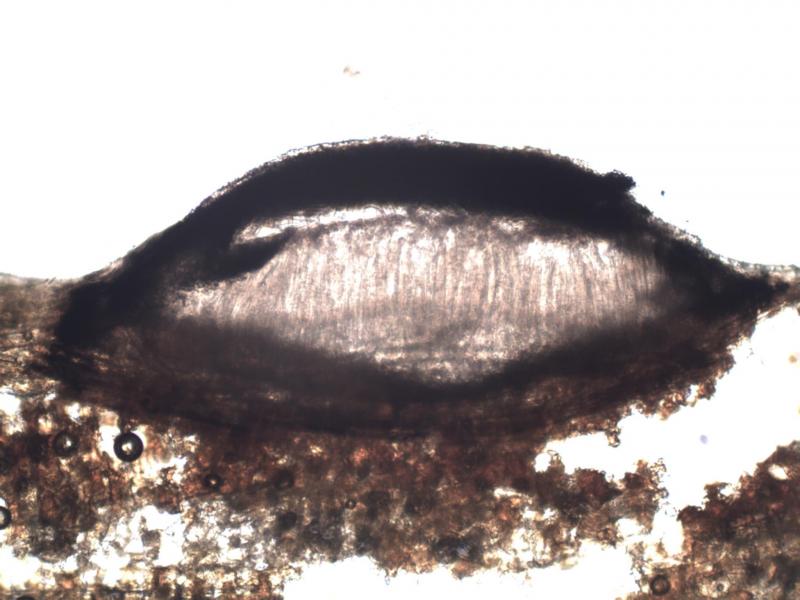
The needles are ver britle, making difficult to make good sections. I attached my best result, from where I could not see any "displaced cells" from the ascoma left on the substrate.
Cordialment,
zaca
The needles are ver britle, making difficult to make good sections. I attached my best result, from where I could not see any "displaced cells" from the ascoma left on the substrate.
Cordialment,
zaca
Peter Püwert,
22-03-2017 02:53

Re : Lophodermium on pine needles
Hi Zaca,
this is not often simple to determine this species.
I have sent some literature.
Greetings Peter.
this is not often simple to determine this species.
I have sent some literature.
Greetings Peter.