05-04-2026 22:46
 Lothar Krieglsteiner
on wood of Ceratonia, Algarve, 3.4.2026.The color
05-04-2026 20:40
 Robin Isaksson
Hi!Found i Japan on bark of Abies sp. Spores 35-4
31-03-2026 21:18
 Miguel Ángel Ribes
Good evening. oes anyone have the original descrip
31-03-2026 20:57
Stefan BlaserHello everybody, I hope somebody can help me with
26-03-2026 15:31
 Åke Widgren
Hello,I found this one in October last year, on r
31-03-2026 16:20
 Mlcoch Patrik
Hello, Please about help with determination. On
31-03-2026 08:19
 Bernard CLESSE
Bonjour à toutes et tous,Pourriez-vous m'aider à
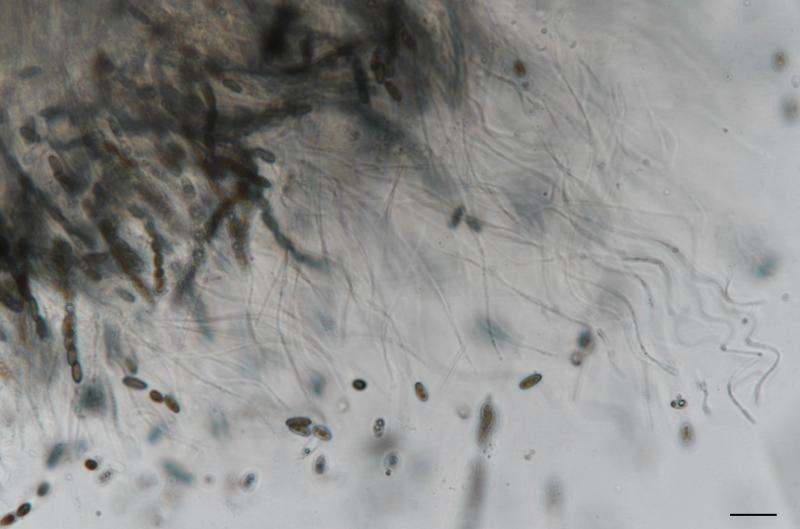
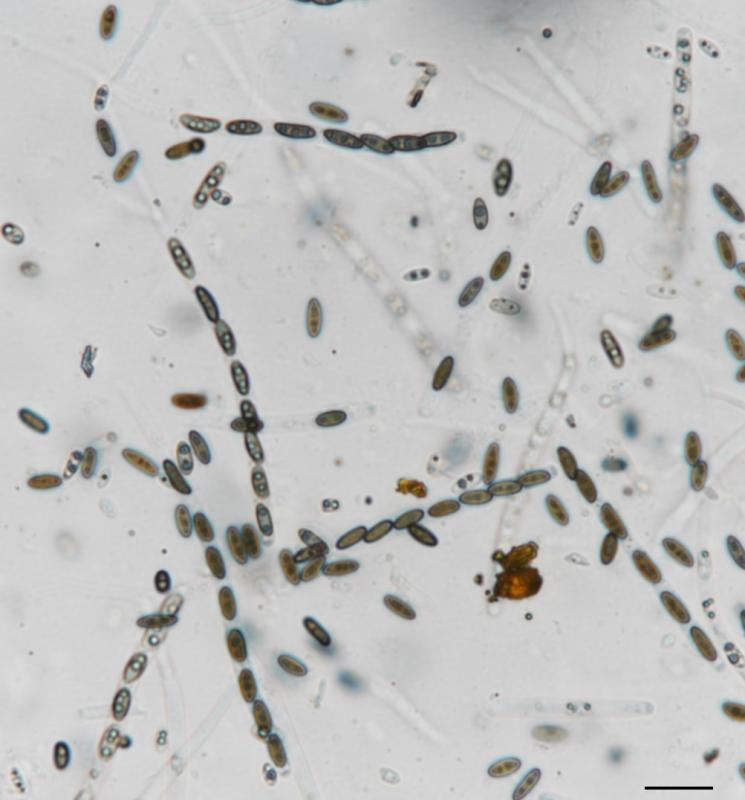
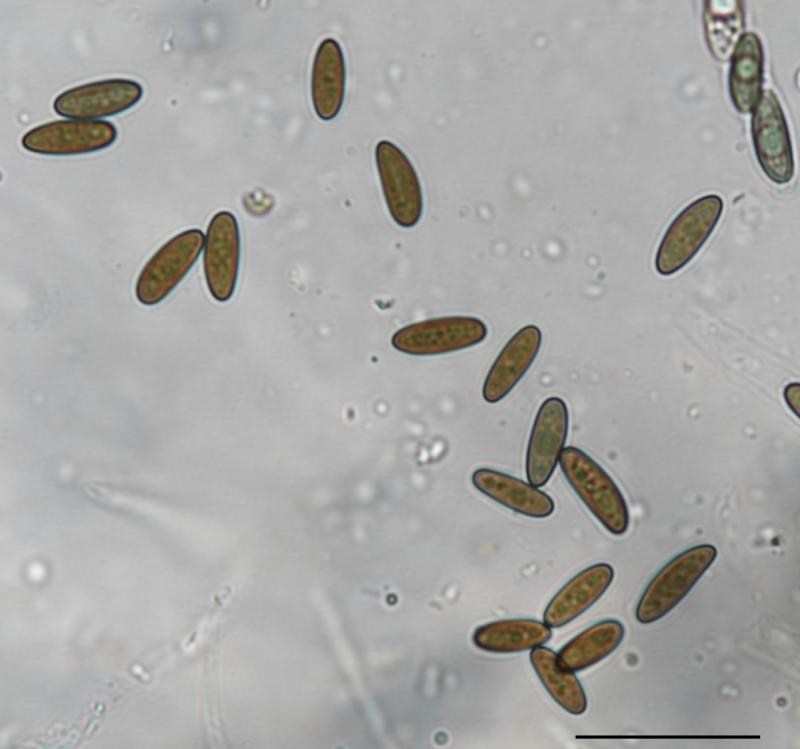
Unknown fungus on Quercus stick.
Guy Buddy,
02-05-2019 15:07
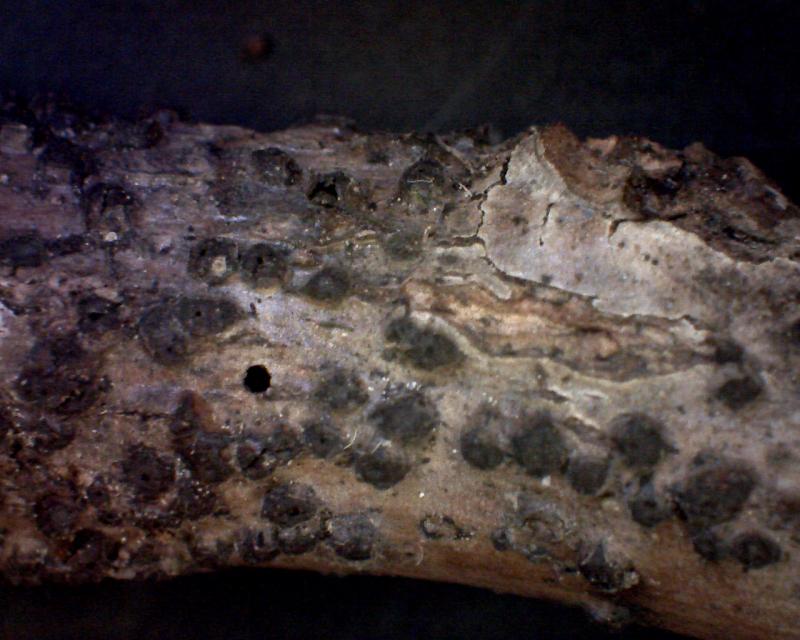
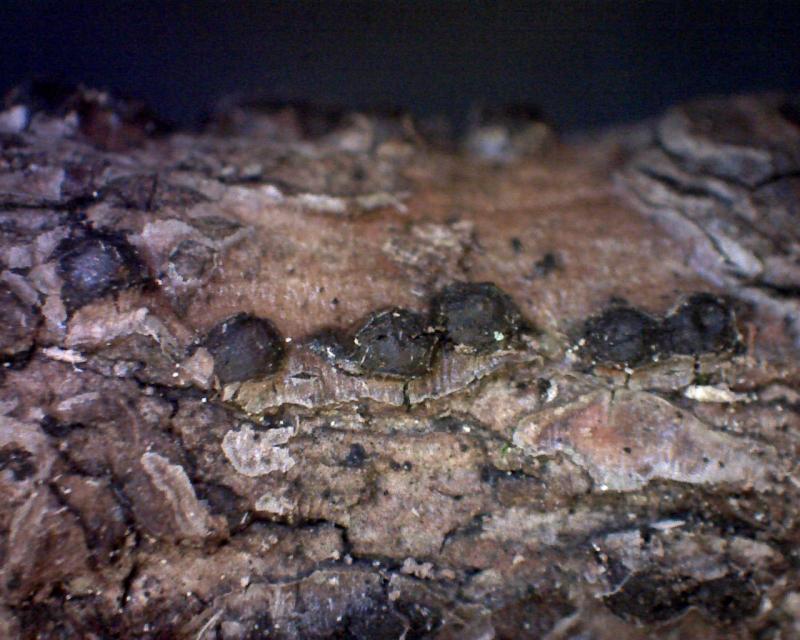
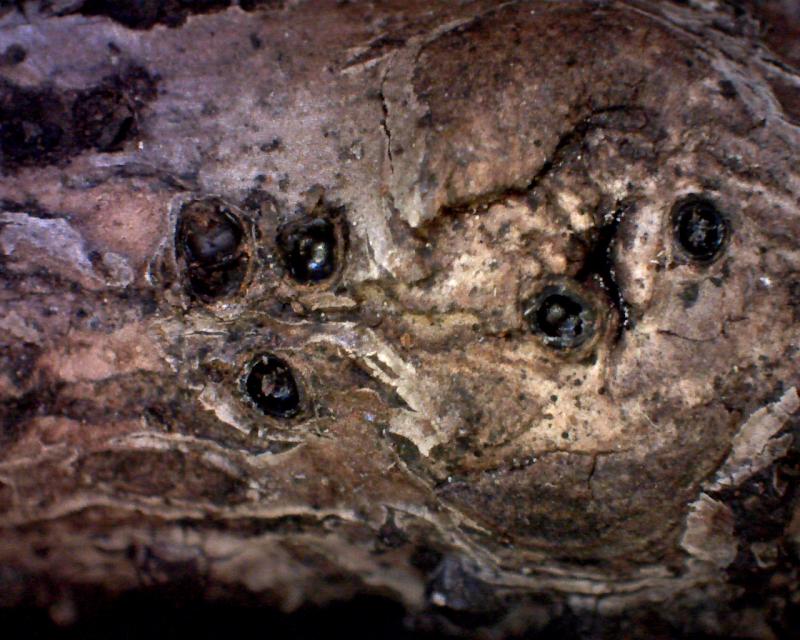
Jacques Fournier,
03-05-2019 15:08

Re : Unknown fungus on Quercus stick.
Hi,
asci and ascospores remind me of Lopadostoma, though the apical ring should be amyloid. But in this genus it is small and easily overlooked.
I wonder if the black pustules are single ascomata or represent several ascomata surrounded by a stroma. A close-up on a horizontal or better a vertical section would answer this question.
Are you related to Buddy Guy?
Cheers,
Jacques
asci and ascospores remind me of Lopadostoma, though the apical ring should be amyloid. But in this genus it is small and easily overlooked.
I wonder if the black pustules are single ascomata or represent several ascomata surrounded by a stroma. A close-up on a horizontal or better a vertical section would answer this question.
Are you related to Buddy Guy?
Cheers,
Jacques
Guy Buddy,
03-05-2019 16:14
Re : Unknown fungus on Quercus stick.
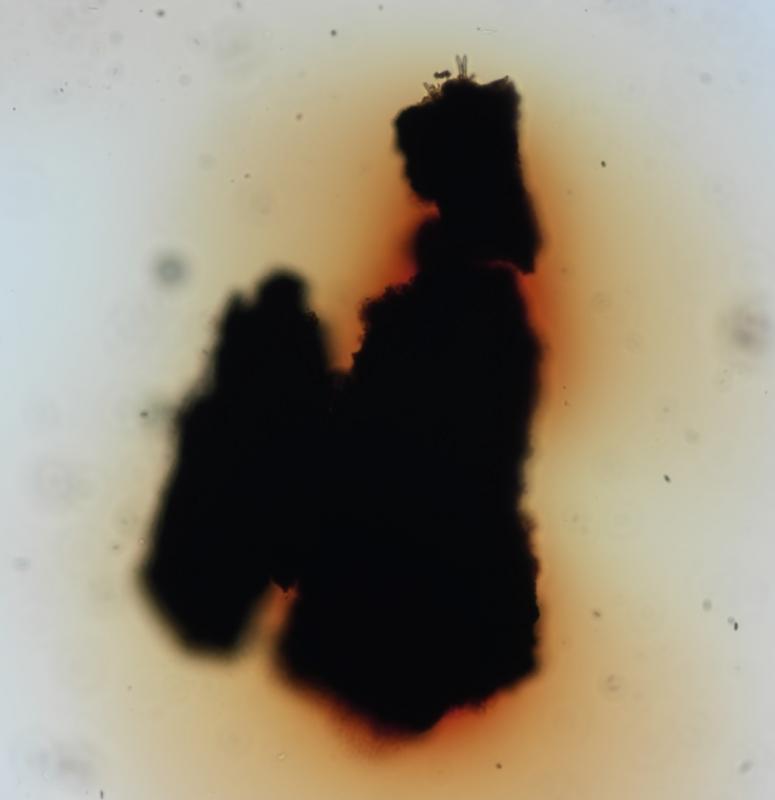
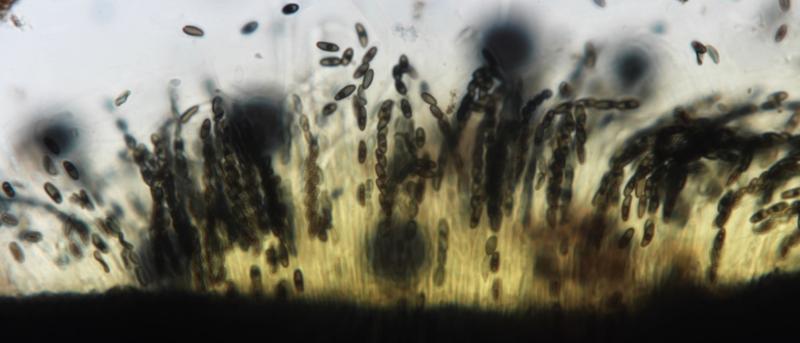
Thanks Jacques. Unfortunately this sample got ignored and I did not spend a lot of time on it. I added a photo of the asci in melzers. I dont see any reaction. Picture three is the ascoma cut open, it appears to be one large perithecia, not loculated. The spores do look good for Lopadostoma, but i dont see any species that are not loculated. Maybe Barrmaelia?
Guy Buddy,
03-05-2019 17:56
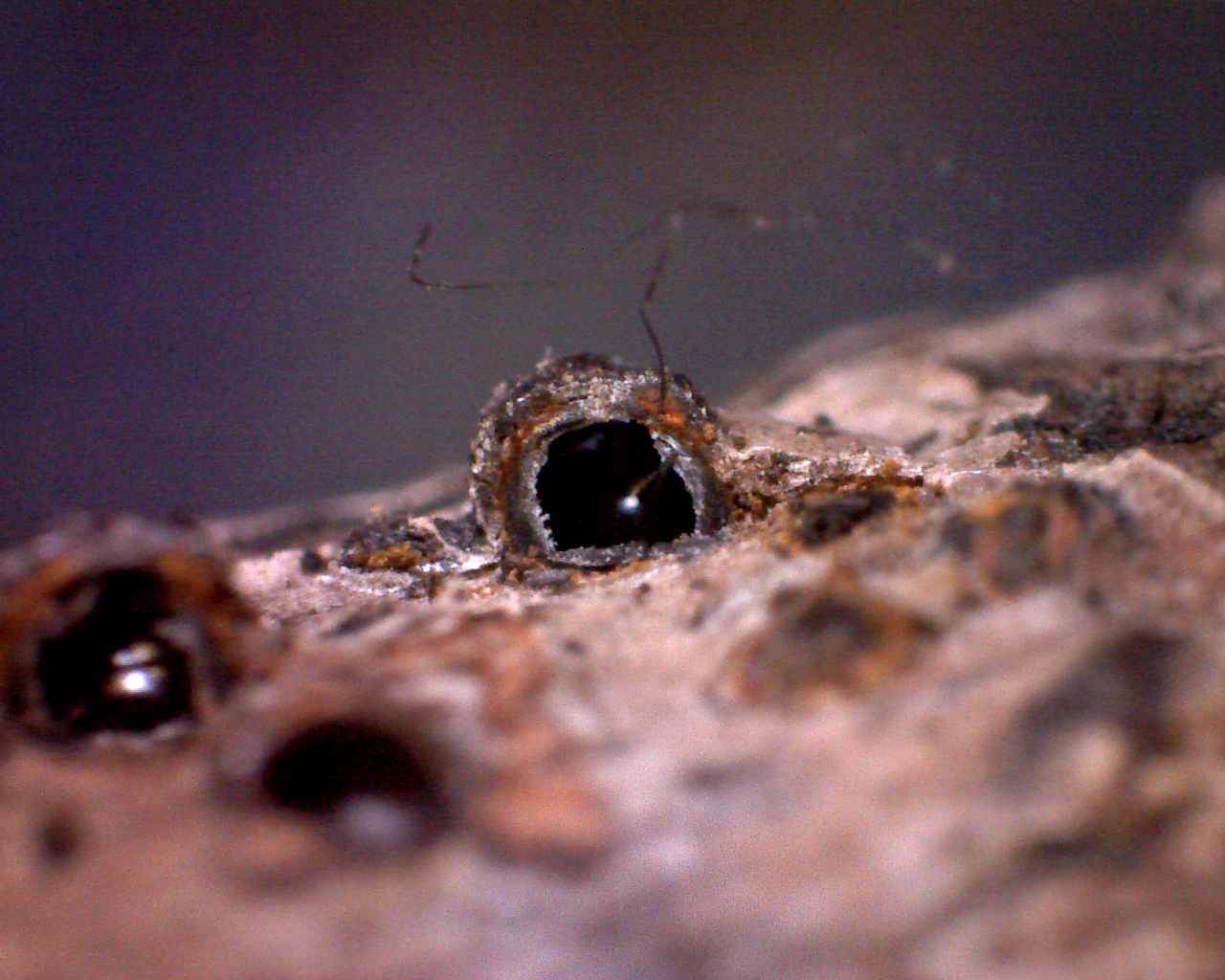 B555-20190503-113401-0001.bmp
Jacques Fournier,
03-05-2019 18:26
Re : Unknown fungus on Quercus stick.
this is much helpful.
There is a layer of some orange brown tissue around the perithecium. If a chip of stroma added to a drop of 5*10 % KOH releases an orange pigment, we are likely dealing with Creosphaeria sassafras, a Xylariaceae which is not uncommon in North America.
Jacques
Guy Buddy,
03-05-2019 20:57
Re : Unknown fungus on Quercus stick.
Thats definitely it! Thanks for your help!