06-04-2026 08:15
 Lothar Krieglsteiner
some days ago, on the lower surface of leaf of Que
05-04-2026 22:46
Lothar Krieglsteiner
on wood of Ceratonia, Algarve, 3.4.2026.The color
05-04-2026 20:40
 Robin Isaksson
Hi!Found i Japan on bark of Abies sp. Spores 35-4
31-03-2026 21:18
 Miguel Ángel Ribes
Good evening. oes anyone have the original descrip
31-03-2026 20:57
Stefan BlaserHello everybody, I hope somebody can help me with
26-03-2026 15:31
 Åke Widgren
Hello,I found this one in October last year, on r
31-03-2026 16:20
 Mlcoch Patrik
Hello, Please about help with determination. On
31-03-2026 08:19
 Bernard CLESSE
Bonjour à toutes et tous,Pourriez-vous m'aider à
 Hallo,
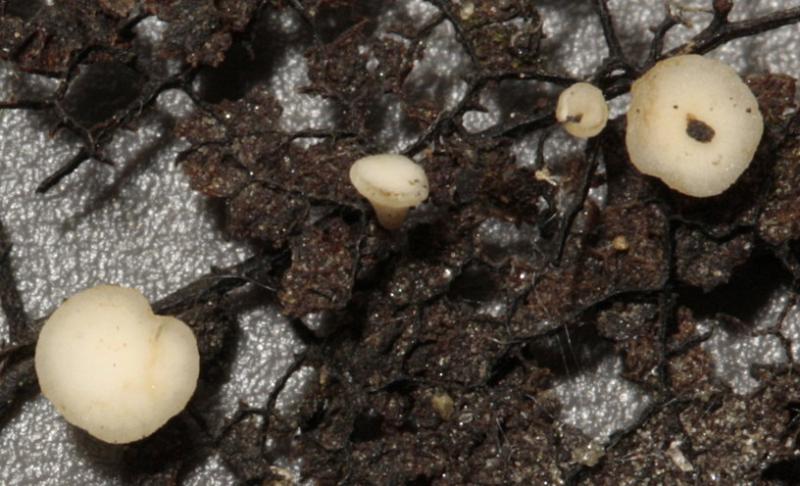
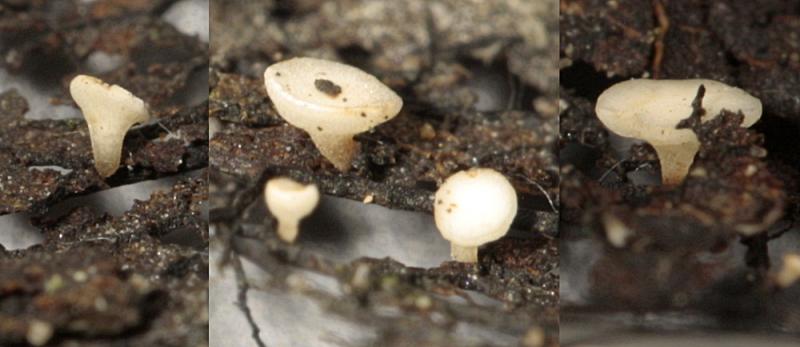
 I've collected a small Hymenoscyphus (about 1 mm, short stalk), ivory white, on skeletized leaves (unidentified), deciduous alluvial forest.
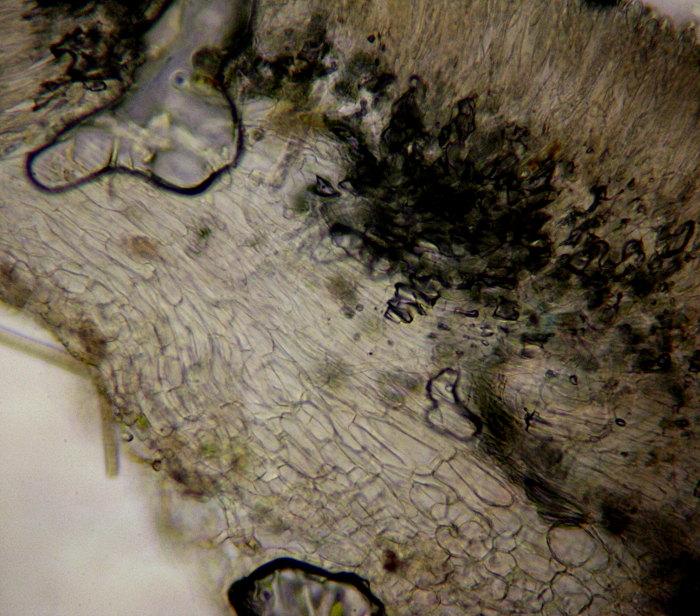
VBs in excipulum, badly visible in paraphyses.
Excipulum = probably t. prismatica.
Spores without cilia, constricted in the middle.
H-, IKI+b.
Could it be H. albopunctus?
Thank you in advance.
Viktorie
edit: Now I've found out there are H. microserotinus and H. pusillus too, probably not an easy group.
edit2: This collection was confirmed as H. pusillus by ITS, on F. pennsylvanica leaves.
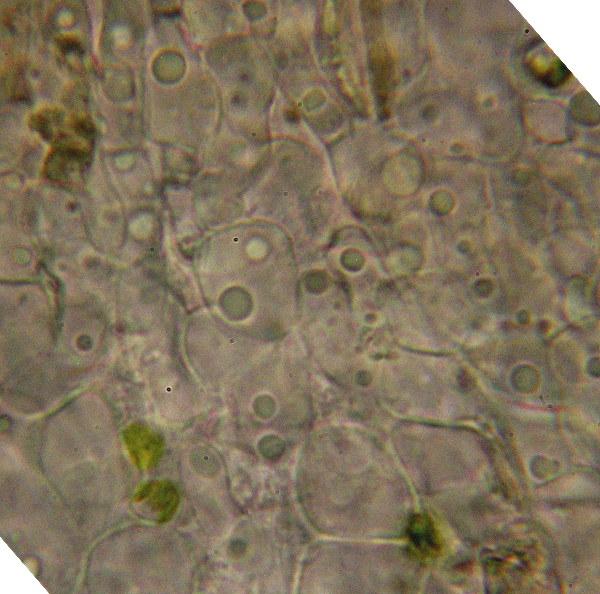
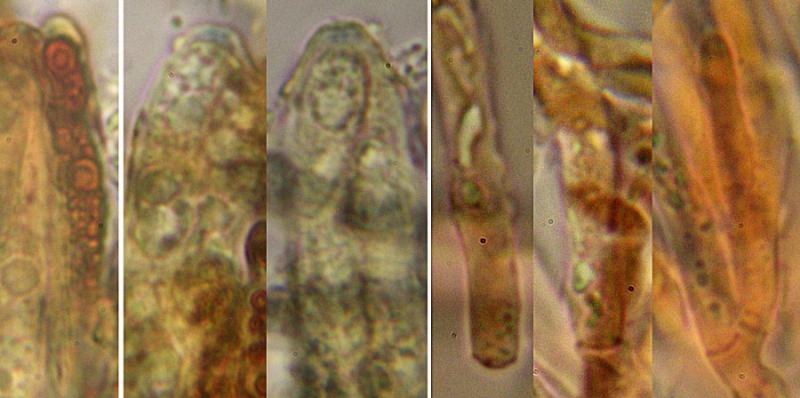
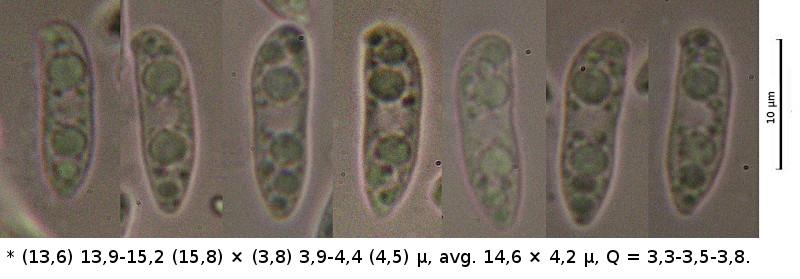

spore size would fit. I earlier thought it is typical f Fagus leaves but apparently not.
The VBs in the paraphyses you probably didn't see because these were not alive.
Is the ample big enough to take an ITS sequence? I have one of my samples, but it is not certain according to the seuencer. Chinese H. microserotinus (5 sequences) is heterogeneous in GenBank but accumulates around H. aesculi, so should include samples with black stipe base and stroma.
the new H. pusillus on Fraxinus pennsylvanica has also a conspicuous black stroma and dark stipe base.
Zotto

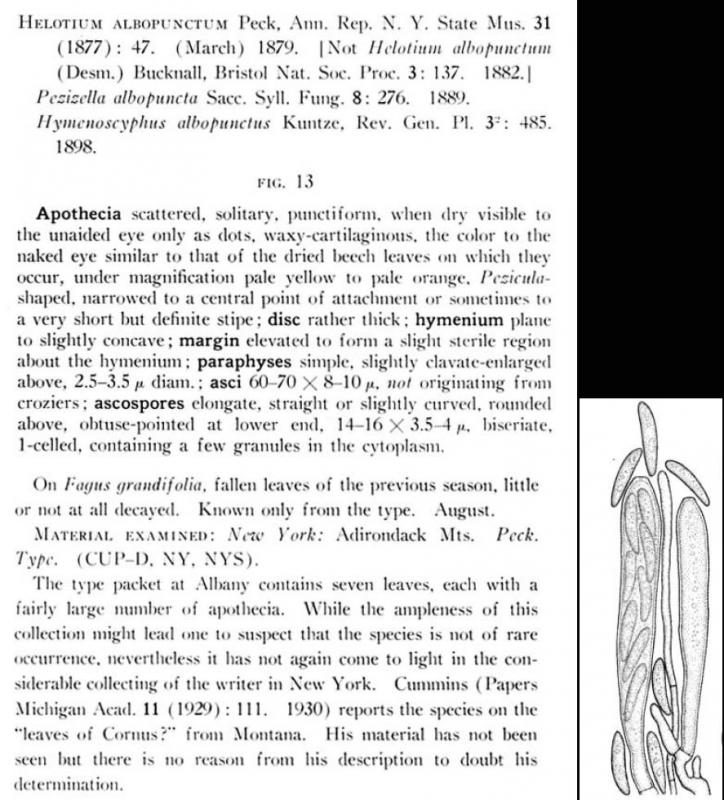
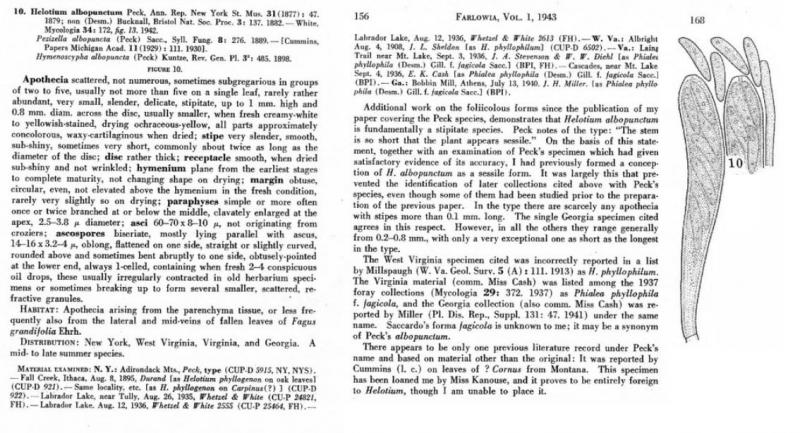
I see that you made a survey many years ago on this species and my Hym. "fageolus".
Of course it might be that in America a different species occurs, but as long as we have no DNA data, we can hardly decide, because the morphology is not clearly different and stipe lengths vary.
A spore width of *4-4.5 gets +3.5-4 which is what White measured.
Spore size in HB 8596 is *(12-)13-15 x 4-4.5 µm, just as in Victorie's sample.
Zotto
thank you for confirmation. Stipe base is not blackish like in H. aesculi.
I've found similar one there on Quercus leaves (non skeletized) in late october, but determined as H. caudatus (spores up to 19,1(20) um long, but constricted in the middle). Also Dumont (1981) synonymized H. albopunctus (as "albopunctatus") under H. caudatus. How do you distinguish them? Shorter spore length + presence of centrally constricted spores for albopunctus?
There are not many apothecia, but I'll put a few aside and try to collect some more. My friend who's doing the sequencing will be available again since autumn, if it works I'll let you know.
Dear Martin,
thank you, I didn't recherche all the relevant literature yet, although it seemed it's not very frequently described/published taxon.
Viktorie