
27-03-2026 15:23
Gernot FriebesHi,this Trichopezizella deviates from typical T. b
27-03-2026 15:08
Gernot FriebesHi,I'm looking for help with this coelomycete on C
26-03-2026 15:31
 Åke Widgren
Hello,I found this one in October last year, on r
27-03-2026 10:47
Åge OterhalsI have tentatively identified this Stictis to S. f
25-03-2026 10:35
Hulda Caroline HolteHello,I collected this species growing on a dead b
24-03-2026 21:37
Elisabeth StöckliBonsoir,Sur bois (tronc) très pourri de conifère


25-03-2026 22:23
 Marc Detollenaere
Dear Forum,On a debarked stem of Tilia, we found s
24-03-2026 15:44
Åge OterhalsI hope someone can confirm the name of this collec
Diplodia scrobiculata?
Mirek Gryc,
22-03-2021 14:42
Hello
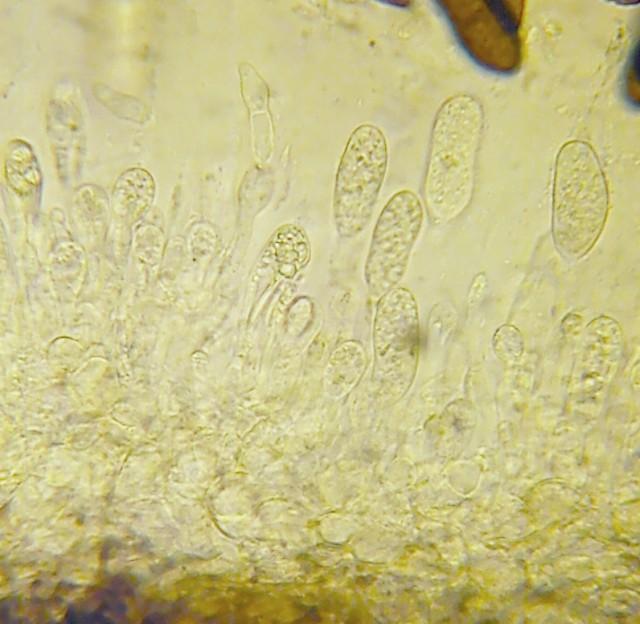
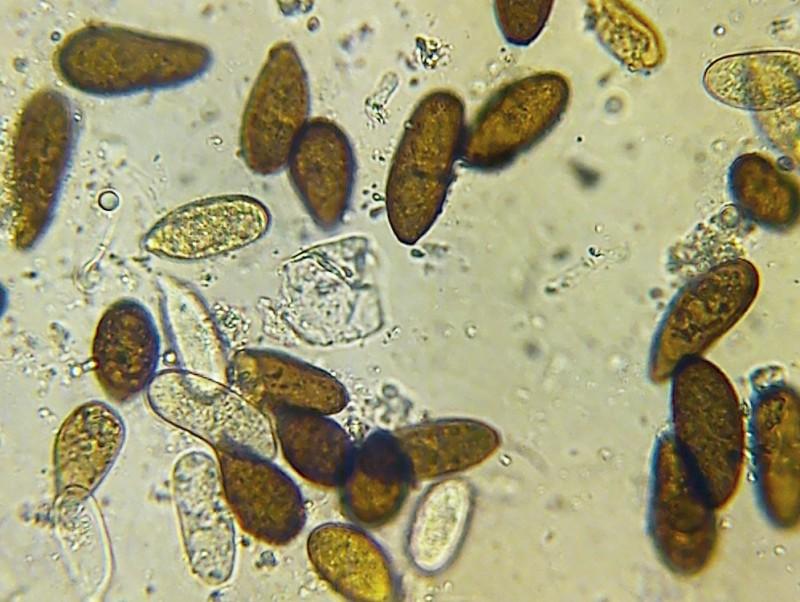
They grew on the bark of dead pine (Pinus sylvestris). Usually, there are shown on pine needles so I have some doubts?
Another species occurring on this substrate is D. Sapinea. However, according to literature, it should have much longer spores?
Spores:
(30.2) 31.2 - 39.5 (39.6) × (14) 14.7 - 15.9 (18.6) ?m
Q = (1.7) 2 - 2.57 (2.6); N = 8
Me = 34.8 × 15.7 ?m; QE = 2.2
I marked well?
Greetings
Mirek
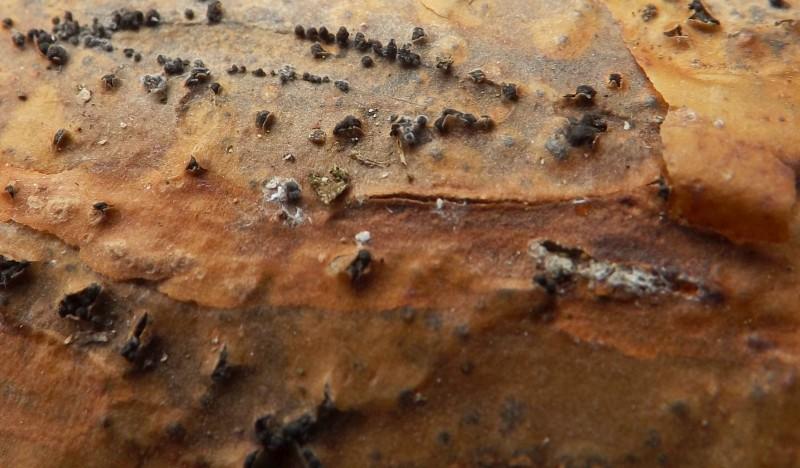
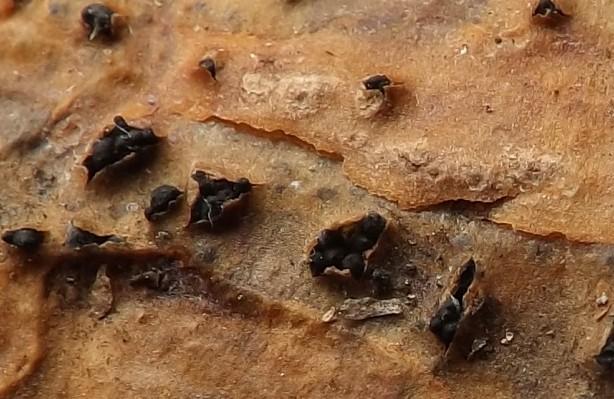
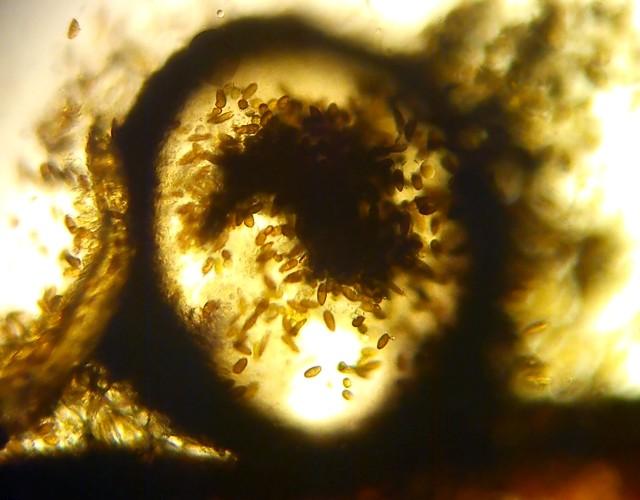
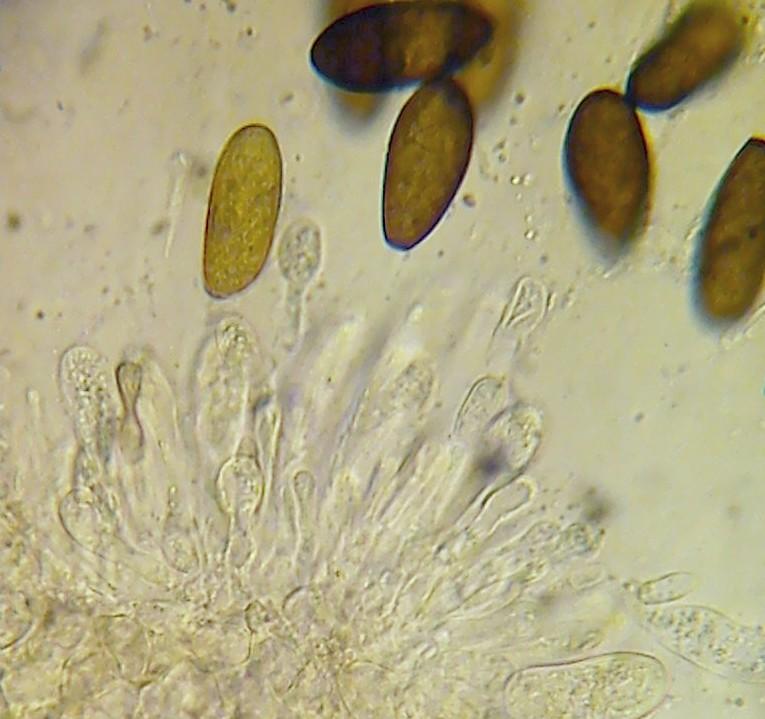
Bernard Declercq,
22-03-2021 18:26

Re : Diplodia scrobiculata?
Hi Mirek,
You collected an asexual morph, so you observed conidia.
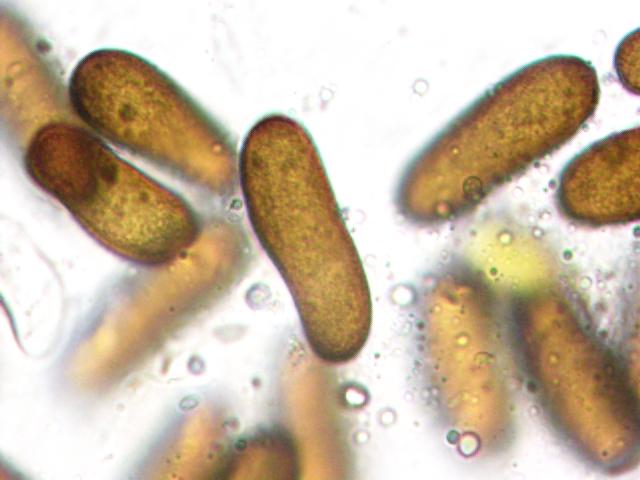
The genus Diplodia has a lot of cryptic species. I am afraid that Diplodia sapinea ss. lato is one of those species. Indeed, I collected similar species without ornamentation as well as species with verruculose conidia (see photo) on Pinus.
Greetings,
Bernard
You collected an asexual morph, so you observed conidia.
The genus Diplodia has a lot of cryptic species. I am afraid that Diplodia sapinea ss. lato is one of those species. Indeed, I collected similar species without ornamentation as well as species with verruculose conidia (see photo) on Pinus.
Greetings,
Bernard
Mirek Gryc,
22-03-2021 19:31
Re : Diplodia scrobiculata?
Hi Bernard
Earlier I thought like you. Now, however, I took advantage of:
The BotrySphaeriaceae: General and Species Known from Culture.
This publication contains a key to this type:
***
13. Conidial length exceeding 50 µm (up to 54 µm) .................. D. sapinea
13. Conidial length never exceeding 50 µm (up to 41.5 µm) ......... D. scrobiculata
***
Because Conidia was definitely shorter than 50um, I recognized them for D. Scrobiculata?
On the pictures you can not see anyone, while Conidia during the observation under the microscope seem to be slightly rough.
Do you have any newer data on this topic?
Thank you, Bernard for a comment.
greetings
Mirek
Earlier I thought like you. Now, however, I took advantage of:
The BotrySphaeriaceae: General and Species Known from Culture.
This publication contains a key to this type:
***
13. Conidial length exceeding 50 µm (up to 54 µm) .................. D. sapinea
13. Conidial length never exceeding 50 µm (up to 41.5 µm) ......... D. scrobiculata
***
Because Conidia was definitely shorter than 50um, I recognized them for D. Scrobiculata?
On the pictures you can not see anyone, while Conidia during the observation under the microscope seem to be slightly rough.
Do you have any newer data on this topic?
Thank you, Bernard for a comment.
greetings
Mirek
Bernard Declercq,
22-03-2021 20:10
Re : Diplodia scrobiculata?
I am sorry, but D. scrobiculata has (1) conidia with clearly pitted wall, while I do not observe such wall on your photos, (2) conidial Qm = 3.5 while Qm = 2.2 in your collection and, (3) as far as I known , always been collected on leaves or needles, so never on bark or wood.
So I think we should exclude that species.
Bernard
So I think we should exclude that species.
Bernard
Mirek Gryc,
22-03-2021 20:26
Re : Diplodia scrobiculata?
Bernard, I do not say that this is D. scrobiculata.
I do not know these species, which is why I asked for your opinion.
I only explain why I recognized this species for D. scrobiculata and not for D. sapinea.
Thank you again and best regards.
Mirek
I do not know these species, which is why I asked for your opinion.
I only explain why I recognized this species for D. scrobiculata and not for D. sapinea.
Thank you again and best regards.
Mirek
Lothar Krieglsteiner,
23-03-2021 08:06

Re : Diplodia scrobiculata?
Hello Bernard,
"You collected an asexual morph, so you observed conidia."
... when I was a student I once learned: conidia = exomitospores
So, conidia are spores as well as ascospores are (meiospores).
Best, Lothar
"You collected an asexual morph, so you observed conidia."
... when I was a student I once learned: conidia = exomitospores
So, conidia are spores as well as ascospores are (meiospores).
Best, Lothar
Bernard Declercq,
24-03-2021 15:49
Re : Diplodia scrobiculata?
Hello Lothar,
I learned that anamorphs represent forms which propagate by means of mitoconidia resulting from mitosis. Anyhow, in literature the word 'conidium' is used since decades for a reproductive structure in asexual morphs. Using 'spores' in the context here could be misleading.
Bernard
I learned that anamorphs represent forms which propagate by means of mitoconidia resulting from mitosis. Anyhow, in literature the word 'conidium' is used since decades for a reproductive structure in asexual morphs. Using 'spores' in the context here could be misleading.
Bernard