
24-03-2026 21:37
Elisabeth StöckliBonsoir,Sur bois (tronc) très pourri de conifère
25-03-2026 10:35
Hulda Caroline HolteHello,I collected this species growing on a dead b
26-03-2026 15:31
 Åke Widgren
Hello,I found this one in October last year, on r


25-03-2026 22:23
 Marc Detollenaere
Dear Forum,On a debarked stem of Tilia, we found s
24-03-2026 15:44
Åge OterhalsI hope someone can confirm the name of this collec
25-03-2026 20:53
François BartholomeeusenDear forum members,On 23 March 2026, I found sever
23-03-2026 20:16
 Miguel Ángel Ribes
Good eveningI'm unable to identify this Coprotus o
25-03-2026 15:06
 Bernard CLESSE
Bonjour à toutes et tous,Pourriez-vous me confirm
On 19 March 2021 I took some thin twigs of Ulex europaeus home for examination.
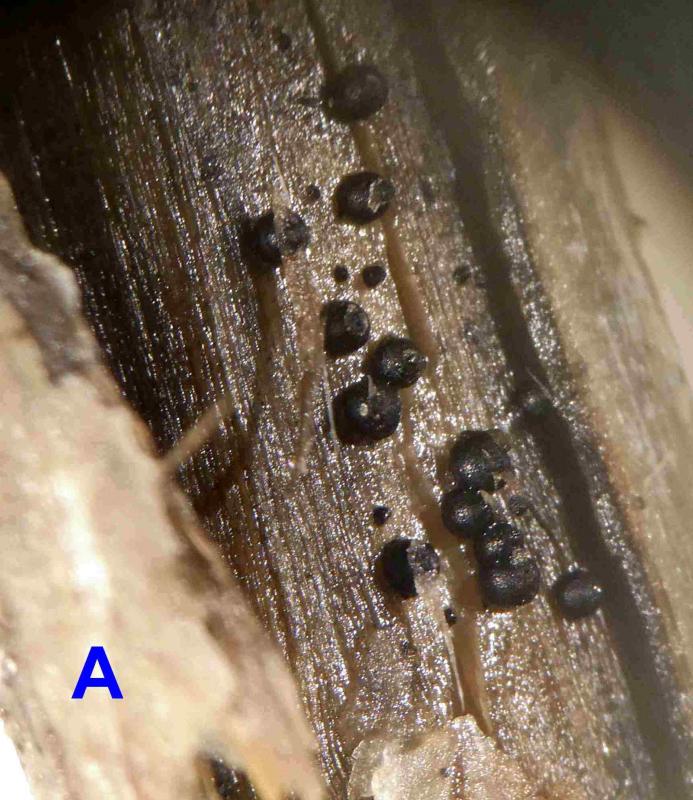
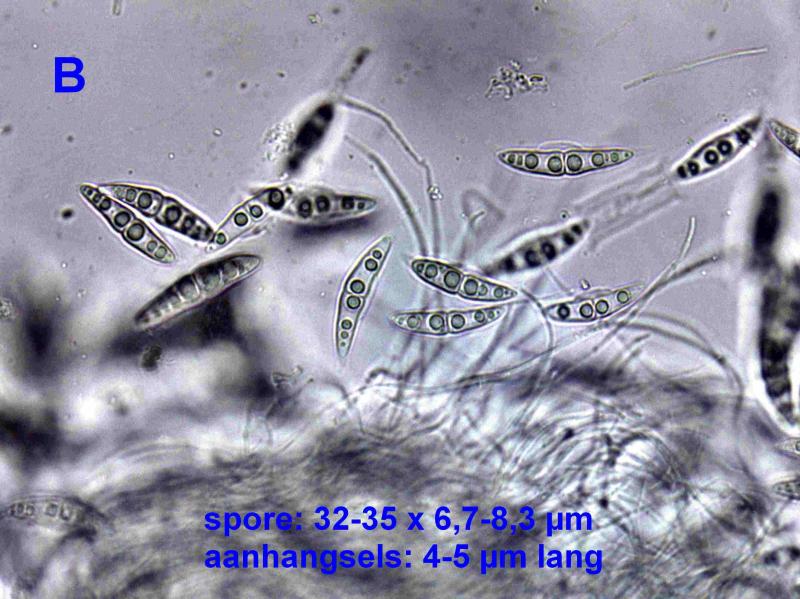
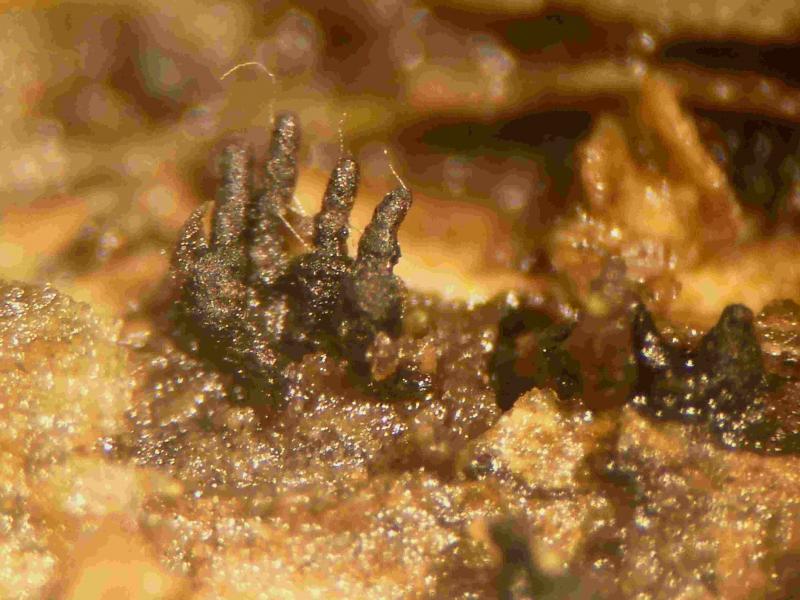
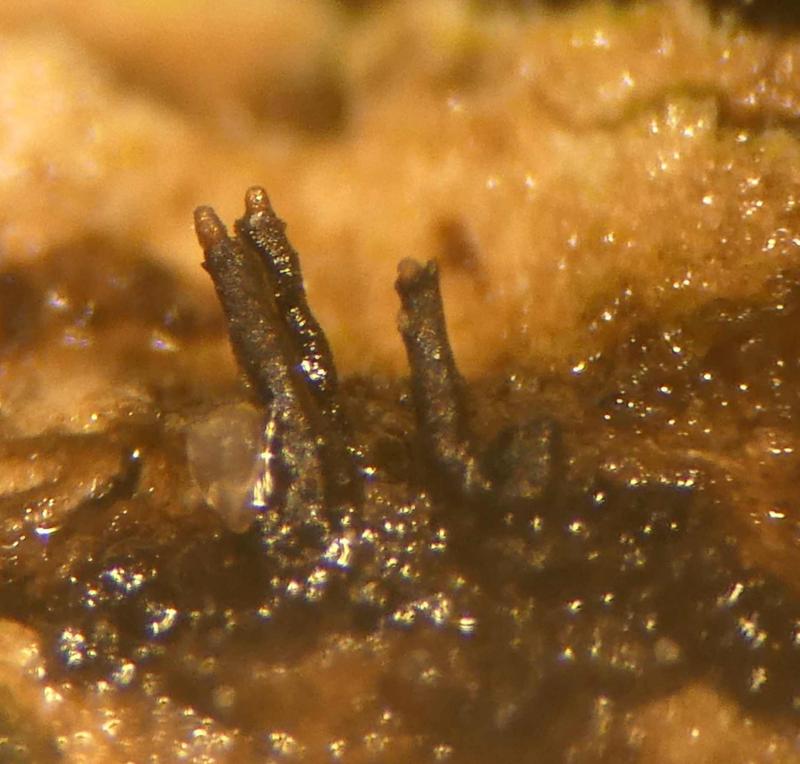
I found several perithecia of Lophiosphaera ulicis (Photo A and B). Nearby I found perithecia with long necks (1.3 mm long; 0.13 mm wide at the base).
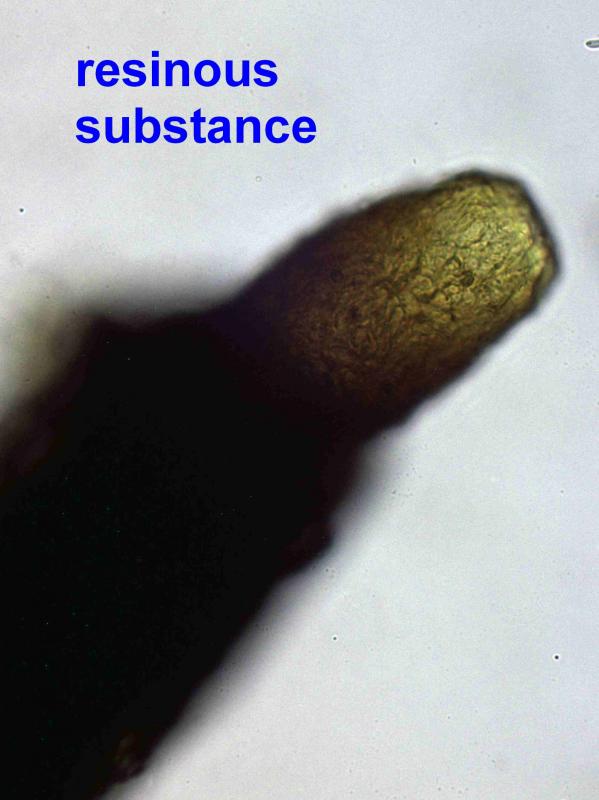
After a few days, a resinous substance flowed from the ostiole. It was too hard to examine microscopically.
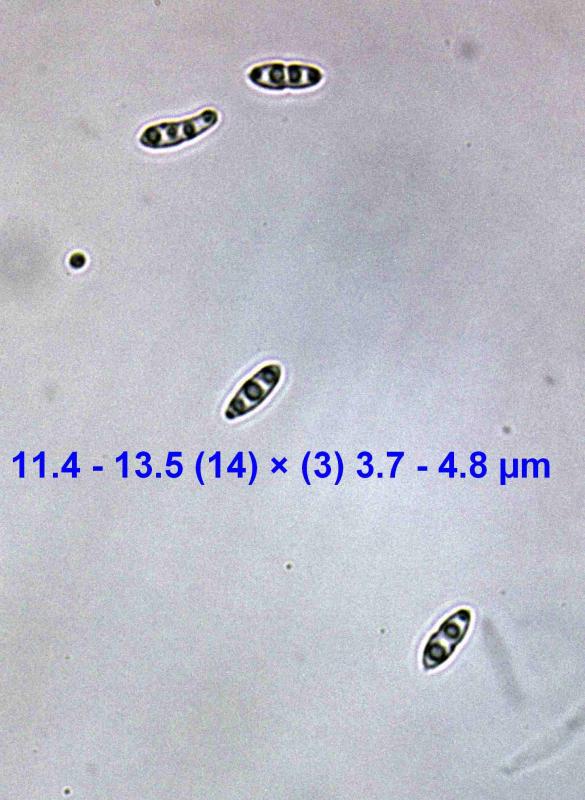
In the lower part of the perithecia I found asci with ellipsoid spores. They had 1 sept (slightly off centre) and are constricted there.
Who can help me, could this be Diaporthe or Chrysoporthe?
Many thanks in advance,
François Bartholomeeusen
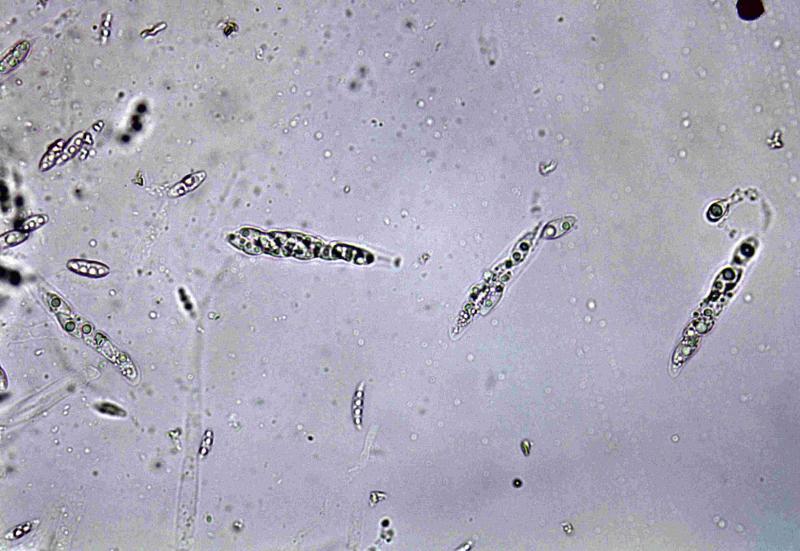
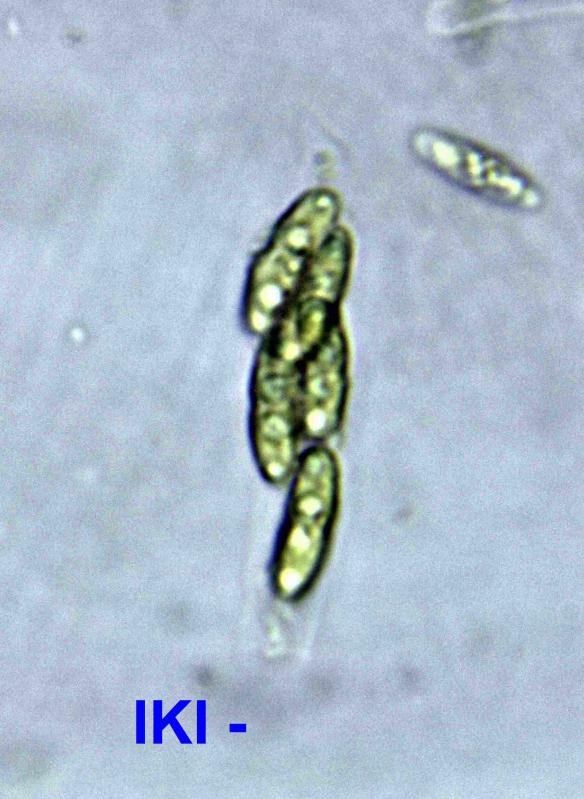
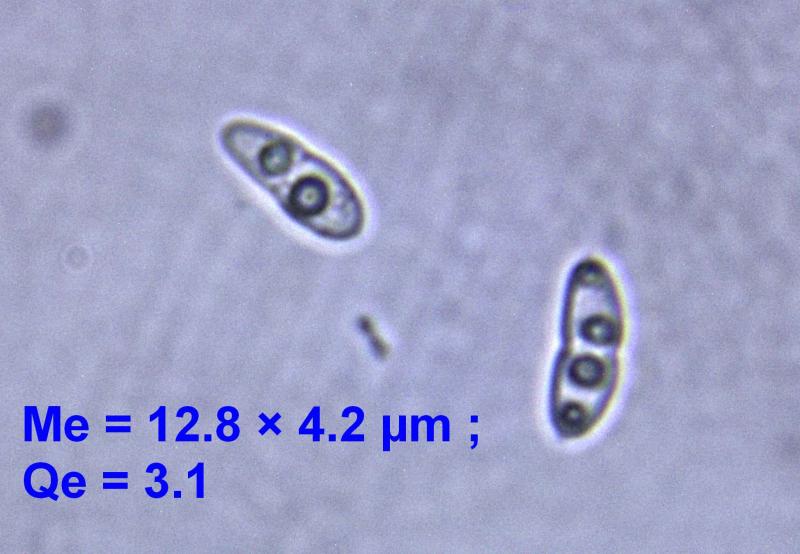

These long-stalked asci and there apex are typical for Diatrypaceae. There, with those very long neck, I would directly have chosen for Peroneutypa. But Peroneutypa species have small, aseptate spores. At first sight no other genus seems to fit here.
All the best,
Bernard

Bonjour,
Espèce à comparer à Diaporthe eres. Ou en tout cas dans ce genre. Il arrive que les becs soient si longs.
Alain
Good afternoon Alain,
Thank you for your suggestion. Diaporthe eres is a good candidate. I found a description of D. eres on the internet (Huhndorf, S.A. 1992 and Wehmeyer L.E. 1933).
The dimensions of the spores are correct except mine are wider (possible effect of measurements on herbarium material?).
In attachment some pictures of the last examinations. I have the impression that the spores take on a different shape with each examination.
Because the two parts of the spores are not always the same I thought of Apioporthe but that seems to be a synonym of Diaporthe. Sometimes I think I see short appendages at the poles of the spores.
My choice is D. eres if the substrate is not a problem.
Thank you very much Alain and Bernard,
François Bartholomeeusen
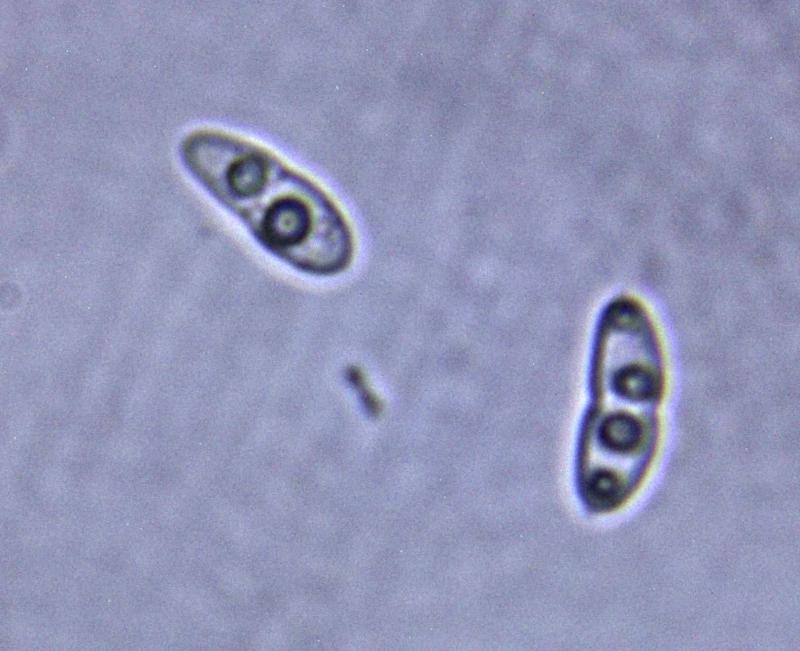
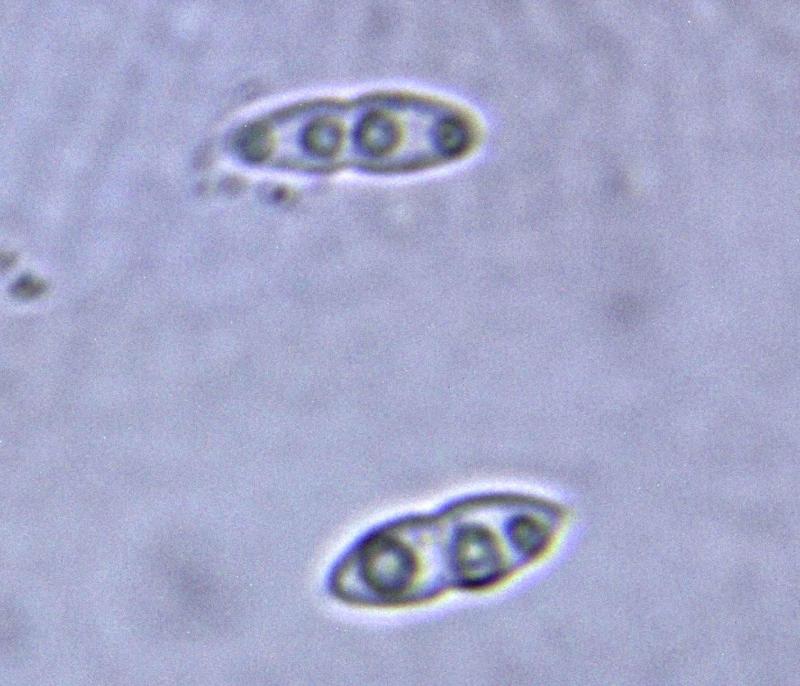
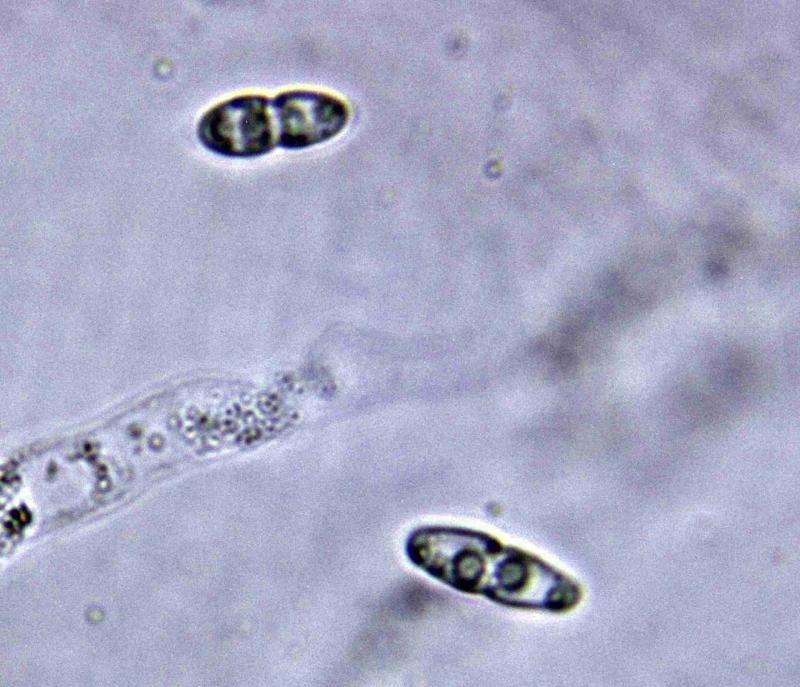
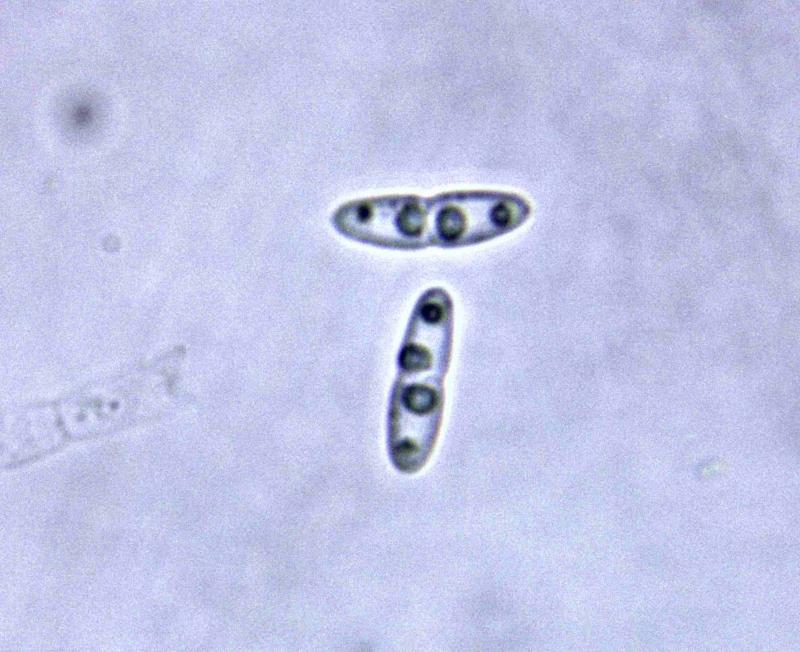
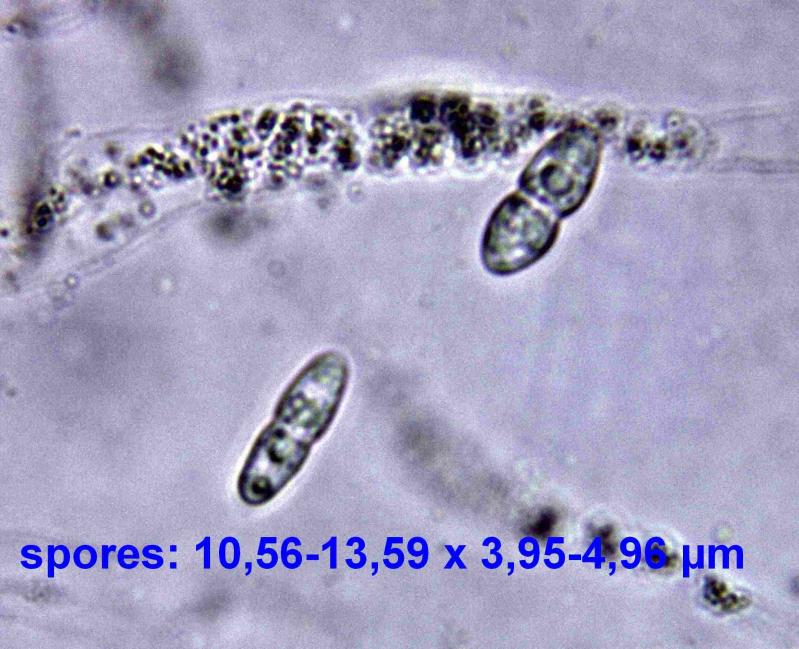
Spores typical Diaporthe indeed. But the young long-stalked ascus on the left on that misleading photo 6, on which my comments were based, certainly does not belong to Diaporthe.
Bernard