
26-03-2026 15:31
 Åke Widgren
Hello,I found this one in October last year, on r


25-03-2026 10:35
Hulda Caroline HolteHello,I collected this species growing on a dead b
25-03-2026 22:23
 Marc Detollenaere
Dear Forum,On a debarked stem of Tilia, we found s
24-03-2026 15:44
Åge OterhalsI hope someone can confirm the name of this collec
25-03-2026 20:53
François BartholomeeusenDear forum members,On 23 March 2026, I found sever
23-03-2026 20:16
 Miguel Ángel Ribes
Good eveningI'm unable to identify this Coprotus o
25-03-2026 15:06
 Bernard CLESSE
Bonjour à toutes et tous,Pourriez-vous me confirm
25-03-2026 13:54
 Enrique Rubio
Does anyone know where I could download Paoletti's
Ijuhya, striate sp., on herbal stem
Viktorie Halasu,
06-06-2021 11:51
 Hello,
 I couldn't find a name for this Ijuhya in the latest 2019 key.
On an unidentified herbal stem ca 5 mm thick. Riparian lowland forest, clearing under a power line with Reynoutria, Helianthus tuberosus and other tall plants.
Perithecium doesn't react in LA, seems to be one-layered only.
"Crown" without hairs, only very short cylindric cells are protruding on places.
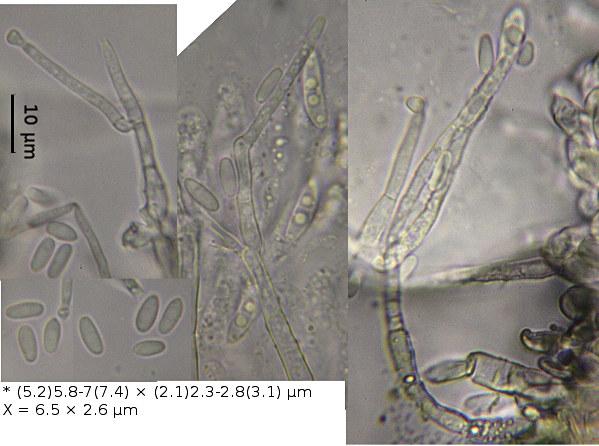
Asci 8-spored. Spores straight, frequently also more or less bent to allantoid, only 1-septate, finely longitudinally striate.
Anamorph present.
Soc. Sarcopodium sp.
Thank you for any help.
Viktorie
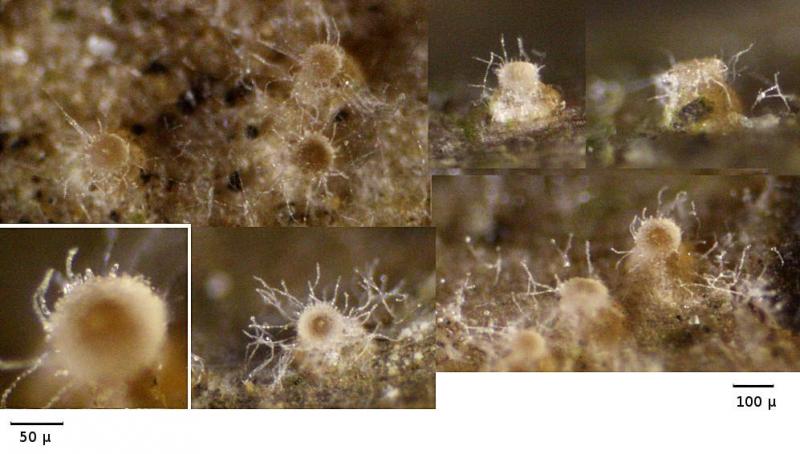
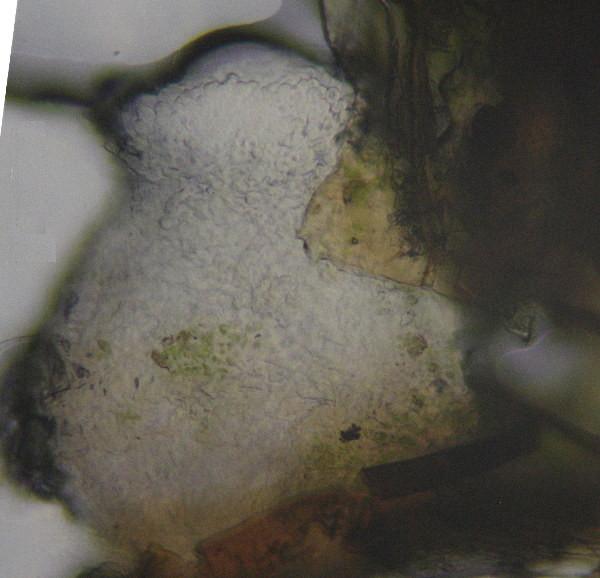
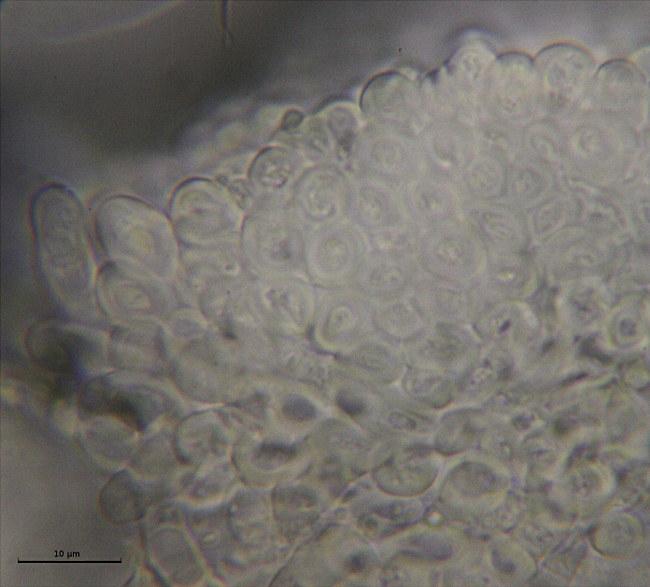
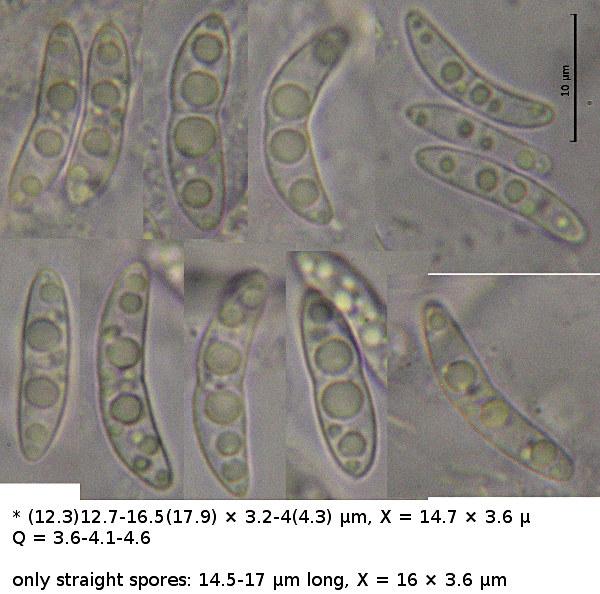
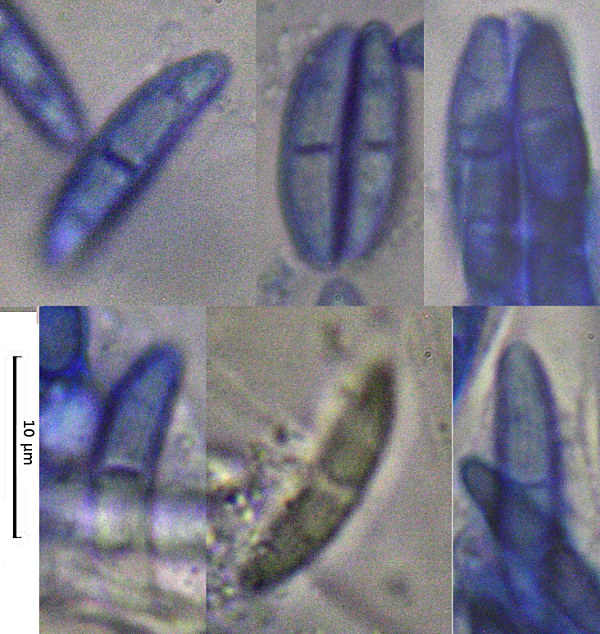 ornamentation
Christian Lechat,
06-06-2021 17:13

Re : Ijuhya, striate sp., on herbal stem
Hi Viktorie,
Is the ascomatal apex conical or flat? In the first image it looks rather conical, and if so it is not an Ijuhya species. Ijuhya is characterized by ascomata with a flat discoid
apex pierced by a small, faintly prominent papilla and a one-layered
ascomatal wall covered by hyphal elements arising from base, proliferating
over ascomatal surface and becoming fasciculate to form
teeth arranged in a stellate fringe around upper margin.
apex pierced by a small, faintly prominent papilla and a one-layered
ascomatal wall covered by hyphal elements arising from base, proliferating
over ascomatal surface and becoming fasciculate to form
teeth arranged in a stellate fringe around upper margin.
Maybe You should compare this specimen with the genus Lasionectria, whose ascomata have a conical apex. Lasionectria differs from Ijuhya in having hairs arising from the cells of ascomatal wall, not from base. Al known species of Lasionectria have striate ascospores.
Good luck,
Christian