
24-03-2026 19:59
 William Slosse
Hello everyone,On 23/03/26, I found the following
21-03-2026 15:13
Lepista ZacariasHello everyone, Does any one know of any literatu
24-03-2026 21:37
Elisabeth StöckliBonsoir,Sur bois (tronc) très pourri de conifère
24-03-2026 21:07
Ethan CrensonHello all, A friend collected this asco in a wood
23-03-2026 20:16
 Miguel Ángel Ribes
Good eveningI'm unable to identify this Coprotus o
24-03-2026 15:44
Åge OterhalsI hope someone can confirm the name of this collec

20-10-2017 09:23
Garcia SusanaEste otro crecía en el mismo trocito de madera qu
Hymenoscyphus on Rubus
Chris Yeates,
15-11-2021 16:37

Bonjour
Continuing my work on fungi on Rubus I recently collected a small section of dead Rubus fruticosus stem with three long-stalked Hymenoscyphus apothecia.
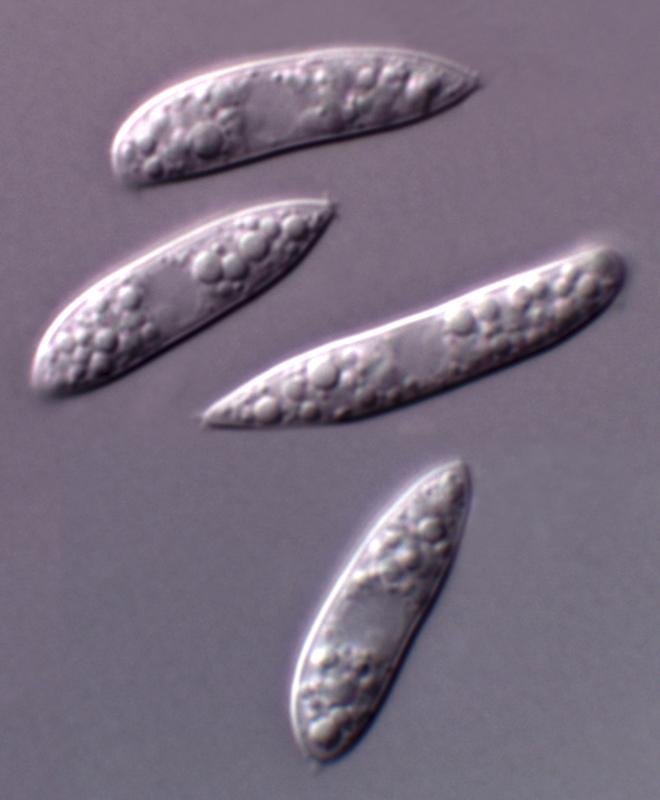
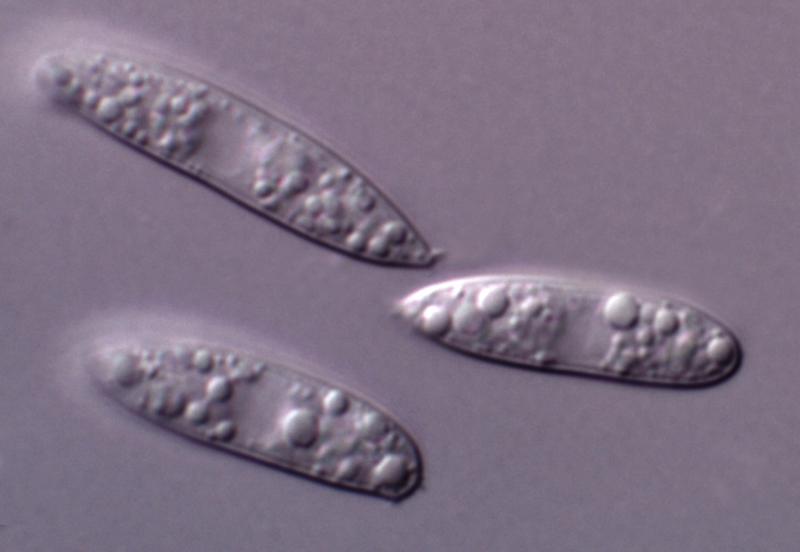
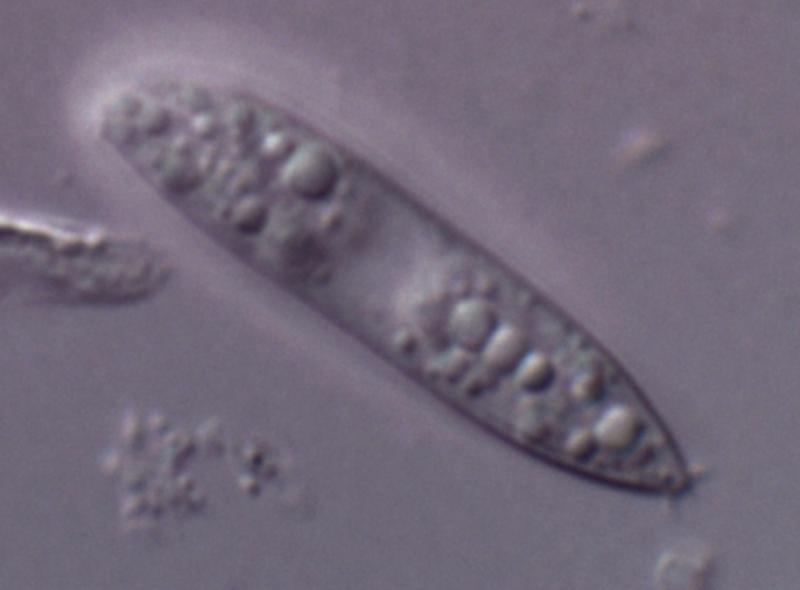
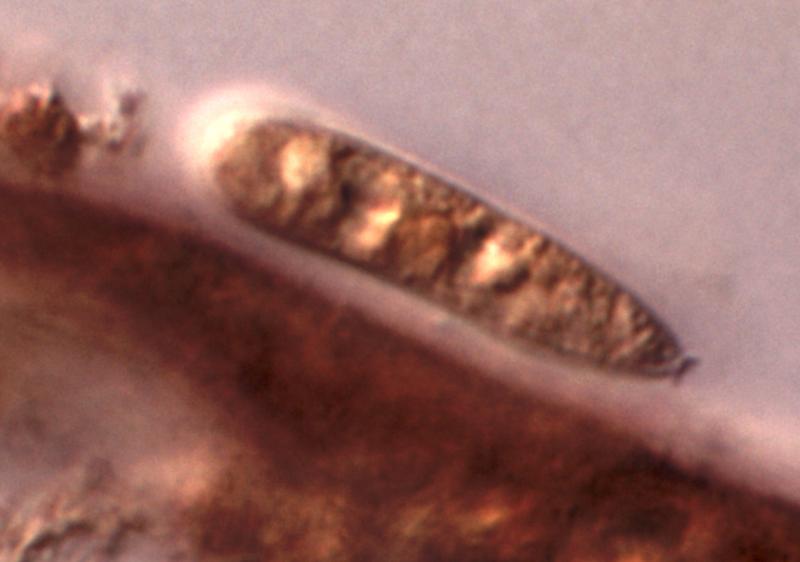
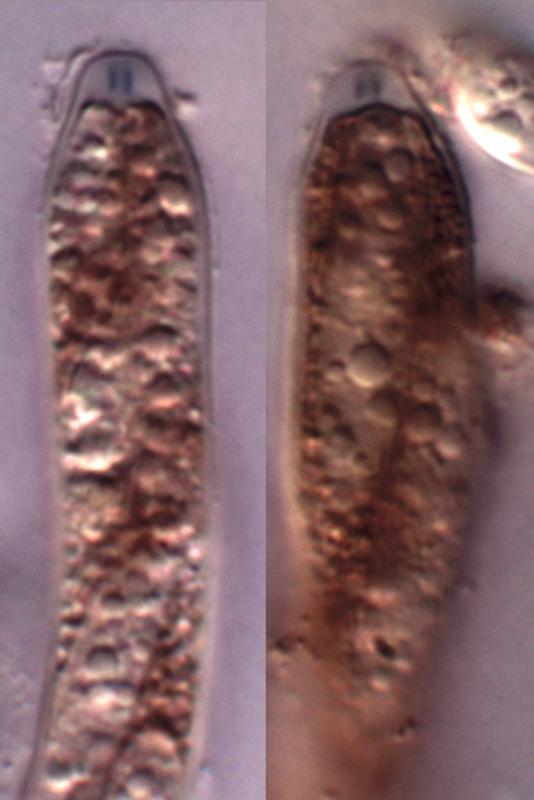
Under the microscope at x400 these looked like typical H. scutula (H- 19.2-22.5 x 4.4-5µm), though I could see no evidence of cilia. With oil at x1000 the usual cilia one might expect were not seen, but almost every ejected spore had 2 (occasionally 3) short projections, mostly at the "tail" end but also often at both ends. I managed to find something similar in Zotto's folder:
scutula - vitellinus H- > Hymenoscyphus scutula on Impatiens, 5.X.08.jpg
So this is not an unknown feature, I was interested, though, that this was not an occasional occurrence - with careful searching most (of many) spores showed this.
Chris
Hans-Otto Baral,
15-11-2021 16:56

Re : Hymenoscyphus on Rubus
Yes, this is nothing rare. Did you look for the ascus base? Surely without croziers I assume.
You can see them in my Hymenoscyphus menthae paper in H. macroguttatus (figs 32 33 36) and in a species on Vitis (62). In H. vitellinus they tended to be longer. This is quite a difficult group and requires DNA study.
Chris Yeates,
15-11-2021 18:22
Re : Hymenoscyphus on Rubus
Ah wie dumm von mir!
I read through Dennis's and White's papers, but forgot http://www.ascofrance.fr/uploads/forum_file/Baral-2015-Hymenoscyphus-menthae-AscomyceteOrg-07-06-0001.pdf
Thanks Zotto, and yes - as I think I said before - without croziers "H-"