
24-03-2026 19:59
 William Slosse
Hello everyone,On 23/03/26, I found the following
21-03-2026 15:13
Lepista ZacariasHello everyone, Does any one know of any literatu
24-03-2026 21:37
Elisabeth StöckliBonsoir,Sur bois (tronc) très pourri de conifère
24-03-2026 21:07
Ethan CrensonHello all, A friend collected this asco in a wood
23-03-2026 20:16
 Miguel Ángel Ribes
Good eveningI'm unable to identify this Coprotus o
24-03-2026 15:44
Åge OterhalsI hope someone can confirm the name of this collec

20-10-2017 09:23
Garcia SusanaEste otro crecía en el mismo trocito de madera qu
Are these two different ascomycetes ?
Stephen Martin Mifsud,
12-12-2021 20:51
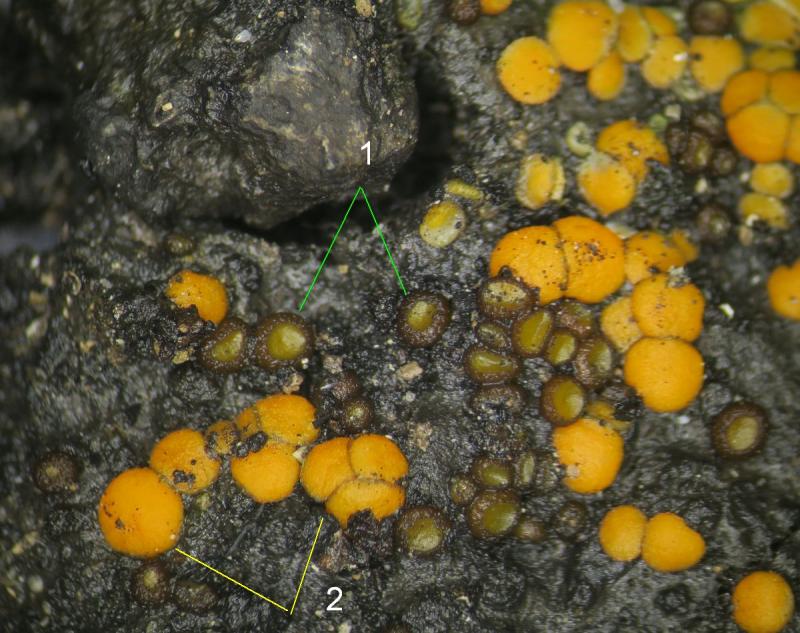
 So there was a feast of Anthracobia spp. on burnt ground (huge trees of Ceratonia burnt due to illega fireworks in summer :-( ). I collected samples, and I am working on the ID. Likely we have nitida and macrocystis in the party, however, under the stereo, I noticed a group of of brownish-yellow smaller cups (1.5mm?) where I dont know if they are just young forms of the Anthracobia close by, or a different species. For now I am asking this for registration of samples. Full analysis will follow. In my eyes they are different.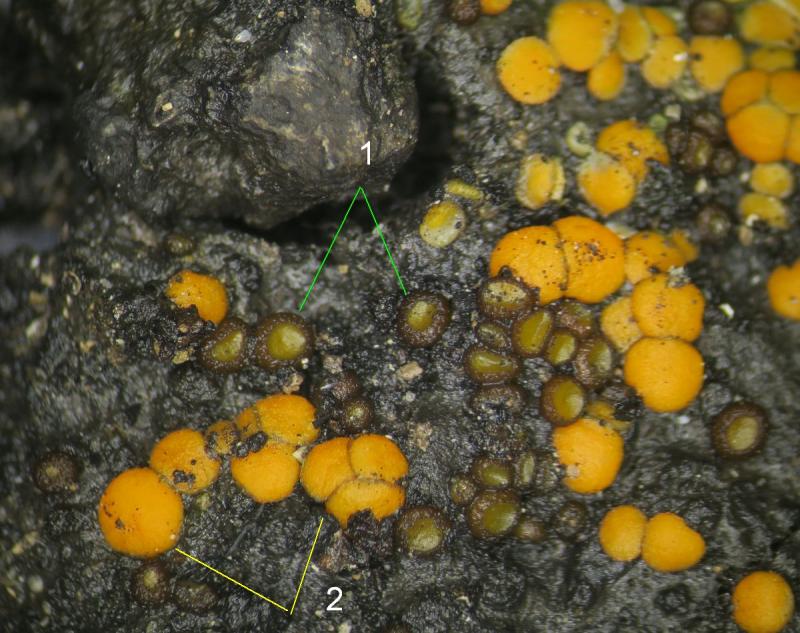
Michel Hairaud,
12-12-2021 21:08

Re : Are these two different ascomycetes ?
Bonsoir Stephen ,
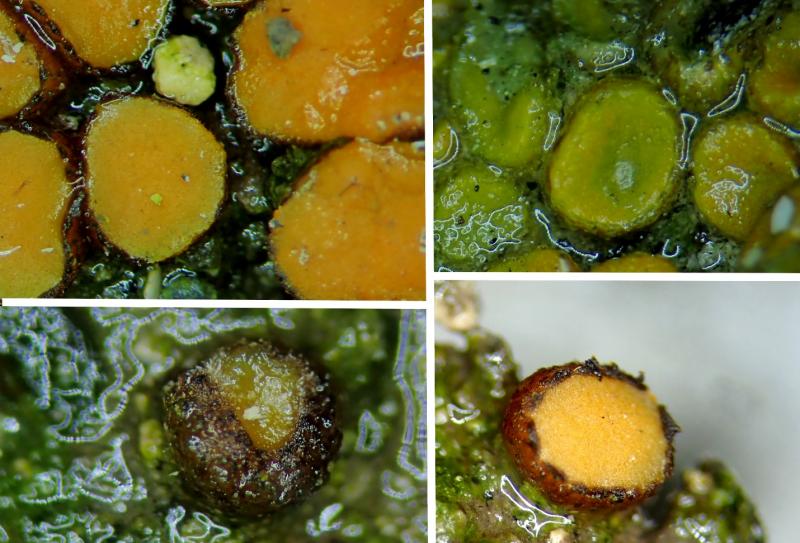
Not necessarily. I already noticed that young Anthracobia apothecia are urceolate with more conspicuous hairs (actually easier on such apos to observe hairs) andlook different.
You will probably confirm when they are more mature that they match the same species.
Mind you, 2 different species on a same fire place is possible...
I attach pics of a same collection
AmitiésMichel
Not necessarily. I already noticed that young Anthracobia apothecia are urceolate with more conspicuous hairs (actually easier on such apos to observe hairs) andlook different.
You will probably confirm when they are more mature that they match the same species.
Mind you, 2 different species on a same fire place is possible...
I attach pics of a same collection
AmitiésMichel
Stephen Martin Mifsud,
12-12-2021 22:44
Re : Are these two different ascomycetes ?
Hi Michael,
Yes they look more or less like yr pics, urceolate with a brown brush of apressed short hairs. I also experienced that greenish tonality in some occassions as in your 2nd pic. Anyway what species is the Anthracobia you attached ?
I follow up this collection and keep you updated. Many thanks Michel!
Yes they look more or less like yr pics, urceolate with a brown brush of apressed short hairs. I also experienced that greenish tonality in some occassions as in your 2nd pic. Anyway what species is the Anthracobia you attached ?
I follow up this collection and keep you updated. Many thanks Michel!
Michel Hairaud,
13-12-2021 08:23
Re : Are these two different ascomycetes ?
I concluded in A. macrocystis in this case.
The green colour is produced by algae which often cover the apos.
Michel
The green colour is produced by algae which often cover the apos.
Michel
Stephen Martin Mifsud,
15-12-2021 19:00
Re : Are these two different ascomycetes ?
Ok, here are some data for this collection.
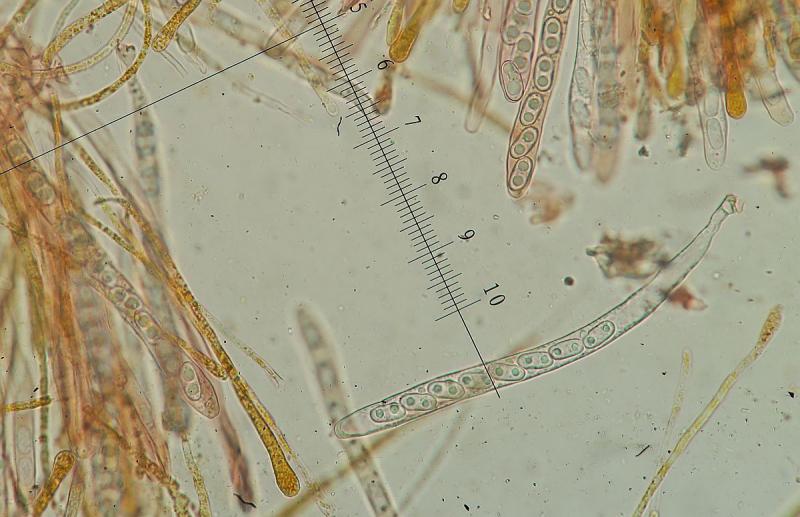
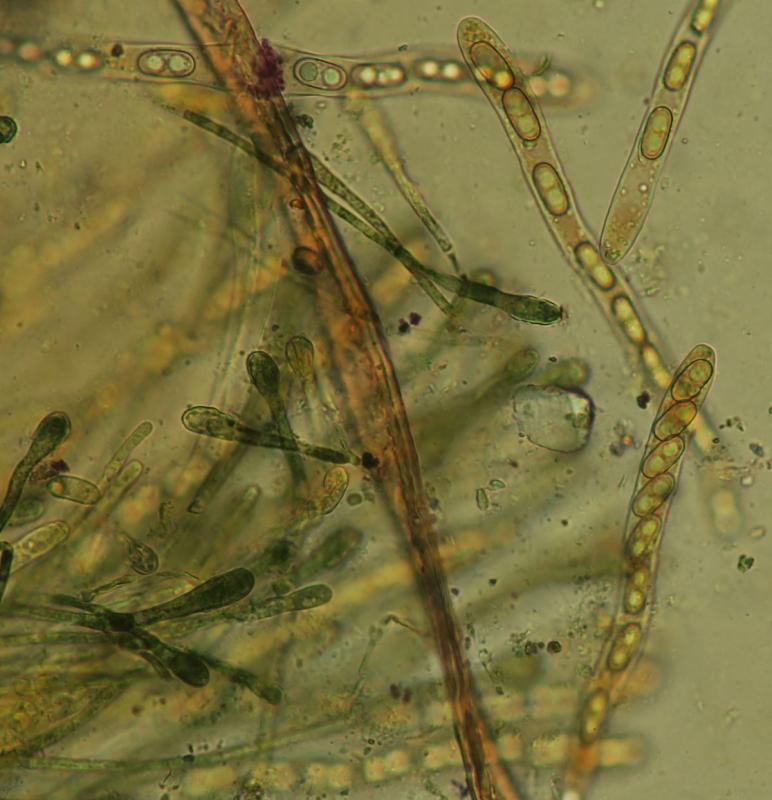
- Asci J-ve with bi-bulbous or uni-bulbous root, operculate
- Spores 15-16 x 6.5-7.0 um
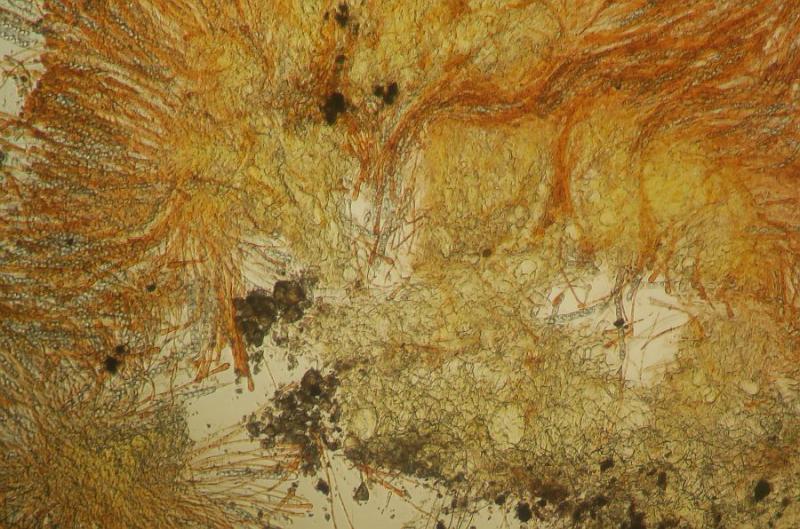
- Paraphyses with quite swollen heads, 7um wide, some reaching 10um, their orange pigment (at upper half) is amyloid. Some paraphyses split into two heads. The subdivide at the basal one quarter.
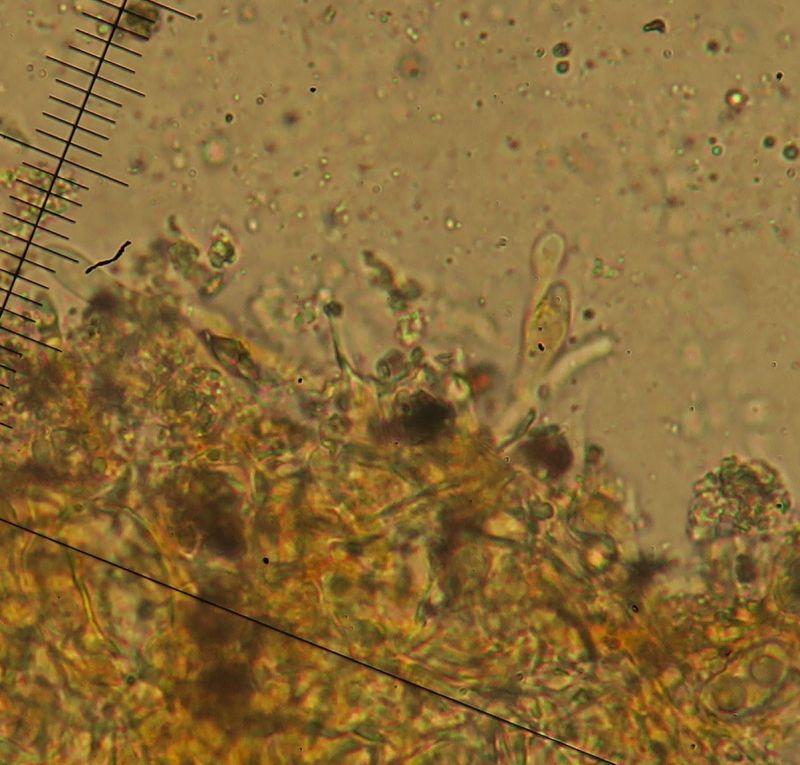
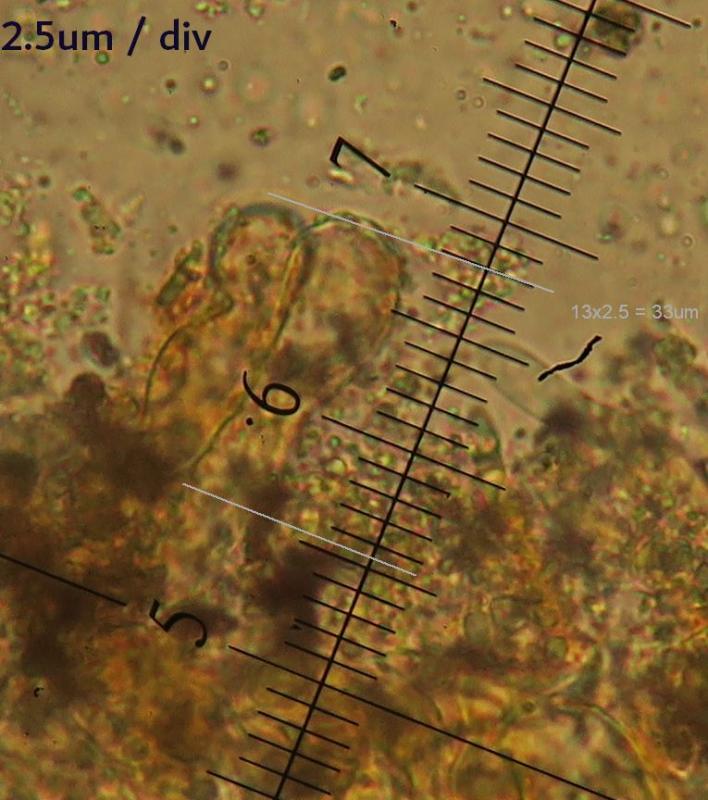
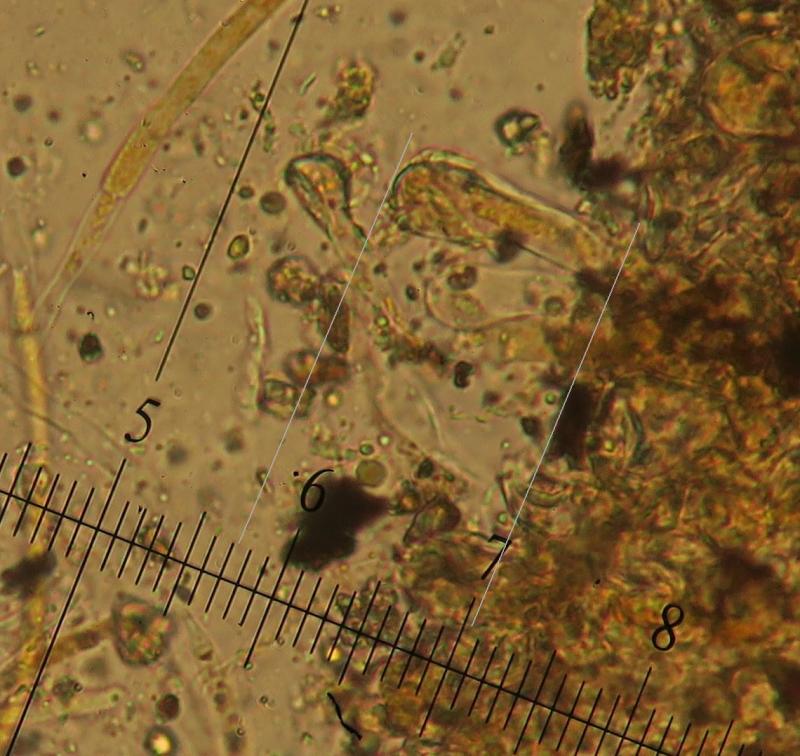
- very short and hyaline hairs, not numerous, 30-40um (not sure if they are hairs, see pics) otherwise hairless in mature specimens. Some are wide, 12um or so.
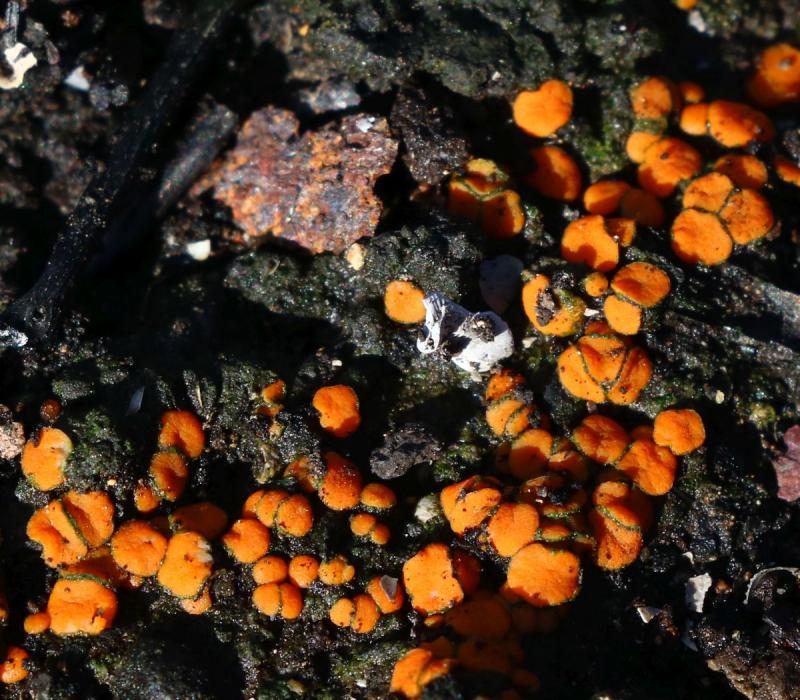
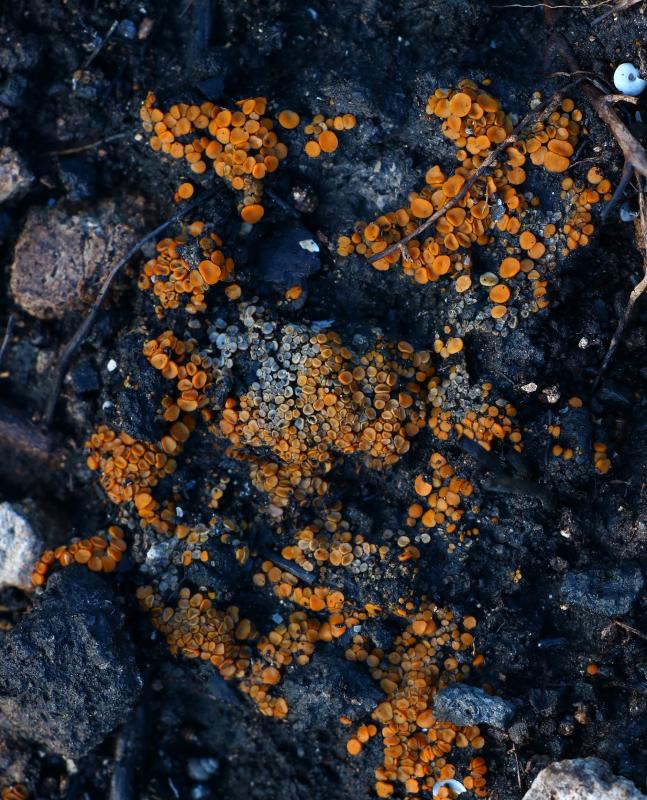
- Ascocarps vivid orange, hairless to the naked eye, without brown mottling (tufts of hair) when mature.
- Asci J-ve with bi-bulbous or uni-bulbous root, operculate
- Spores 15-16 x 6.5-7.0 um
- Paraphyses with quite swollen heads, 7um wide, some reaching 10um, their orange pigment (at upper half) is amyloid. Some paraphyses split into two heads. The subdivide at the basal one quarter.
- very short and hyaline hairs, not numerous, 30-40um (not sure if they are hairs, see pics) otherwise hairless in mature specimens. Some are wide, 12um or so.
- Ascocarps vivid orange, hairless to the naked eye, without brown mottling (tufts of hair) when mature.
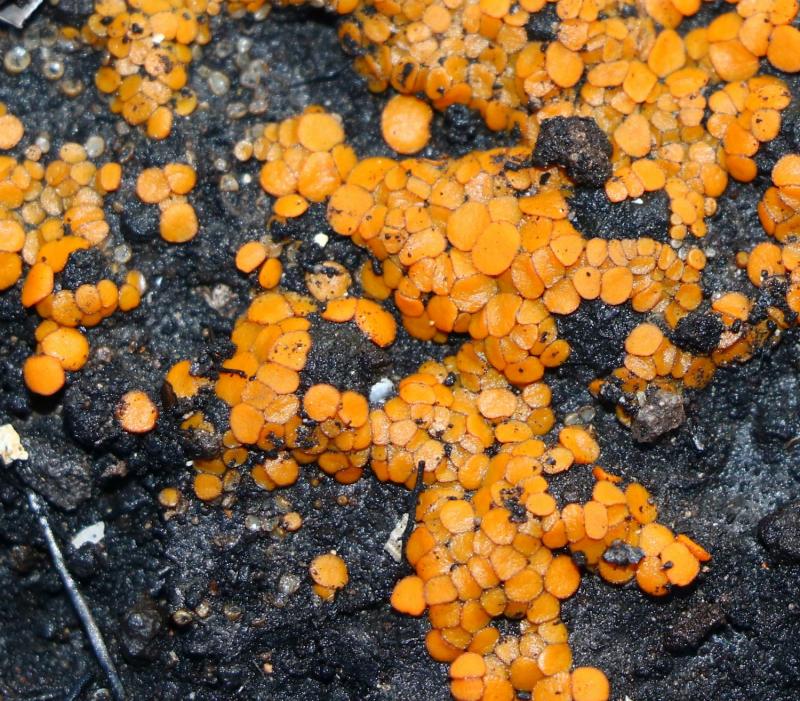
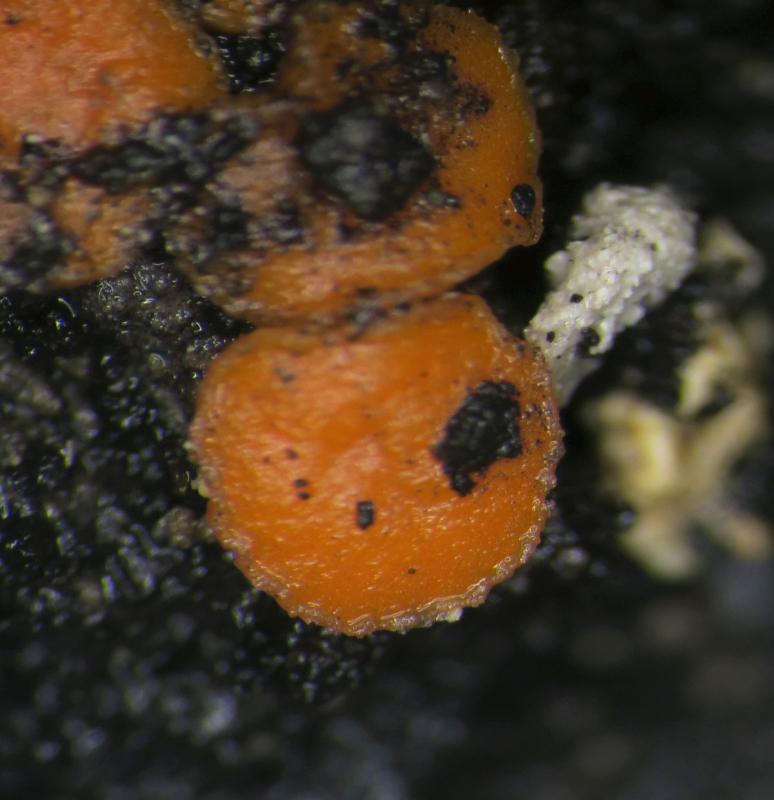
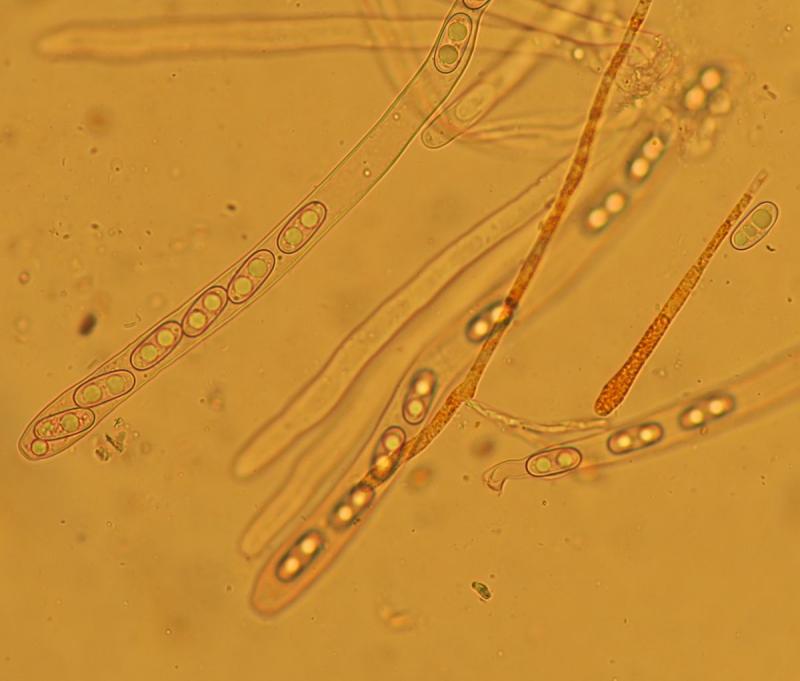
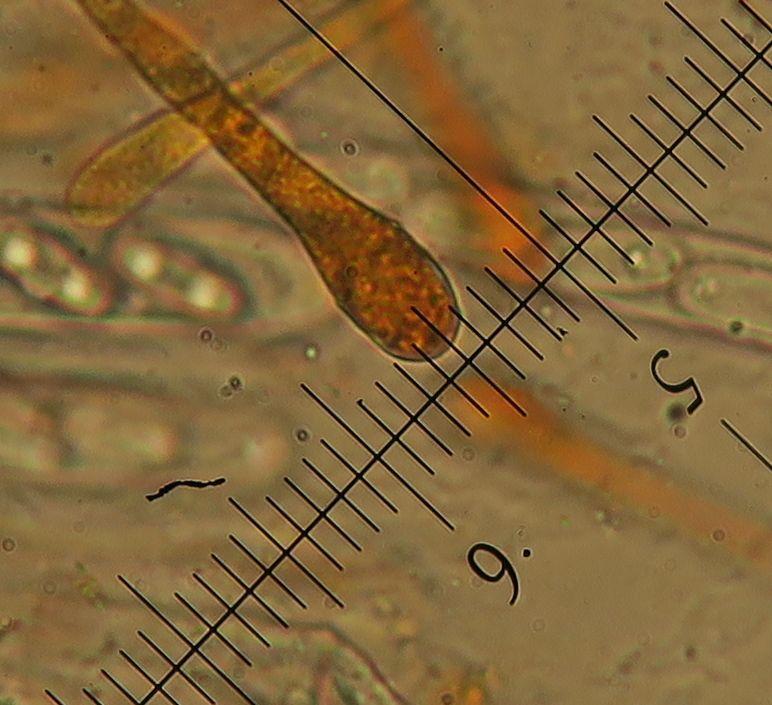
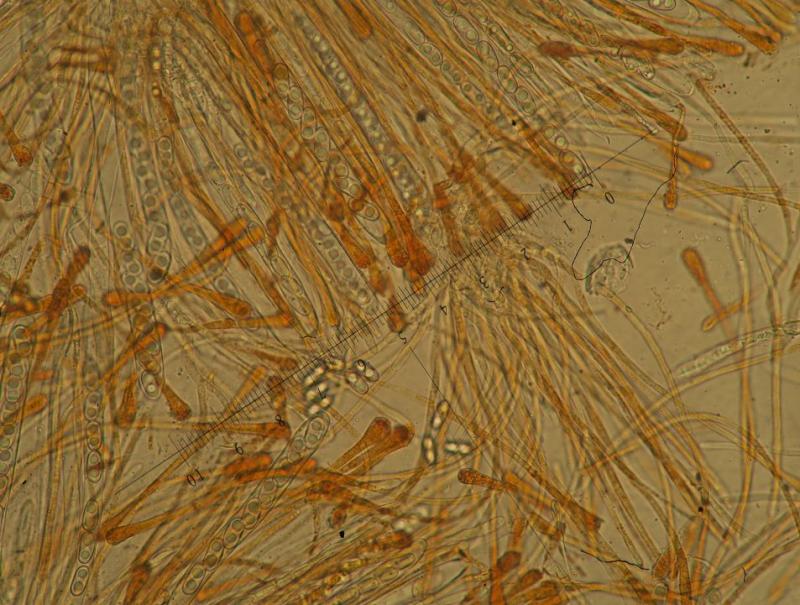
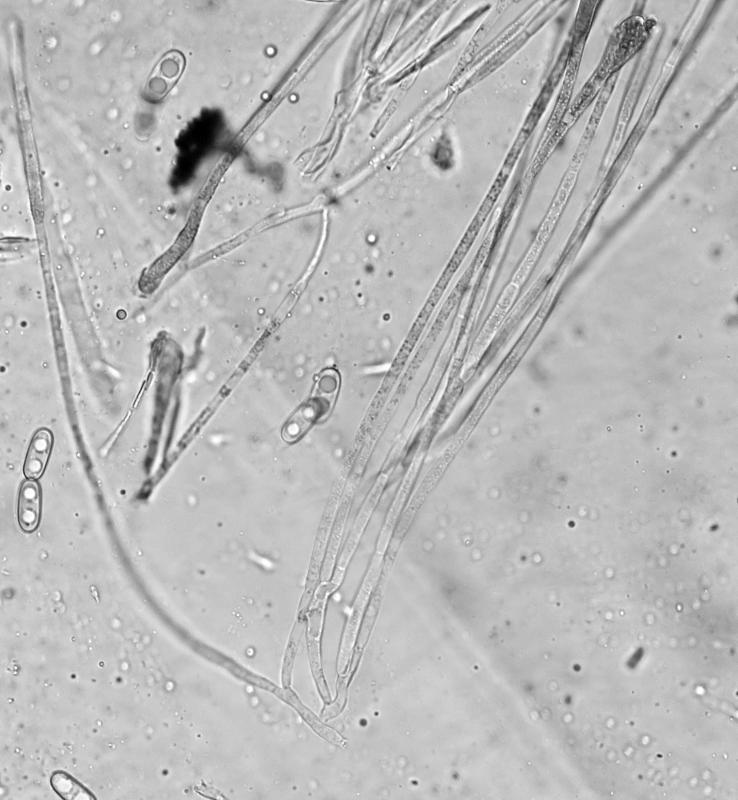
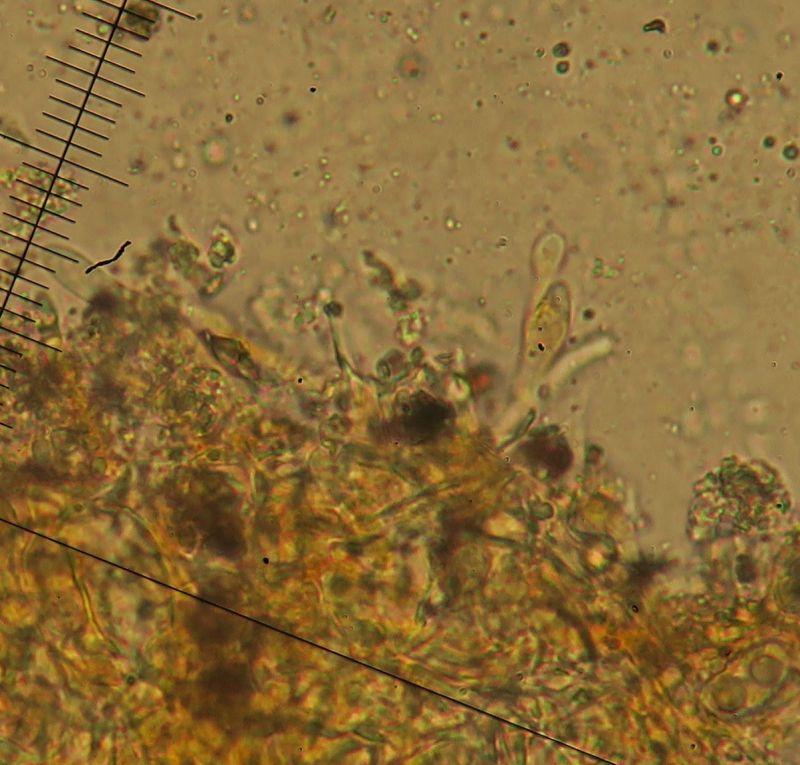
Stephen Martin Mifsud,
15-12-2021 20:03
Re : Are these two different ascomycetes ?
Here is another pic of the hairs which are about 30-35um long making this Anthracobia to be more macrostycis then nitida (longer hairs). However, the problem is the 15-16um long spores :-( bit too short for macrocystis/nitida.
Michel Hairaud,
15-12-2021 21:41
Re : Are these two different ascomycetes ?
Bonsoir Stephen,
Did you also consider A. tristis ?
The cylindrical spores would match, though somehow too short
Michel
Did you also consider A. tristis ?
The cylindrical spores would match, though somehow too short
Michel
Stephen Martin Mifsud,
17-12-2021 11:08
Re : Are these two different ascomycetes ?
I did but from what i see, tristis do not have very swollen paraphyses tips (macrocytis typically have), but I dont know how important this charachter is.
https://ascomycete.org/Revue/Article/Anthracobia-tristis#
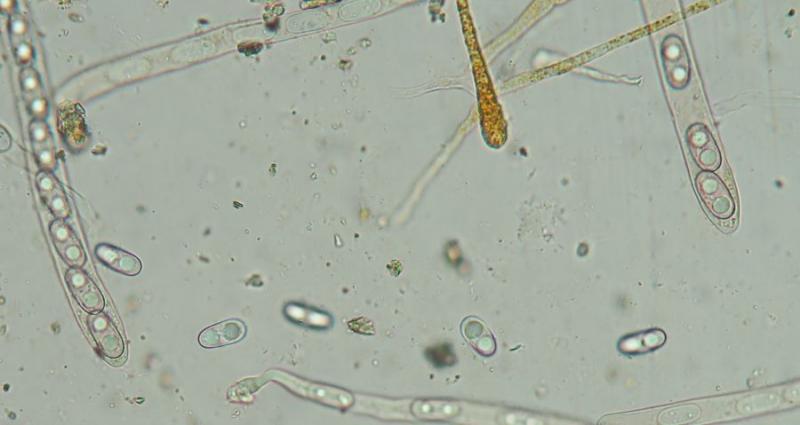
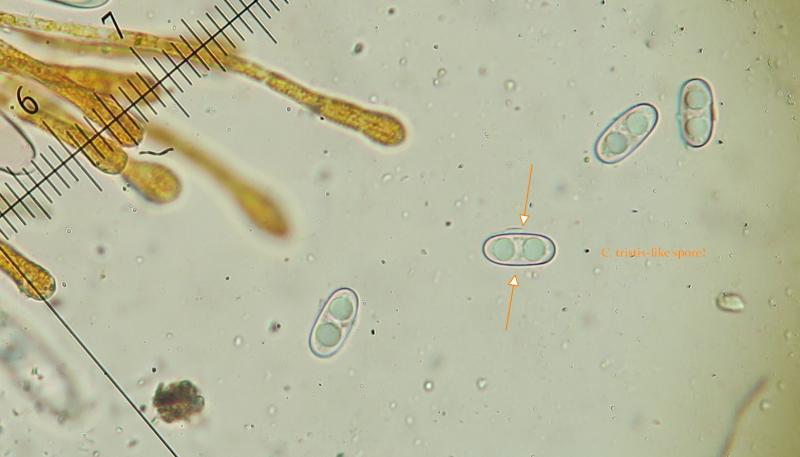
The free spores are a often cylindrical but some are not that much too - very confusing. As is confusing the slightly shorter spores for all three species considered (macrocystis/tristis/nitida) all being >16 um
Yet on seeing this post:
http://www.ascofrance.com/forum/28517/anthracobia-cf-tristis
http://www.ascofrance.com/uploads/forum_file/Ficha-Anthracobia-tristis-web-0001.jpg
I see lot of similarities. Maybe tristis should be considered . I try to measure free-running spores maybe they are a bit larger.
Thanks!
I add a few more images
https://ascomycete.org/Revue/Article/Anthracobia-tristis#
The free spores are a often cylindrical but some are not that much too - very confusing. As is confusing the slightly shorter spores for all three species considered (macrocystis/tristis/nitida) all being >16 um
Yet on seeing this post:
http://www.ascofrance.com/forum/28517/anthracobia-cf-tristis
http://www.ascofrance.com/uploads/forum_file/Ficha-Anthracobia-tristis-web-0001.jpg
I see lot of similarities. Maybe tristis should be considered . I try to measure free-running spores maybe they are a bit larger.
Thanks!
I add a few more images
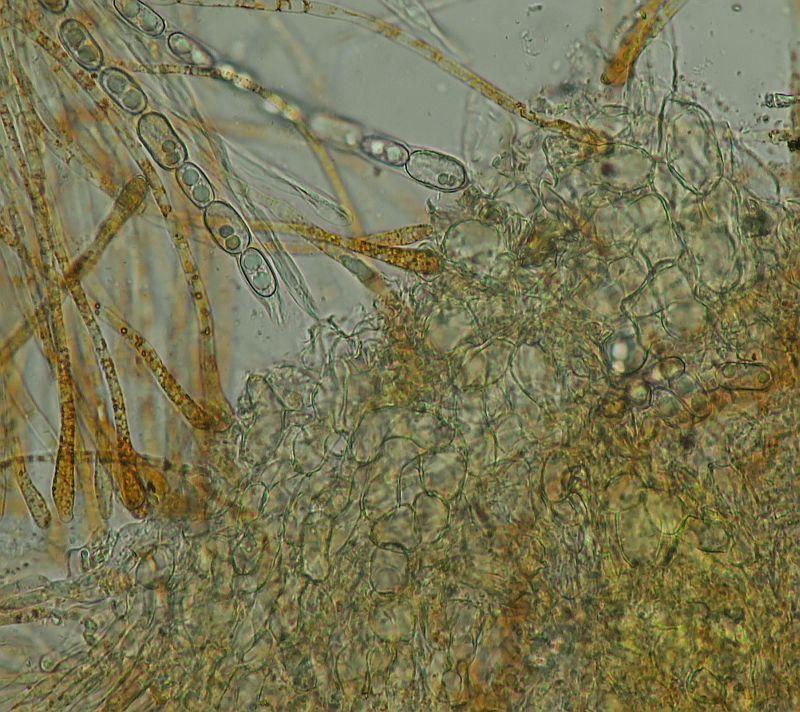
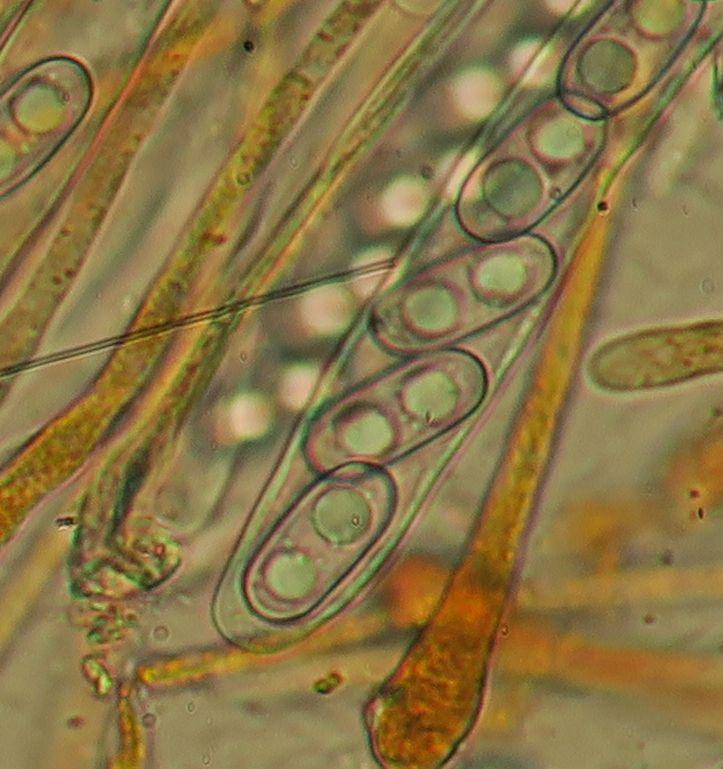
Michel Hairaud,
17-12-2021 13:16
Re : Are these two different ascomycetes ?
Still the same idea for me. I share with you that this genus is not as easy as it may appear... (as in others -:) )Michel
Stephen Martin Mifsud,
18-12-2021 06:37
Re : Are these two different ascomycetes ?
I measured a few ascospores (outside the asci) carefully and I got a slightly better result, although measurments are still on the lower range of the species.
(15.4) 15.9 - 16.4 (16.8) × (6.7) 6.9 - 7.1 (7.5) µm
Q = (2.1) 2.2 - 2.3 (2.4) ; N = 10
V = (360) 391 - 422 (476) µm3
Me = 16.2 × 7 µm ; Qe = 2.3 ; Ve = 413 µm3
Interestingly, ascomycete.org says that ascospores are 13-15 [um long] if I understand the text well. https://ascomycete.org/Revue/Article/Anthracobia-tristis
Anthracobia tristis!
(15.4) 15.9 - 16.4 (16.8) × (6.7) 6.9 - 7.1 (7.5) µm
Q = (2.1) 2.2 - 2.3 (2.4) ; N = 10
V = (360) 391 - 422 (476) µm3
Me = 16.2 × 7 µm ; Qe = 2.3 ; Ve = 413 µm3
Interestingly, ascomycete.org says that ascospores are 13-15 [um long] if I understand the text well. https://ascomycete.org/Revue/Article/Anthracobia-tristis
Anthracobia tristis!