
22-05-2026 21:35
Steve ClementsBonjour, I expected this find on old wood on our
22-05-2026 18:12
 Lothar Krieglsteiner
... in moist chamber from Portugal.As the fungus s
22-05-2026 20:08
Ethan CrensonHello all, Yesterday in NYC I was visiting an e
11-01-2022 16:36
 Jason Karakehian
Hi does anyone have a digital copy of Raitviir A (
20-05-2026 17:47
Margot en Geert VullingsWe found this Mollisia on dead Juncus stems mown l
22-05-2026 14:47
Gernot FriebesHi,superficial ascomata collected on bark of a liv
22-05-2026 14:44
Lothar Krieglsteiner
in unripe condition citrine yellow, then soon fadi
22-05-2026 13:29
Gernot FriebesHi,I am curious to hear your opinion on this mater
22-05-2026 10:59
 Nicolas VAN VOOREN
Trouvé sur Phragmites, ce que je pense être un L
20-05-2026 21:49
Margot en Geert VullingsWe found this Lachnum on Juncus stems mown last ye
bryophilous Helotiales IKI rr
Andreas Gminder,
01-02-2025 20:32
 Hello,
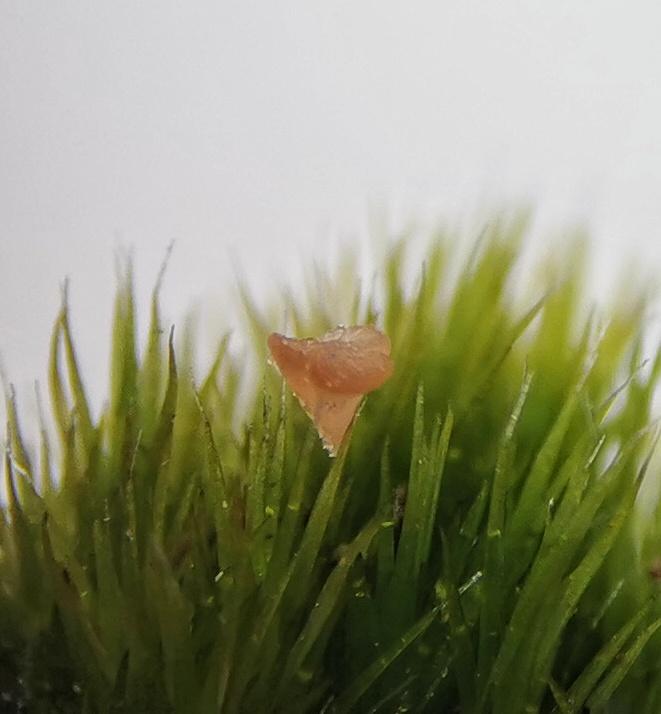
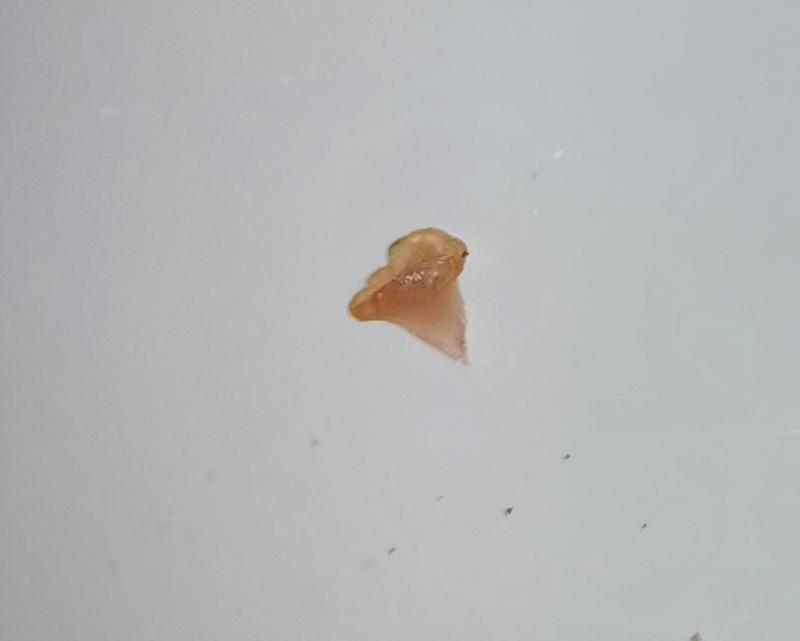
today my girlfriend Sylvie found a single apothecium of an obviousely bryophilous inoperculate ascomycete on bare soil between some cushion of Dicranum spec.
The apothecium is turbinate, slightly orange-salmon coloured, appr. 0,5 mm in diam.. The attached foto here is not the original growth place, but the apothecium was placed in this cushion of Dicranum. Nevertheless the only moss nearby was just this one.
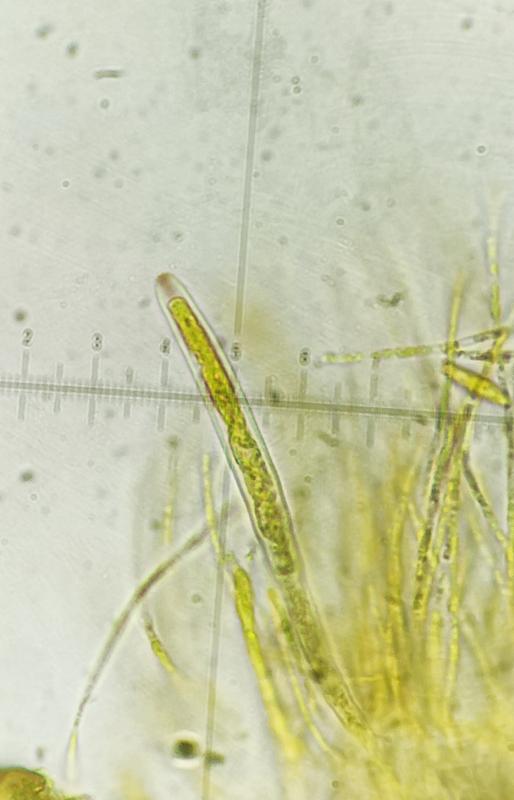
Most striking microscopical feature is the Ascus pore reacting red with IKI.
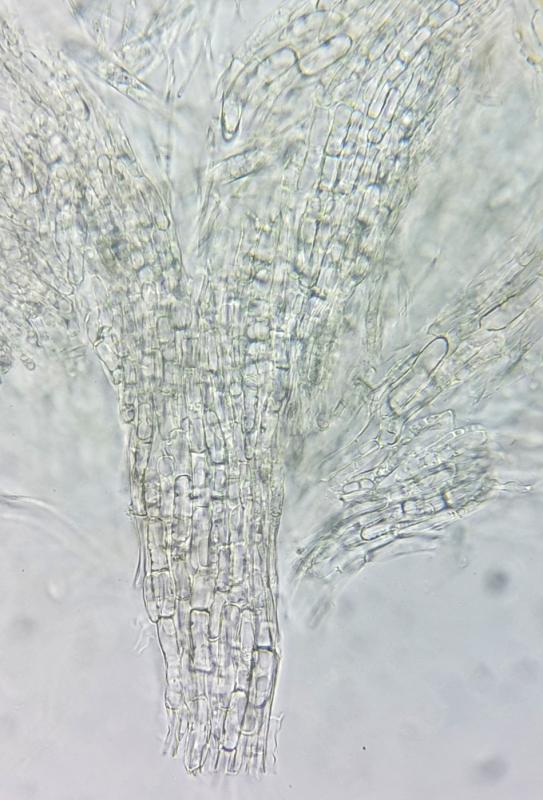
Exc. of textura prismatica +/- parallel to surface.
Spores 1-14 x 3,5-4 µm, with oil guttules, appr. content 1,5-2.
Asci 90-110 x 8-9 µm (dead state), with croziers. Ascus pore strongly enlarged in dead state, IKI rr.
Paraphyses with some diffuse internal content, non-refractive, cylindrical, 1-1,5 µm broad, tips slighetly bent and up to 2 µm broad, branched.
Any hints?
thank you and all the best,
Andreas and Sylvie
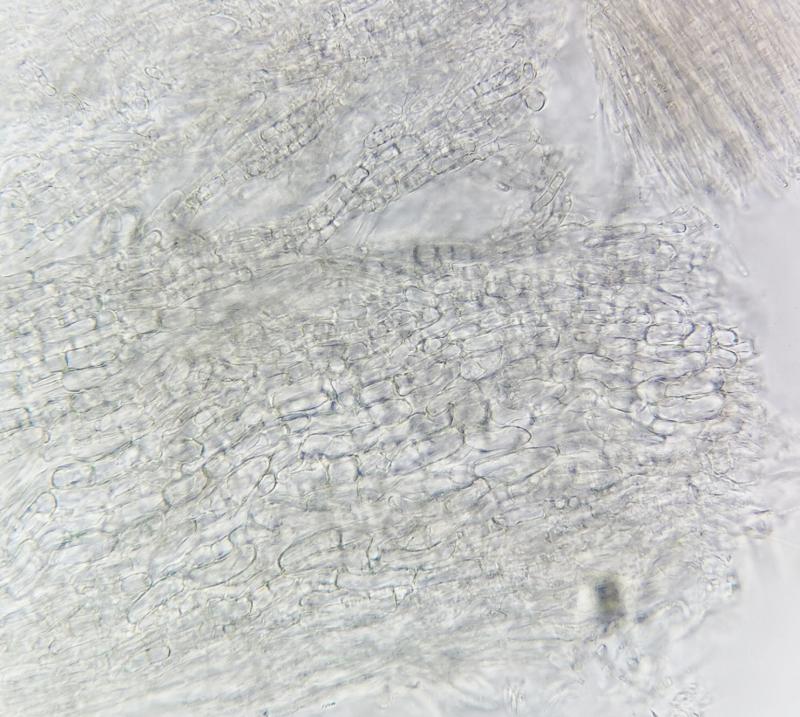
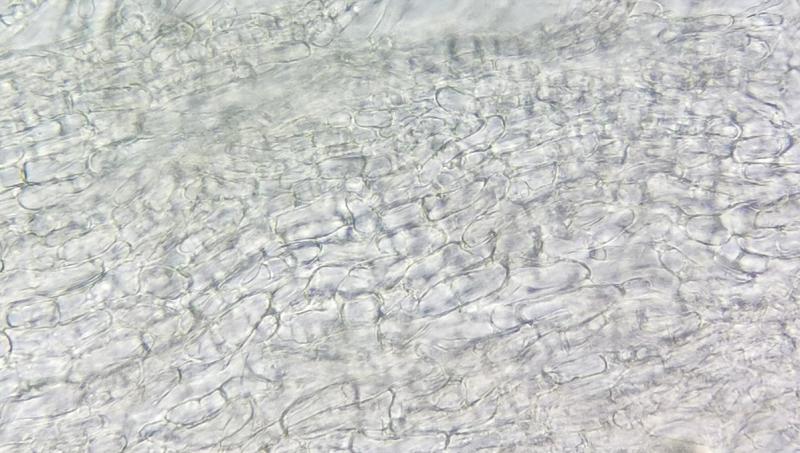
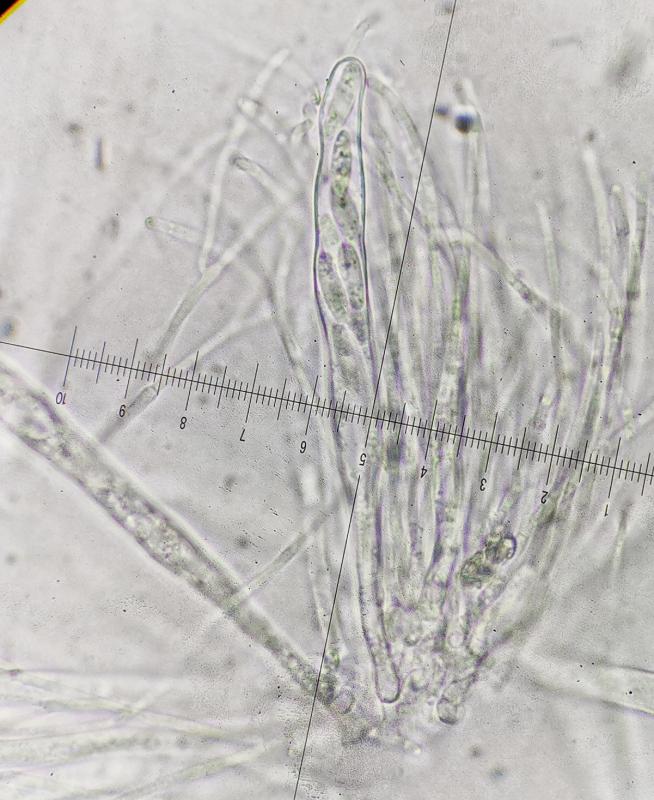
Hans-Otto Baral,
01-02-2025 21:23

Re : bryophilous Helotiales IKI rr
Hallo Andreas
die Sporen sind ?11-14 µm lang?
Die Asci und Sporen sind etwas zu lang für Luteodiscus hemiamyloideus, der auch nicht an Laubmoosen vorkommt.
Das Apo war ja auch vital rosa-orange, offenbar ohne äußeren Einfluss.
B. turbinatus hat keine Haken.
Ein echter Bryoscyphus ist wegen der fehlenden VBs ausgeschlossen.
Hab keine Ahnung.
Zotto
Andreas Gminder,
01-02-2025 21:33
Re : bryophilous Helotiales IKI rr
Hello Zotto,
not exactly the answer I hoped for, but nevertheless thank you for your opinion.
The spores are 11-14 µm long, not 1-14 µm of course.
What concerns the colour of the apothecium: We only had this one and as there is freezing temperatures in the night I don't know for sure whether this is the true colour. But as there are no vacuoles, it should not be a reddening species at least.
all the best,
Andreas
not exactly the answer I hoped for, but nevertheless thank you for your opinion.
The spores are 11-14 µm long, not 1-14 µm of course.
What concerns the colour of the apothecium: We only had this one and as there is freezing temperatures in the night I don't know for sure whether this is the true colour. But as there are no vacuoles, it should not be a reddening species at least.
all the best,
Andreas
Hans-Otto Baral,
01-02-2025 21:45
Re : bryophilous Helotiales IKI rr
Yes, the parahyses and excipular cells look alive, so there is no reason for a colour change.
Andreas Gminder,
08-02-2025 16:13
Re : bryophilous Helotiales IKI rr
Hello,
we solved the question - it is Roseodiscus formosus. And we had that species already in 2021 at this location .....
all the best,
Andreas
we solved the question - it is Roseodiscus formosus. And we had that species already in 2021 at this location .....
all the best,
Andreas
Andreas Gminder,
08-02-2025 20:49
Re : bryophilous Helotiales IKI rr
Hello once more,
the location is by the way the highest elevation with 470-480 m a.s.l., whereas the other known locations do not exceed 250 m a.s.l.. Also the other German location are all in the atlantic climat zone, whereas the location in Goslar is just at the border to continental climate.
all the best,
Andreas
the location is by the way the highest elevation with 470-480 m a.s.l., whereas the other known locations do not exceed 250 m a.s.l.. Also the other German location are all in the atlantic climat zone, whereas the location in Goslar is just at the border to continental climate.
all the best,
Andreas
Hans-Otto Baral,
08-02-2025 22:12
Re : bryophilous Helotiales IKI rr
Ah that's a good idea!