14-05-2026 05:36
Ethan CrensonHi all, I haven't paid much attention to Lachnu
10-05-2026 23:17
 Andreas Gminder
Hello,today we found in a moist steep decidous for
16-03-2011 14:31
roman vargas albertoHi. I would like some opinion about this Peziza
11-05-2026 12:32
 Bernard CLESSE
Pourriez-vous m'aider à identifier cette héloti
13-05-2026 15:26
 François Freléchoux
Bonjour,Voici une récolte faite il y a quelques j
12-05-2026 15:41
 Nicolas VAN VOOREN
Dear Ascolovers, especially interested in Pezizale
13-05-2026 12:05
 Thierry Blondelle
Bonjour à tous,J'aimerais avoir confirmation de c
28-04-2026 20:07
 Lothar Krieglsteiner
... on twig in the air at standing Ceratonia siliq
27-04-2026 20:52
Lothar Krieglsteiner
Found on hanging tiwg of Olea europaea in dried-ou
11-05-2026 20:22
Lothar Krieglsteiner
on attached twig of standing Ficus caricaquite uns
 Good evening
Another find I'm looking for help with:
Place of discovery: dead, damp, greasy, partially debarked hardwood branch with a broad strip of Exidia effusa, hidden under partially protruding bark, on the round NSG Auenwald near Deuz
MTB: 5014,434 Date of discovery: 02.03.2025
Fruiting bodies in rows and small groups with a total of 9 specimens, bowl-shaped round, sessile, with a clearly recognizable edge that protrudes above the hymenium; colorless to milky white, very soft, discoloring to yellowish-hyaline with age, completely glabrous;
Ø up to 640µm, h up to 200µm;
No membranous covering layer is recognizable on the hymenium and paraphyses and asci are not attached to each other;
Practically no asci were to be found in the first fruiting body (although externally overripe), while the second fruiting body showed at least some asci that appeared quite ripe. Free spores were not to be found.
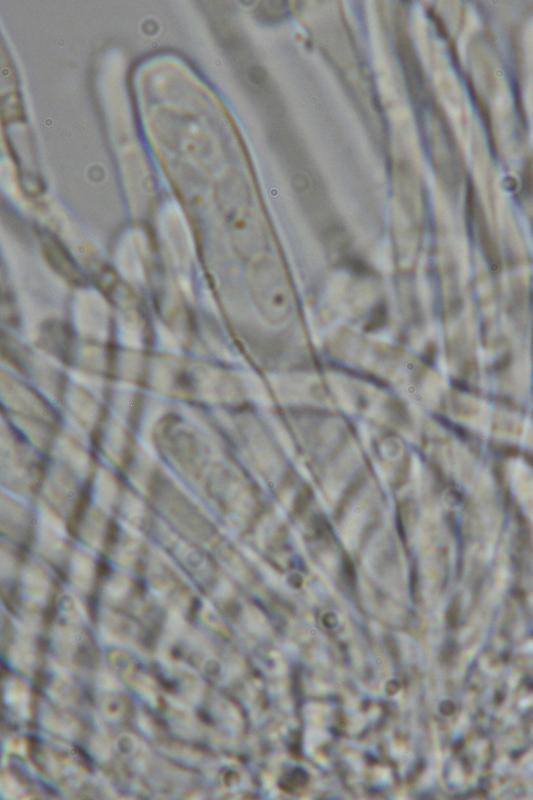
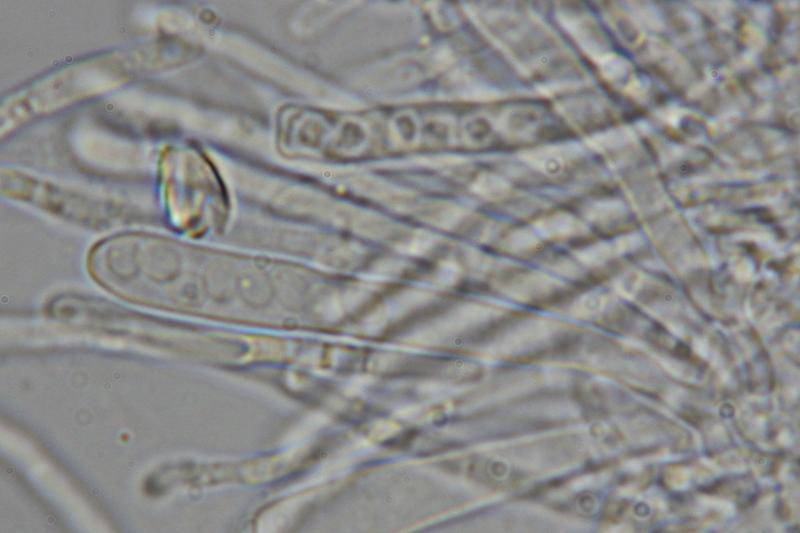
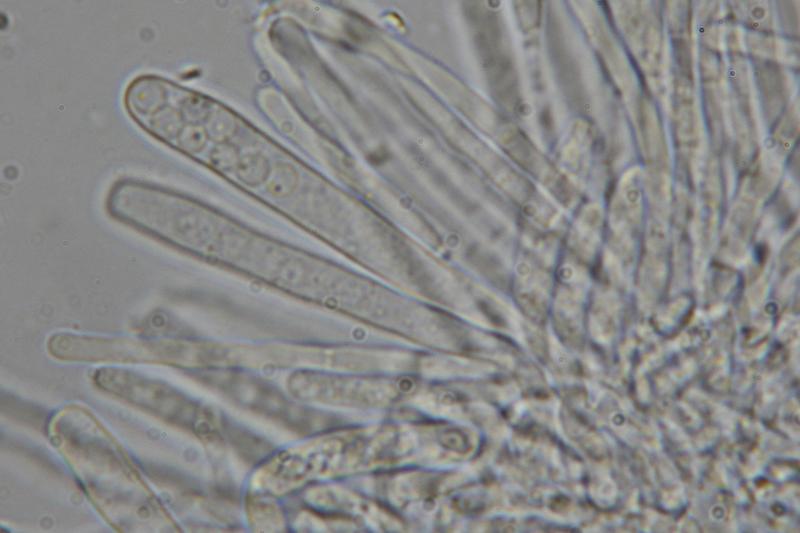
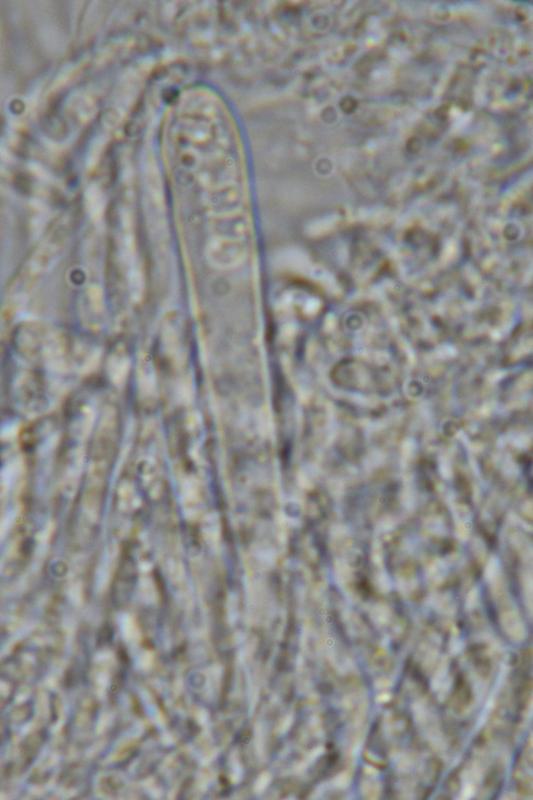
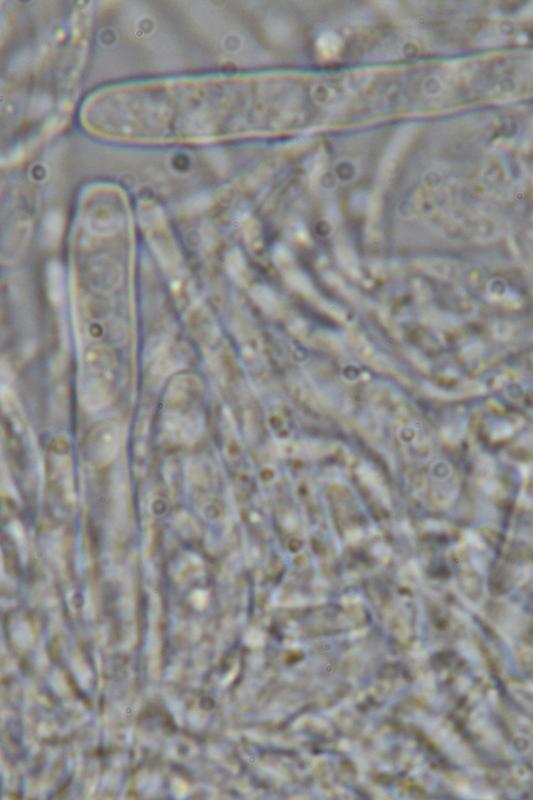
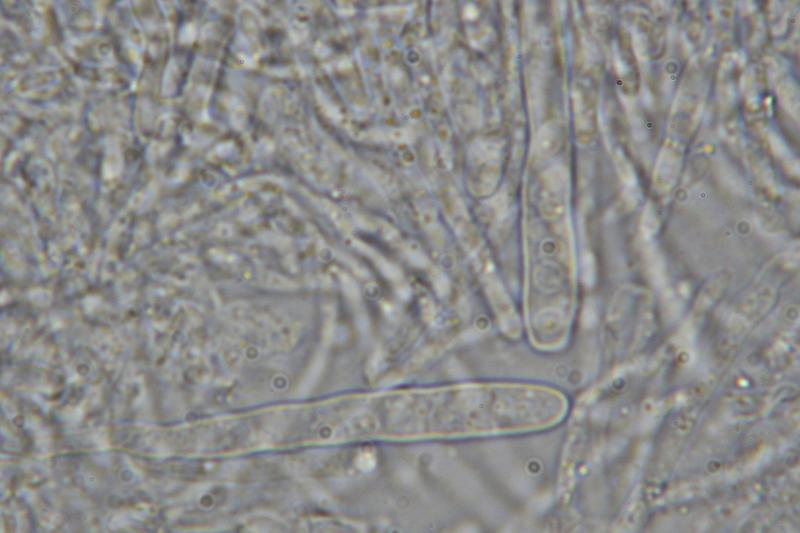
Asci were cylindrical to clavat, clearly truncate in profile, filled with 8 spores each; details of the base not visible at first sight;
28.5x3.0 - 27.5x2.4
Spores, only observed and measured in the ascus, broadly oval to roundish; practically not visible in water, later stained with Congo red (NH3) the spore outlines became visible; measured in Congo red and in the ascus:
2,2x1,4
2,3x1,5
2,3x1,7
Paraphyses cylindrical, 3-5 septate, filled with refractive light;
Can someone please tell me if my suspicion applies to orbilia frangulae?
Many thanks and best regards
Harald


Ich hab´s heute noch einmal versucht - anbei sind die Ergebnisse.
Die Sporen sind elliptisch mit Sporenkörper od. LB von 0,65µm Ø an einem Pol.
Die Maße in Wasser im Ascus: 2,3x1,6 µm aus 5 Messungen.
Laut Schlüssel lande ich damit bei Orbilia fissilis, wobei die Abgrenzung zu O. Eucalypti mit subglobosen Sporen wegen der Sporenmaße im Ascus unsicher ist.
Viele Grüße
Harald
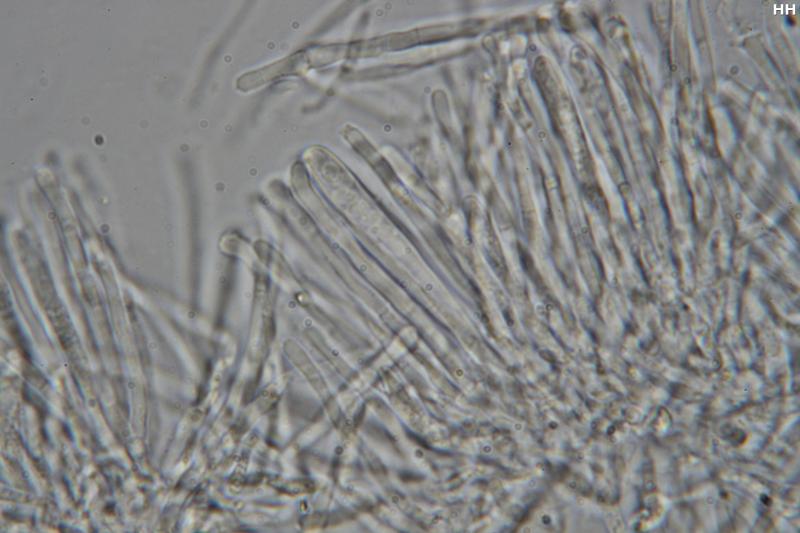
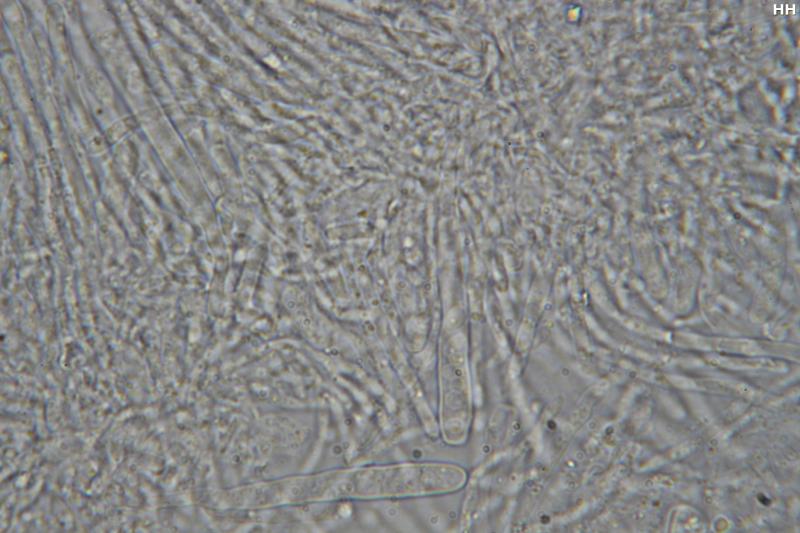
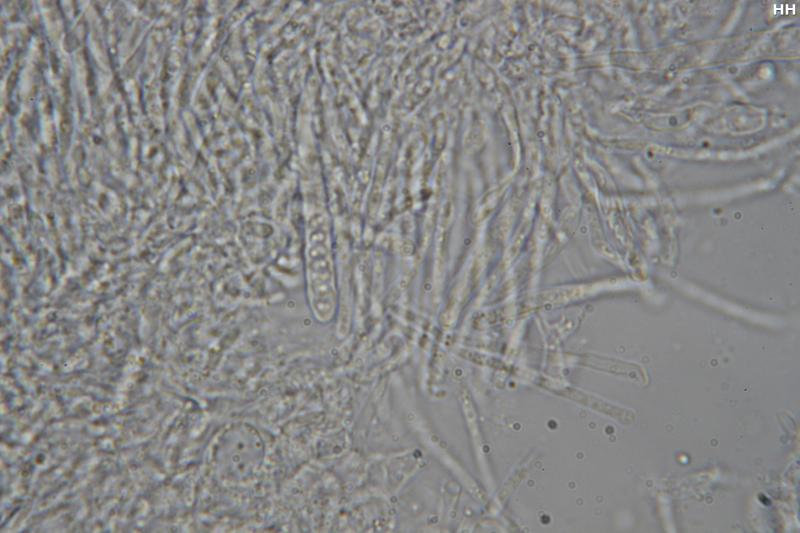
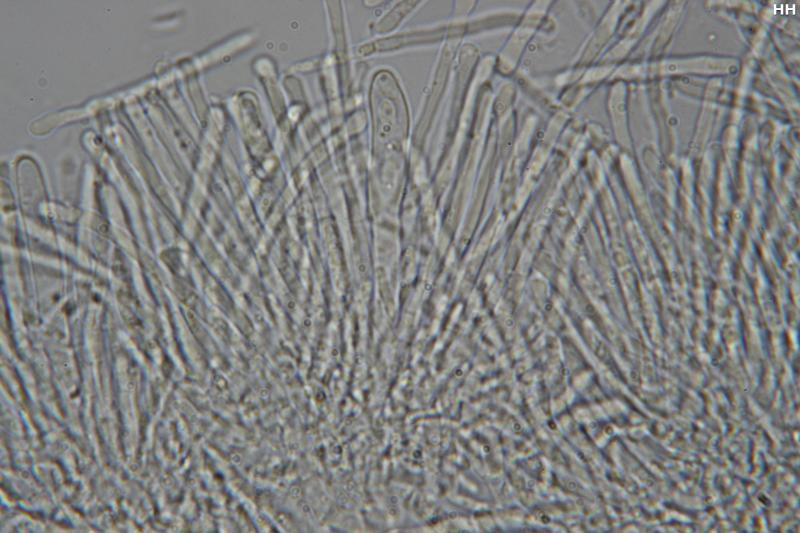
Nachdem ich klarere Bilder von den Sporen hatte, bin ich den Schlüssel und Teile der Monographien noch einmal durchgegangen und war ebenfalls bei der Frage nach O. cejpii gelandet.
Die Fruchtkörper vom Fund 3e (Titisee) sehen in Form und Farbe meinem Fund sehr ähnlich. Auch die Paraphysen können offensichtlich weniger stark kopfig sein.
„Paraphyses slightly or often medium to (very) strongly (clavate-)capitate, ..." dürfte doch die Interpretation zulassen.
Ich versuche in einigen Tagen noch einmal freie Sporen zu finden. Bei Erfolg melde ich mich.
Anbei noch einige Sporenbilder – anders aufgearbeitet.
Viele Grüße
Harald