22-05-2026 21:35
Steve ClementsBonjour, I expected this find on old wood on our
22-05-2026 18:12
 Lothar Krieglsteiner
... in moist chamber from Portugal.As the fungus s
22-05-2026 20:08
Ethan CrensonHello all, Yesterday in NYC I was visiting an e
11-01-2022 16:36
 Jason Karakehian
Hi does anyone have a digital copy of Raitviir A (
20-05-2026 17:47
Margot en Geert VullingsWe found this Mollisia on dead Juncus stems mown l
22-05-2026 14:47
Gernot FriebesHi,superficial ascomata collected on bark of a liv
22-05-2026 14:44
Lothar Krieglsteiner
in unripe condition citrine yellow, then soon fadi
22-05-2026 13:29
Gernot FriebesHi,I am curious to hear your opinion on this mater
22-05-2026 10:59
 Nicolas VAN VOOREN
Trouvé sur Phragmites, ce que je pense être un L
20-05-2026 21:49
Margot en Geert VullingsWe found this Lachnum on Juncus stems mown last ye
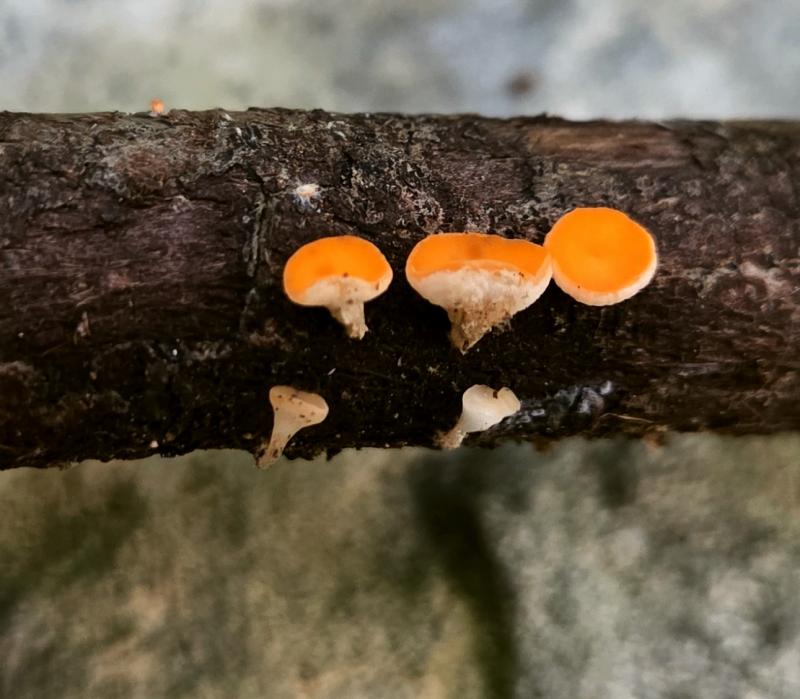
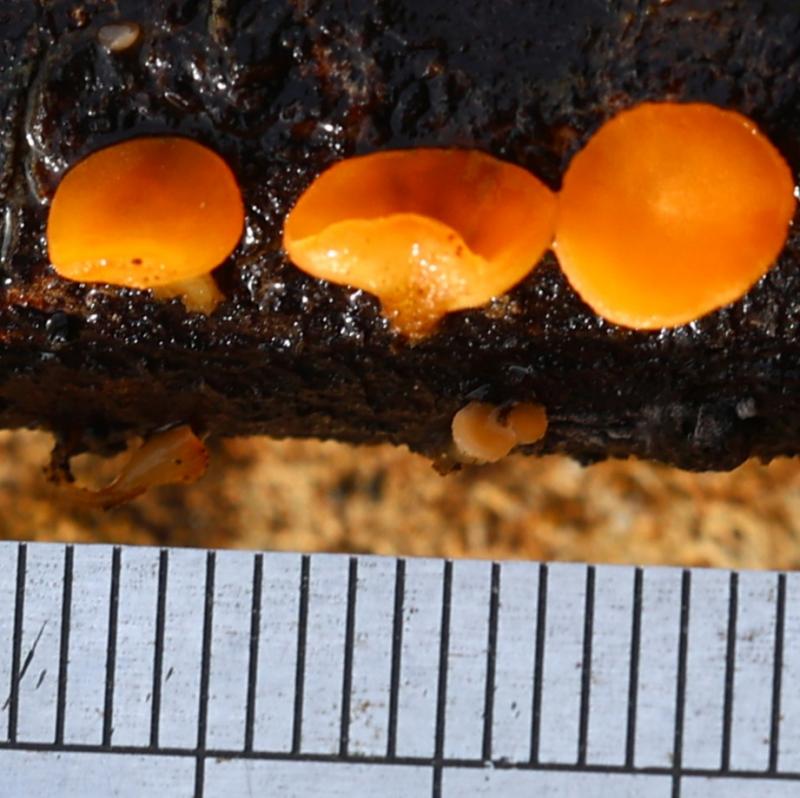
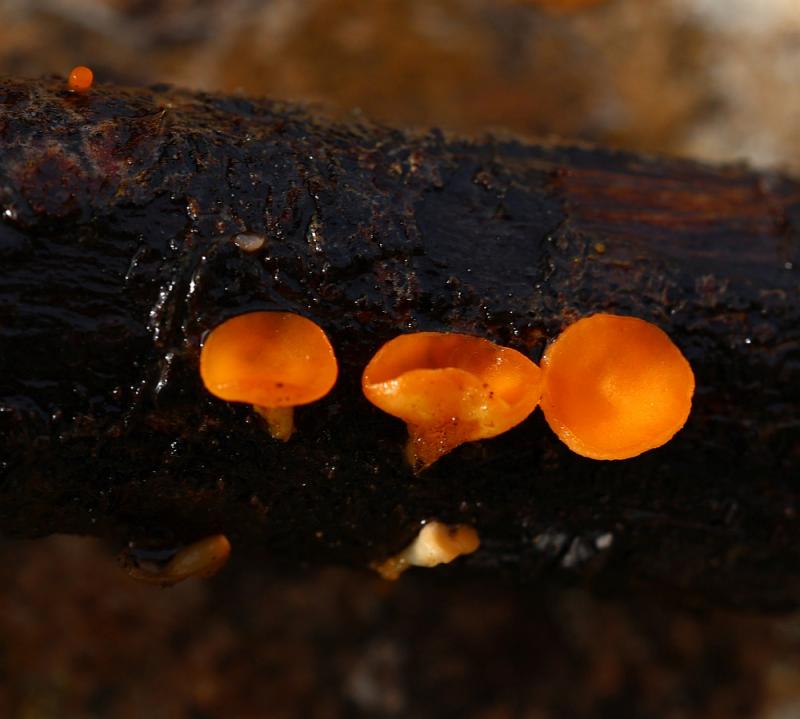
 I was happy to find these orange asmocyetes which at first glance I identified tentavely as Pithya vulgaris based on the size of the apothecium that ranged between 3.5 to 5.5cm and the substrate being a woody twig. P. cupressina, which I am familiar with, are here found of fallen leaves of Cupressus sempervirens and are up to 3mm wide (mostly barely 2mm).
Can I assign this finding to P. vulgaris or I still need further verifications (microscopical investigations).
https://www.zobodat.at/pdf/Mycologia-Bavarica_10_0055-0062.pdf
After reading the paper, these are the most important features to distinguish P. cupressina and P. vulgaris (considered distinct species).
Spore Size (at maturity)
Pithya cupressina: (9) 10-12 (12.5) um
Pithya vulgaris 12-15 um
Substrate Specialization
Pithya cupressina: Cupressaceae (e.g., Chamaecyparis, Cupressus, Juniperus, Sequoia, Thuja)
Pithya vulgaris: Pinaceae (usually Abies species, occasionally Picea, Pinus)
Size of Apothecia
Pithya cupressina: 2-5 mm wide
Pithya vulgaris: (5-) 10-15 mm wide
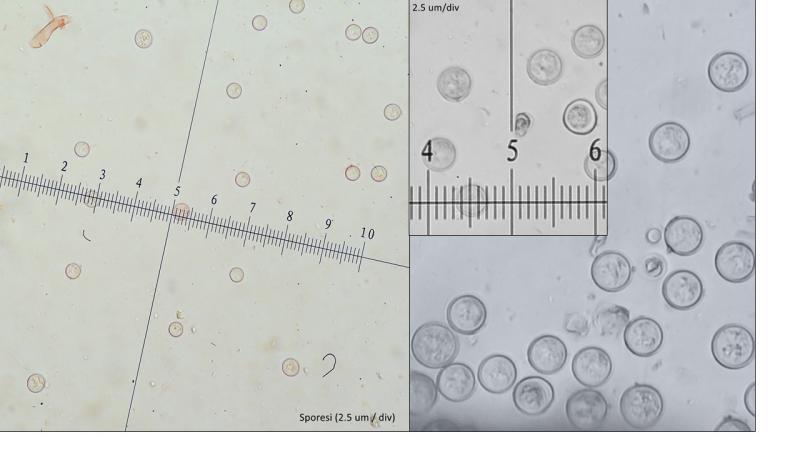
My finding was on an unkown twig up to 5.5mm wide and spores with the following measurments:
9.1 [10.1 ; 10.6] 11.6 × 8.9 [9.9 ; 10.4] 11.3 µm
Q = 1 [1.0] 1.1 ; N = 27 ; C = 95%
Me = 10.4 × 10.1 µm ; Qe = 1
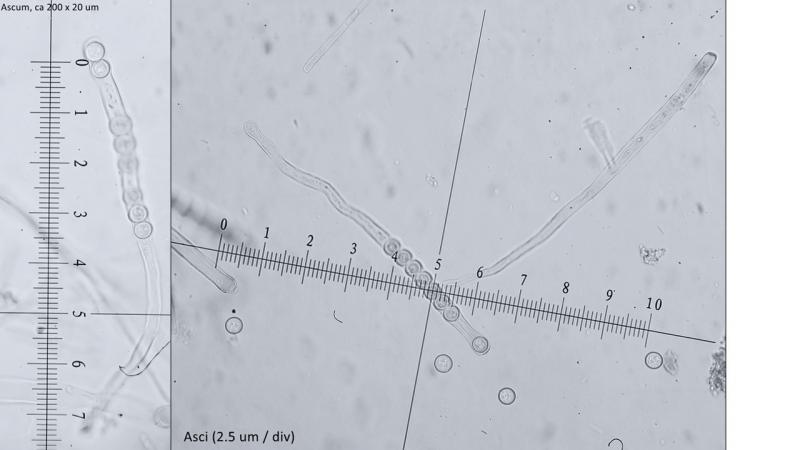
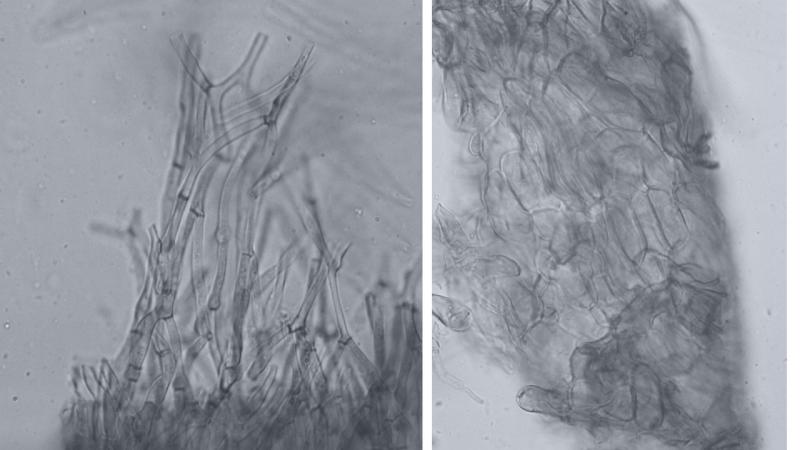
So it is (disappointingly) the usual Pithya cupressina which grew slightly larger up to 5mm possibly because they were growing on a woody twig, while on leaves and leaf petioles fruiting bodies only reach 1-3mm in diameter (here in Malta).
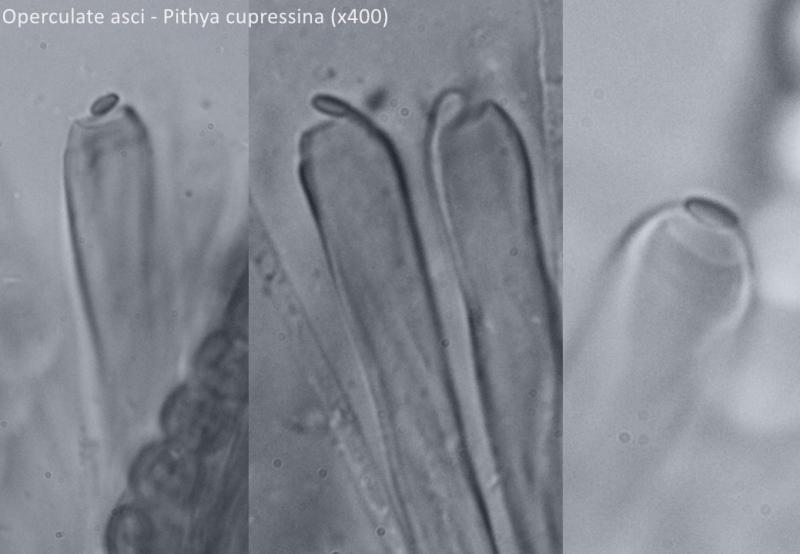
Eye-catching are the operculate asci !!!