
12-07-2015 00:05
 Nedim Jukic
This one from the same locality as the previous on
06-06-2026 17:44
Steve ClementsBonjour, This disco was on planed wood 3 x 1.5 cm
14-08-2016 23:15
 Alex Akulov
Dear friendsCan you help me to find the descriptio

05-06-2026 11:02
Thomas Læssøehttps://svampe.databasen.org/observations/10596691
04-06-2026 11:36
Gernot FriebesHi,found on Vaccinium myrtillus.Asci: IKI –, 8-s
05-06-2026 12:10
 François Freléchoux
Capitotricha sp. sur Lonicea caerulea Caractères
19-05-2026 10:27
Patrice TANCHAUDBonjour, récolte récente sur terre retournée i
04-06-2026 18:39
Gernot FriebesHi,I collected this species in two different locat
Peziza -> Phylloscypha labessiana
Margot en Geert Vullings,
21-04-2026 22:14
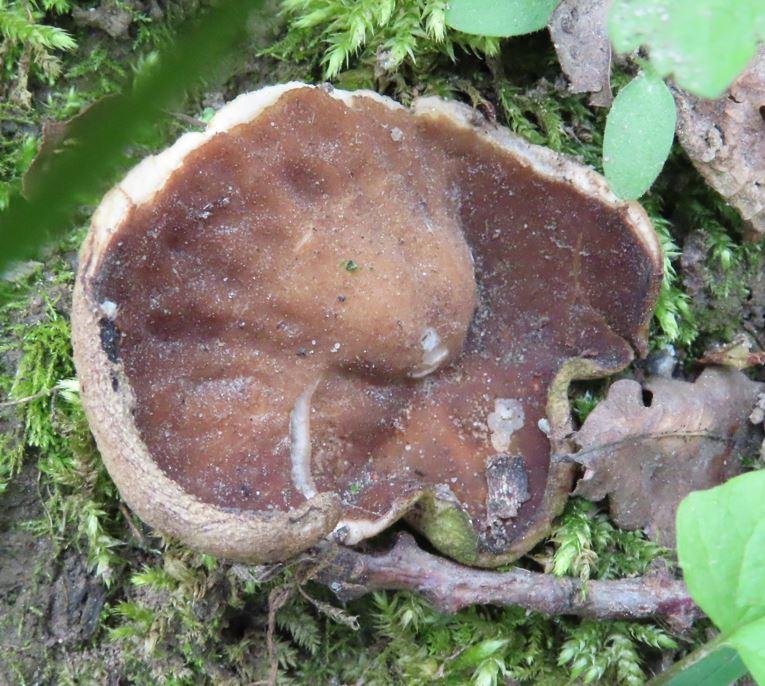
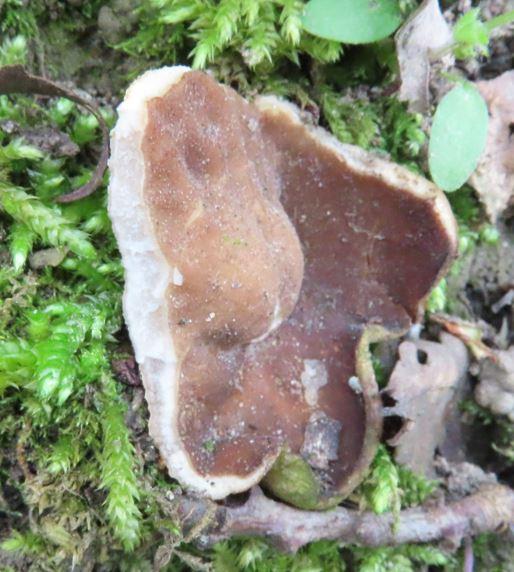
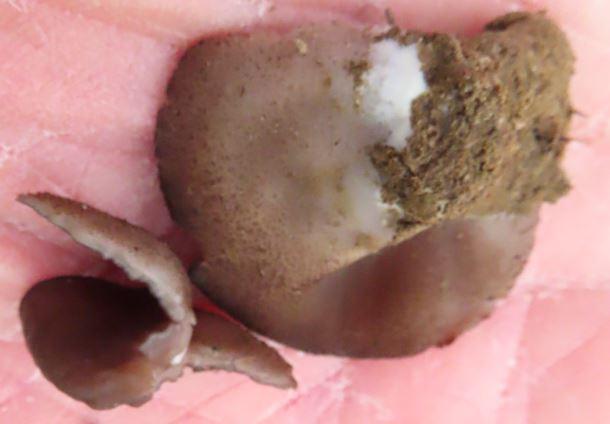
Diameter 4 cm. No moisture observed upon damage.
Outer surface light brown, slightly rough and white at the attachment. Inner surface light brown. Hymenium:
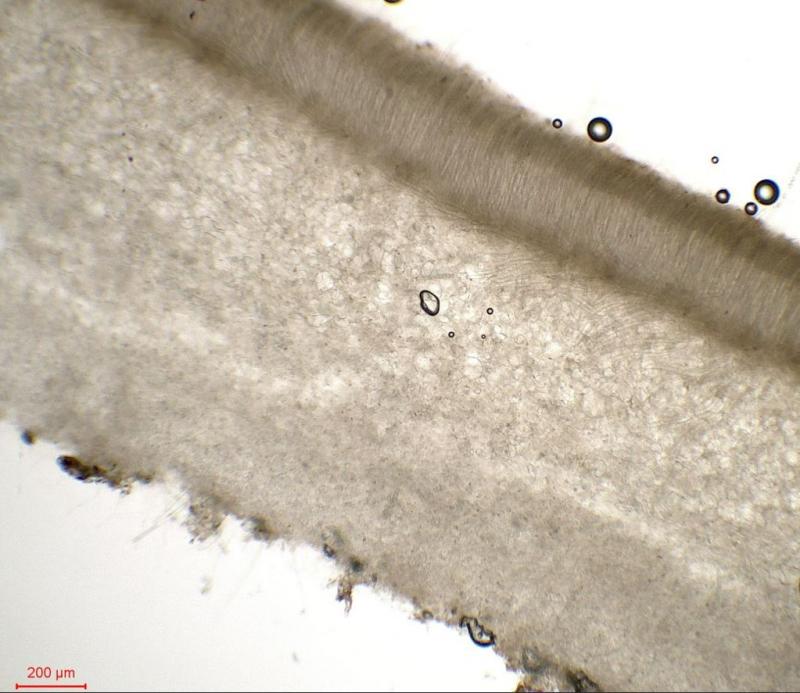
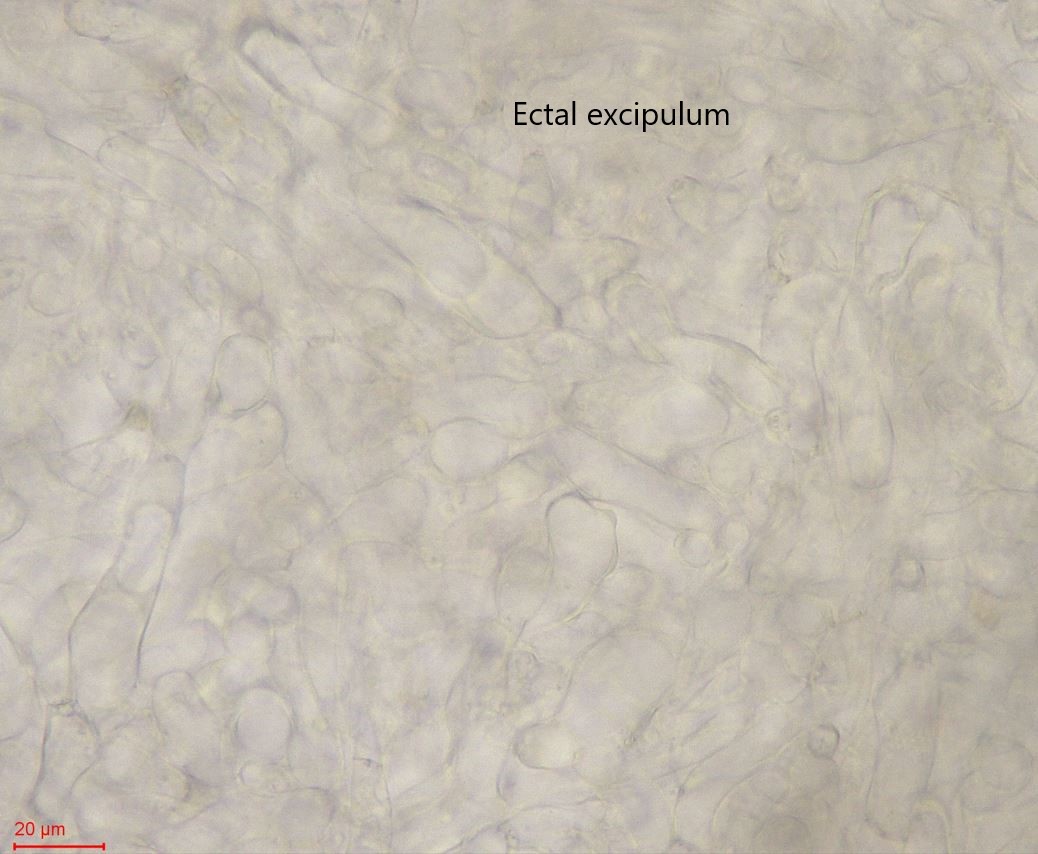
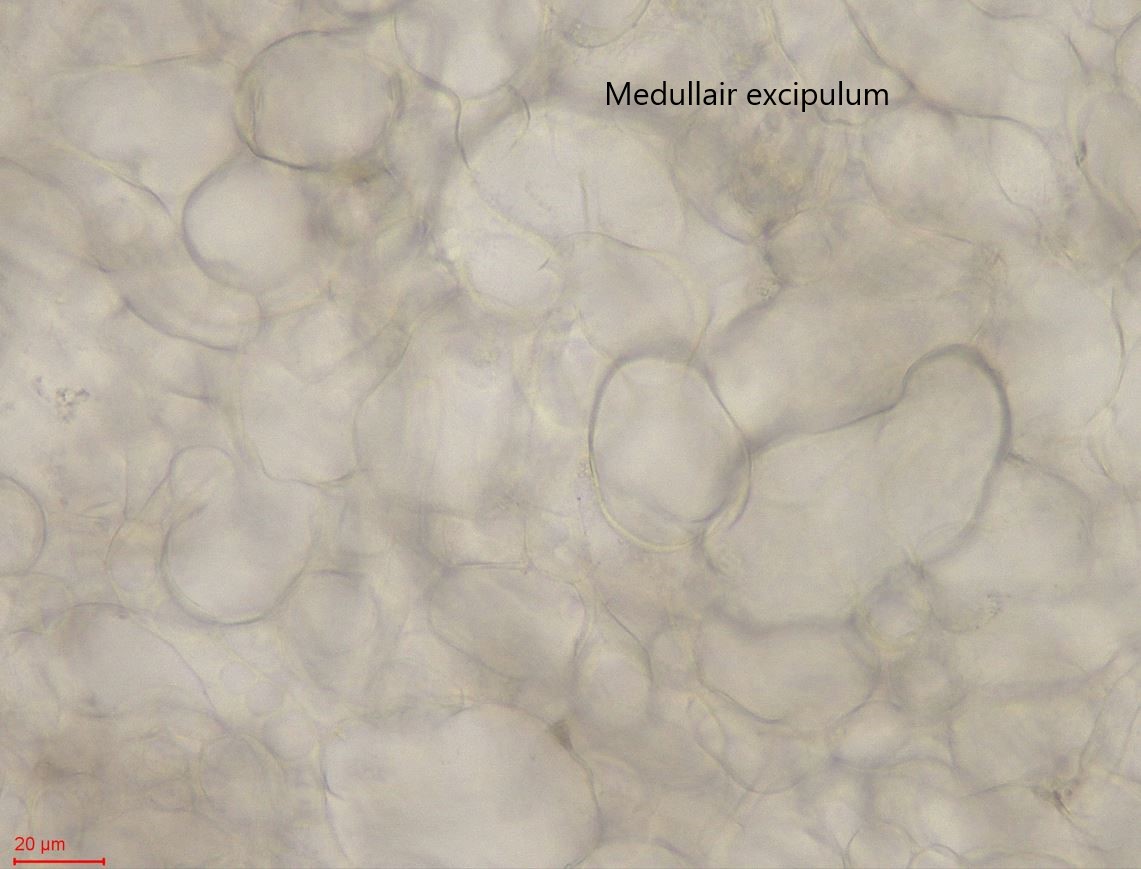
Cross-section is white, ectal excipulum resembling textura intricata, medullary excipulum with large round cells.
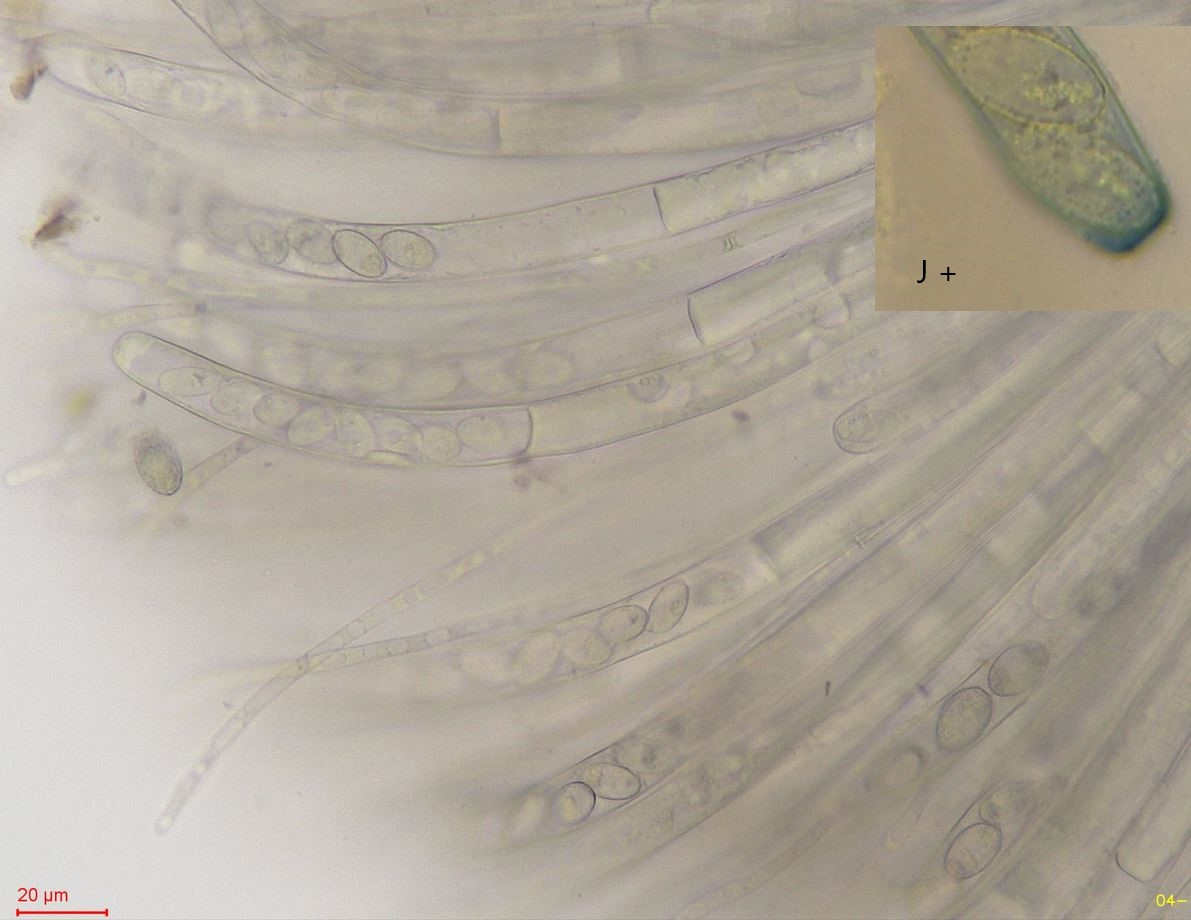
Asci: Measured in water: Me = 358.1 × 12.8 µm Croziers +, J + WTR type.
Paraphyses: Cylindrical with septa and guttules.
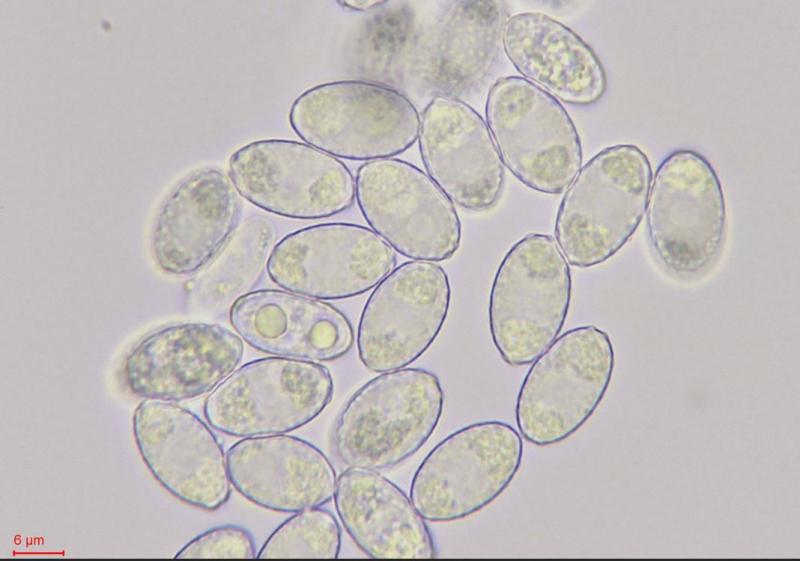
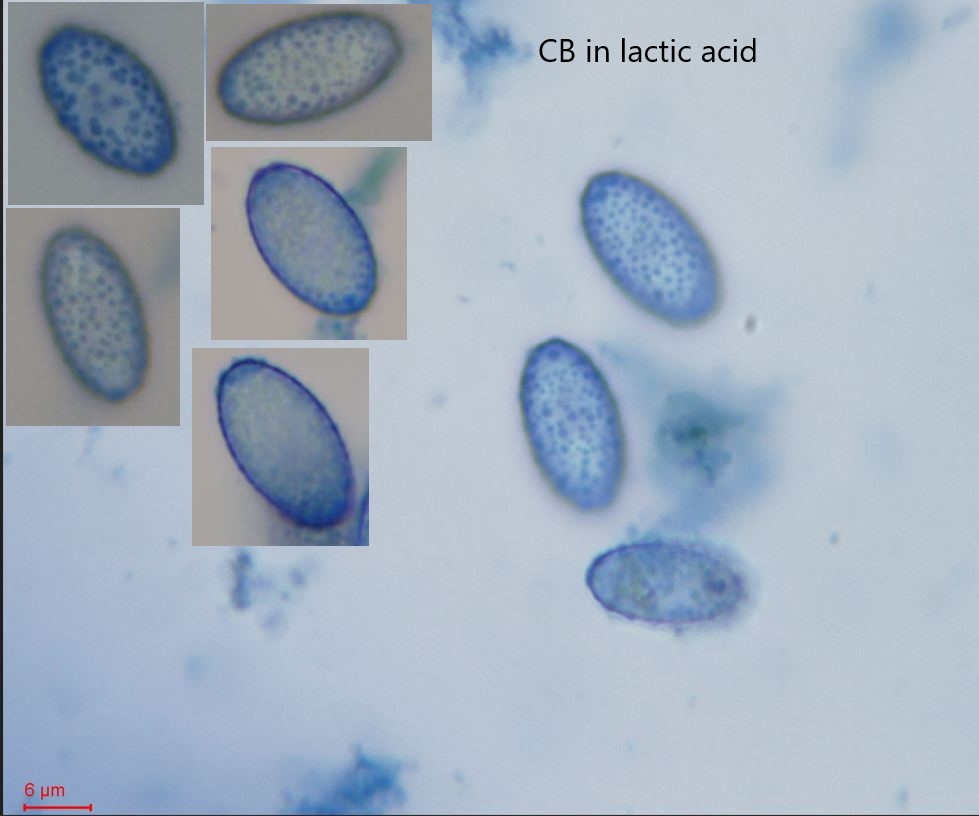
Spores: With loose medium-sized warts, not connected, sometimes somewhat closer to the poles. Sometimes with 2 large droplets, but most still developing? Measured in water: (14.7) 14.9 - 16.7 (17.3) × (8.4) 8.7 - 9.9 (10) µm, Q = 1.6 - 1.8
We would like to know which cup fungus this could be?
Thank you very much in advance, Geert & Margot
 5-Knipsel-18-012-0001.JPG
 6-Knipsel-18-013-0001.JPG
 7-Knipsel-18-053-0001.JPG
 9-Knipsel-18-061-0001.JPG
Nicolas VAN VOOREN,
22-04-2026 14:37

Re : Peziza
The amyloid reaction of asci is WT type. And the ascospores contain BSG (bipolar spore granules).
These two characters point to Phylloscypha.
I let you identify the species with the key to this genus.
These two characters point to Phylloscypha.
I let you identify the species with the key to this genus.
Margot en Geert Vullings,
22-04-2026 17:41
Re : Peziza
Thank you very much for your help.
We do not see the nice round warts of P. labessiana, but sometimes elongated warts; we do not see spores with tapered ends or elliptico-fusoid, so there is some doubt, but we think using the key this could be P. phyllogena?
Kind regards, Geert & Margot
Marek Capoun,
22-04-2026 22:31

Re : Peziza
I know P. phyllogena with entirely different colours, different spore shape and higher Q value. I can't think of anything other than P. labessiana, although I have no personal experience with it.
Greetings,
Marek
Greetings,
Marek
Nicolas VAN VOOREN,
23-04-2026 07:50
Re : Peziza
I agree with Marek, the spore ornamentation of P. phyllogena is different.
Margot en Geert Vullings,
23-04-2026 08:36
Re : Peziza
Thank you very much to both of you; we were hesitant partly because this species does not seem to be known in the Netherlands yet, even when looking at synonyms?
Kind regards, Geert&Margot
Patrice TANCHAUD,
23-04-2026 09:58
Re : Peziza
Bonjour,
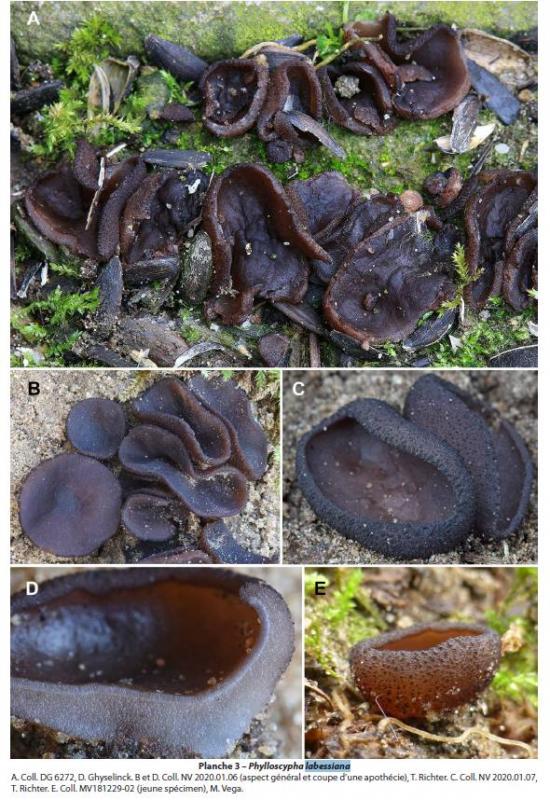
je ne remets pas en question l'identification, mais je voyais P. labessiana nettement plus sombre avec des ponctuations sur la face externe rappelant P. boltonii, ayant en tête les photos publiées dans Ascomycetes.org 13 fasc. 3 de 2021.
Patrice
Patrice
Marek Capoun,
23-04-2026 11:10
Re : Peziza
I remembered one very light cup-fungus, which Stano Glejdura determined as P. labessiana...
https://www.nahuby.sk/obrazok_detail.php?obrazok_id=385138&poradie=1&form_hash=2229c9494ab28c50aa22526e589caa48
https://www.nahuby.sk/obrazok_detail.php?obrazok_id=385138&poradie=1&form_hash=2229c9494ab28c50aa22526e589caa48