
10-06-2026 21:16
 François Freléchoux
Bonsoir,Le dernier du jour, en attendant votre avi
11-06-2026 19:01
 William Slosse
Hello all,In an attempt to make a culture of a sus
11-06-2026 19:03
 Nicolas VAN VOOREN
Chers membres d'Ascofrance,Le site sera placé en

09-06-2026 18:32
Camille MertensSur morceau de roseau immergé 0,5 - 0,7 mm de dia
10-06-2026 12:54
Steve ClementsBonjour encore, Pouvez-vous m'aider, s'il vous pl
10-06-2026 21:07
François Freléchoux
Toutes les tiges de gentianes jaunes de l'an passÃ
10-06-2026 13:41
François Freléchoux
Bonjour à nouveau, Voici une trouvaille d'hier.
10-06-2026 11:53
Steve ClementsBonjour, This disco is abundant on dead stems of
Orbilia 'rosea' again?
Chris Yeates,
17-03-2014 21:22
 Bonsoir Tous
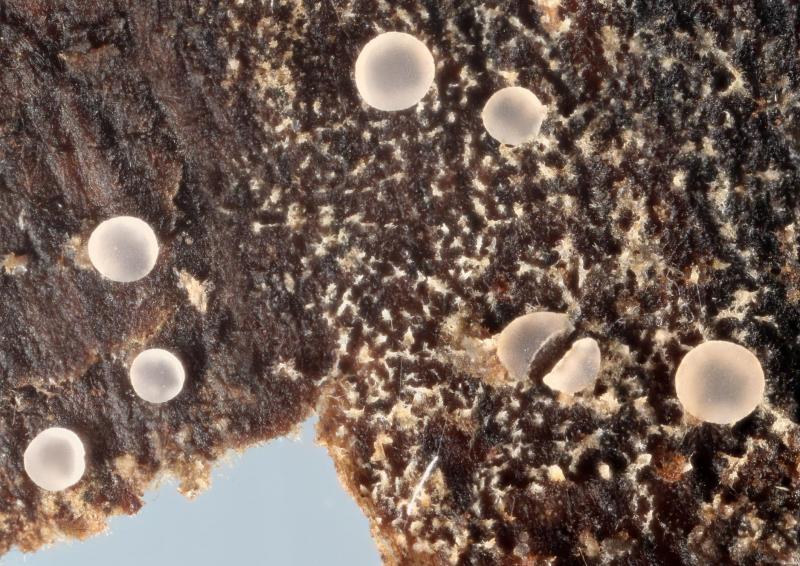
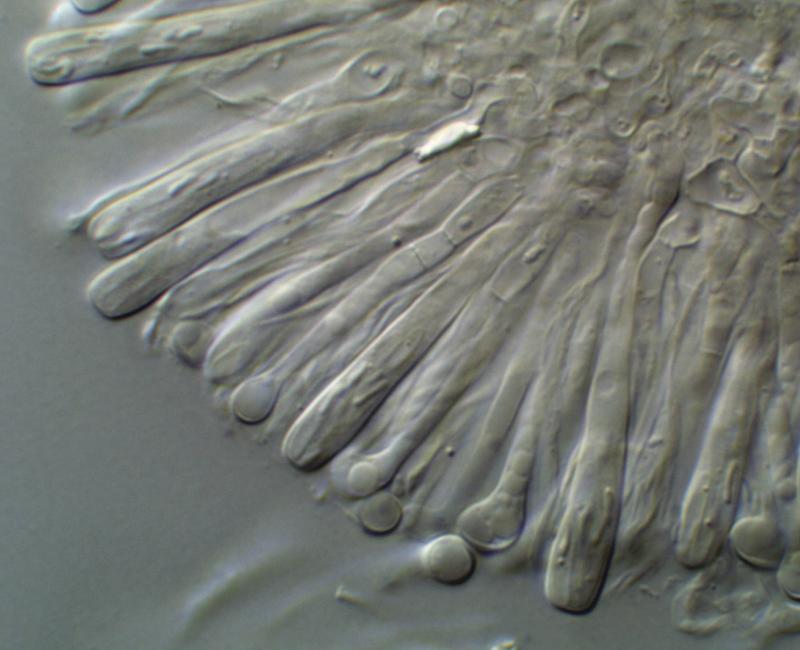
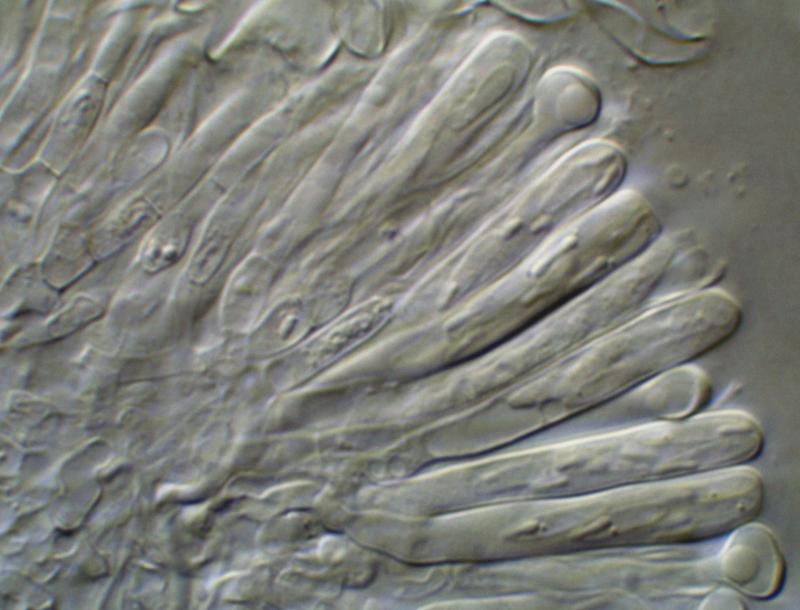
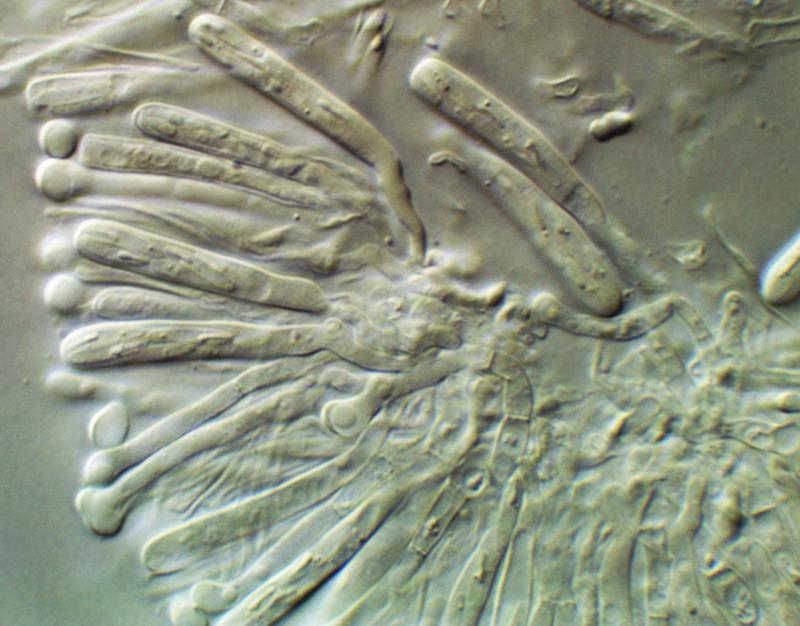
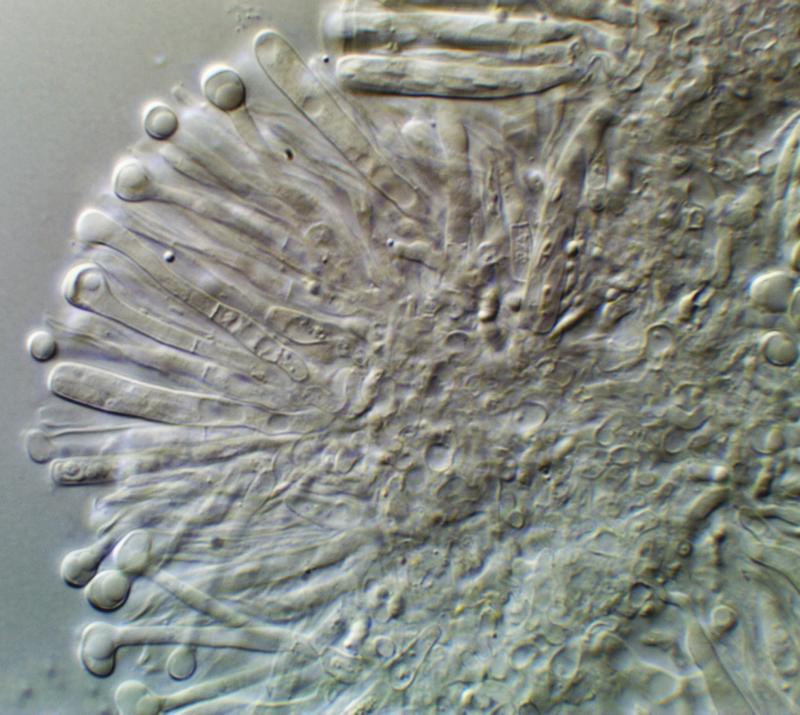
I have collected this Orbilia species on the underside of a wet rotting Quercus branch in a damp (but not exceptionally wet) area of woodland. Many of the paraphyses have distinctly irregular, often asymmetrical, apices. The spores measure 6.7-7.8 x 1.4-1.7µm and have an elongate VB taking up a quarter to almost half of the length of the spore, plus often a single very small globose body.
This looks close to my collection http://www.ascofrance.com/search_forum/25696 - there was no trace of an anamorph (I looked very carefully).
any comments very welcome
amitiés
Chris
Hans-Otto Baral,
17-03-2014 22:17

Re : Orbilia 'rosea' again?
Yes, it is undoubtedly the same. It is not easy with these anamorphs. Even when you get a pure culture they do not like to sporulate easily. The mycelium should attain a rose colour, therefore the name Anguillospora rosea. But the conidia we have obtained only after putting agar blocks in sterile water to simulate flooding, and only very very sparsely.
Deascals & Webster had apparently more luck than we, they also saw microconidia and the conidiophores.
Was it the same place as before? No rivulet or well close to it?
Zotto
Deascals & Webster had apparently more luck than we, they also saw microconidia and the conidiophores.
Was it the same place as before? No rivulet or well close to it?
Zotto
Chris Yeates,
28-03-2014 18:23
Re : Orbilia 'rosea' again?
Apologies Zotto
I realise I have not passed on the relevant information.
The Orbilia was collected a little over 12 kilometres SE from my first find in:
Longwood Valley, Huddersfield
West Yorkshire
damp Quercus petraea / Salix fragilis woodland
53°39'15.54"N
1°51'24.82"W
14th March 2014
very damp area, with small rivulets/springs in the area
LG
Chris
I realise I have not passed on the relevant information.
The Orbilia was collected a little over 12 kilometres SE from my first find in:
Longwood Valley, Huddersfield
West Yorkshire
damp Quercus petraea / Salix fragilis woodland
53°39'15.54"N
1°51'24.82"W
14th March 2014
very damp area, with small rivulets/springs in the area
LG
Chris
Hans-Otto Baral,
28-03-2014 18:44
Re : Orbilia 'rosea' again?
thanks, Chris!
is it also carboniferous (acid) there ?
Did you keep a dry specimen here and also of the last one?
Zotto
is it also carboniferous (acid) there ?
Did you keep a dry specimen here and also of the last one?
Zotto
Chris Yeates,
28-03-2014 19:50
Re : Orbilia 'rosea' again?
Hi Zotto
these two collections (as well as the original find of the Anguillospora) were all on the Upper Carboniferous Millstone Grit formation (acidic) - http://www.bgs.ac.uk/lexicon/lexicon.cfm?pub=MG
other Carboniferous (the Lower Carboniferous) deposits in Yorkshire form extensive limestone areas (like the one in our recent email conversation re Juniperus).
I have kept material of both my finds:
CSVY/F/2395 (the Broadhead Clough one)
CSVY/F/2425 (this one)
best wishes
Chris
these two collections (as well as the original find of the Anguillospora) were all on the Upper Carboniferous Millstone Grit formation (acidic) - http://www.bgs.ac.uk/lexicon/lexicon.cfm?pub=MG
other Carboniferous (the Lower Carboniferous) deposits in Yorkshire form extensive limestone areas (like the one in our recent email conversation re Juniperus).
I have kept material of both my finds:
CSVY/F/2395 (the Broadhead Clough one)
CSVY/F/2425 (this one)
best wishes
Chris
Hans-Otto Baral,
28-03-2014 21:05
Re : Orbilia 'rosea' again?
Yes, I took a note of the geology back then (only the "Upper" I missed).
so you don't find any O. sarraziniana at the water courses on this acidic geology?
Thanks!
Zotto
so you don't find any O. sarraziniana at the water courses on this acidic geology?
Thanks!
Zotto
Chris Yeates,
28-03-2014 21:55
Re : Orbilia 'rosea' again?
At least 9 records (not all mine of course) on Millstone Grit/Coal Measures (both Upper Carboniferous, and with very similar ecological niches) including two you identified when you were here at Wentworth Castle in 2011 ;-).
Chris
Chris
Hans-Otto Baral,
28-03-2014 22:38
Re : Orbilia 'rosea' again?
Regrettably I did not note the geology there. O. sarraziniana we had from here:
Worsbrough Country Park
Hatfield Moor
Anston Stones Wood
which are Millstone Grid?
Worsbrough Country Park
Hatfield Moor
Anston Stones Wood
which are Millstone Grid?
Chris Yeates,
28-03-2014 23:00
Re : Orbilia 'rosea' again?
the three sites all have very different geological characters:
Worsbrough Country Park is on Coal Measures (very similar to Millstone Grit, except that the latter tends to be more upland)
Hatfield Moor is on Triassic soils, though here the presence of considerable peat deposits is the major factor
Anston Stones Wood is on Permian Magnesian (dolomitic) Limestone
Chris
Worsbrough Country Park is on Coal Measures (very similar to Millstone Grit, except that the latter tends to be more upland)
Hatfield Moor is on Triassic soils, though here the presence of considerable peat deposits is the major factor
Anston Stones Wood is on Permian Magnesian (dolomitic) Limestone
Chris
Hans-Otto Baral,
28-03-2014 23:26
Re : Orbilia 'rosea' again?
So you meant the first showing acidic soil.