
14-08-2016 23:15
 Alex Akulov
Dear friendsCan you help me to find the descriptio

05-06-2026 11:02
Thomas Læssøehttps://svampe.databasen.org/observations/10596691
04-06-2026 11:36
Gernot FriebesHi,found on Vaccinium myrtillus.Asci: IKI –, 8-s
05-06-2026 12:10
 François Freléchoux
Capitotricha sp. sur Lonicea caerulea Caractères
19-05-2026 10:27
Patrice TANCHAUDBonjour, récolte récente sur terre retournée i
04-06-2026 18:39
Gernot FriebesHi,I collected this species in two different locat
22-05-2026 13:29
Gernot FriebesHi,I am curious to hear your opinion on this mater
Tarzetta
Zuzana Sochorová (Egertová),
27-05-2015 22:16
 Hello,
I often have troubles with determination of Tarzetta.
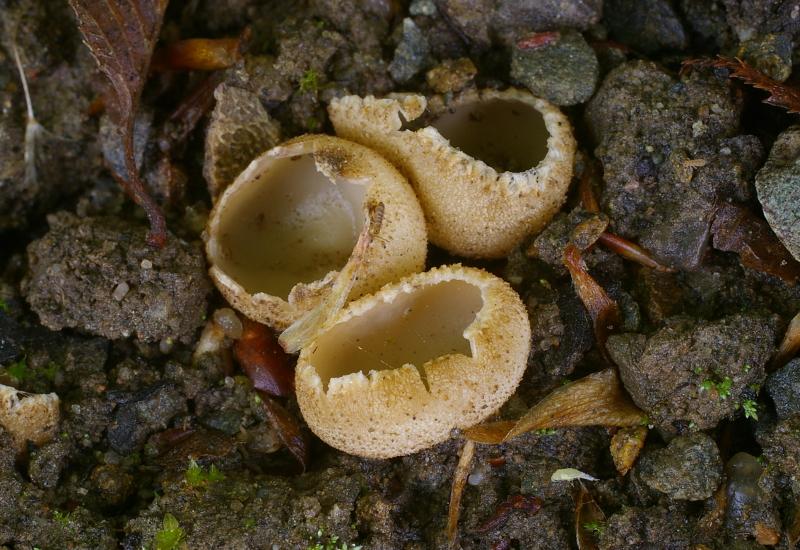
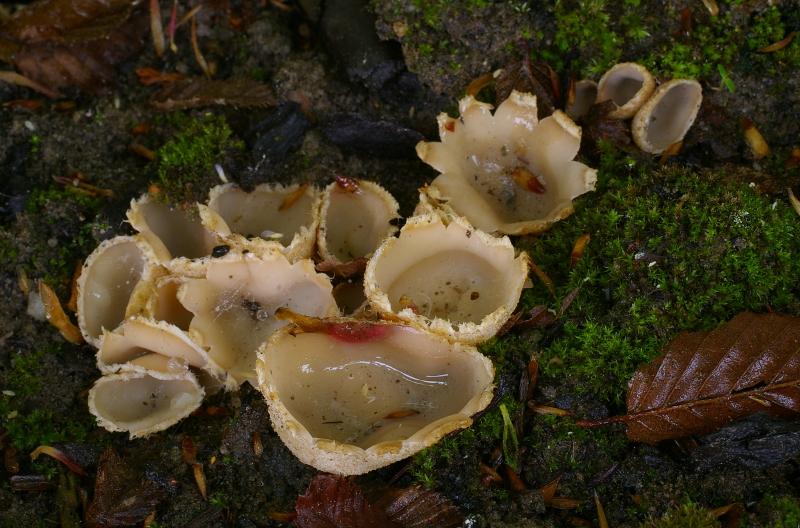
This one was found yesterday in a park (Kvetna zahrada, strongly influenced by a man), tens or few hundreds of apothecia on soil under young Carpinus trees.
Apothecia measured up to 32 mm, stipe was hiden in the substrate and measured up to 8 x 4 mm. The warts were quite bold.
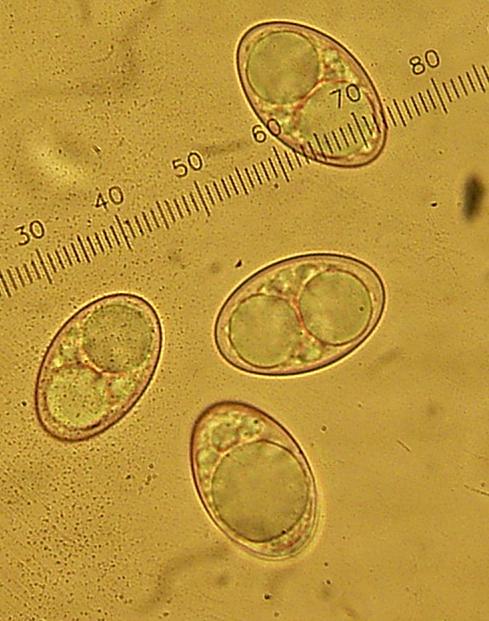
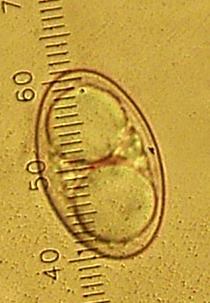
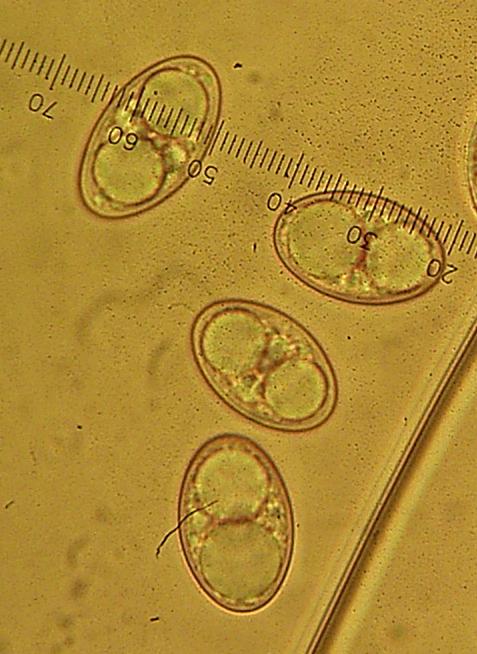
Spores (from sporeprint, measured in water): 19-22.2 x (11-)12-13(-14) micrometers, ellipsoid with little bit narrower poles, hyaline, smooth, with two guttules (8-9 micrometers).
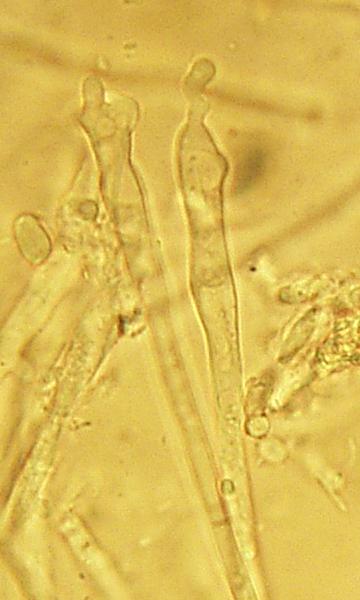
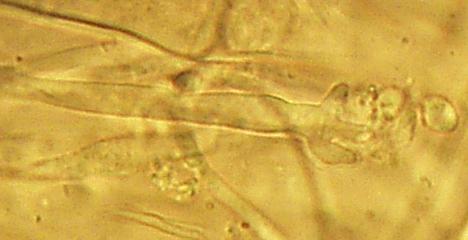
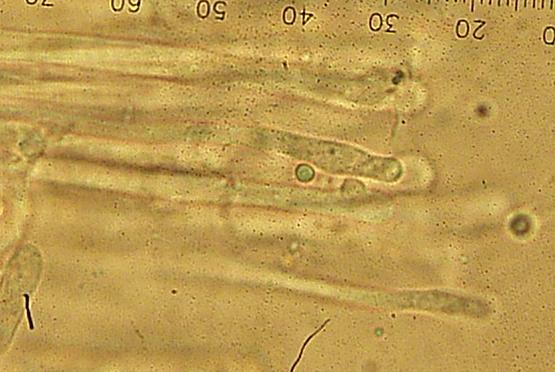
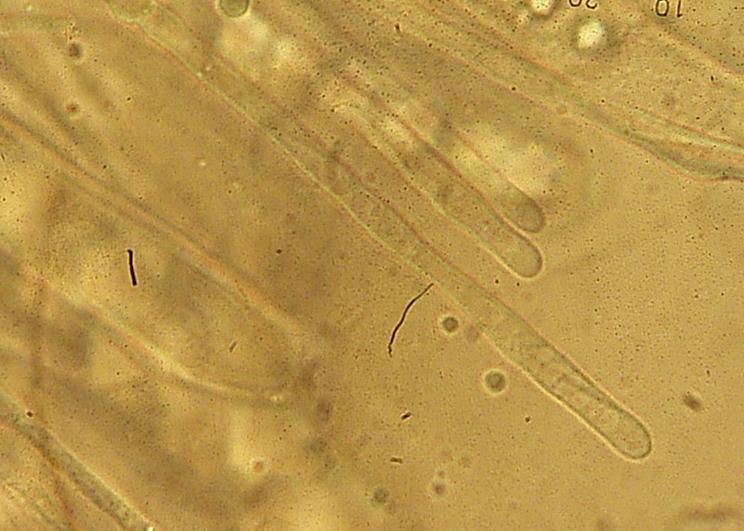
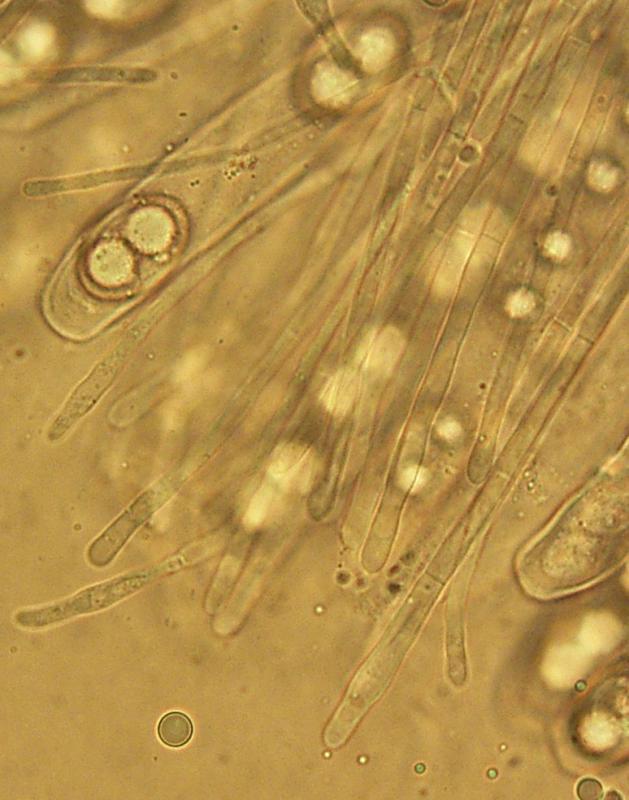
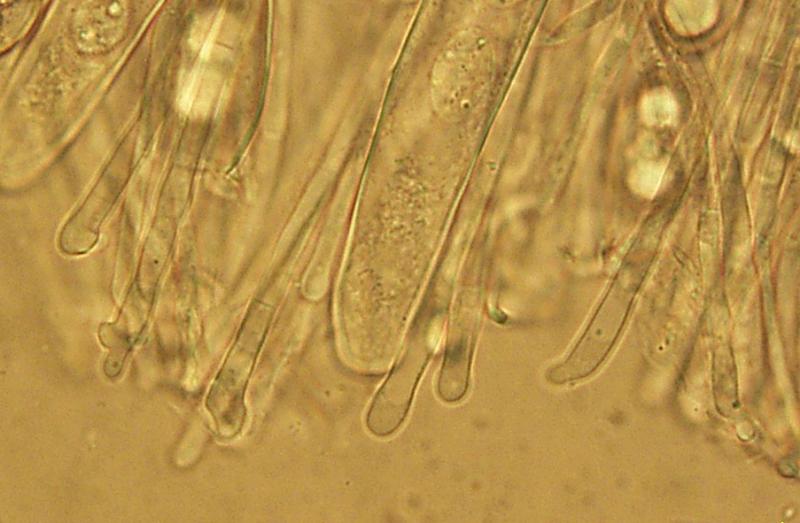
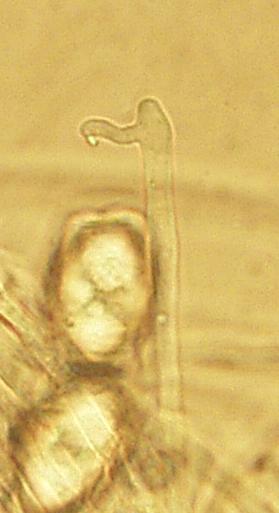
Paraphyses are sometimes simple, sometimes (in cca 20%) enlarged, branched or with lobes on the apex, but never so crazy as in the right part of the pictures depicting T. spurcata and T. pusilla in the article by Harmaja.
In the key in the article by Yao and Spooner I cannot decide already in the first step, because my apothecia are larger than 2 cm, but distincly pustulate, not finely.
Finally, I think T. catinus seems to be the best choice, but the apothecia could be bigger and with smaller warts... What do you think?
Zuzana
René Dougoud,
28-05-2015 10:10
Re : Tarzetta
Chère amie,
Je détermine cette espèce comme T catinus. Le diamètre des apothécies peut varier, idem pour la furfuration. La présence de quelques paraphyses diformes au sommet est nornale et leur nombre peut également varier et sans doute plus avec l'âge. Les apothécies sont peu ou pas stipitées et souvent percées au fond de la cupule. Elle ne présente pas de voile, même sur les jeunes exemplaires. A noter, sur les espèces du genre, l'absence de crochet et la coloration des noyaux au carmin acétique.
Cordialement
René
Je détermine cette espèce comme T catinus. Le diamètre des apothécies peut varier, idem pour la furfuration. La présence de quelques paraphyses diformes au sommet est nornale et leur nombre peut également varier et sans doute plus avec l'âge. Les apothécies sont peu ou pas stipitées et souvent percées au fond de la cupule. Elle ne présente pas de voile, même sur les jeunes exemplaires. A noter, sur les espèces du genre, l'absence de crochet et la coloration des noyaux au carmin acétique.
Cordialement
René
Zuzana Sochorová (Egertová),
28-05-2015 12:22
Re : Tarzetta
Merci, René!
The paraphyses seemed somewhat changing with the age to me too - the most branched paraphyses were found in the largest apothecium.
Best regards,
Zuzana