
30-03-2026 12:03
 William Slosse
Hello all,On 27/03/26, in Kraaiveld in Wingene (Be
30-03-2026 09:53
Yanick BOULANGERBonjourVoici des petites fructifications poilues s
25-03-2026 10:35
Hulda Caroline HolteHello,I collected this species growing on a dead b
27-03-2026 10:47
Åge OterhalsI have tentatively identified this Stictis to S. f
28-03-2026 07:55
 Marc Detollenaere
Hello everybody,Yesterday I found a number of whit
26-03-2026 15:31
 Åke Widgren
Hello,I found this one in October last year, on r
27-03-2026 15:23
Gernot FriebesHi,this Trichopezizella deviates from typical T. b
27-03-2026 15:08
Gernot FriebesHi,I'm looking for help with this coelomycete on C
Asco from California, USA
Alan Rockefeller,
03-03-2017 11:58
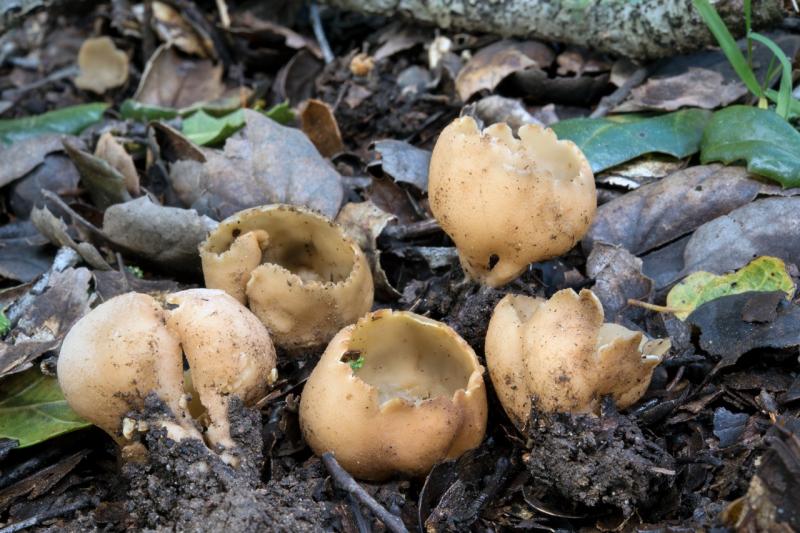
 What is this? Under Quercus agrifolia in Oakland. Size approx 2 - 3 cm diameter.
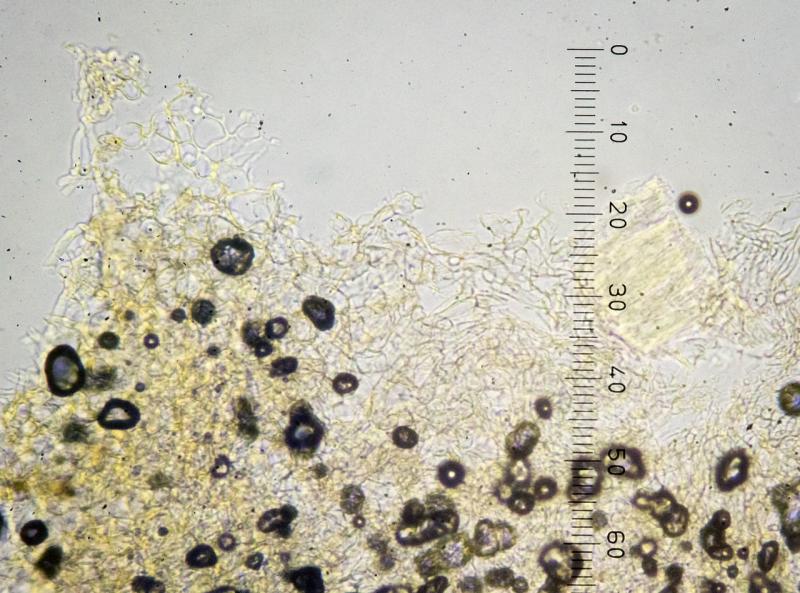
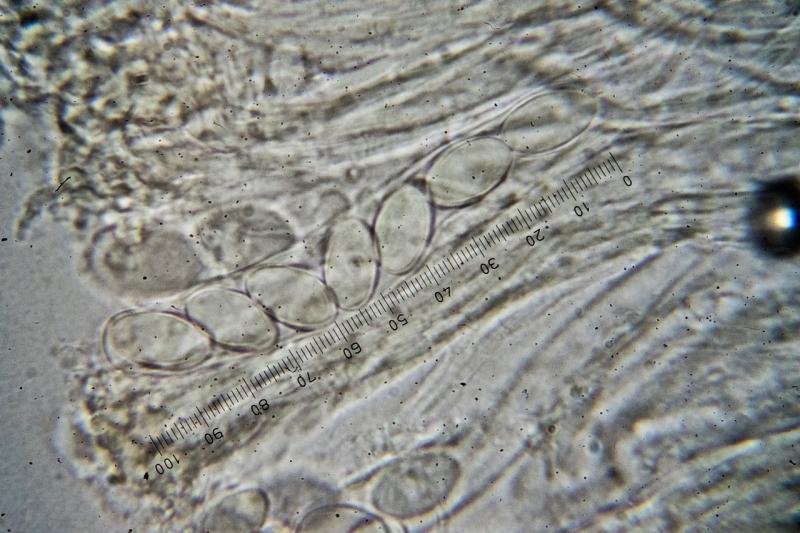
Spores smooth, inamyloid, 18 × 10 micrometers. Asci inamyloid and with a rounded apex. Micrographs in Meltzer's.
Viktorie Halasu,
03-03-2017 23:21

Re : Asco from California, USA
Hello,
that's an interesting discomycete. That stipe reminds me of Tarzetta, but if the spores really are without guttules, then my best guess is a Geopyxis. If you can check the ascus base, Tarzetta has simple septate base, Geopyxis has forked (pleurorhynchous) base.
Viktorie
that's an interesting discomycete. That stipe reminds me of Tarzetta, but if the spores really are without guttules, then my best guess is a Geopyxis. If you can check the ascus base, Tarzetta has simple septate base, Geopyxis has forked (pleurorhynchous) base.
Viktorie
Nicolas VAN VOOREN,
10-03-2017 00:02

Re : Asco from California, USA
Tarzetta species possess large guttules in their spores.
Consider also the genus Jafnea (especially J. semitosta) because your micrographs show immature ascospores, but the spore shape agrees.
Consider also the genus Jafnea (especially J. semitosta) because your micrographs show immature ascospores, but the spore shape agrees.