
21-03-2026 15:13
Lepista ZacariasHello everyone, Does any one know of any literatu
20-10-2017 09:23
Garcia SusanaEste otro crecía en el mismo trocito de madera qu
20-03-2026 16:16
 Edvin Johannesen
These 0.5 mm diam. acervuli were breaking through
19-03-2026 19:34
 Filip Fuljer
Hello everyone,a few days ago I collected this str
19-03-2026 18:25
 William Slosse
Good evening everyone, On 18/03/26 I found a few
17-03-2026 10:09
 François Freléchoux
Bonjour, Voici la description rapide d'un petit d
19-03-2026 17:50
 Enrique Rubio
Hi to everybodyThese thiny, blackish pseudothecia
Phaeocryptopus?
Guy Buddy,
14-06-2022 18:22
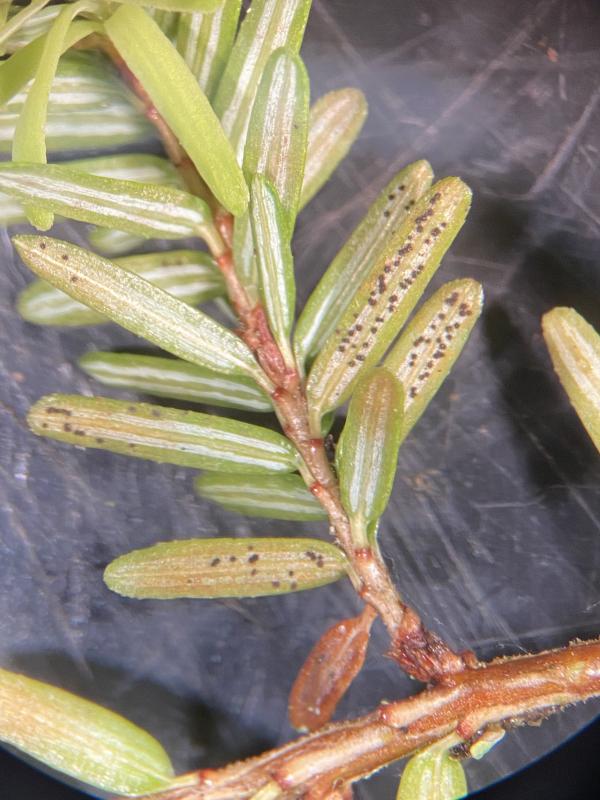
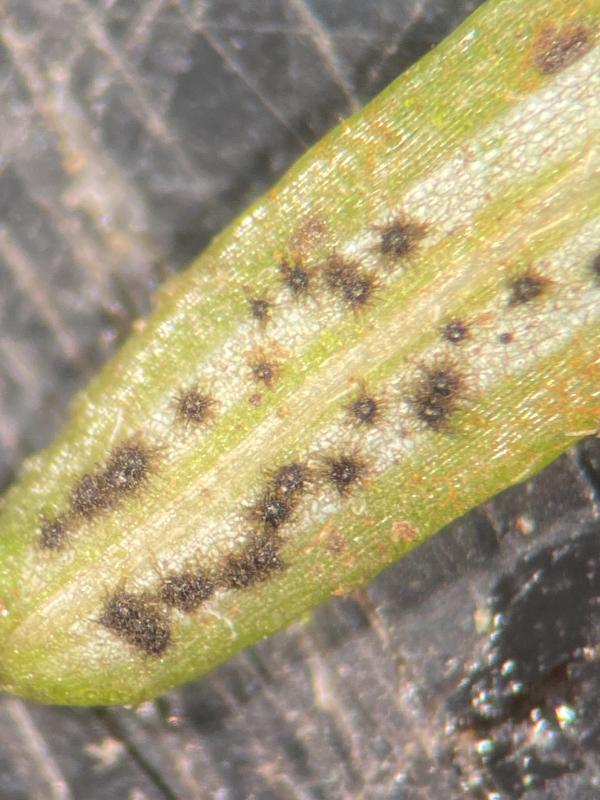
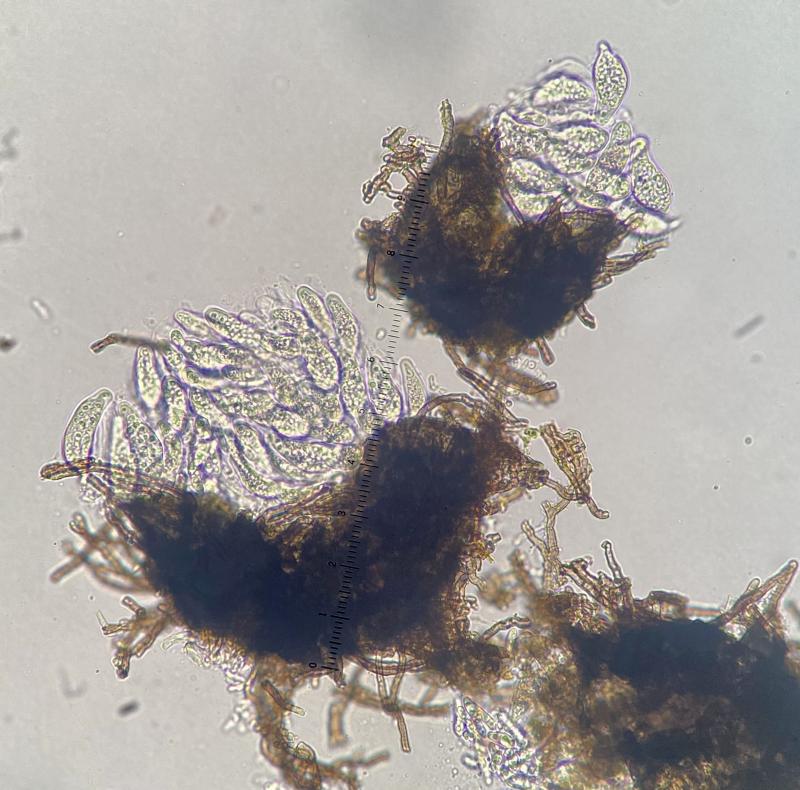
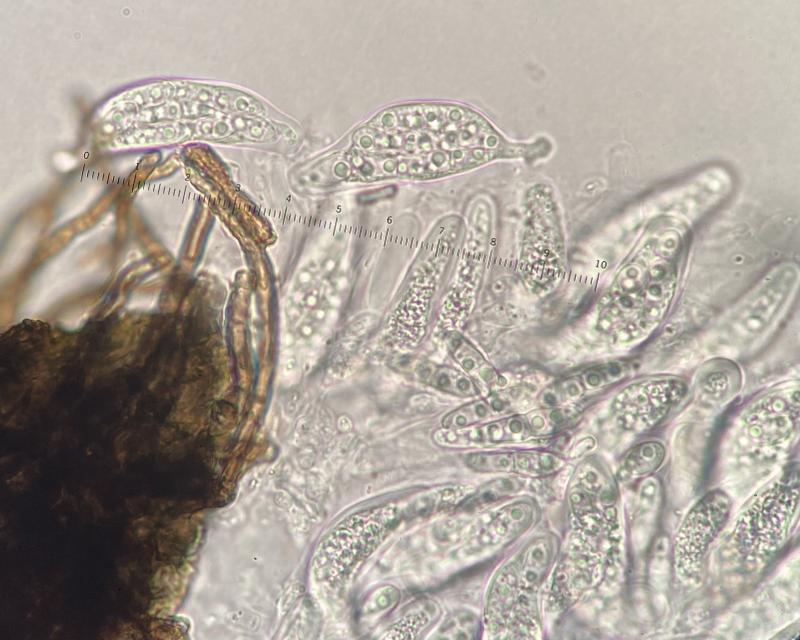
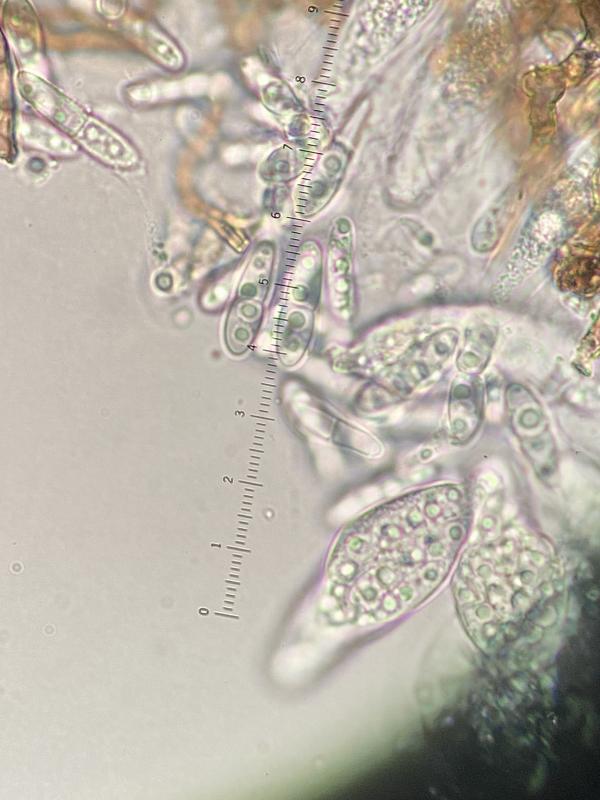
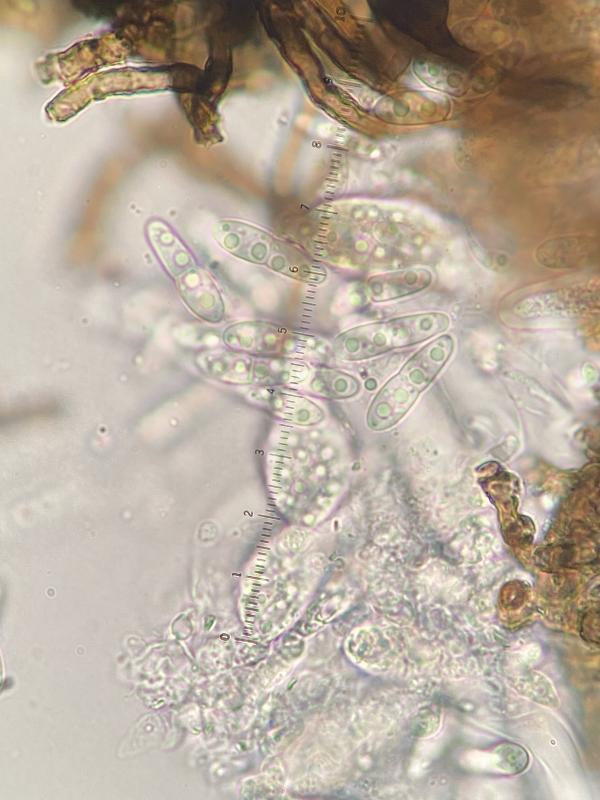
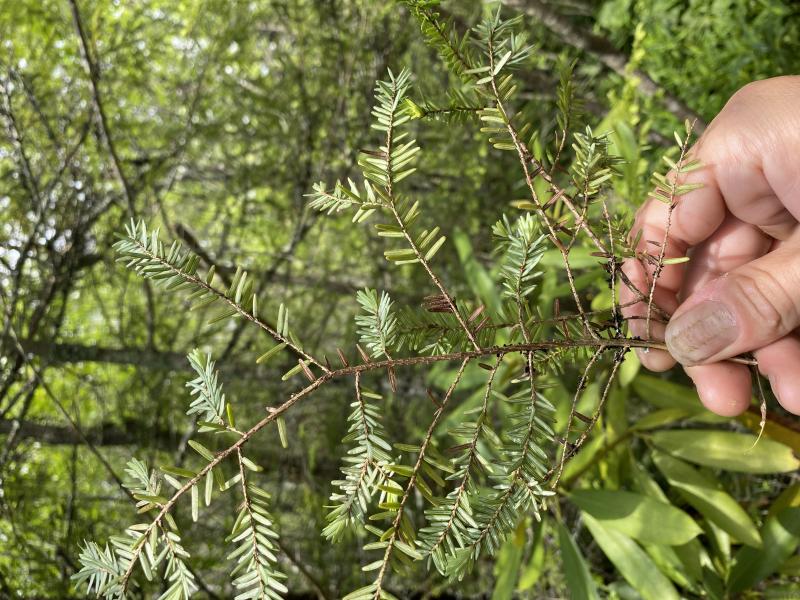
Could this be a species of Phaeocryptopus? P. nudus has been reported on this host before, but I cannot find much info on it. The tree was experiencing a needle cast of last years growth, Fabrella tsugae was also found on the same branch. No amyloid reaction in Lugols. All micro taken in H2O. Spores measure 8-10 x 4-5 um.
Location: Cranberry Wilderness, West Virginia, USA
Host: Tsuga canadensis
Thanks!
Guy Buddy,
17-06-2022 03:46
Re : Phaeocryptopus?
Looking closer the ascomata do not appear to be erupting from the stomata. But the bitunicate asci and spores look promising for Venturiaceae.