
21-03-2026 15:13
Lepista ZacariasHello everyone, Does any one know of any literatu
20-10-2017 09:23
Garcia SusanaEste otro crecía en el mismo trocito de madera qu
20-03-2026 16:16
 Edvin Johannesen
These 0.5 mm diam. acervuli were breaking through
19-03-2026 19:34
 Filip Fuljer
Hello everyone,a few days ago I collected this str
19-03-2026 18:25
 William Slosse
Good evening everyone, On 18/03/26 I found a few
17-03-2026 10:09
 François Freléchoux
Bonjour, Voici la description rapide d'un petit d
19-03-2026 17:50
 Enrique Rubio
Hi to everybodyThese thiny, blackish pseudothecia
Black, setose on Salix
Zuzana Sochorová (Egertová),
28-06-2022 22:07
 Hello,
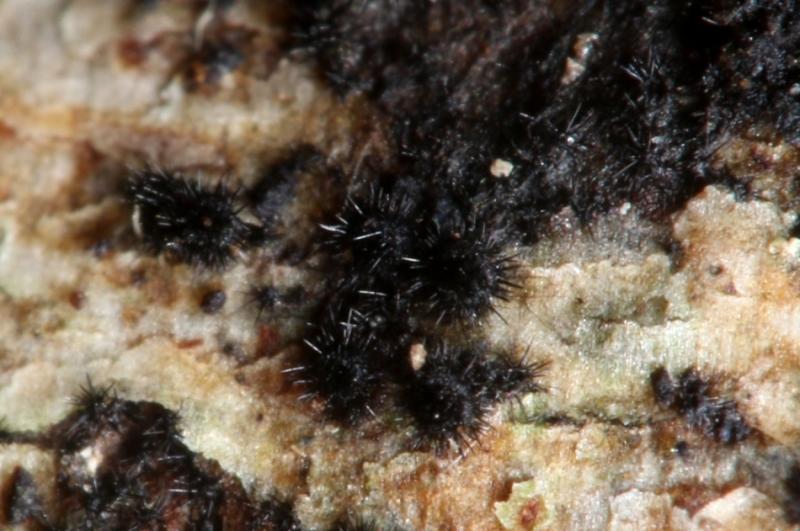
I would welcome some help with these little ascomycetes growing on a fallen twig of Salix, accompanied by Diatrype bullata and Orbilia cf. tremulae. Czech Republic, 200 m a.s.l..
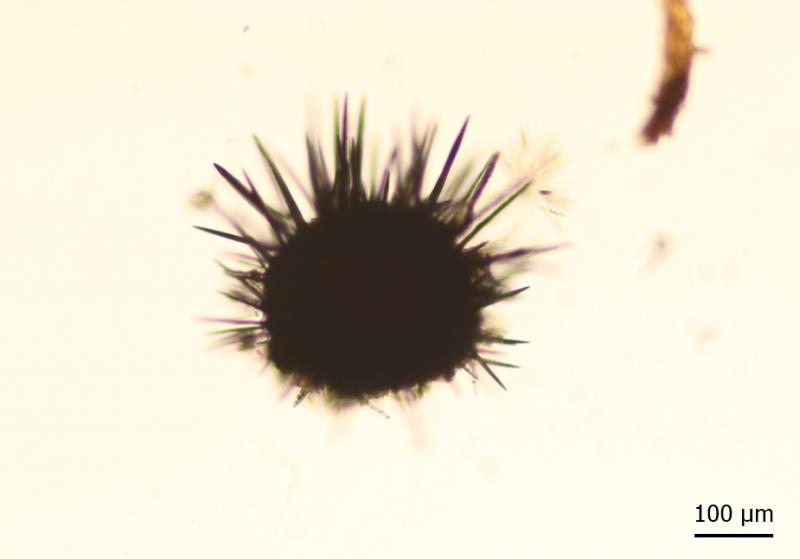
Black, globose, setose fruit bodies (that one in the photo is 280 µm broad).
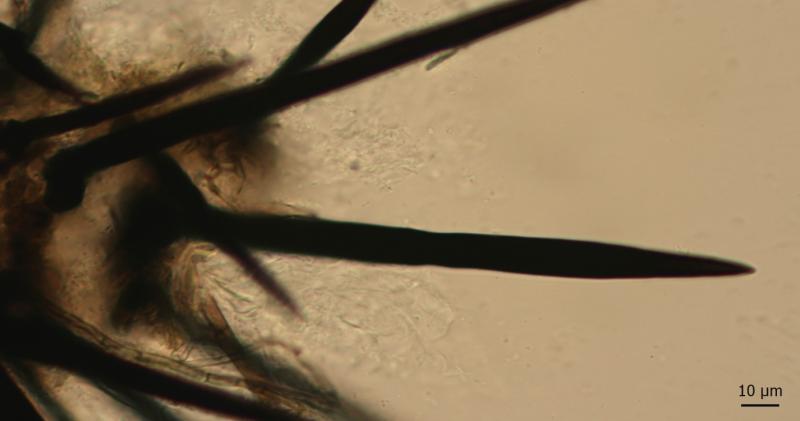
Setae up to 170 µm long, pointed, black, thick-walled, base broadened.
The wall formed by t. angularis.
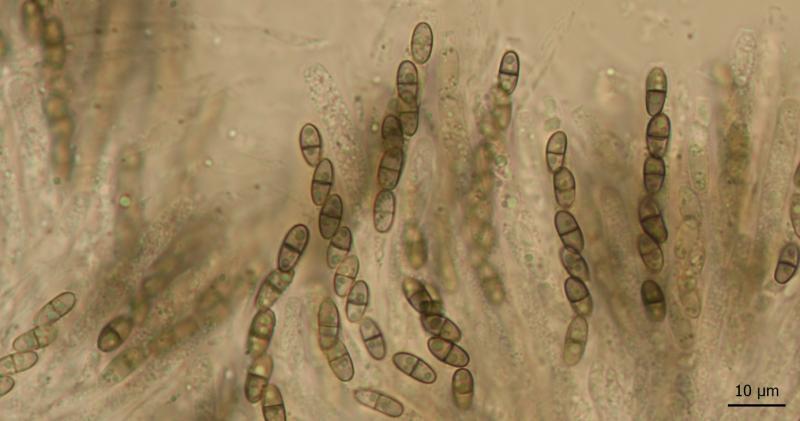
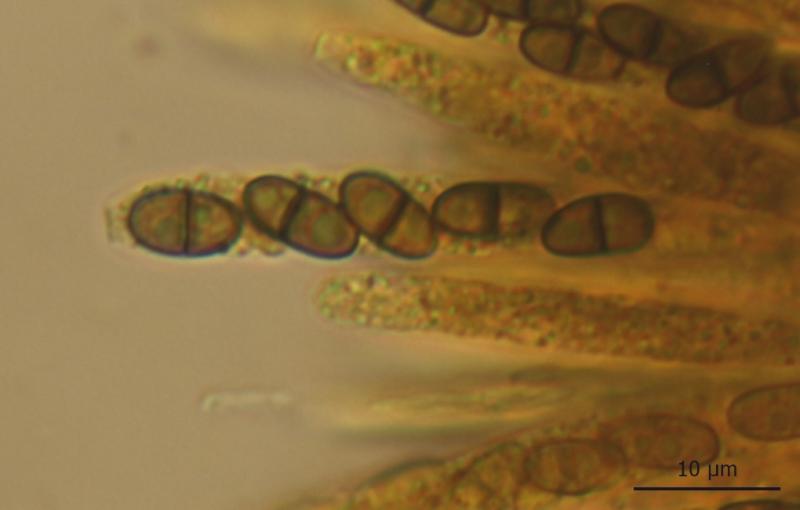
Asci 8-spored, IKI-, MLZ-.
Ascospores one-septate, each half containing a guttule, (7.1) 7.2-8.6 (8.9) × (3.1) 3.2-4.2 µm,
Q = 1.8-2.8
Me = 8 × 3.6 µm
I though it could be Capronia, and Gernot Friebes´s key from ascomycete.org led me to C. inconspicua. However, its ascospores should have a different shape. I was adviced by Bjorn Wergen Capronia isn´t the right genus for my fungus. Does somebody have an idea where could this asco belong to?
Zuzana

Zuzana Sochorová (Egertová),
28-06-2022 22:29
Re : Black, setose on Salix
In situ


Hans-Otto Baral,
29-06-2022 08:05

Re : Black, setose on Salix
I think this is sordarial and a member of Lasiosphaeriaceae or Helminthosphaeriaceae. Perhaps related to Helminthosphaeria?
Alain GARDIENNET,
29-06-2022 09:25

Re : Black, setose on Salix
Surely.
Zuzana Sochorová (Egertová),
29-06-2022 20:46
Re : Black, setose on Salix
Thank you, Zotto and Alain.
Nevertheless, I tried to use the key to Helminthosphaeriaceae by Andrew Miller et al. 2014, but found no good option. I would come to the point 15, and then nothing is fitting. I also tried alternative ways, but it also didn´t bring any acceptable result.
Nevertheless, I tried to use the key to Helminthosphaeriaceae by Andrew Miller et al. 2014, but found no good option. I would come to the point 15, and then nothing is fitting. I also tried alternative ways, but it also didn´t bring any acceptable result.