
21-03-2026 15:13
Lepista ZacariasHello everyone, Does any one know of any literatu
20-10-2017 09:23
Garcia SusanaEste otro crecía en el mismo trocito de madera qu
20-03-2026 16:16
 Edvin Johannesen
These 0.5 mm diam. acervuli were breaking through
19-03-2026 19:34
 Filip Fuljer
Hello everyone,a few days ago I collected this str
19-03-2026 18:25
 William Slosse
Good evening everyone, On 18/03/26 I found a few
17-03-2026 10:09
 François Freléchoux
Bonjour, Voici la description rapide d'un petit d
19-03-2026 17:50
 Enrique Rubio
Hi to everybodyThese thiny, blackish pseudothecia
Pinkish ones
Marja Pennanen,
07-11-2022 22:43
Hello forum,
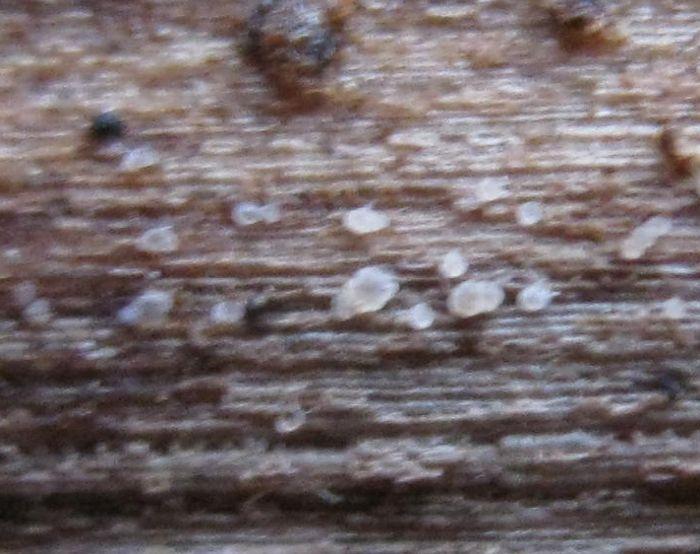
I found these tiny ones on old stems of a perennial flower. The stems were guite soft. I actually looked for them, because I had found them last autumn, too, but had no time to study them.
The fruitbodies are about 0,1-0,3 mm wide, first white turning pinkish later.
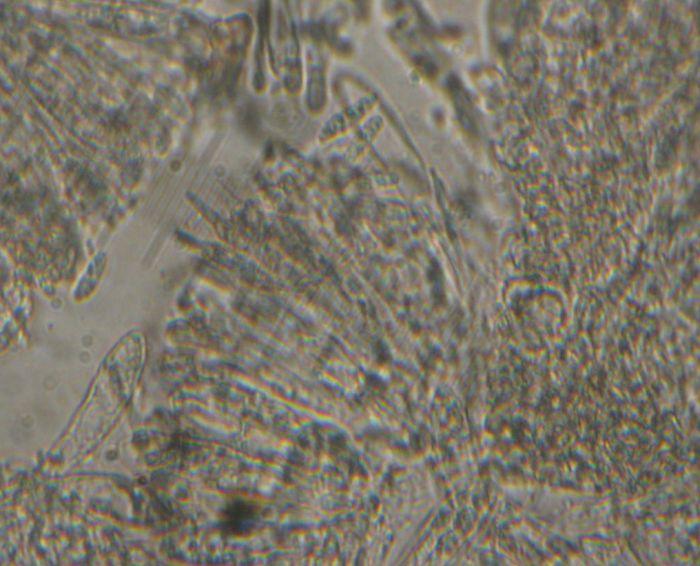
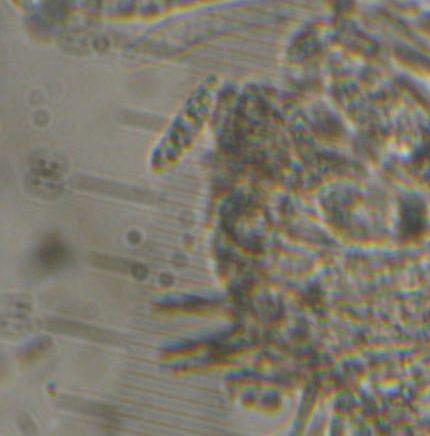
The spores are multiguttulate, about 9-15x3.
The asci are about 35-55x9-10, IKI+ blue and paraphyses are narrow.
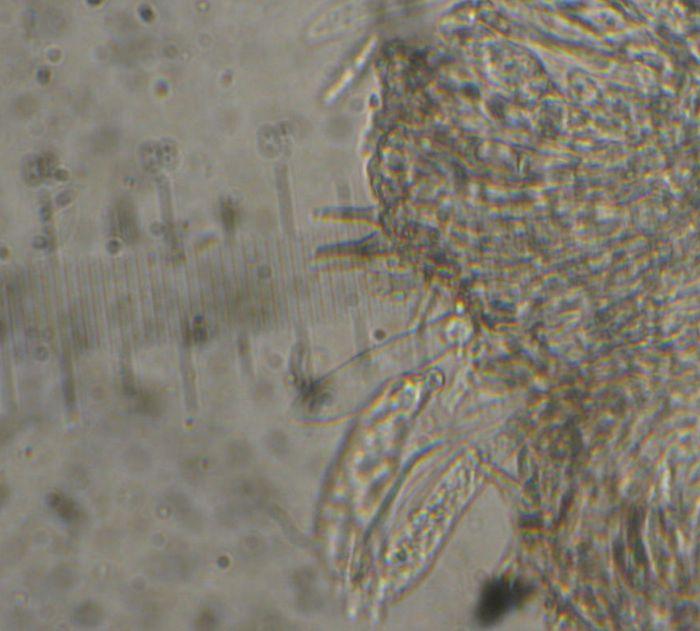
I thought, that this was not hairy, but found some small structures, that may be hairs, about 10-15x3-4.
Curiously: Marja
Viktorie Halasu,
08-11-2022 00:15

Re : Pinkish ones
Hello,
were the "hairs" a bit darker, brownish? They remind me on Chalara anamorphs, sometimes occuring on the margin of Calycellina sp. There is C. separabilis on Rubus with similar spore shape and guttulation in Zotto's folder, but I don't know it firsthand.
Viktorie
were the "hairs" a bit darker, brownish? They remind me on Chalara anamorphs, sometimes occuring on the margin of Calycellina sp. There is C. separabilis on Rubus with similar spore shape and guttulation in Zotto's folder, but I don't know it firsthand.
Viktorie
Marja Pennanen,
08-11-2022 14:44
Re : Pinkish ones
Hi Victorie,
Zottos Calycellina chalarae has more and bigger guttules and bigger septate spores than these. I saw no septas in spores.
The hairs do not seem much darker in my opinion and are almoust invisible on eye or loupe. I suppose, that I found hairs only because one fruitbody went upside down on preparate. They remind a bit Hyaloscypha hairs or do they?
Thank you for your answer: Marja