
21-03-2026 15:13
Lepista ZacariasHello everyone, Does any one know of any literatu
20-10-2017 09:23
Garcia SusanaEste otro crecía en el mismo trocito de madera qu
20-03-2026 16:16
 Edvin Johannesen
These 0.5 mm diam. acervuli were breaking through
19-03-2026 19:34
 Filip Fuljer
Hello everyone,a few days ago I collected this str
19-03-2026 18:25
 William Slosse
Good evening everyone, On 18/03/26 I found a few
17-03-2026 10:09
 François Freléchoux
Bonjour, Voici la description rapide d'un petit d
19-03-2026 17:50
 Enrique Rubio
Hi to everybodyThese thiny, blackish pseudothecia
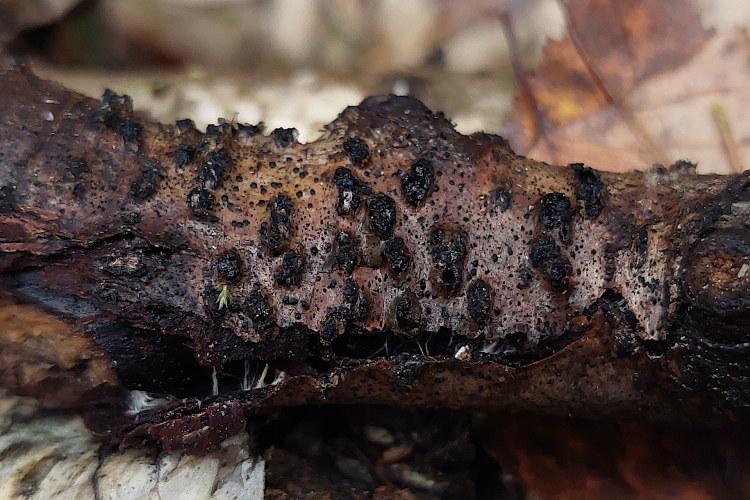
Dialonectria on Diatrypella
Juuso Äikäs,
16-11-2022 19:57
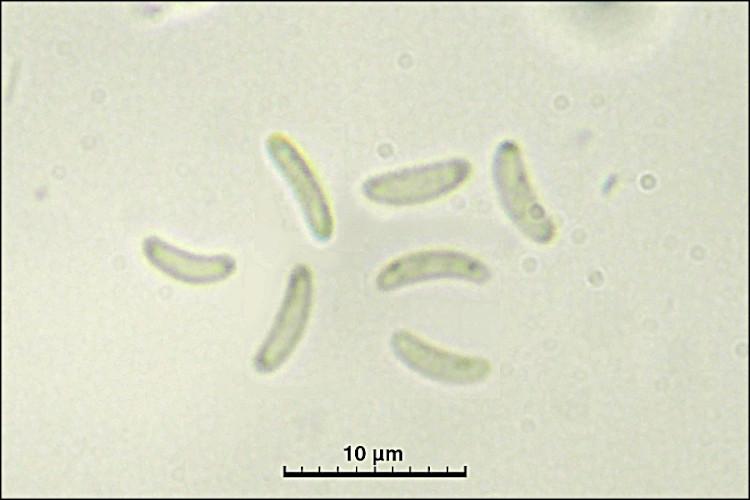
Diatrypella spores:
(5) 5.6 - 6.2 (6.5) × (1.2) 1.24 - 1.7 µm
Q = (3.4) 3.41 - 4.6 (5.2) ; N = 10
Me = 5.9 × 1.5 µm ; Qe = 4
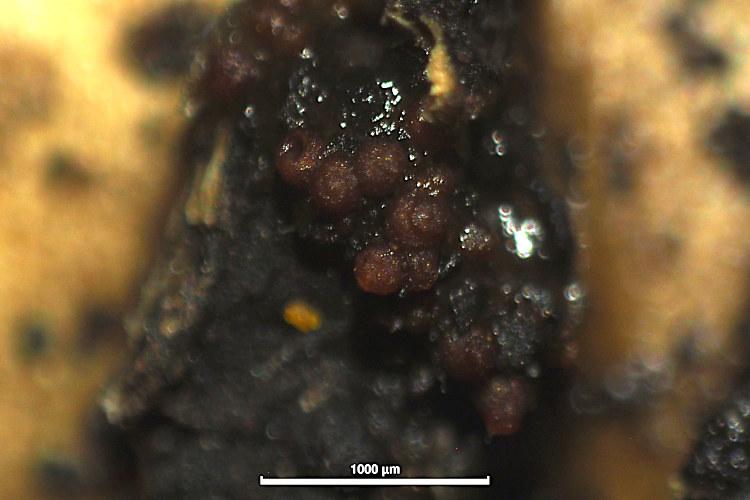
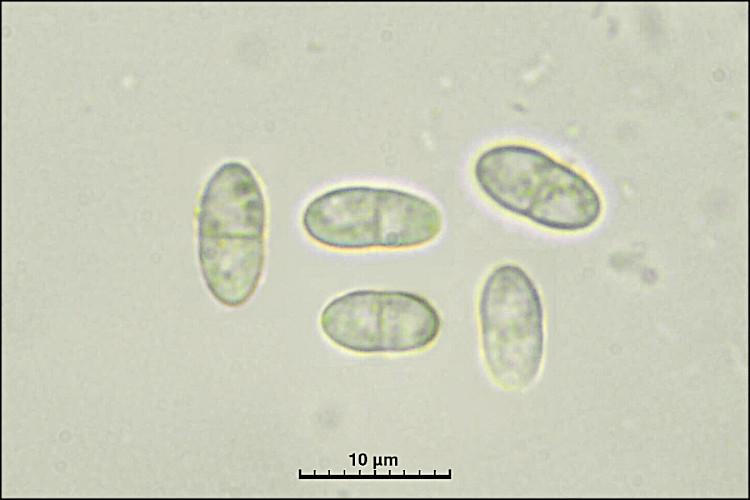
Dialonectria spores:
(7.6) 7.64 - 9.47 (9.5) × 3.9 - 4.2 µm
Q = 2 - 2.3 ; N = 5
Me = 8.6 × 4 µm ; Qe = 2.1
I suspect this might be a case of Dialonectria episphaeria growing on Diatrypella favacea, although the spores are maybe a bit small for both species.
Is this data enough to say anything with certainty, or are there other possibilities?
Andgelo Mombert,
17-11-2022 08:28

Re : Dialonectria on Diatrypella
Bonjour,
Dialonectria episphaeria ne pousse que sur Diatrype sp.
D'après moi, il s'agit ici d'un Stylonectria. Beaucoup des espèces de ce genre ne sont pas spécifiques à un hôte et il n'est pas possible de les identifier sans culture.
Dialonectria episphaeria ne pousse que sur Diatrype sp.
D'après moi, il s'agit ici d'un Stylonectria. Beaucoup des espèces de ce genre ne sont pas spécifiques à un hôte et il n'est pas possible de les identifier sans culture.
Juuso Äikäs,
17-11-2022 10:57
Re : Dialonectria on Diatrypella
Ah ok -- thank you. Maybe I'll just try to avoid Nectria s.l. :).