
21-03-2026 15:13
Lepista ZacariasHello everyone, Does any one know of any literatu
20-10-2017 09:23
Garcia SusanaEste otro crecía en el mismo trocito de madera qu
20-03-2026 16:16
 Edvin Johannesen
These 0.5 mm diam. acervuli were breaking through
19-03-2026 19:34
 Filip Fuljer
Hello everyone,a few days ago I collected this str
19-03-2026 18:25
 William Slosse
Good evening everyone, On 18/03/26 I found a few
17-03-2026 10:09
 François Freléchoux
Bonjour, Voici la description rapide d'un petit d
19-03-2026 17:50
 Enrique Rubio
Hi to everybodyThese thiny, blackish pseudothecia
18-03-2026 13:09
 Khomenko Igor
I recently examined Celtis occidentalis branches
I must refer to Elisabeth Stöckli's item "Nectria" with link: http://www.ascofrance.com/forum?page=1
In order not to disturb the flow of Elisabeth's item, I am launching a new item on the forum although I am convinced it is about the same species.
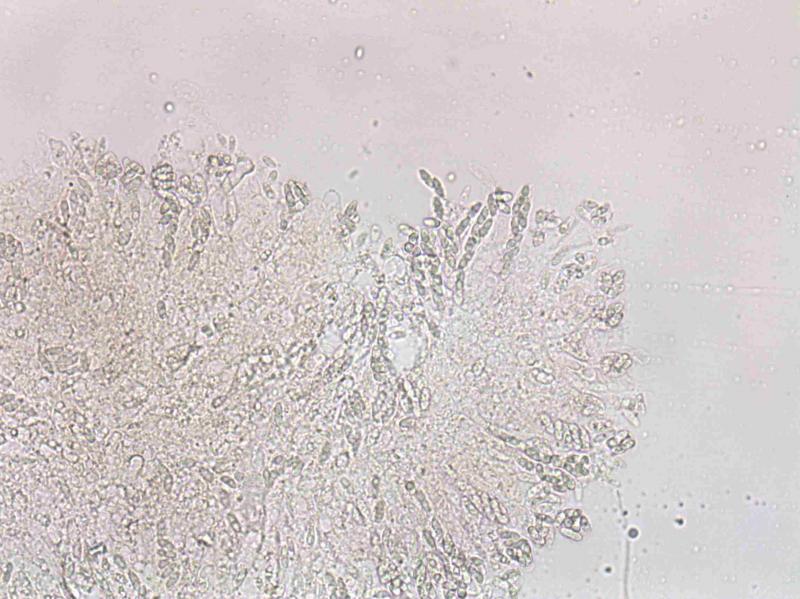
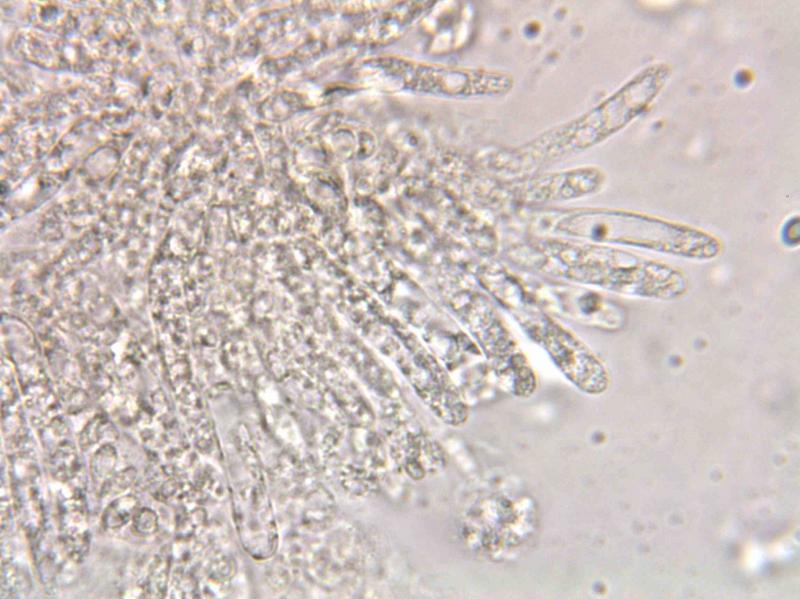
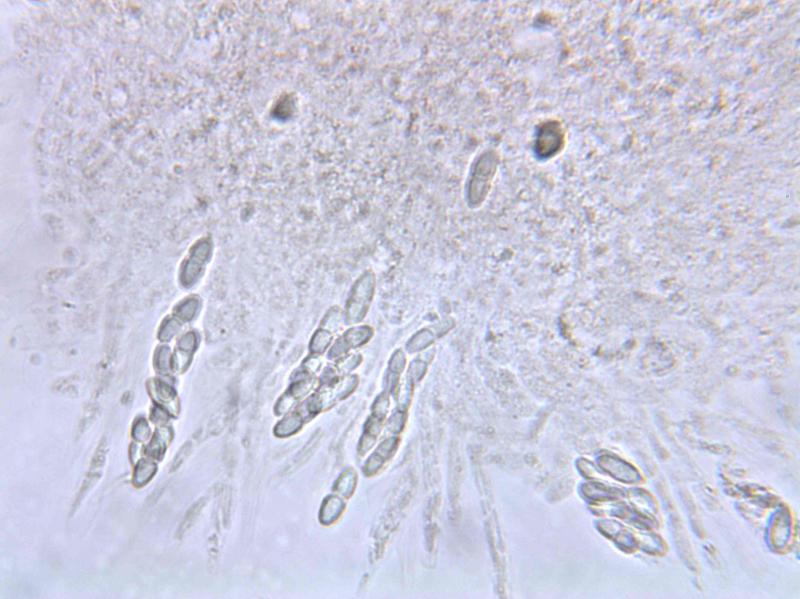
On 23 February 2023, I found on twigs of Sambucus nigra covered with Xanthoria parietina and Orthotrichum affine several small to very small fruiting bodies. On the rhizoids of O. affine it was Octospora affinis but on the leaves there were orange/pink perithecia singly or in small groups. They were apparently loose on the leaves (some anchor hyphae?).
Preparations were difficult to make and photography was no sinecure either. When applying a coverslip, the perithecia shot away from under the glass. To recover the fruiting bodies during a second attempt, I had to insert a piece of leaf along with the FRB's. Due to the very small size and high transparency, focusing was difficult (limitation quality microscope!).
FRB: 195 x 185 µm
Asci: 35-40 x 5-6.8 µm
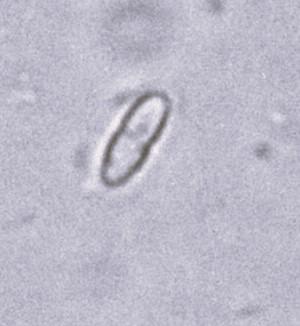
Spore: 6-8.5 x 2.3-3 µm; subcylindrical with 1 septa, constricted at the septa
Melzer: negative
Following on from item by Elisabeth probably Nectria hirta ? I myself have little experience with this genus.
Many thanks for any comments,
François Bartholomeeusen
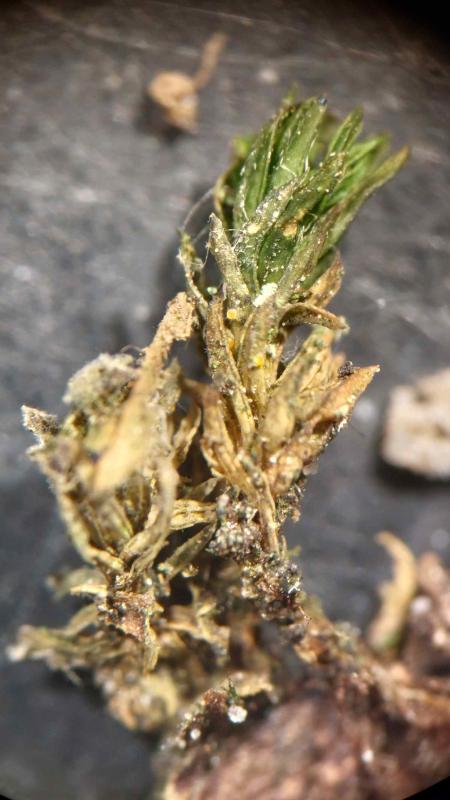
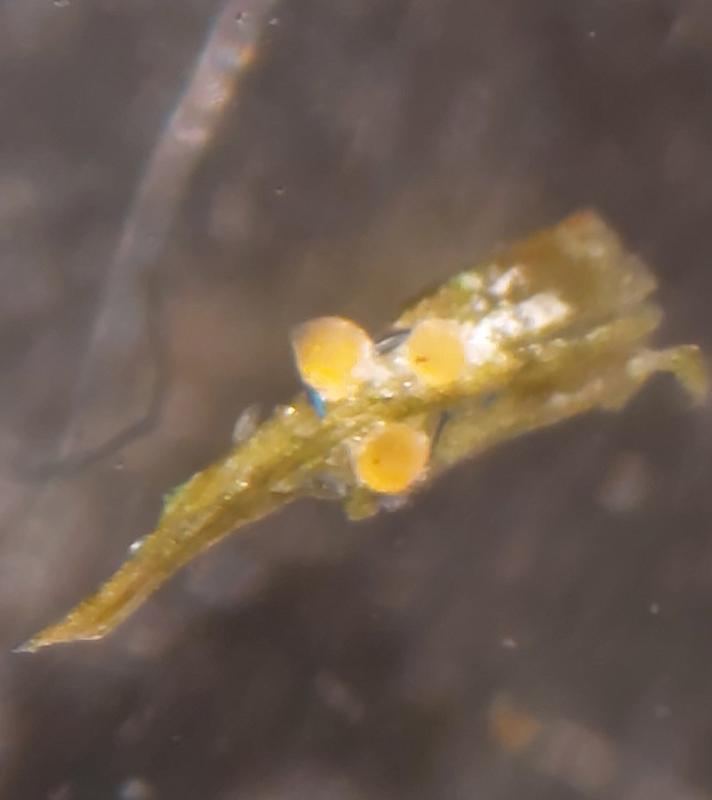
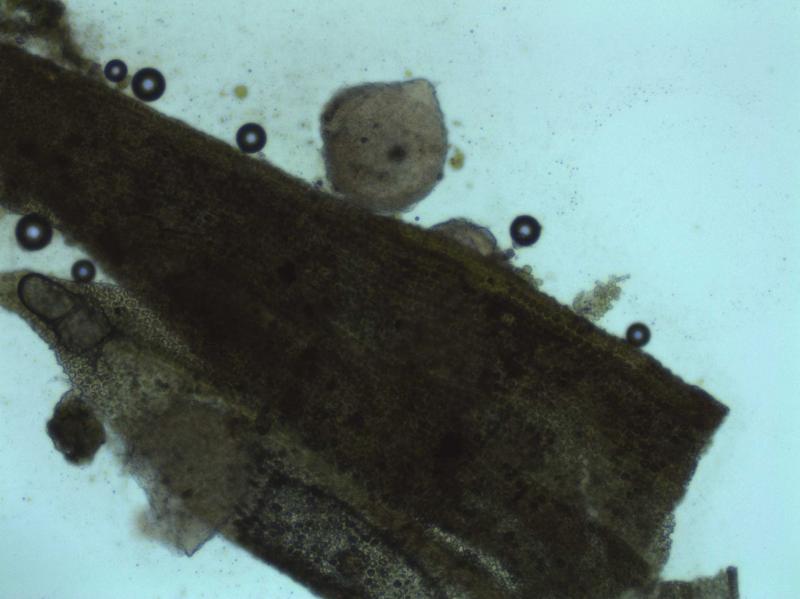
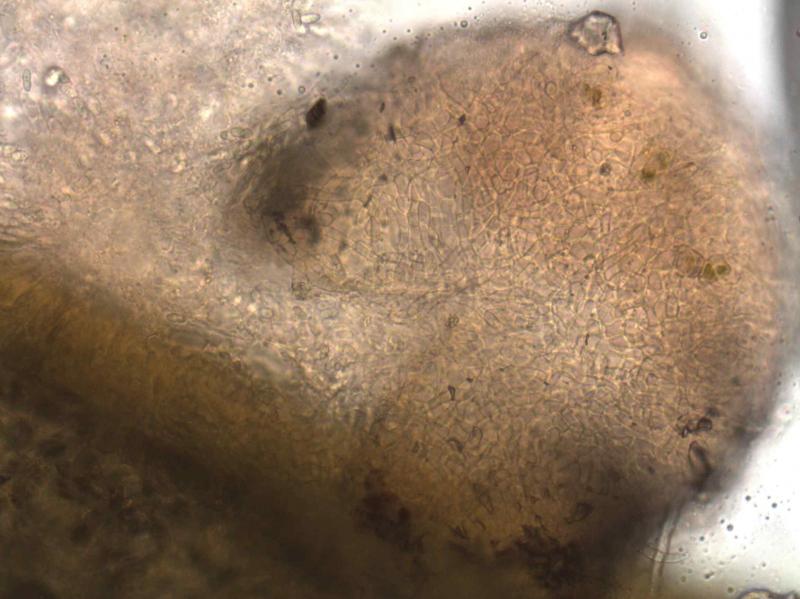
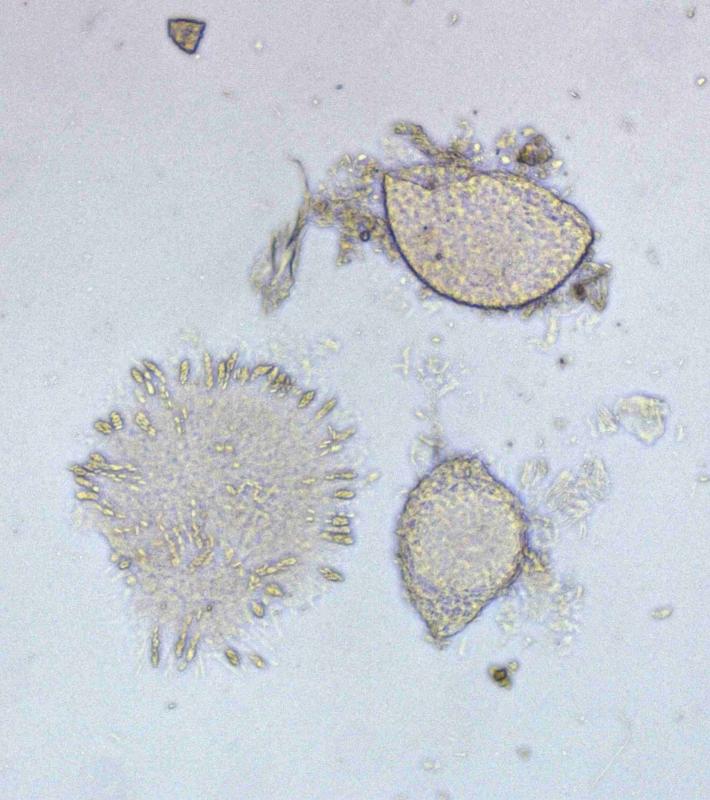
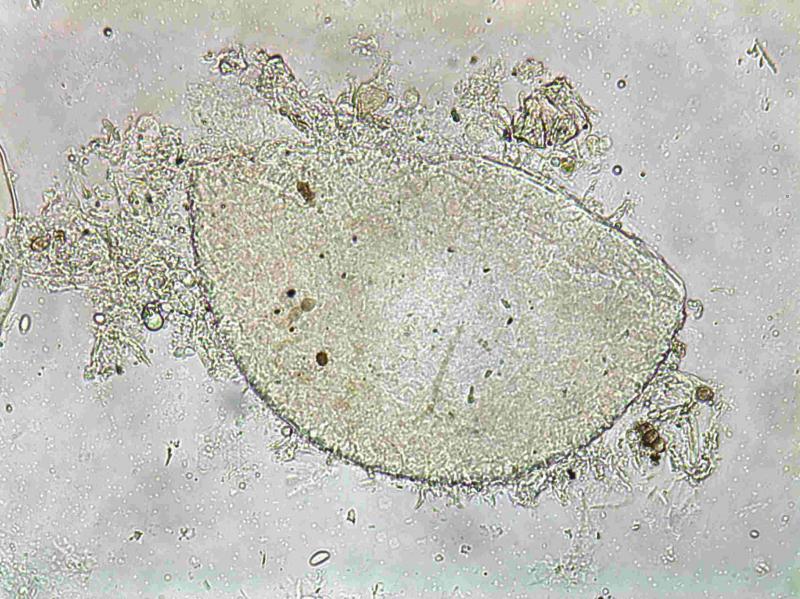
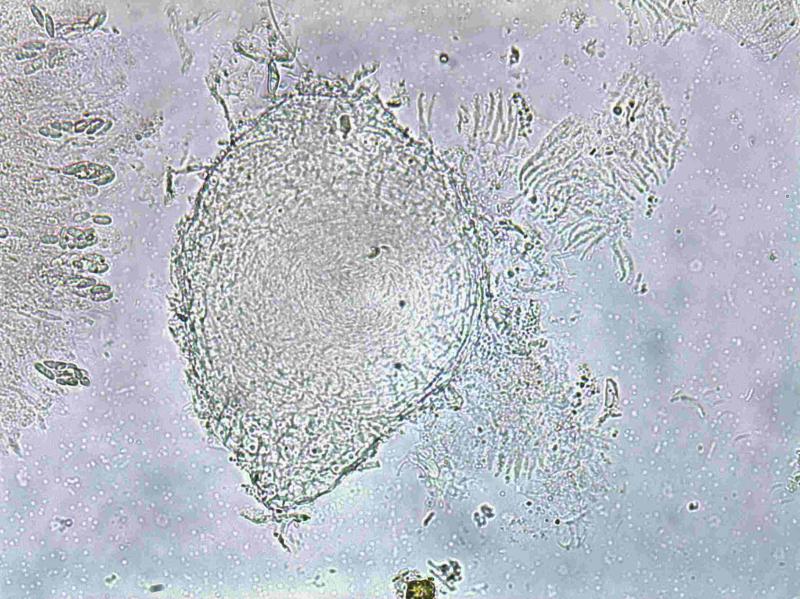
Interesting collection and it must be the same as found by Elisabeth. Clearly, the fungus is quite widespread and should be searched for on Orthotrichum / Lewinskya affinis at this time of year.
As for the ID, I guess it must be undescribed. I am not familiar with anything quite like it in Europe though Peter Döbbeler would know for sure. My guess is Bryocentria but additional work would be needed to confirm. I am happy to check some if you have enough material, please e-mail me if you are interested.
All the best,
George