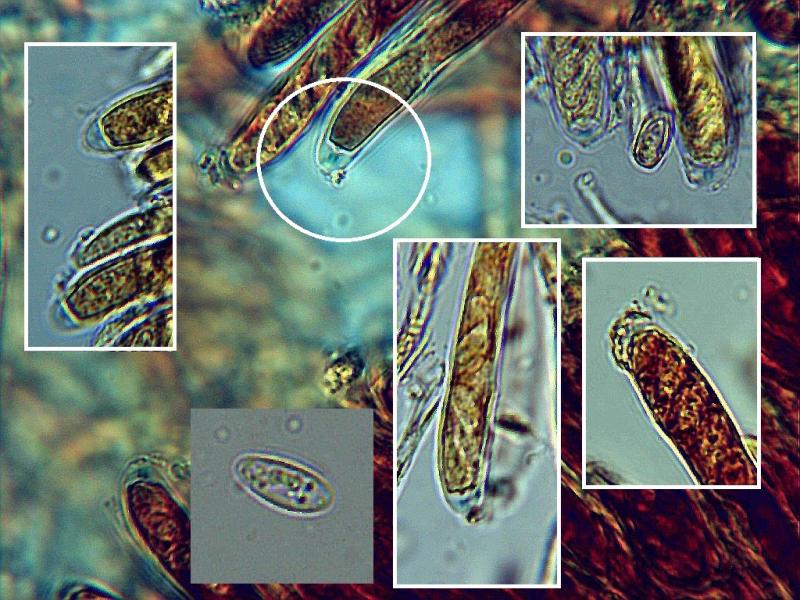
20-10-2017 09:23
Garcia SusanaEste otro crecía en el mismo trocito de madera qu
20-03-2026 16:16
 Edvin Johannesen
These 0.5 mm diam. acervuli were breaking through
19-03-2026 19:34
 Filip Fuljer
Hello everyone,a few days ago I collected this str
19-03-2026 18:25
 William Slosse
Good evening everyone, On 18/03/26 I found a few
17-03-2026 10:09
 François Freléchoux
Bonjour, Voici la description rapide d'un petit d
19-03-2026 17:50
 Enrique Rubio
Hi to everybodyThese thiny, blackish pseudothecia
18-03-2026 13:09
 Khomenko Igor
I recently examined Celtis occidentalis branches
17-03-2026 19:41
 Bernard CLESSE
Bonsoir à toutes et tous,Pourriez-vous m'aider à
 Wonder if anyone can help here with this species which I thought was Durella suecica, but is IKI -, the spores are slightly larger with larger apothecia <1.0mm. Gregariously scattered under fallen branch of Pinus sylvestris with flattish surface, concolourous margins and exteriors of pale cream colour. No marginal hairs.
Ascospores: 6.53 - 8.03 x 3.31 - 3.63 µm, hyaline, non-septate, polar drops at each end, one end slightly larger both rounded.
Asci: 8-spored, Unseriate 60 - 75 x 6.85 - 7.55 µm. IKI -
Paraphyses: 10 µm ± above asci, cylindrical rounded tips, tapering up with 2-septa, filled mostly upper sections VB's, some highly refractive, some with granular exudate tips.
Croziers: Not observed.
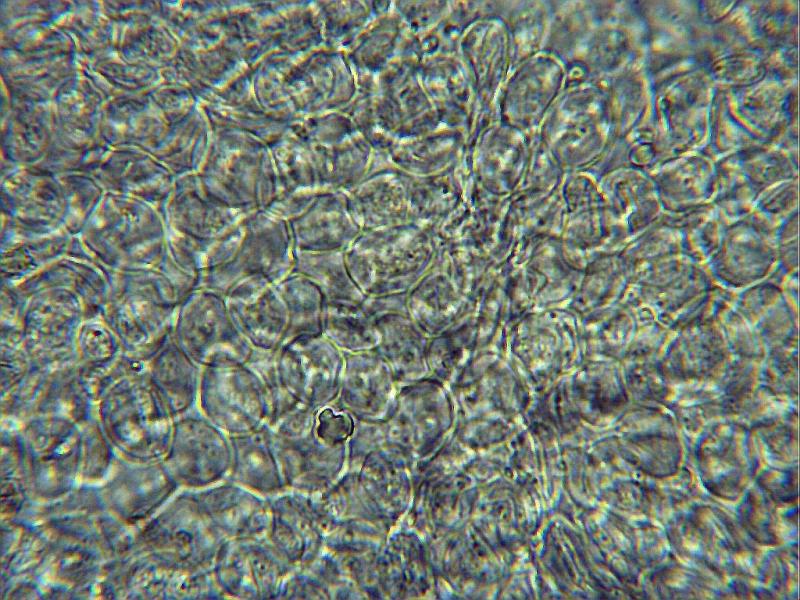
Excipulum: Small celled subglobose texture.
with many thanks for any ideas
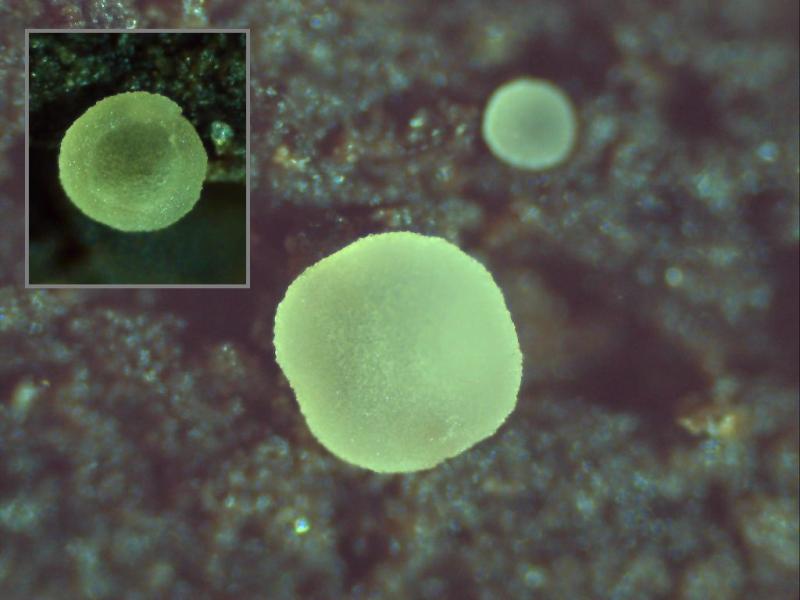
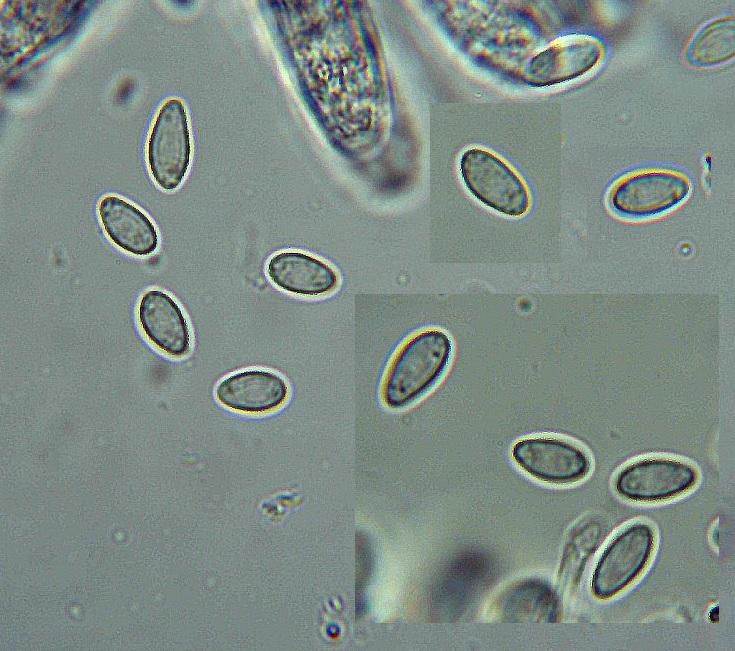
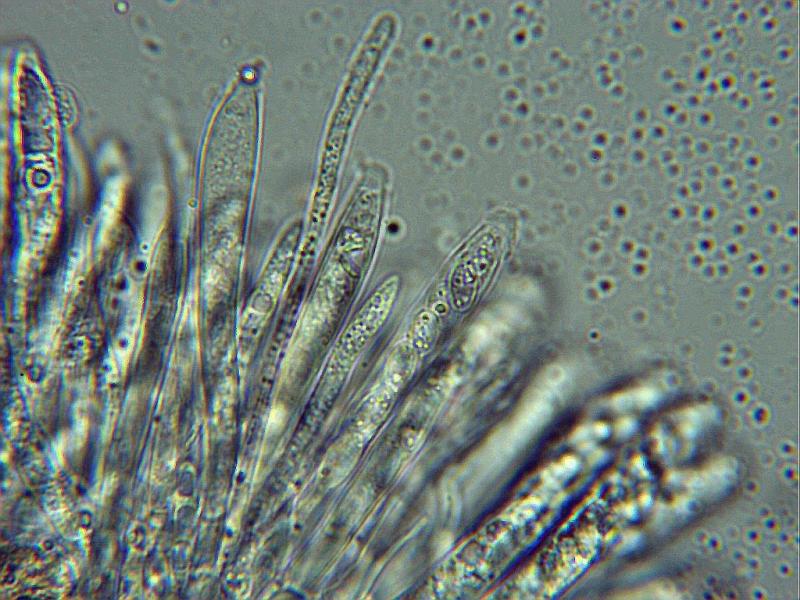
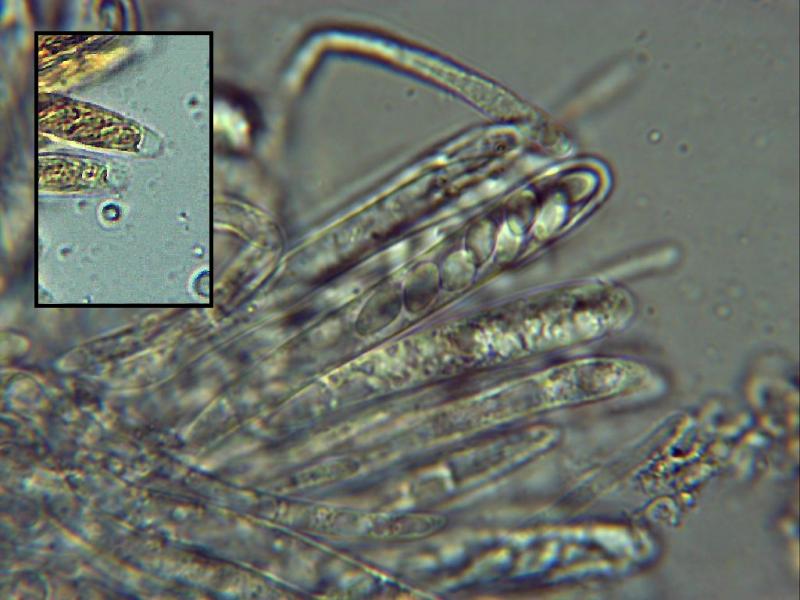
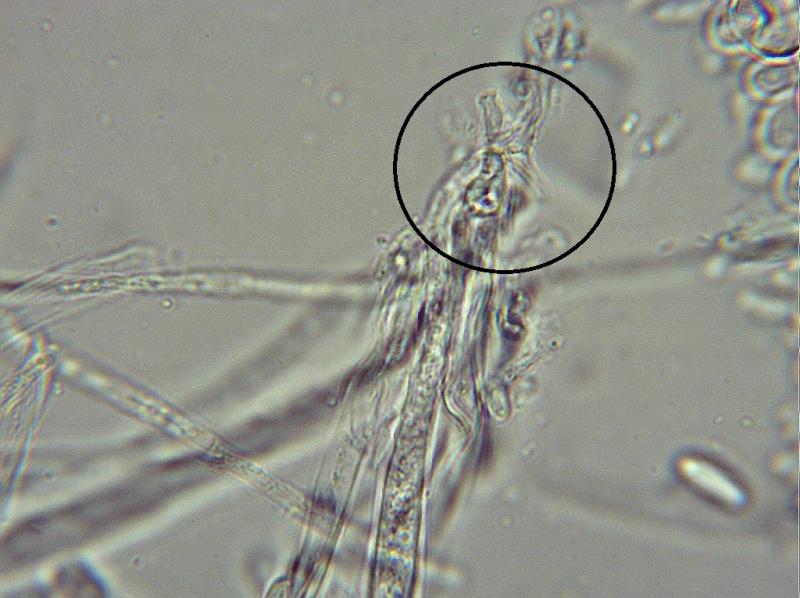

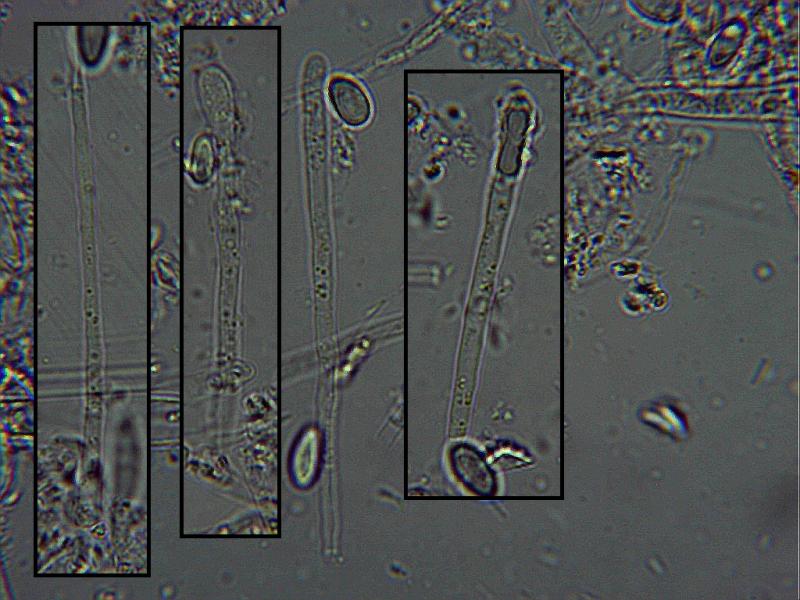
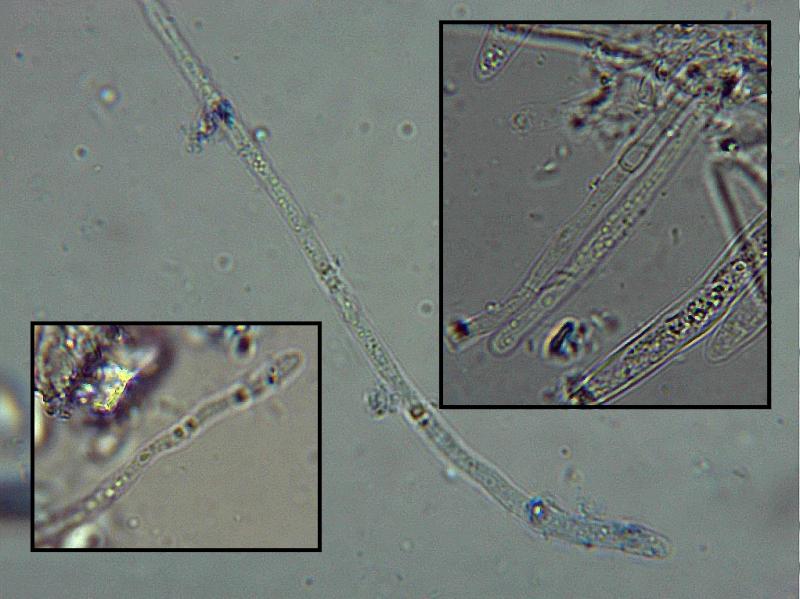
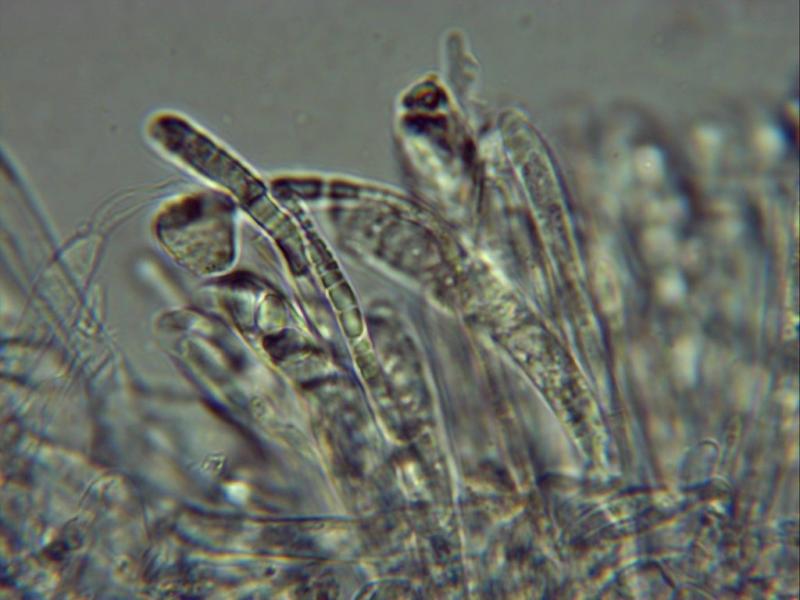
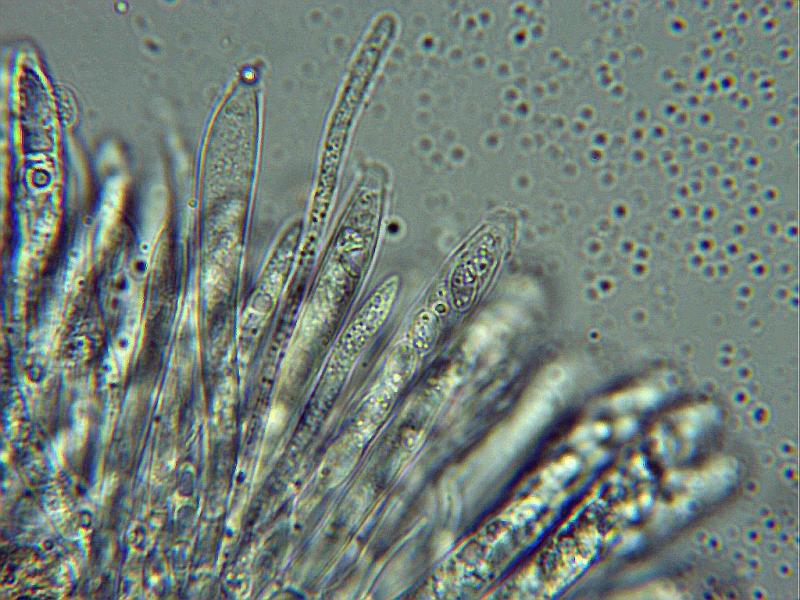

the thick ascus apex, VB+ paraphyses and spores make an impression of a Hymenoscyphus (around H. imberbis).
Viktorie
I could go back and obtain more material as this test exhausted all that I had left.
Thks again
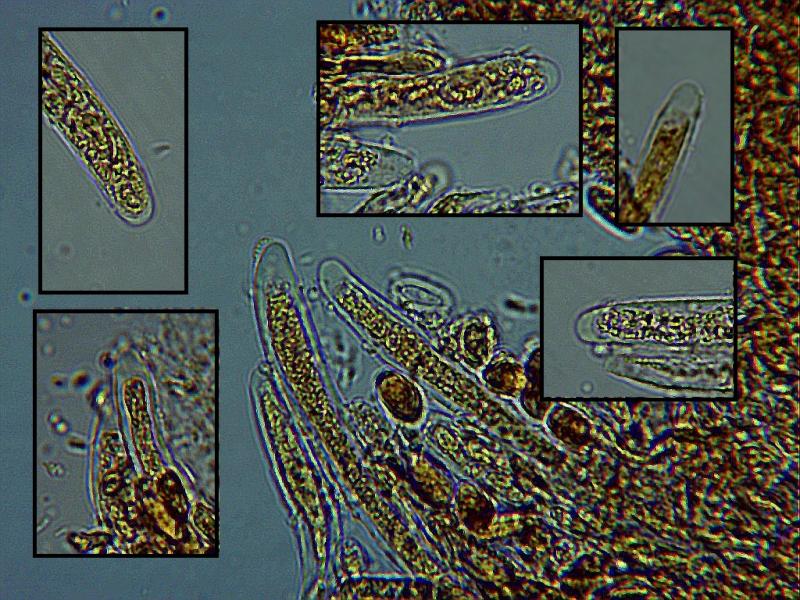
I was hoping this would make Hymenoscyphus rufescens a distinct possibility now. H. imberbis doesn't seem to fit and the excipulum seems different. Is this Hymenoscyphus or Phaeohelotium - different acceptances seen?
With thanks for your further consideration Tony