
20-10-2017 09:23
Garcia SusanaEste otro crecía en el mismo trocito de madera qu
20-03-2026 16:16
 Edvin Johannesen
These 0.5 mm diam. acervuli were breaking through
19-03-2026 19:34
 Filip Fuljer
Hello everyone,a few days ago I collected this str
19-03-2026 18:25
 William Slosse
Good evening everyone, On 18/03/26 I found a few
17-03-2026 10:09
 François Freléchoux
Bonjour, Voici la description rapide d'un petit d
19-03-2026 17:50
 Enrique Rubio
Hi to everybodyThese thiny, blackish pseudothecia
18-03-2026 13:09
 Khomenko Igor
I recently examined Celtis occidentalis branches
17-03-2026 19:41
 Bernard CLESSE
Bonsoir à toutes et tous,Pourriez-vous m'aider à
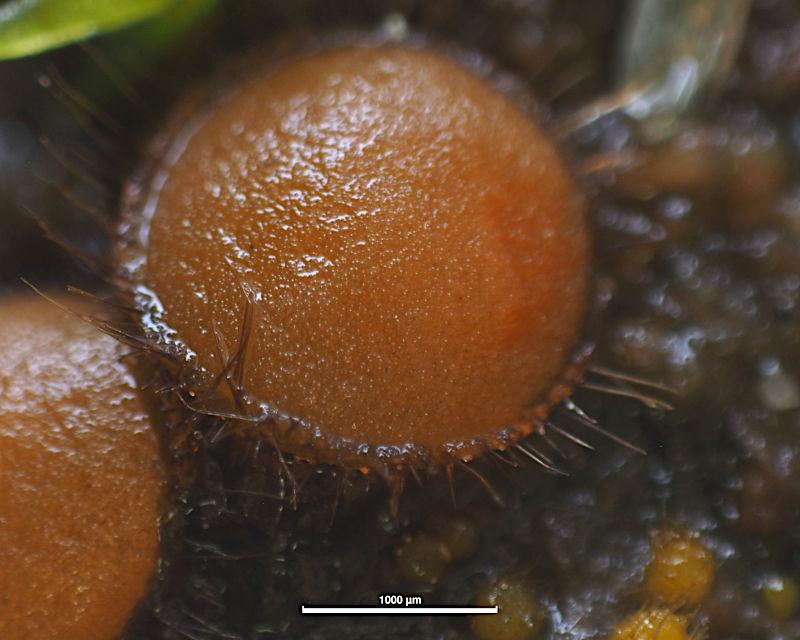
Cheilymenia on moose dung
Juuso Äikäs,
08-05-2023 11:11
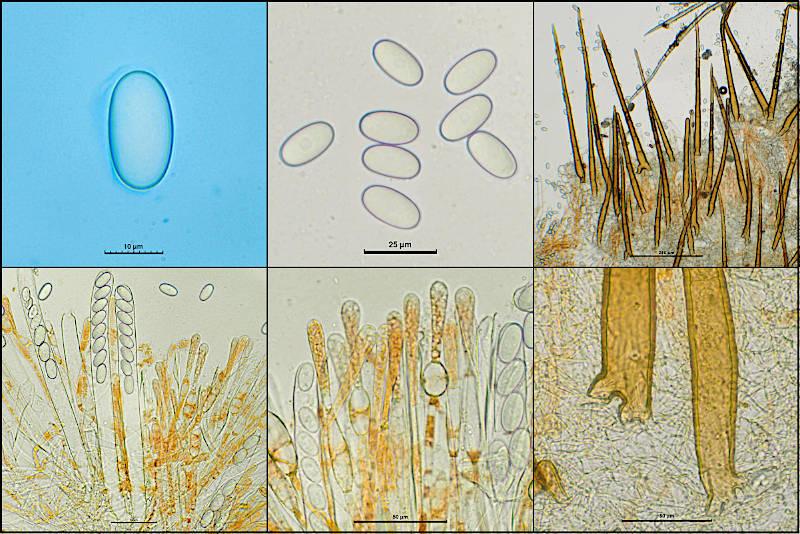
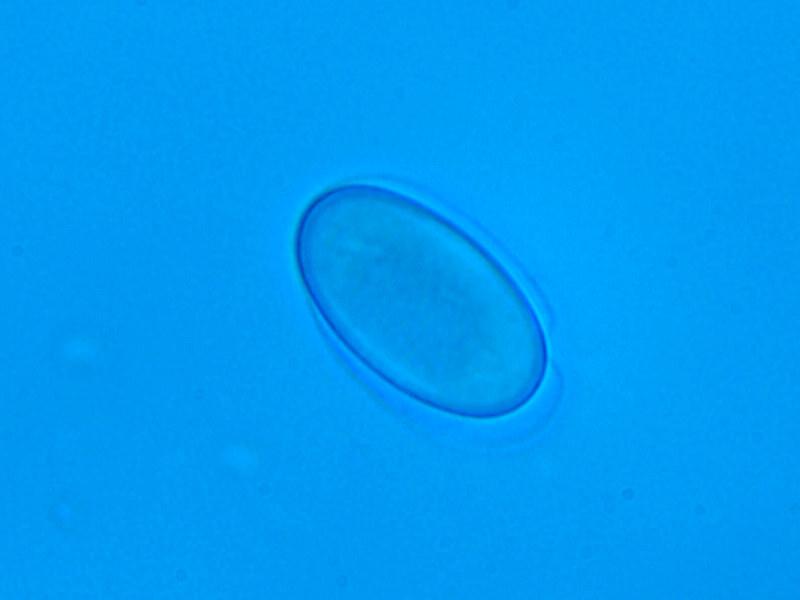
The hairs are max. 650 µm long and many are forked at the base. No stellate hairs. The spores are completely smooth in water and cotton blue. Measurements:
(19.2) 19.8 - 21.3 (21.6) × (10) 10.4 - 11.3 (11.5) µm
Q = (1.7) 1.8 - 2 ; N = 20
Me = 20.4 × 10.8 µm ; Qe = 1.9
Although it apparently usually grows on cow dung, could this be C. fimicola?
Juuso Äikäs,
09-05-2023 19:33
Re : Cheilymenia on moose dung
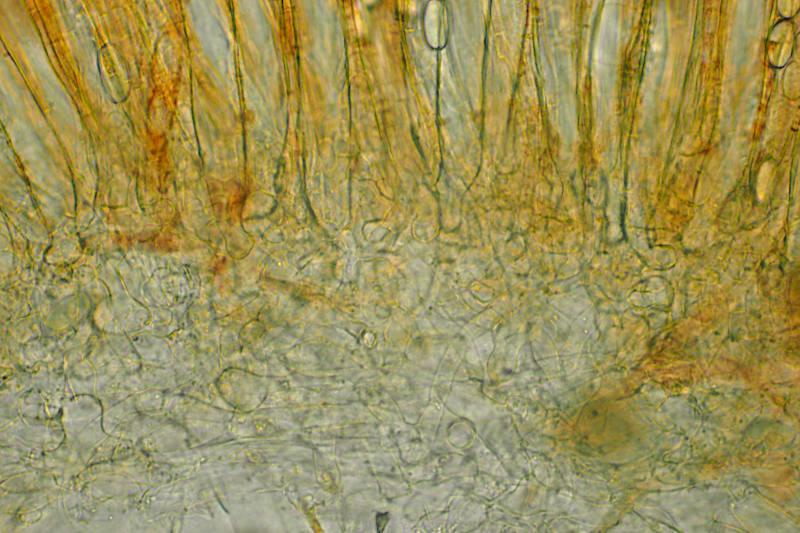
I tried to make a section, but without much success. If C. fimicola is indeed a nomen dubium, maybe this might be named C. coprinaria? I believe the spores are however rather large for it.
Juuso Äikäs,
10-05-2023 17:19
Re : Cheilymenia on moose dung
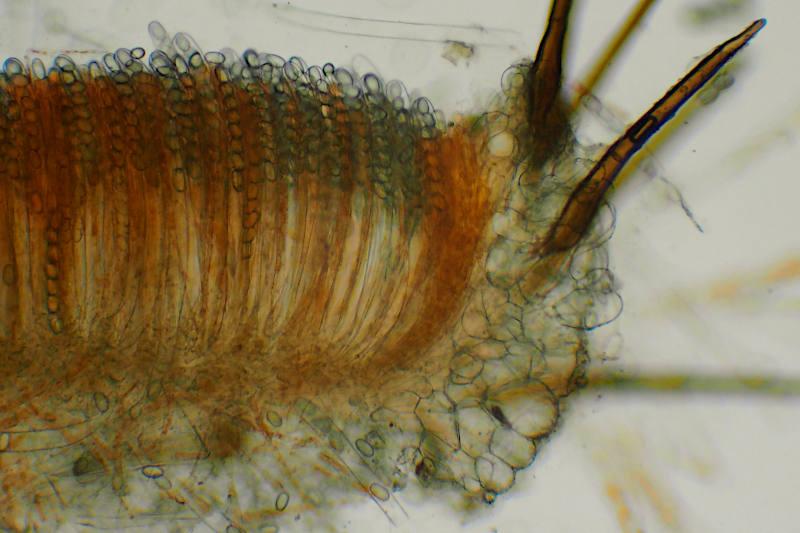
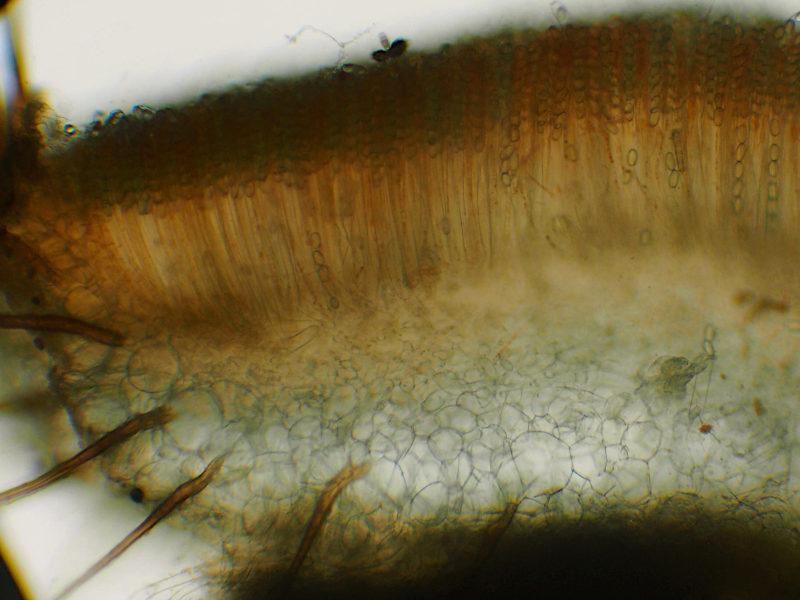
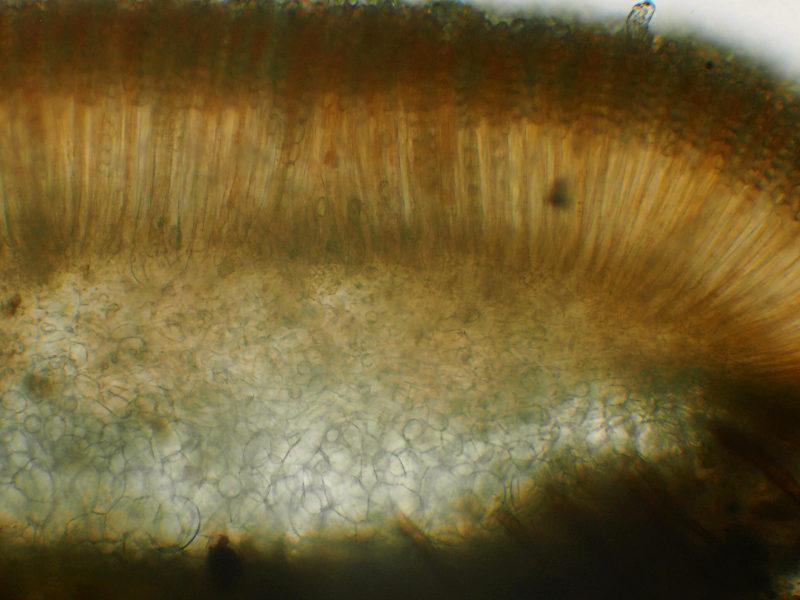
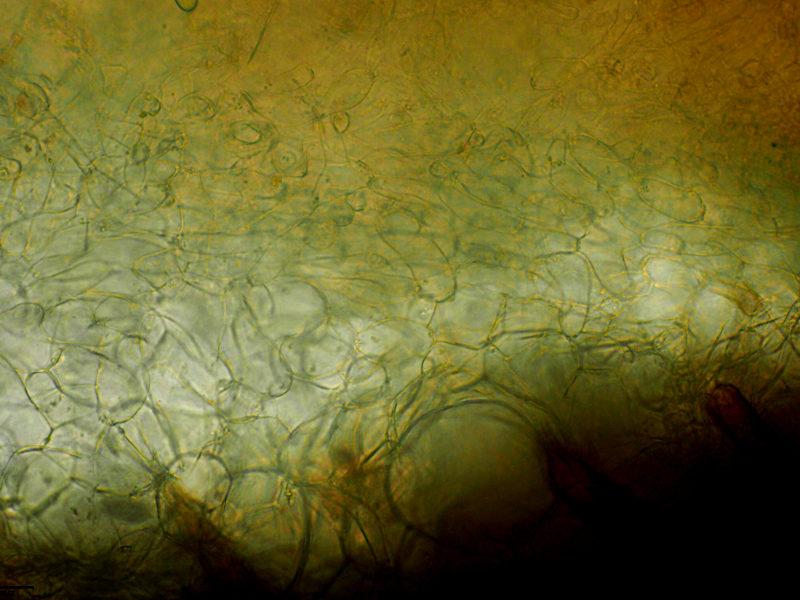
I managed to make a better section, and the extal excipulum is made of large (up to 80 µm) globose - angular cells, and the medulla seems like an unclear textura intricata. There doesn't seem to be a well-defined subhymenium. Hymenium 285 µm thick. Also, the spores appear to have a loosening perispore in heated CB.
Aside from the large spores and thick hymenium, this would seem to still fit C. coprinaria.
Aside from the large spores and thick hymenium, this would seem to still fit C. coprinaria.
Michel Delpont,
10-05-2023 20:14

Re : Cheilymenia on moose dung
Good evening.
Indeed the spores are a little different in size, but despite everything I think you are in the right direction with C.coprinaria. Difficult to disentangle sometimes according to the authors the various authors.
Michel.
Juuso Äikäs,
10-05-2023 20:25
Re : Cheilymenia on moose dung
Good evening Michel, and thank you for the assesment! I think this is what I will label this.