
27-04-2026 20:52
 Lothar Krieglsteiner
Found on hanging tiwg of Olea europaea in dried-ou
28-04-2026 22:51
 Bernard CLESSE
Bonsoir à toutes et tous,Pourriez-vous m'aider à
29-04-2026 08:01
Lothar Krieglsteiner
... on twig attached to small tree of Citrus auran
29-04-2026 10:44
Lothar Krieglsteiner
growing at moist, drying-out soil at the side of a
28-04-2026 20:33
Vitus SchäfftleinHello, I found Trochila ilicina on Ilex aquifoliu

28-04-2026 21:50
 Pablo Sandoval
Hola a todos,Espero se encuentren bien. Hace mucho
27-04-2026 18:05
Lothar Krieglsteiner
... still attached at standing tree. The green con
28-04-2026 20:07
Lothar Krieglsteiner
... on twig in the air at standing Ceratonia siliq
27-04-2026 18:48
Tony MoverleyCollected 23rd April 2026, Norfolk, EnglandSwarms
Orbilia or Hyalorbilia?
Ethan Crenson,
08-03-2025 14:54
Hello all,
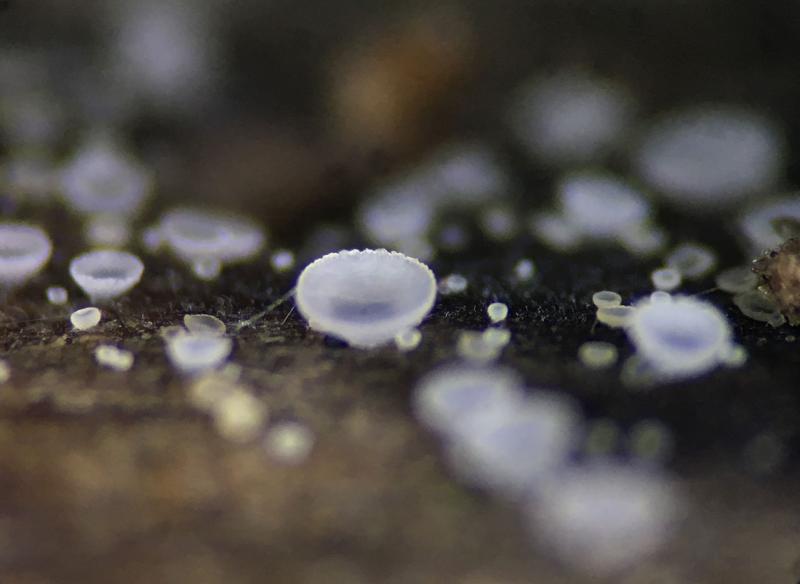
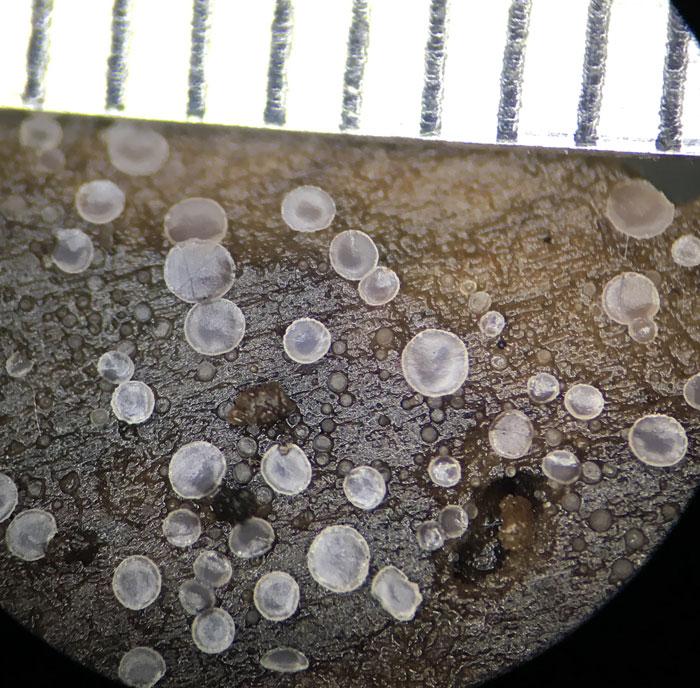
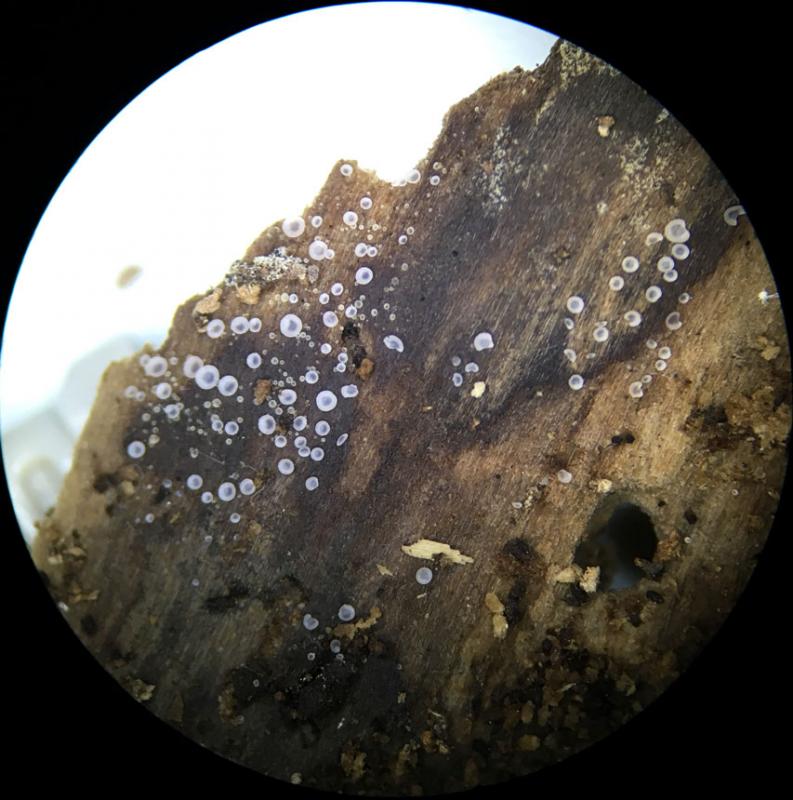
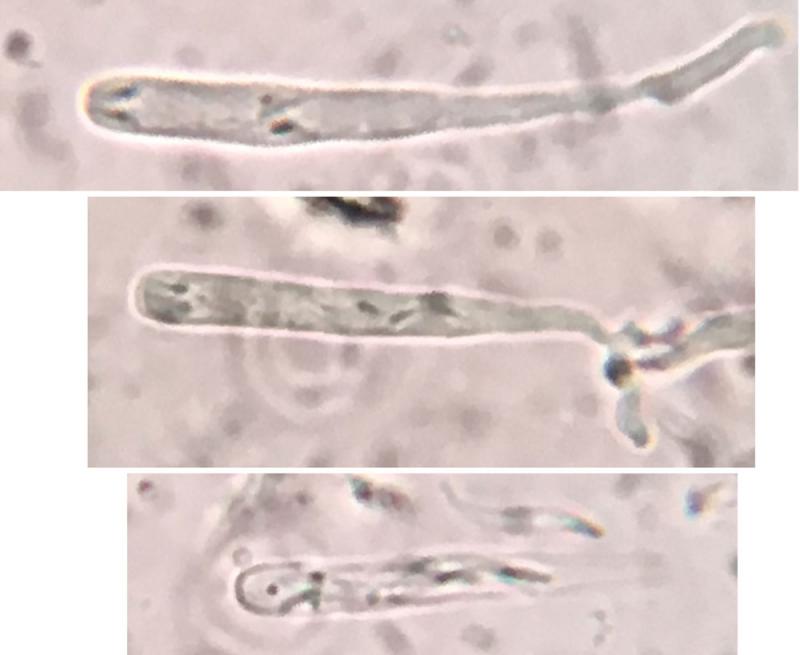
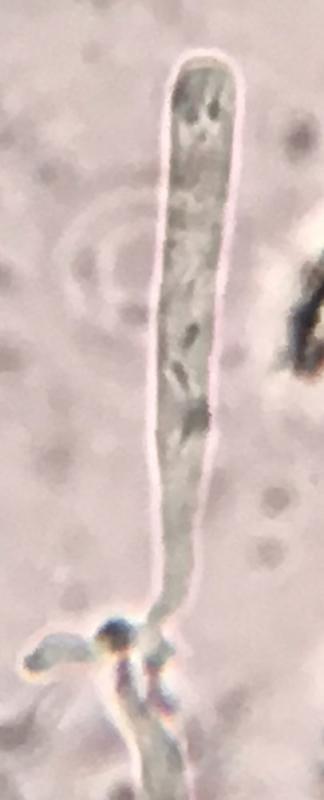
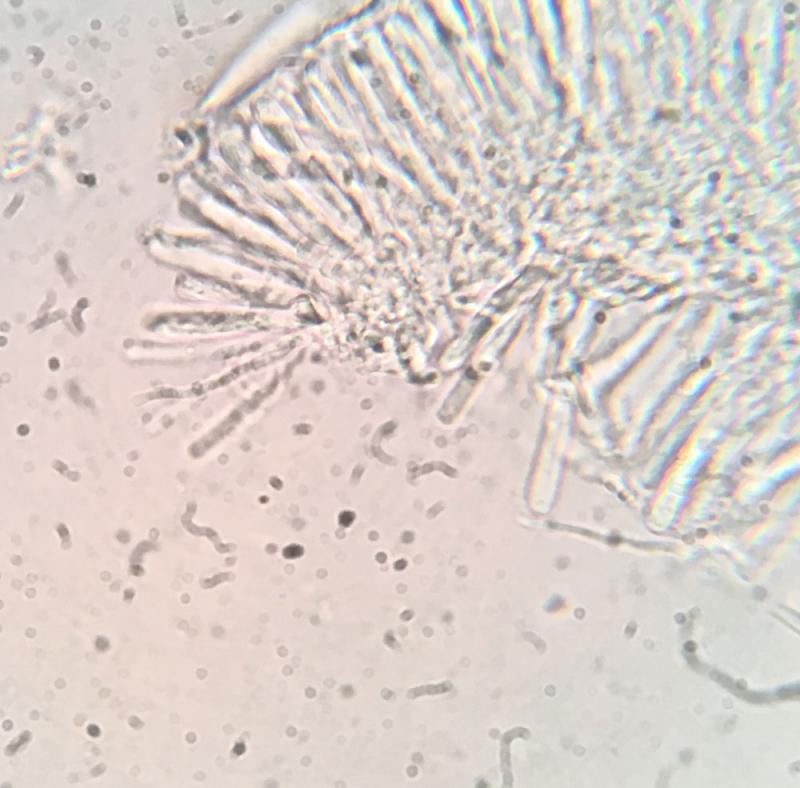
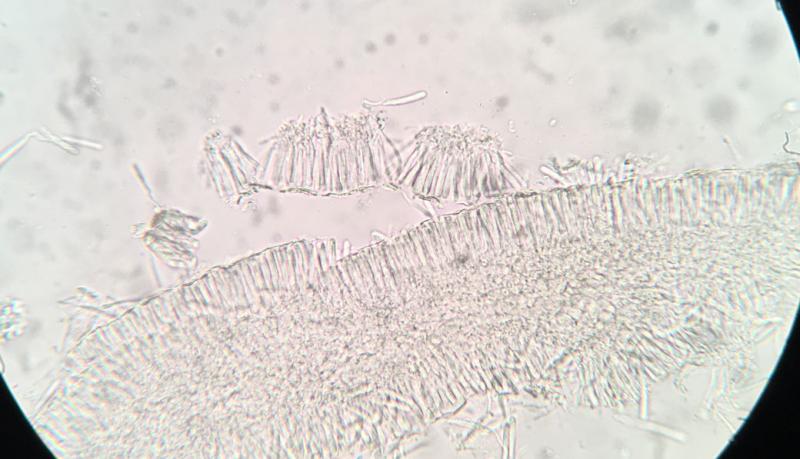
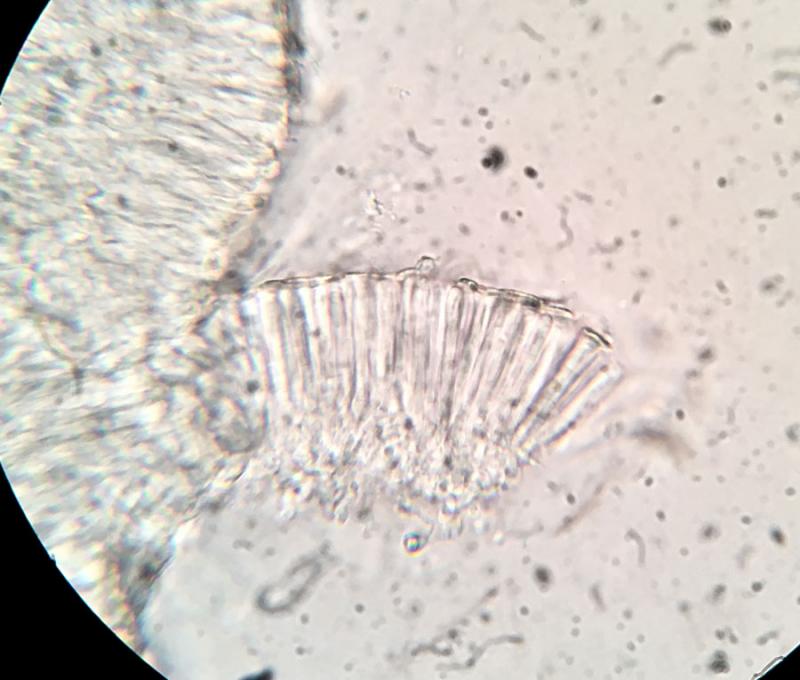
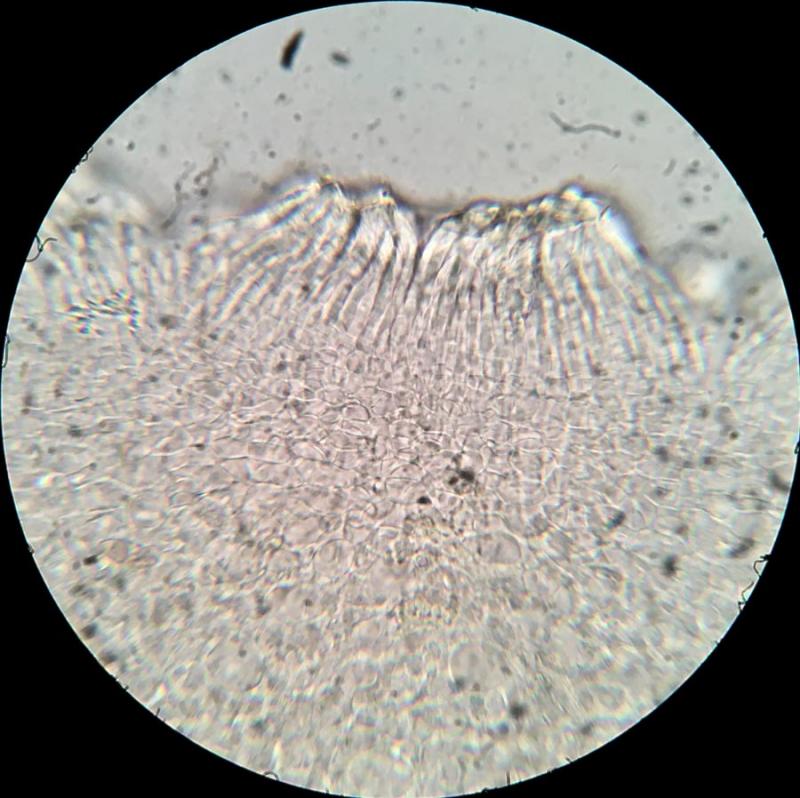
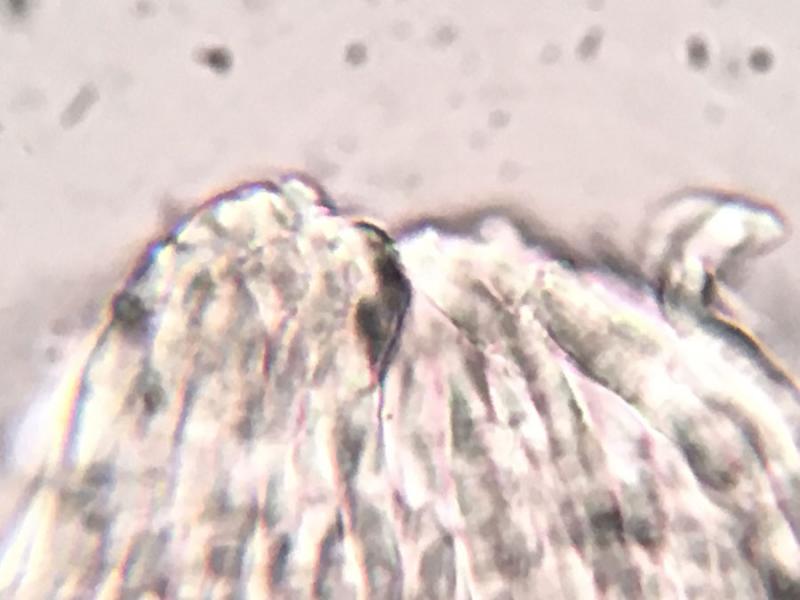
This is a recent find from New York City in a forested city park on dead hardwood on the ground. I had thought initially that this was Orbilia crenatomarginata, but when looking at the microscopy I see what looks like an epithecium over the asci and paraphyses.
Apothecia are pale white/hyaline, up to about 1mm in diameter, with a crenulate margin.
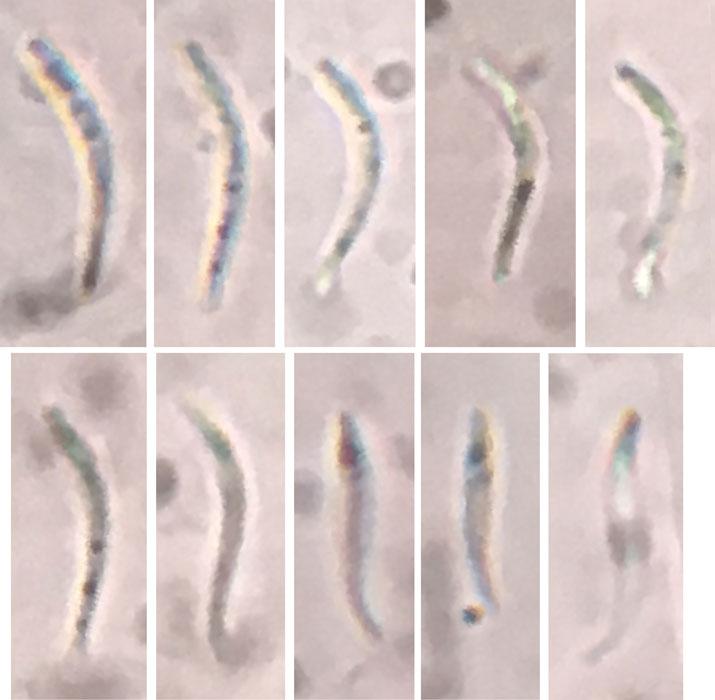
Spores are curved and occasionally S-shaped (in three dimensions) with guttules in many instances and with a spore body at the acute end in some instances. 8-10.5 x 0.8-1.1µm
Asci sometimes truncate. The spores arrayed, as seen in photo 5 and 6, with the spore bodies facing upward at the top of the ascus and downward in the bottom spores. 28-33 x 3-3.6µm
Paraphyses, cylindrical to slightly enlarged at the ends.
Edit: As I reread the description of O. crenatomarginata I am now seeing the note: Exudate over paraphyses continuous to cloddy. Perhaps this accounts for what I am interpreting as an epithecium?
Thank you in advance for your help.
Ethan
Hans-Otto Baral,
08-03-2025 21:01

Re : Orbilia or Hyalorbilia?
Hi Ethan
I think it is O. nemaspora in Xanthoguttulatae, but the glassy processes and the wider spores contradict that. Zotto
Ethan Crenson,
11-03-2025 03:48
Re : Orbilia or Hyalorbilia?
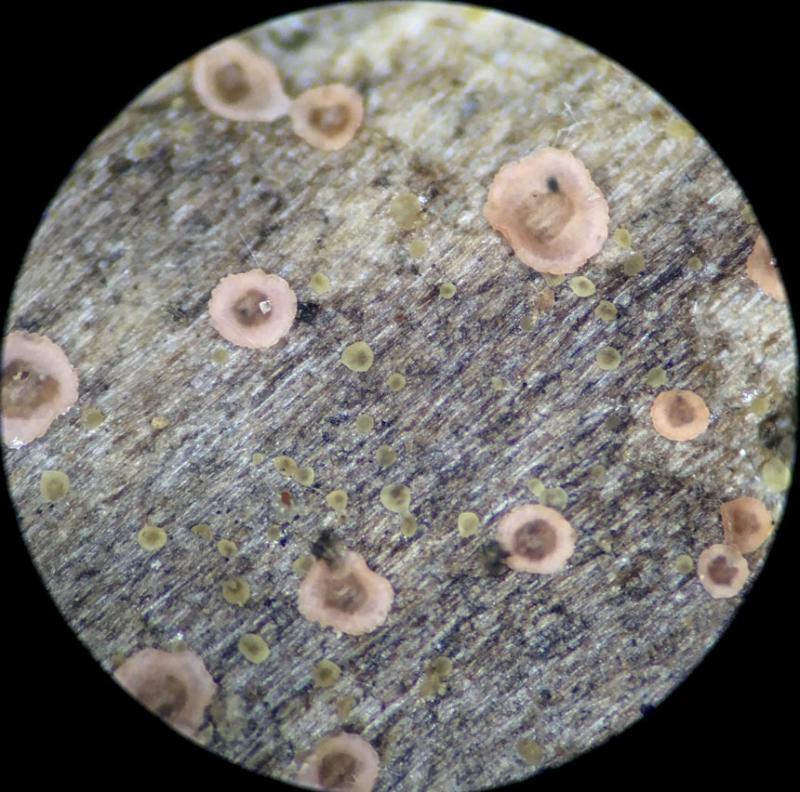
Thank you for your help, Zotto. I'm afraid I might have inadvertently mixed things up with this post. I dried the collection after posting here and receiving your reply. Now it is much more obvious that there are two collections on the substrate— one is much larger and dried a salmon-orange, the other is smaller and dried quite yellow. Looking at my spore photos, it now does look like it must be two morphologies rather than one.
Hans-Otto Baral,
11-03-2025 09:01
Re : Orbilia or Hyalorbilia?
Indeed and I now see it also on yout first photo. The small is probably a Hyalorbilia but your mics come from the large one I think.
Ethan Crenson,
11-03-2025 14:27
Re : Orbilia or Hyalorbilia?
Yes, most of the microscopy is from the large apos. But I did a spore drop for some of the spore photos, so there is potential for confusion there.