
28-04-2026 22:51
 Bernard CLESSE
Bonsoir à toutes et tous,Pourriez-vous m'aider à

28-04-2026 21:50
 Pablo Sandoval
Hola a todos,Espero se encuentren bien. Hace mucho
27-04-2026 18:05
 Lothar Krieglsteiner
... still attached at standing tree. The green con
28-04-2026 20:33
Vitus SchäfftleinHello, I found Trochila ilicina on Ilex aquifoliu
28-04-2026 20:07
Lothar Krieglsteiner
... on twig in the air at standing Ceratonia siliq
27-04-2026 20:52
Lothar Krieglsteiner
Found on hanging tiwg of Olea europaea in dried-ou
27-04-2026 18:48
Tony MoverleyCollected 23rd April 2026, Norfolk, EnglandSwarms
27-04-2026 17:41
Lothar Krieglsteiner
.. Algarve, same leaf than the last post. The con
27-04-2026 17:16
Lothar Krieglsteiner
.. Algarve, moist lying.The conidiomata look like
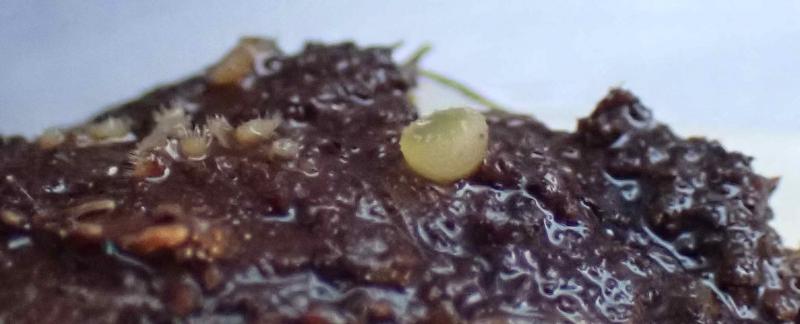
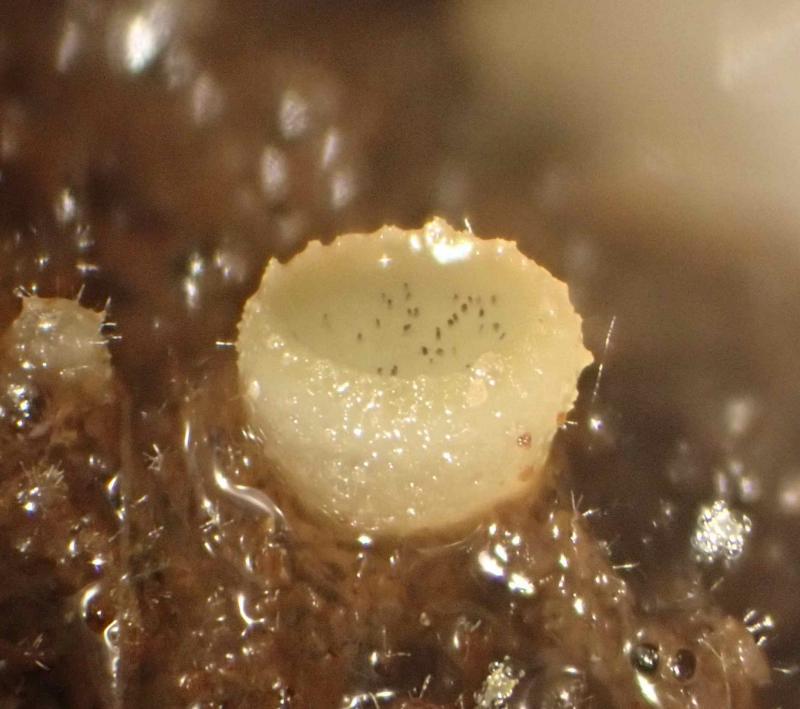
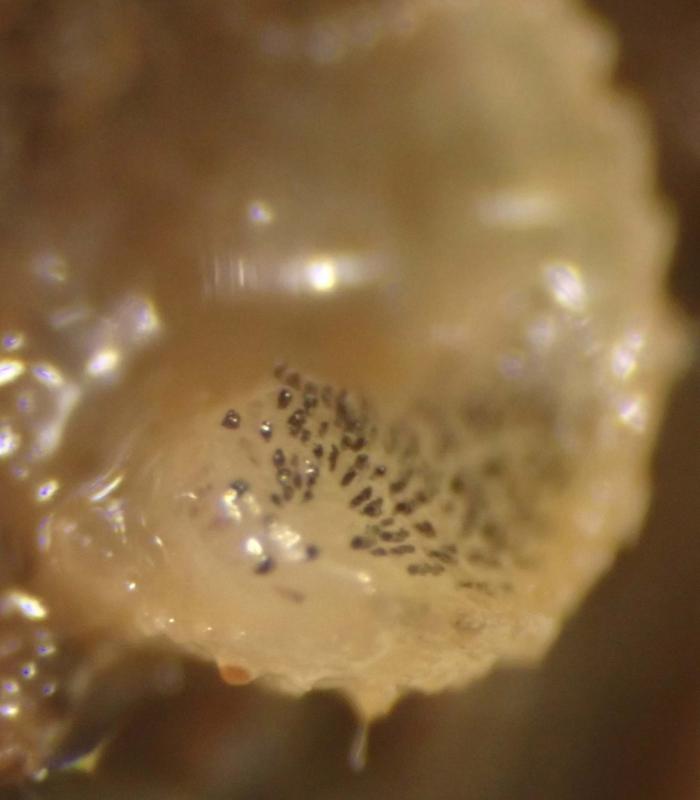
On cow dung, between fruiting bodies of Lasiobolus papillatus, I found almost cylindrical ascomata with a diameter < 2 mm. The disc is yellowish with dentate margin.
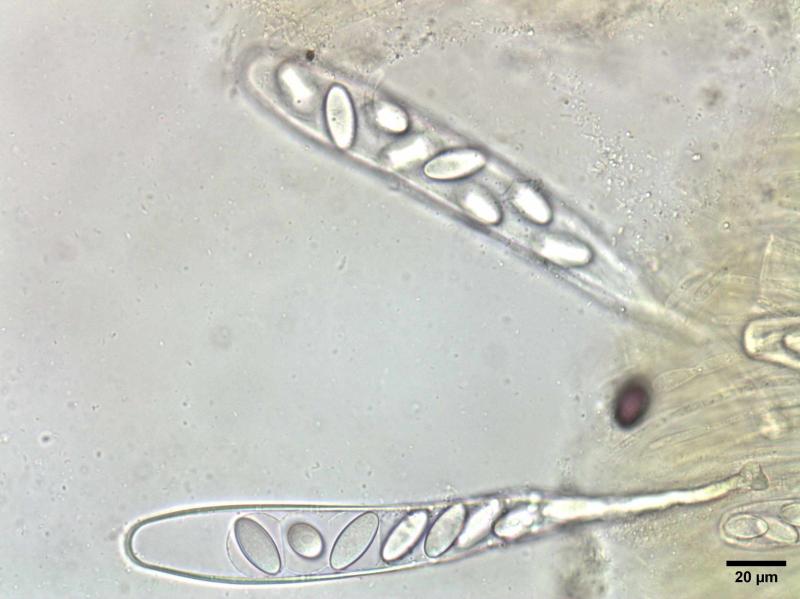
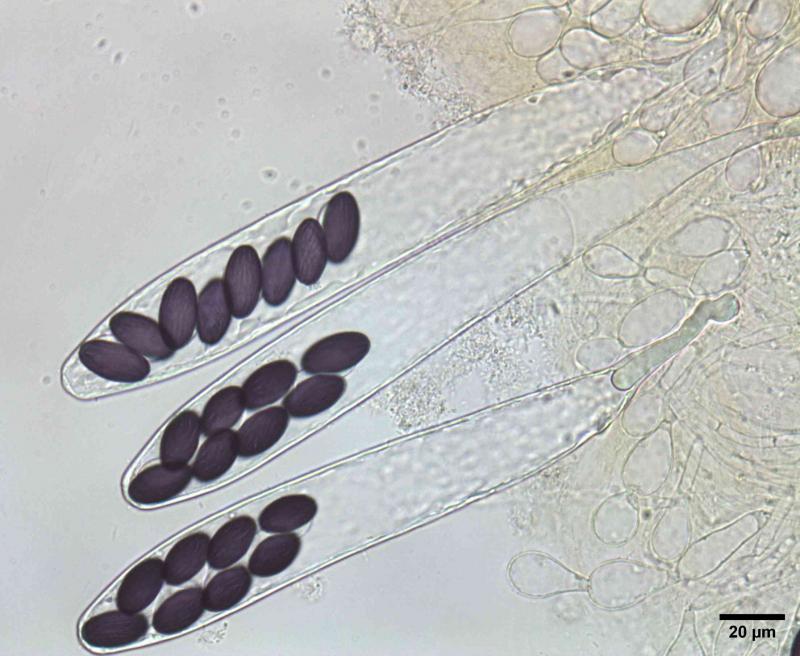
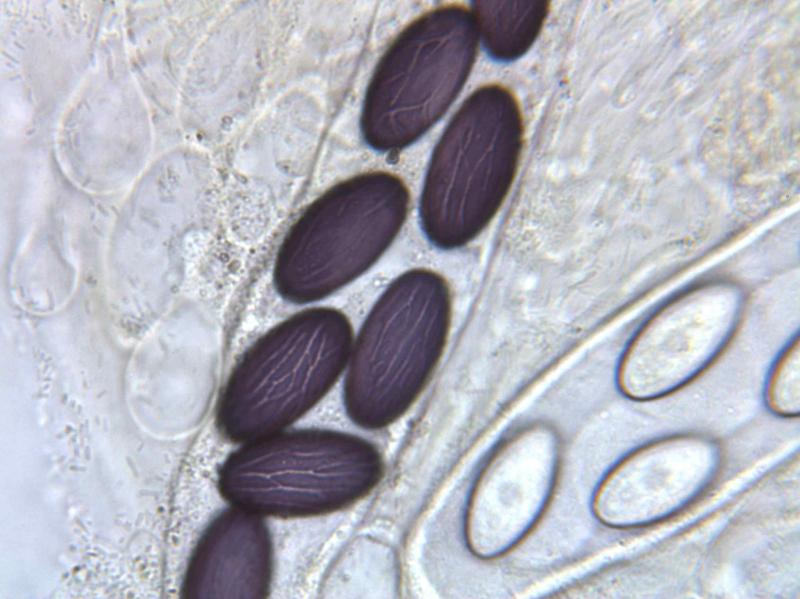
Spores: elliptical with gelatinous coating, with longitudinal anastomosing lines, from hyaline to purple; (18.6) 20 - 24.3 (24.8) × (10.4) 11 - 11.9 (12.3) µm; Q = (1.6) 1.8 - 2.1 (2.2) ; Me = 22.3 × 11.4 µm ; Qe = 2
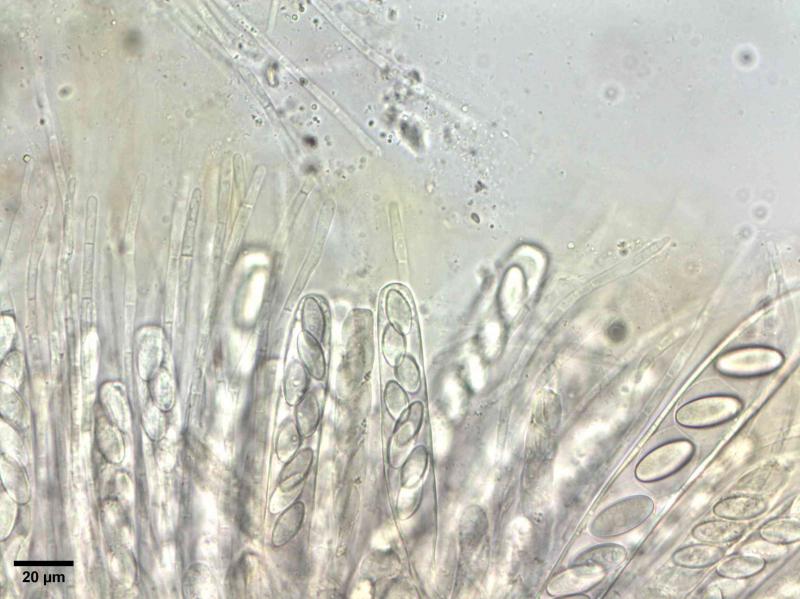
Asci: elongated club-shaped, Me = 210.5 × 27.4 µm ; Qe = 7.7; slight purple discolouration in Melzer:
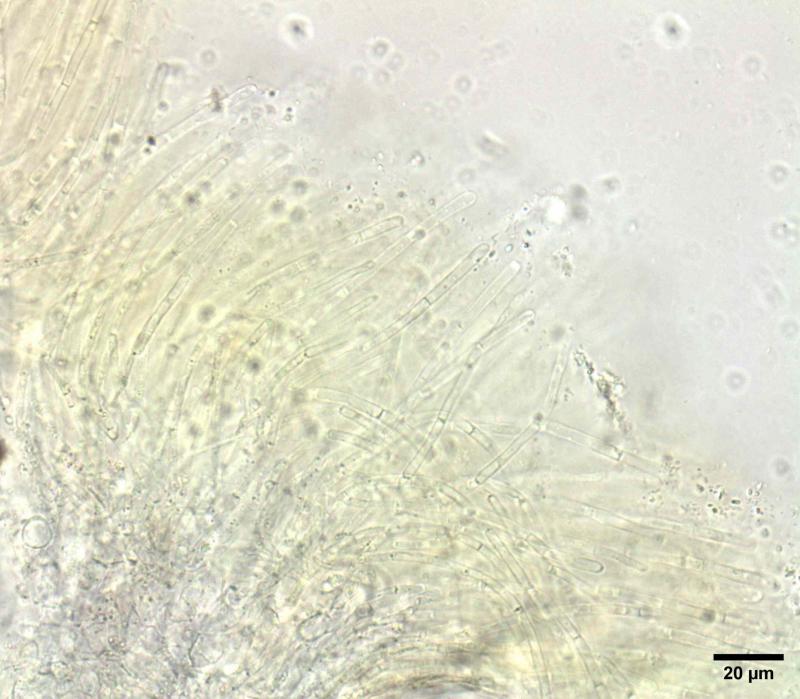
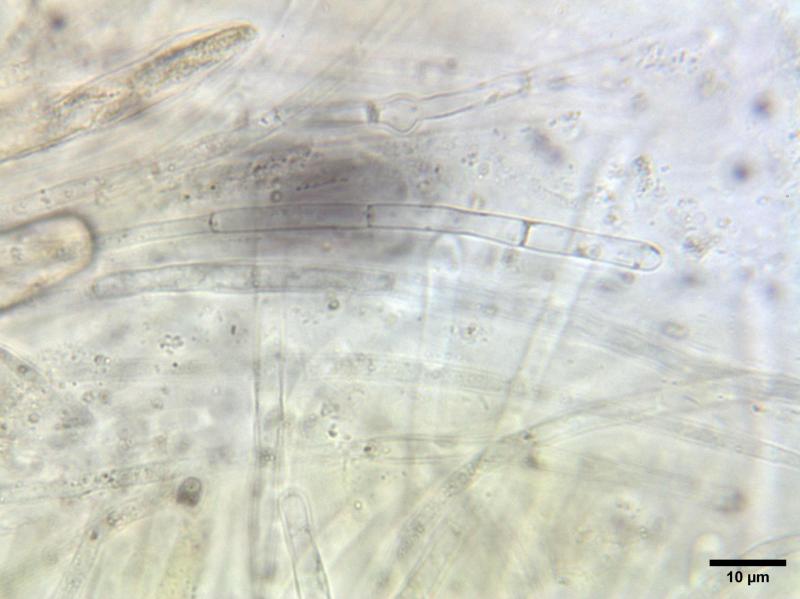
Paraphysis: filiform, with multiple septa, width about 3.5 µm in a yellowish substance. After some days in moist environment I observe fortoulisme.
Ectal excipulum: textura globulosa.
Could this be Ascobolus michaudii?
Thanks in advance,
François Bartholomeeusen
N.B.: on two photos during microscopic examination I found clustered spores with the following dimensions: (52.3) 52.33 - 58 × (4.4) 4.42 - 5.15 (5.2) µm: Me = 55 × 4.9 µm ; Qe = 11.6.
I found only these spores and no perithecial beak. Could these spores belong to Pyxidiophora arvernensis (Laboulbeniomycete)?
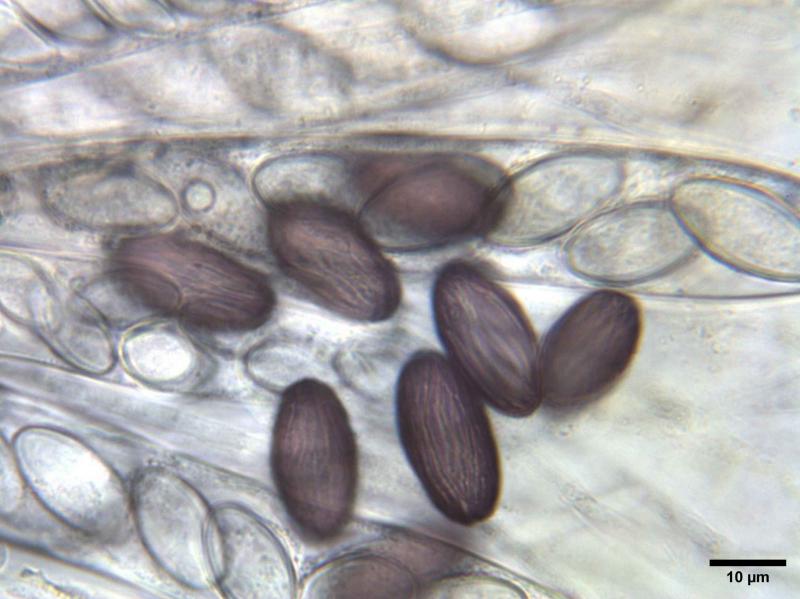
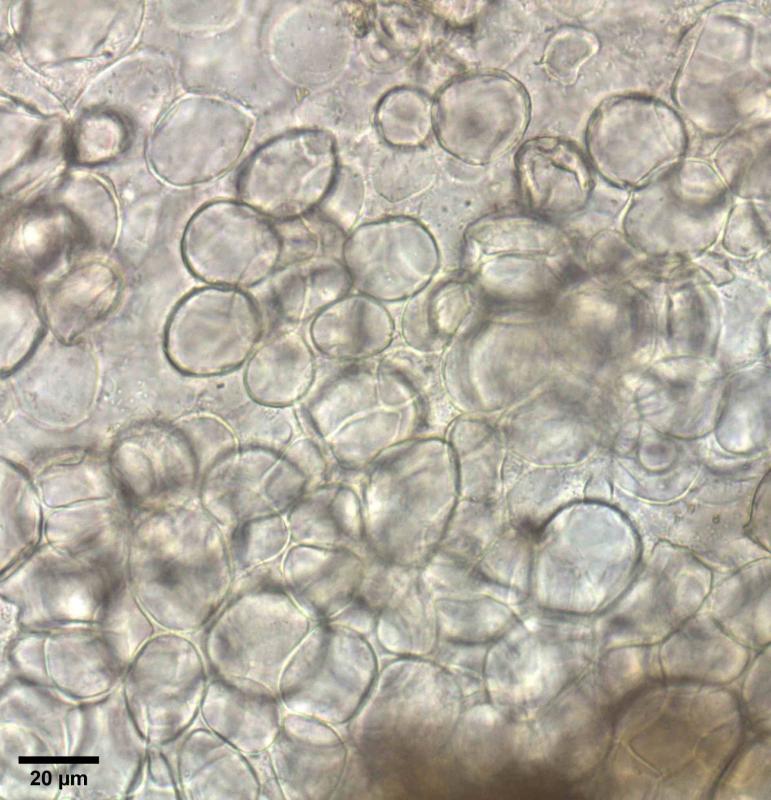
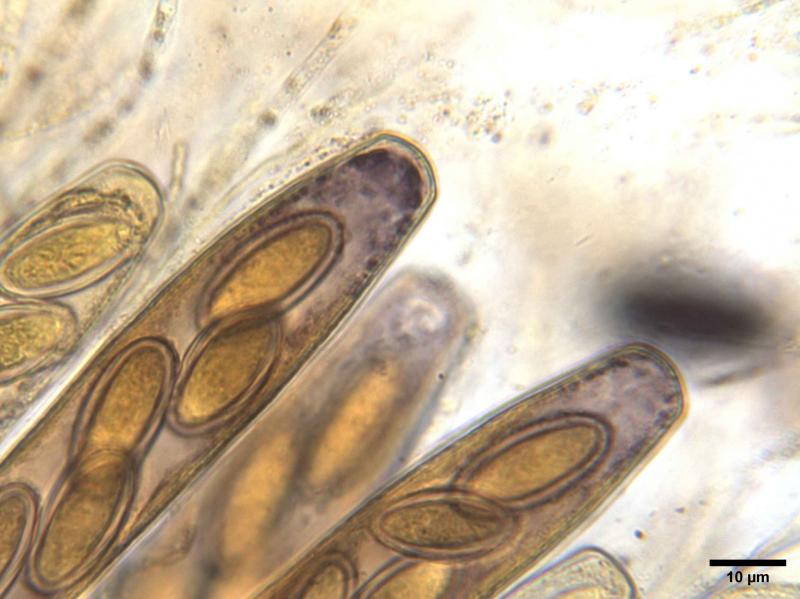
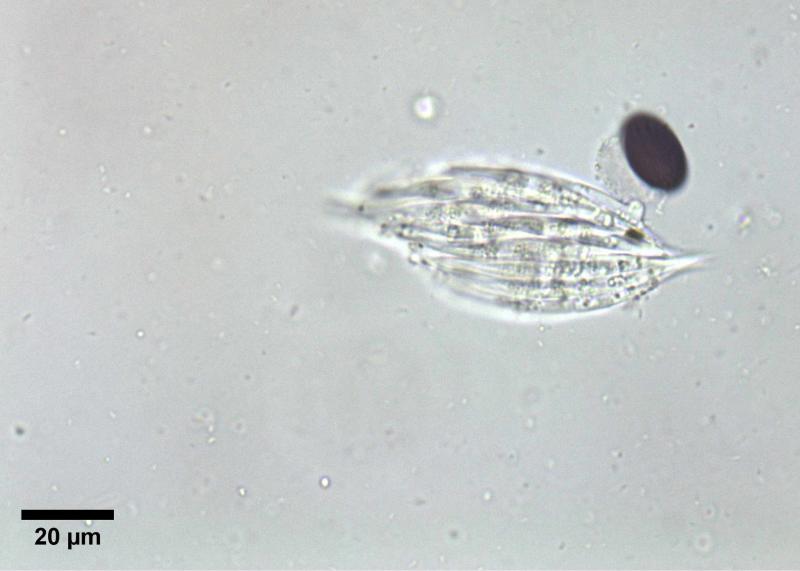
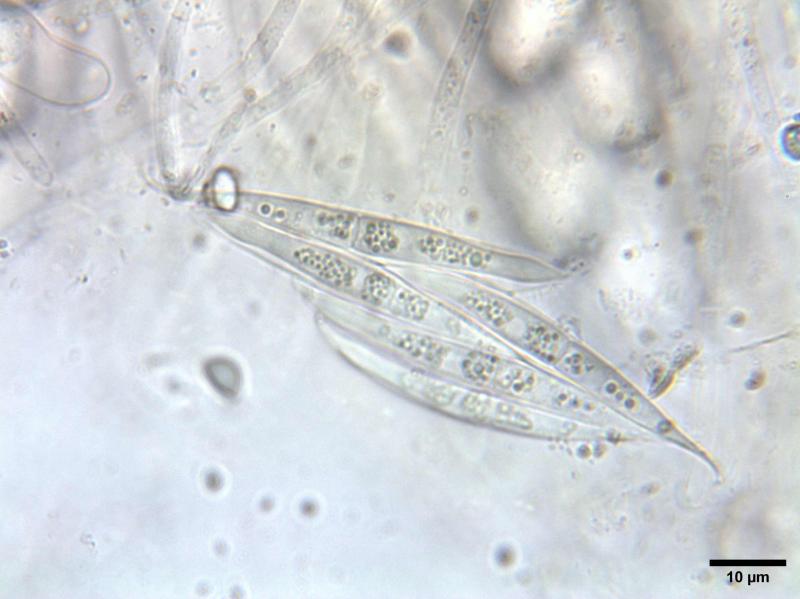

See: Doveri, F. & B. Coue (2006) - First record of Pyxidiophora badiorostris from France. Doc. Myco
l. 34/ 133- 134: 33-41.
Thank you very much for your response. I think you are right. I also used the key in that publication, but I was unsure about the number of spores and their length. I suspect the spores are not fully mature.
Thanks again, now I only need to obtain confirmation about Ascobolus michaudii!
Many greetings,
François