
23-03-2026 20:16
 Miguel Ángel Ribes
Good eveningI'm unable to identify this Coprotus o
20-10-2017 09:23
Garcia SusanaEste otro crecía en el mismo trocito de madera qu
21-03-2026 15:13
Lepista ZacariasHello everyone, Does any one know of any literatu
20-03-2026 16:16
 Edvin Johannesen
These 0.5 mm diam. acervuli were breaking through
19-03-2026 19:34
 Filip Fuljer
Hello everyone,a few days ago I collected this str
19-03-2026 18:25
 William Slosse
Good evening everyone, On 18/03/26 I found a few
17-03-2026 10:09
 François Freléchoux
Bonjour, Voici la description rapide d'un petit d
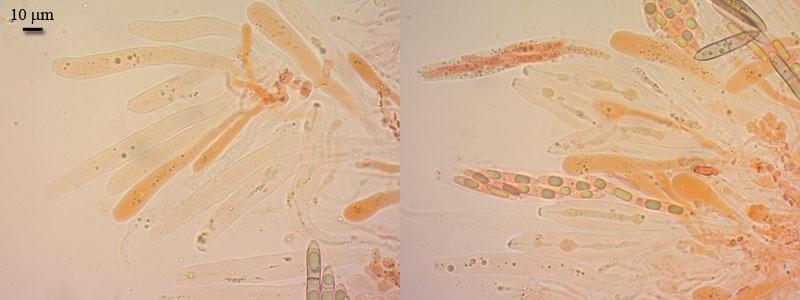
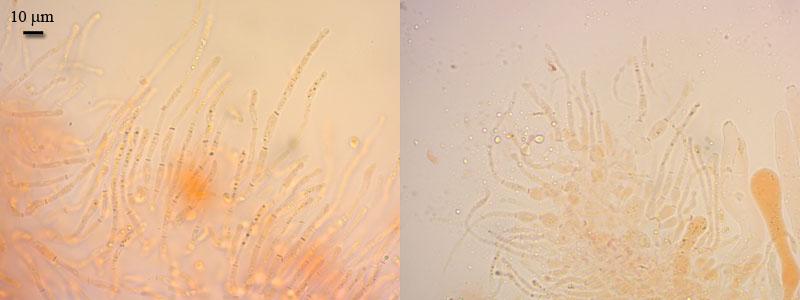
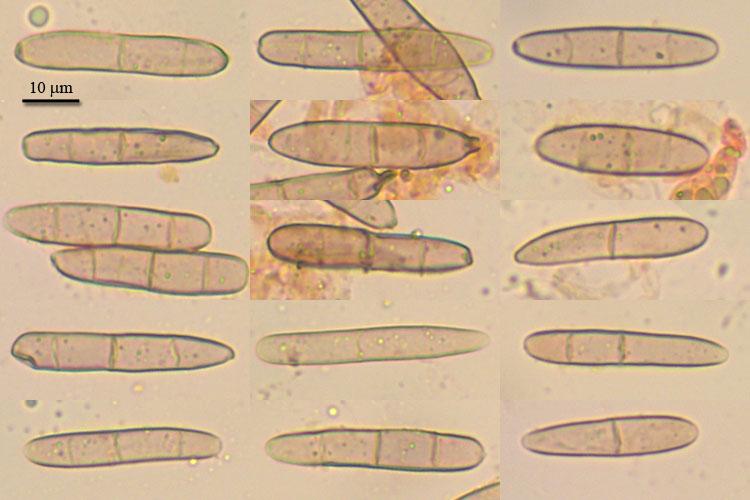
Perithecia globose to pyriform, to 700 mk high, 500-600 mk broad, site among dense weft of brown hyphae on sphagnum branches; dark brown, almost black, upper part setose, base with abundant hyphae, walls firm; all plant (sphagnum) becoming black and firm to the touch. Asci cylindrical, to 200 long, 15-20 broad; paraphyses cylindrical, segmented, 2-3 broad; spores cylindrical, becoming brown in asci, with 1-3 septa, gututlate, 36 (31-41) x 7 (5,5-8,8) (N=20).
Covering densely sphagnum in one spot; S. balticum probably, in wet bog hollow.
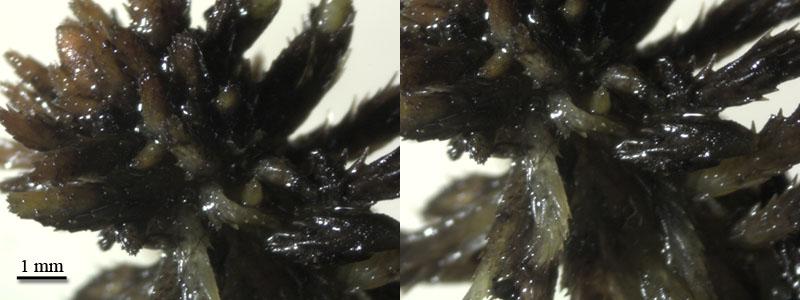
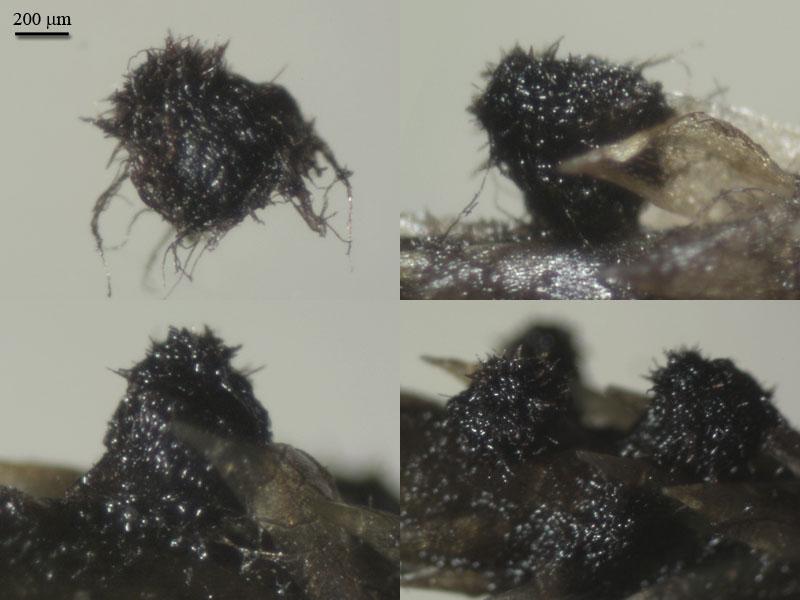
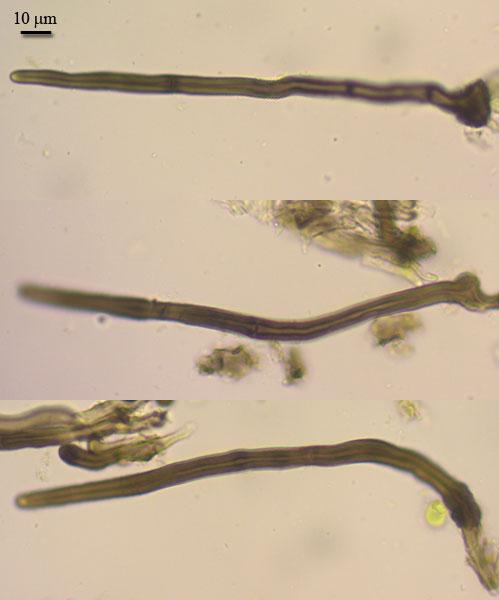
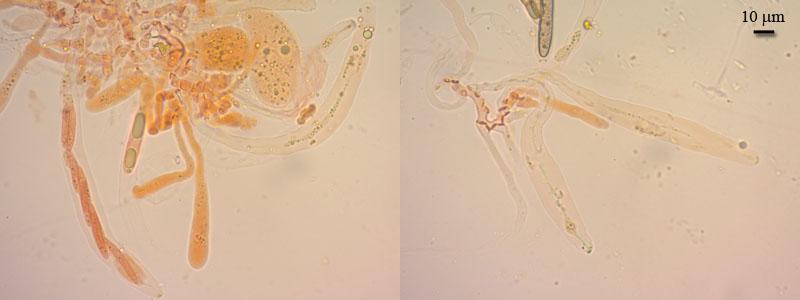

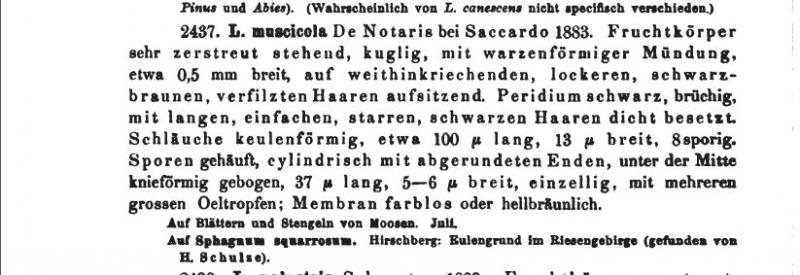
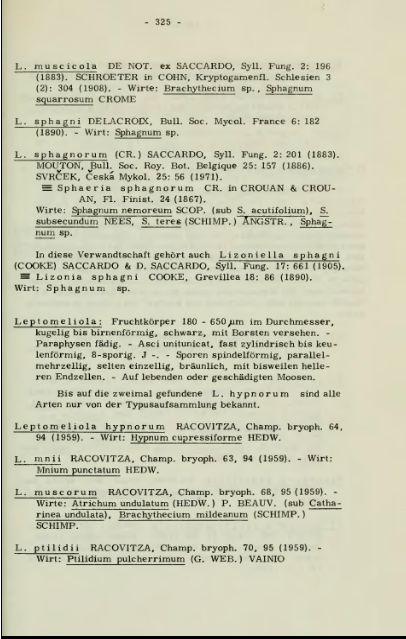
as I understand, De Not's description was only published through Saccardo, who marks it with "MS" (manuscript?).
Here are Saccardo's, Schröter's and finally Doebbeler's short text to it. Maybe this helps.
Best regards
Martin
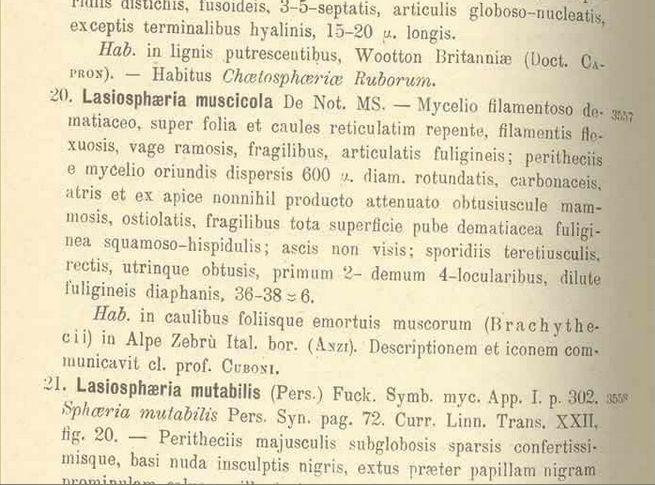
Best
Martin

L. sphagni DELACROIX, Bull. Soc. Mycol. France 6: 182
(1890). -
Wirt: Sphagnum sp.
L. sphagnorum (CR.) SACCARDO, Syll. Fung. 2:201 (1883).
MOUTON, Bull.Soc. Roy. Bot. Belgique 25: 157 (1886).
SVRCEK, Ceska Mykol. 25: 56 (1971). = Sphaeria sphagnorum CR. in CROUAN & CROUAN,
Fl. Finist.
24 (1867).
Wirte: Sphagnum nemoreum SCOP. (sub S. acutifolium), S. subsecundum
NEES. S. teres (SCHIMP. ) ÄNGSTR. , Sphagnum sp.
Alain
Now Andrew Miller reported me and he would be interesting in work with this specimen professionally, and i will send it to him. I will inform there about the results, as soon as they appear.
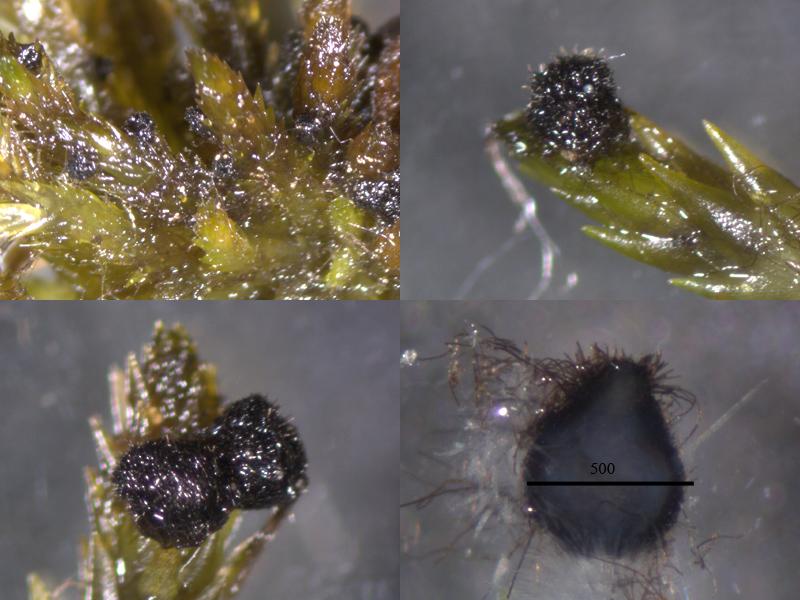
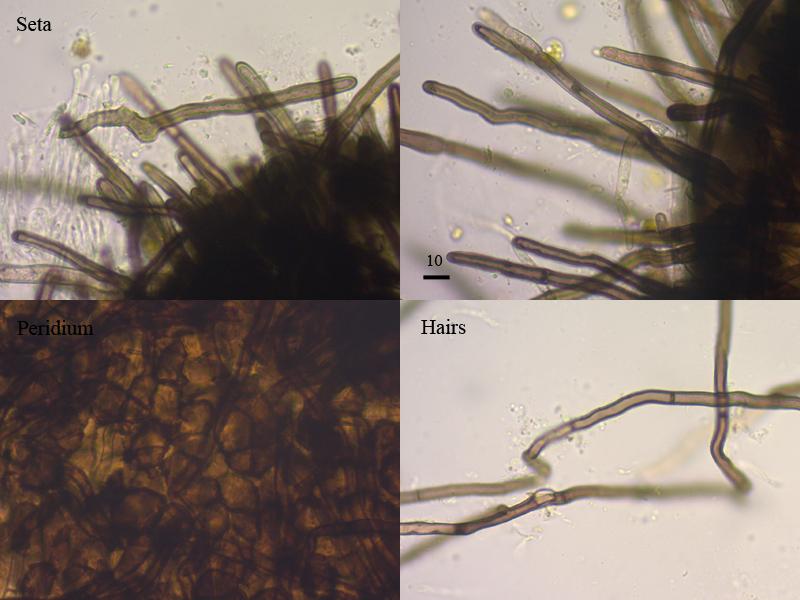
This species has appeared in the same spot again, and now the vital characters are seen.
I will email Andrew about this, since he was working with the specimen, and probably there may have be some results already.
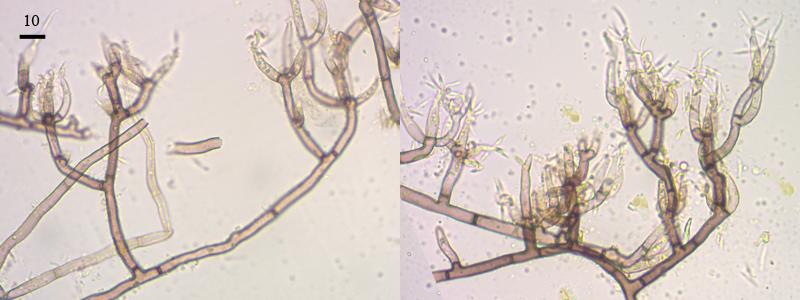
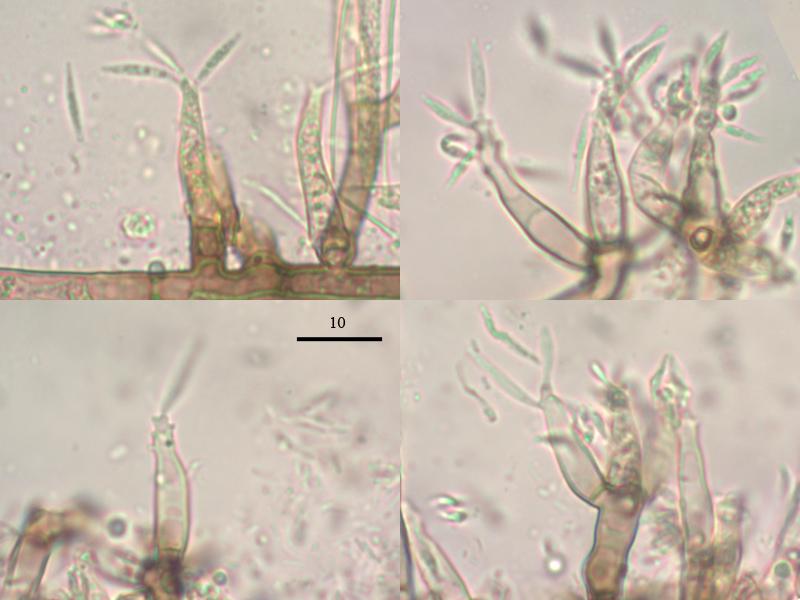
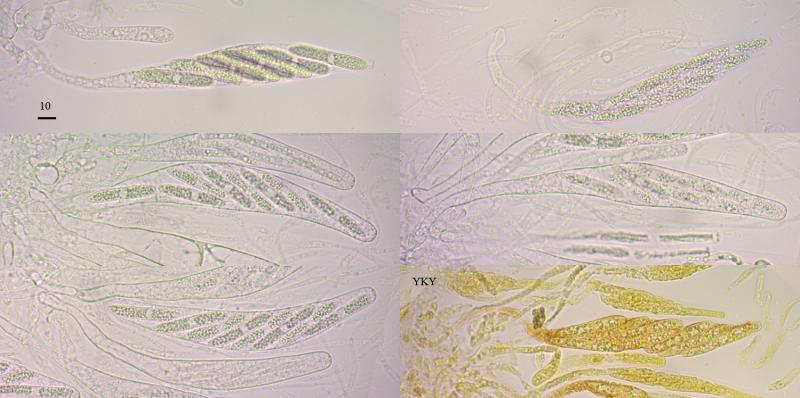
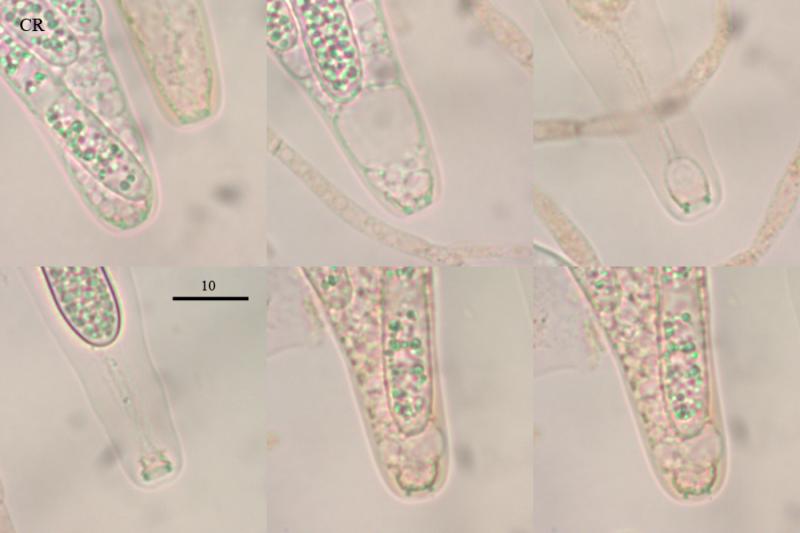
The photos of vital structures:
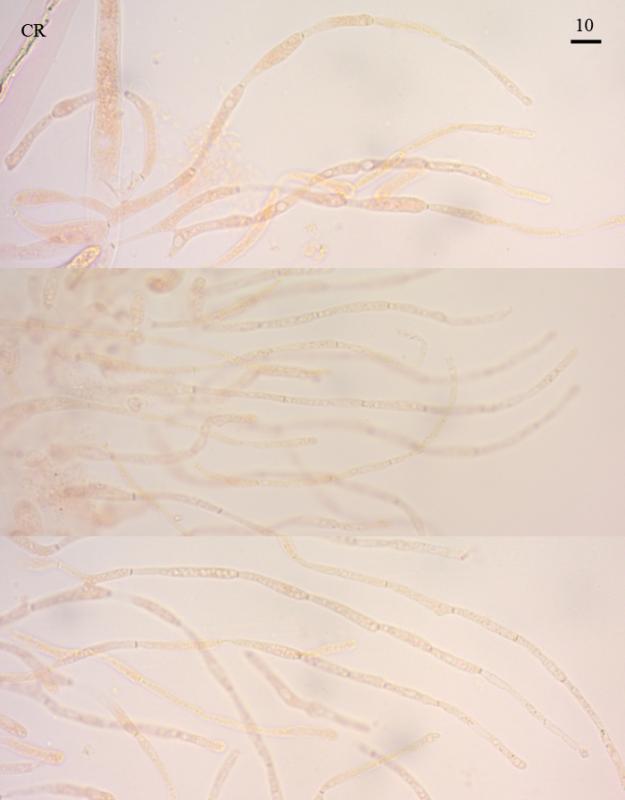
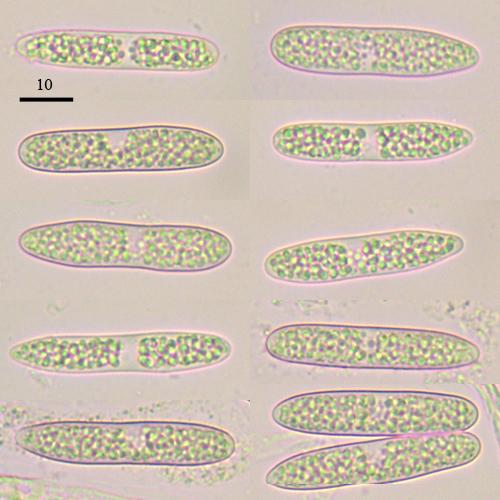
have you got the determination yet?
I have found this species for years on Sphagnum in wet, guite shadowed places and am very interested to know, what its is. This is not rare.
When you find it once, you will find it there every summer, if nothing dramatic happens in the surroundings.
Marja
Although it has been many years since this was observed, I am interested in whether you were able to confirm this collection as L. muscicola.
To me, the lack of obvious bending in the spores seems to eliminate Hilberina (L.) sphagni and H. sphagnorum, but there is some uncertainty in the literature about the differences between H. sphagnorum and L. muscicola (Svre?k, 1971).
I have recently examined very similar material on Scorpidium, also in bog habitat, which also seems to correspond with L. muscicola.
Interesting that such distinctive species have so few documented observations on the internet that I can see...
All the best,
George